The friends and loved ones of Jimmy Gracey were utterly DEVASTATED during the memorial service for the gentle, kind, and intelligent 20-year-old
The friends and loved ones of Jimmy Gracey were utterly DEVASTATED during the memorial service for the gentle, kind, and intelligent 20-year-old. Currently, Jimmy Gracey’s body has not yet been repatriated to the United States, as the situation in Barcelona remains incredibly DIFFICULT and COMPLICATED. We pray that Gracey can return to his homeland soon; his friends and family are waiting for him.
The grief and shock radiating from Barcelona have resonated deeply across the University of Alabama campus, where hundreds of students, friends, and fraternity brothers gathered to honor the memory of Jimmy Gracey. At the St. Francis of Assisi University Parish, a memorial Mass organized by the Theta Chi fraternity and Bama Catholic drew a crowd so large that organizers ran out of printed programs, forcing them to create a virtual version on the spot. This overwhelming attendance serves as a powerful testament to the impact Gracey had on his community, proving that his influence reached far beyond his immediate social circle.
For students like Kiersten Martin, this tragedy represents a profound loss for the entire university. She noted that the sea of people gathered at the parish was a celebration of Jimmy’s life and the positive mark he left on everyone he met. Amidst the heartbreak, the Alabama student body is finding strength in unity, supporting one another through a shared sense of faith and community. Even those who did not know Jimmy personally, such as Meagan Carney, felt compelled to attend the service, seeking solace in the presence of the Lord and offering spiritual support to his grieving family.
While the campus mourns, new details from the investigation in Spain continue to emerge. Members of the Alpha Phi chapter of Theta Chi—many of whom tirelessly aided in search efforts until Jimmy’s body was found last Thursday—are scheduled to hold a private memorial vigil. This gathering will feature selected speakers sharing memories of Gracey’s steadfast faith, his vibrant life, and the legacy he leaves behind. Their dedication to finding their brother in a foreign country reflects a bond that makes the conclusion of a tragic accident all the more painful to bear.
According to reports from El Periodico, investigators are still working to resolve the final lingering questions. While security footage captured the specific moment Jimmy fell into the sea alone near Port Olímpic, police are still trying to identify the individual he was seen speaking with upon exiting the Shoko nightclub. Determining what prompted him to head toward the Somorrostro Beach breakwater remains a priority. Furthermore, the mystery of his mobile phone persists; though found with a habitual offender, it has not been definitively linked to a theft. As the family awaits the final autopsy results to determine if any substances influenced his fall, they remain in Barcelona, navigating the final judicial hurdles to bring Jimmy home to Elmhurst, Illinois, for his final rest.
The disappearance and subsequent discovery of James “Jimmy” Paul Gracey in Barcelona represents a harrowing intersection of youth, international travel, and the unpredictable dangers that can lurk on the fringes of a celebration. Jimmy Gracey, a 20-year-old student at the University of Alabama and a prominent member of the Alpha Phi Chapter of Theta Chi, had traveled to the Spanish coastal city to spend his Spring Break with friends who were studying abroad. What began as a vibrant social excursion ended in a tragedy that has left a family shattered, a university community in mourning, and investigators piecing together the final, solitary moments of a young man’s life.
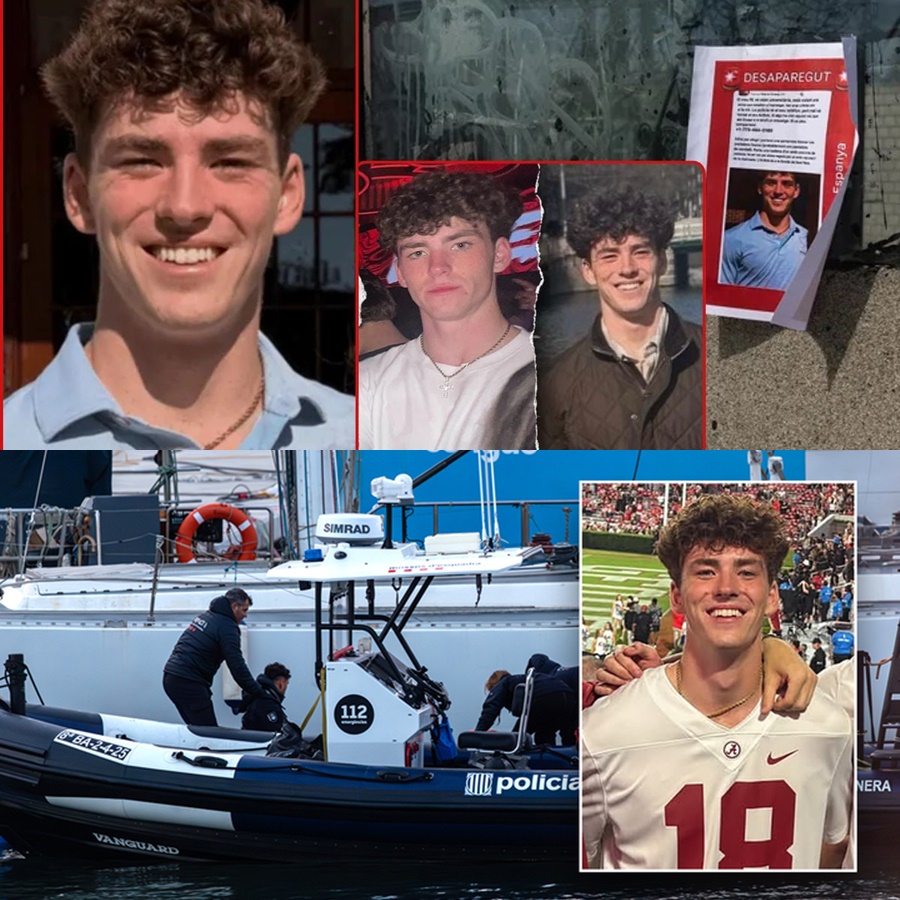
The narrative of Jimmy’s final hours began at Shoko, a high-end nightclub situated on the iconic Barceloneta Beach. Known for its jet-set clientele, VIP bottle service, and pulsing reggaeton beats, Shoko is a focal point of Barcelona’s nightlife. On the night of his disappearance, Jimmy was seen by a friend around 3:00 AM outside the venue. According to his mother, Therese Gracey, the friend was ready to leave the club, but Jimmy opted to stay behind. He was last seen wearing a white T-shirt, dark joggers, and a gold chain featuring a rhinestone cross—a detail his mother highlighted in desperate social media pleas as the search intensified. When Jimmy failed to return to the group’s AirBnB, the initial concern of his friends quickly escalated into a full-scale missing person investigation.
The timeline of the investigation was immediately complicated by the discovery of Jimmy’s mobile phone. In the early hours of Tuesday morning, a patrol from the Municipal Guard encountered a “habitual offender” in the Barceloneta district. During a search, officers found Jimmy’s phone in the man’s possession. While the individual claimed he had simply found the device on the beach, Jimmy’s family remained skeptical, suspecting that the phone had been stolen—a theory fueled by the language barrier and the confusing flow of information from local authorities. Despite the murky circumstances of how the phone changed hands, the device proved to be the critical link that allowed police to bypass security locks and establish contact with the Gracey family in the United States.
As the search transitioned from a local police matter to an international effort involving the U.S. State Department and the Mossos d’Esquadra—the Catalan regional police—the gravity of the situation drew Jimmy’s father, Teras Gracey, to Barcelona. Back in Alabama, Jimmy’s fraternity brothers and friends described a young man who was far from the stereotype of a reckless Spring Breaker. They spoke of a student with “a good head on his shoulders” who led Bible study sessions at his fraternity house. This disconnect between his character and his disappearance created a profound sense of confusion and dread among those who knew him best.
The search reached a somber conclusion when a body was spotted at sea near the Barcelona coastline. Following the recovery, an initial examination was conducted at the Institute of Legal Medicine of Catalonia. According to reports from the Spanish newspaper El Periodico, the preliminary findings indicated that the cause of death was drowning. The examination also revealed numerous bruises on the body, which investigators attributed to the remains repeatedly striking the jagged rocks of the shoreline in the days between his disappearance and the discovery. These physical markers, while grim, provided the police with enough evidence to tentatively rule out foul play, suggesting instead that Jimmy’s death was the result of a tragic accident.
Crucial to understanding how Jimmy ended up in the water was the review of security camera footage from Port Olímpic and the surrounding beach areas. The footage captured a series of movements that painted a picture of a young man separated from his social circle and heading toward the dangerous periphery of the coast. While police believe Jimmy initially left the nightclub in the company of someone else—noting that he was seen speaking with an individual at the venue’s entrance—the subsequent footage showed him walking alone toward the breakwater. The cameras eventually captured the devastating moment he fell into the sea. This visual evidence has led authorities to focus on the Somorrostro Beach area, trying to determine exactly what prompted Jimmy to bypass the safer, more populated areas of the beach in favor of the treacherous stone barriers.
The official autopsy, which is still pending, is expected to provide a clearer picture of Jimmy’s state of mind and physical condition prior to the fall. Investigators are looking to determine if alcohol or other substances played a role in his loss of balance or judgment. While the “foul play” theory has been largely sidelined by the video evidence of his fall, the question of his phone remains a lingering thread. If the phone was indeed stolen before he reached the breakwater, it could suggest a level of distress or distraction that preceded the accident. However, if he lost the phone on the sand before wandering toward the rocks, it reinforces the narrative of a series of unfortunate, accidental events.
The impact of this tragedy extends from the Mediterranean coast back to Elmhurst, Illinois, and the University of Alabama campus in Tuscaloosa. The university released a statement confirming they are in constant contact with the Gracey family, offering support to students affected by the loss of their classmate and fraternity brother. The U.S. State Department, while limited by privacy considerations, underscored its commitment to assisting the family with the logistical and legal hurdles of repatriating Jimmy’s remains.
Currently, the Gracey family remains in Barcelona, navigating the bureaucratic process of the Spanish judicial system. They are awaiting the final judicial authorization required to bring their son home. For a family that spent days in an agonizing limbo of “what ifs” and social media appeals, the confirmation of his death brings a painful form of closure. The rhinestone cross he wore, mentioned so frequently in the search descriptions, now serves as a poignant reminder of the faith and identity of a young man whose life was cut short in a city far from home.
As the investigation into the Somorrostro Beach incident nears its conclusion, the story of Jimmy Gracey serves as a sobering reminder of the vulnerabilities inherent in international travel, even in modern, well-monitored cities. The transition from a crowded, high-energy nightclub to the silent, dark edge of a breakwater can happen in a matter of minutes, leaving behind only grainy camera footage and a trail of unanswered questions. For the community in Elmhurst and the Alpha Phi Chapter, the focus now shifts from the “how” and “why” of the accident to the task of honoring the memory of a student who was remembered more for his leadership and faith than for the tragic circumstances of his final night in Spain.