The aunt who witnessed Shamar Elkins grow up over 25 years speaks out in ABSOLUTE SHOCK: She reveals his final, desperate plea—’Aunty Shell, I need to hear your voice. Give me a call’—and wonders if answering that phone call could have prevented the senseless deaths of 8 innocent children
The Echoes of a Silent Cry: Unpacking the Shreveport Massacre and the Complex Web of Human Failure
SHREVEPORT, LA – The quiet of West 79th Street was not merely broken on Sunday morning; it was shattered by an act of violence so profound that it defies the conventional vocabulary of grief. In the wake of the massacre that claimed the lives of eight innocent children, the city of Shreveport—and indeed the nation—is left grappling with a void that no amount of investigation can truly fill. As the crime scene tape is cleared and the floral tributes begin to wither, the narrative is shifting from the “what” to the agonizing “why.”
New testimony from those who knew the suspect, Shamar Elkins, painting a portrait of a man hidden behind a mask of normalcy, suggests that the path to this tragedy was paved with missed signals, personal desperation, and a legal system that often operates in the shadows of public awareness.
The Mask of Normalcy: Twenty-Five Years of Silence
For Michele Silva, the horror of Sunday morning was compounded by a sense of utter disbelief. Silva, the sister of Michael Mayence, had known Shamar Elkins since he was a six-year-old boy. To her, he wasn’t a monster; he was a fixture of her life for a quarter-century.
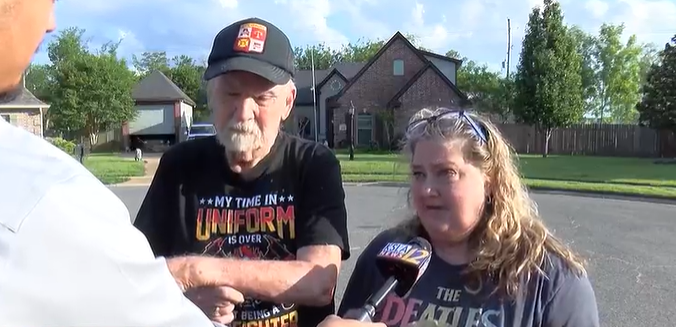
“I would never in a million years believe he would do anything like this to himself or anyone else,” Silva stated, her voice heavy with the burden of a history that no longer makes sense. Her perspective offers a chilling insight into the nature of modern tragedy: the fact that extreme violence often originates from individuals who appear, to the outside world, entirely unremarkable.
Silva’s recollections do not point to a history of outward aggression or sociopathic tendencies. Instead, she describes a man deeply invested in the traditional structures of family. According to Silva, Elkins was reeling from the prospect of a divorce—a dissolution of the life he had built and the future he envisioned for his children.
“He did not want to be divorced. He wanted to be married and raise his children. He did not want anyone else to raise his children. I know that,” Silva emphasized. This possessive, perhaps even obsessive, attachment to his role as a father and husband appears to have been the catalyst. When the agency over his own family unit began to slip away, the “instinct” to protect morphed into a delusional, terminal impulse to control.
The Text Message That Haunts a Lifetime
Perhaps the most tragic element of Silva’s testimony is the revelation of a missed connection. On April 10, just weeks before the massacre, Elkins reached out to Silva with a plea that, in hindsight, carries the weight of a final distress signal.
“Aunty Shell, I need to hear your voice. Give me a call.”
The message was simple, yet it vibrated with an unspoken urgency. Silva, caught in the flow of daily life, never returned the call. It is a detail that she now describes as one of the “biggest regrets” of her life.
This missed phone call serves as a haunting metaphor for the societal failure to intervene in mental health crises. We often look for “red flags” in the form of overt threats or criminal records, but the most significant warnings are frequently found in the quiet erosion of a person’s support system—the reaching out for a familiar voice when the internal darkness begins to close in. While Silva cannot be blamed for the actions of a grown man, her regret underscores a painful truth: we live in an age of hyper-connectivity where the most vital signals are often the easiest to ignore.
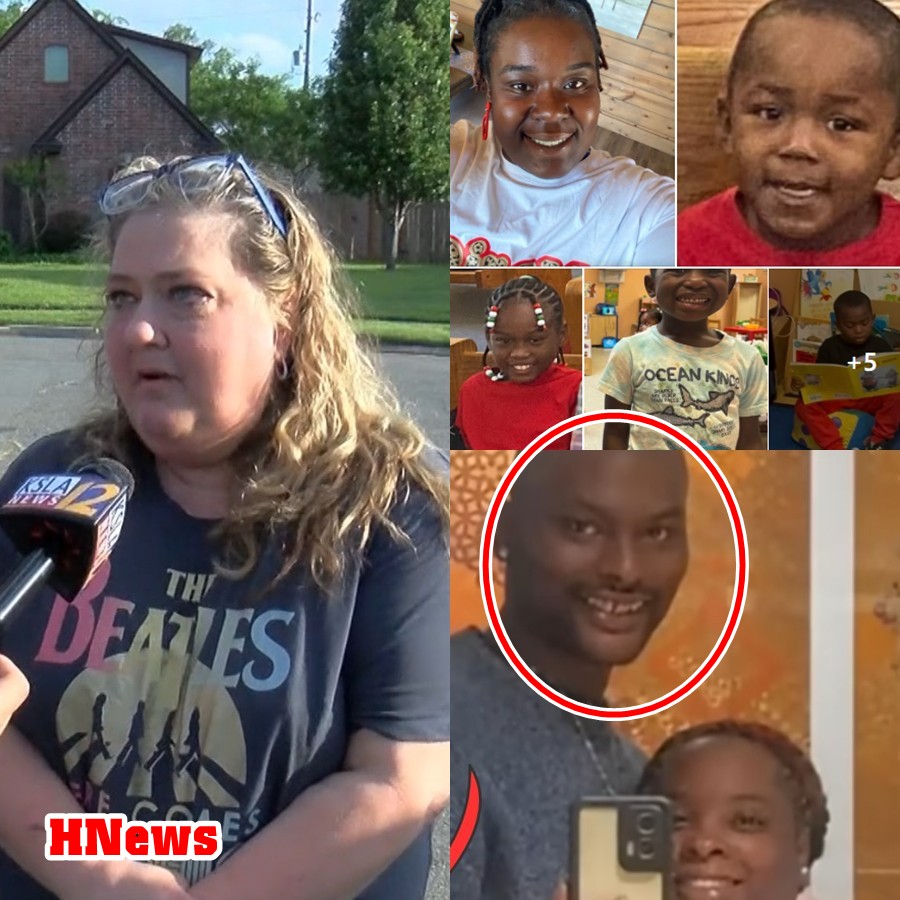
The High-Speed Descent into Chaos
The events following the shootings on West 79th Street read like a descent into madness. After the lives of eight children were extinguished and two women were left wounded, Elkins initiated a high-speed chase that crossed parish lines. The pursuit ended at the home of Michael Mayence in Bossier Parish. There, the violence reached its terminal point as Elkins died in a hail of gunfire during a confrontation with law enforcement.
The choice of destination—the home of Silva’s brother—adds another layer of complexity to the investigation. It suggests that even in his final moments of chaos, Elkins was gravitating toward the few remaining pillars of his social circle, albeit bringing the violence he had unleashed along with him.
The Legal Aftermath: Ignorance and the Law
While the primary focus remains on the loss of life, a secondary legal battle has emerged involving Michael Mayence. In the aftermath of the shooting and the chase, the U.S. Attorney’s Office charged Mayence with illegal possession of a firearm.
The charge stems from a domestic violence protection order that was active against Mayence at the time. Under federal law, individuals subject to such orders are strictly prohibited from possessing firearms. For Mayence, the irony is bitter: the protection order was set to expire in May, a mere few weeks after the tragedy occurred.
Michele Silva has stepped forward to defend her brother, calling the charges “unfair” and arguing that the law in question is not common knowledge. “It’s just startling that you would be punished for a law that people don’t already know,” she said.
This defense highlights a significant gap between legislative intent and public understanding. Federal firearms laws, particularly those intersecting with domestic violence, are designed to prevent the very type of escalation seen in Shreveport. However, if the public—and those directly affected by these orders—remains ignorant of the consequences, the law loses its preventative power and becomes purely punitive after the damage is done.
A Community in Search of Meaning
As Shreveport prepares to bury eight children, the city is left to ponder the intersection of personal failure and systemic gaps.
The tragedy of Shamar Elkins is not just a story of a “bad man” doing a “bad thing.” it is a narrative of a man who spent 25 years being “normal” until he wasn’t. It is the story of a father whose desire to raise his children became so warped by the fear of loss that he chose to end their lives rather than see them grow up in a world he could no longer control. It is the story of a woman haunted by a text message, and a brother caught in the gears of a legal system he didn’t fully comprehend.
The investigation will continue, the ballistics will be analyzed, and the legal proceedings will move forward. But for the survivors—the woman who escaped, the child who ran, and the neighbors who heard the shots—there are no easy answers.
The Shreveport massacre stands as a grim reminder that the most dangerous darkness is often the kind that hides in plain sight, nurtured by silence, fueled by the fear of abandonment, and ignored until it is far too late to turn back. As the white balloons float into the Louisiana sky, they carry with them the weight of a community that must now learn to live with the ghosts of what might have been, if only a phone call had been returned, or if the law had been understood, or if the “normal” man had found a way to let go.