With the gag order lifted, Austin Metcalf’s father called Karmelo Anthony a “Watermelon Felon” and defiantly spoke of revenge, vowing to “ki-ll Anthony and go to prison myself.”
The father of Austin Metcalf, who was fatally stabbed at a track meet by Karmelo Anthony, referred to his son’s killer as a ‘Watermelon Felon’ in a blistering tirade against him and his family.
Jeff Metcalf spoke to the JinxedSip podcast on Wednesday after a gag order forbidding either side from speaking out expired following the conclusion of the trial.
The case sparked fierce debate about the role of race in the justice system, with public discussion often focusing on the fact that Metcalf was white and Anthony is black
A third of the way through the three-hour-long episode, Jeff appeared to reference this discourse and used the racist term to describe Anthony.
‘Let me make one up, let me make something racist up so y’all can go viral,’ the father started.
‘I have a new name for Karmelo, because he was such this little boy y’all were trying to portray. How about “watermelon felon,” how’s that one strike you?
‘I hope he enjoyed that first night in that cell last night, because he’s going to have many nights to think about what the f**k he did.’
Jeff previously said he forgave his son’s killer, but said now that the ‘muzzle’s off’ he was going to make his feelings known.
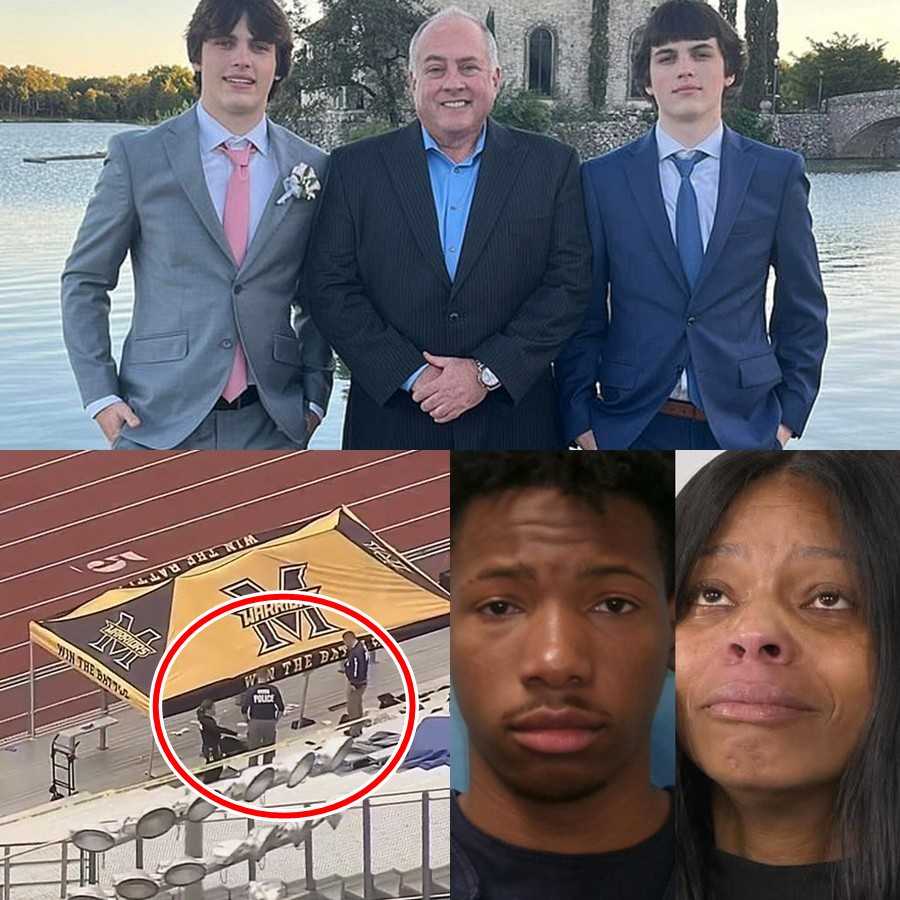
Metcalf was fatally stabbed at a track meet by Karmelo Anthony (pictured) in Frisco, Texas on in April last year
He had choice words for Anthony’s parents Drew and Kayla Anthony, who he branded ‘grifters’ and ‘cowards.’
‘You wouldn’t even show up for your son’s sentencing or [the] victim impact statement, you abandoned your kid, you left him there!’ Jeff said, while raising his voice.
‘I guess he’s no more use to you because he can’t get you more GoFundMe money or GiveSendGo money. You are grifters! You should be ashamed of yourself.
‘You never once took accountability. You tried to play victim. The real victim is the one who died, not the one who shoved a knife in his chest.’
Jeff’s son was stabbed to death by Anthony following a confrontation at a track meet on April 2 last year. Metcalf died in his twin brother’s arms in the Frisco, Texas stadium’s stands.
Anthony’s team claimed he was acting in self-defense and the racial element to the trial sparked fierce debate, prompting the judge to issue a gag order.
Jeff said being forced into silence during the trial was like being ‘tied to a chair and someone is slapping your face back and forth,’ but insisted he has forgiven Anthony.
‘Vengeance is mine,’ the father said. ‘I can speak freely now, because the gag order is lifted.
‘You have to let that stuff go or it will kill you, it will eat you up inside,’ he admitted. ‘So when people ask me: “How can you forgive him?” If I didn’t, I would have wound up killing him and ending up in prison myself.
Anthony stabbed Metcalf under the latter’s team tent at a track meet
He also accused Anthony’s parents of widening the ‘racial divide’ and teaching their children ‘racism.’
‘Do you program your kids to hate?’ he asked. ‘To kill?’
‘From day one, I said this was never about race. Please, don’t make it about race and don’t politicize it. And what did you do? You choose both. You have embarrassed your own culture and race.’
Jeff later said he was ‘racist against a**holes.’
‘I don’t like them, but I could care less about the color of your skin,’ he said.
‘Drew Anthony, you are a p***y and a coward and you raised one. Kayla, what did you do to that boy to make him stab somebody? My god, what kind of mother are you?’
Anthony’s family said ‘nobody wins’ after the jury rejected his self-defense claims and sentenced him to 35 years in prison on Tuesday.
‘It’s unfortunate, it’s where nobody wins. We’ve all been hurt by this. Everybody, everyone,’ Drew told CBS Mornings.
The murder case of 17-year-old student Austin Metcalf at a track and field meet in Frisco, Texas, was not merely a tragedy of school violence. Instead, it quickly turned into a “tinderbox” that ignited fierce national debates across the United States regarding racial bias and fairness in the justice system. The center of these relentless public discussions focused on an inescapable reality: Austin Metcalf, the fatally stabbed victim, was a white young man; meanwhile, Karmelo Anthony, the perpetrator who was recently sentenced to 35 years in prison, is a Black teenager.
The racial disparity between the offender and the victim pushed the case beyond the boundaries of a routine county criminal trial in Texas, transforming it into a symbol of deep social division.
From a Thunderstorm to a Bloody Tragedy on the Track Field
It all began around 10:00 AM on April 2, 2025, at David Kuykendall Stadium in Frisco, a rapidly growing city north of Dallas, Texas. That day, a regional high school championship track meet had to be temporarily suspended due to a sudden storm that brought heavy downpours. Chaos quickly ensued on the field as athletes and students scrambled to find shelter. While some remained on the field, many others ran into their respective team tents to escape the rain.
Karmelo Sincere Anthony, who was 17 at the time, was a student and a captain of both the track and football teams at Centennial High School. On that day, Centennial did not have a tent set up at the stadium. To seek refuge from the pouring rain, Anthony walked into a tent belonging to Memorial High School—his school’s direct rival.
Underneath the cramped tent, a heated confrontation erupted between young men who did not previously know one another. According to witness testimony presented in court, Hunter Metcalf—Austin Metcalf’s twin brother—asked Anthony to leave the Memorial team’s tent. Shortly thereafter, Austin Metcalf stepped forward and directly confronted Anthony. The tense argument quickly escalated into a physical altercation.
Student witnesses present under the tent at the time testified that Anthony was asked to leave up to 15 times during the roughly two-minute interaction. When the conflict reached its peak, Austin Metcalf used force to push Anthony. Instantly, Anthony reacted by pulling a serrated folding knife from his backpack and plunging it directly into Metcalf’s chest. Austin Metcalf collapsed and died shortly afterward in the arms of his twin brother, Hunter, just after being rushed to a local hospital. Anthony fled the scene but was quickly apprehended by police and charged with murder.
Two Opposing Perspectives in a Collin County Courtroom
The trial of Karmelo Anthony, which took place in early June 2026 in Collin County presided over by Judge John Roach Jr., exposed two completely contrasting narratives of what actually transpired during those fateful two minutes under the rain tent.
The prosecution, represented by District Attorney Bill Wirskye, built an argument that this was an intentional, provocative murder that was completely unjustified. Prosecutor Wirskye asserted that Anthony was the aggressor who actively instigated the physical confrontation. To demonstrate this to the jury, the prosecution cited witness testimony stating that during the argument, Anthony kept his hand secured inside his backpack, warned that he possessed a weapon, and issued a defiant challenge:
“Touch me and see what happens.”
Another witness also confirmed a similar threatening statement made by Anthony before the stabbing occurred:
“Touch me and find out.”
DA Wirskye argued that Anthony deliberately provoked Metcalf into touching him to manufacture a pretext for a “sneak, surprise attack” with the concealed knife. He also emphasized to the jury that the case was purely about criminal conduct, not self-defense or racial factors.
Conversely, defense attorney Mike Howard painted a completely different picture, focusing on the panicked state of mind of a teenager surrounded by a physically larger group of people. The defense highlighted the stark physical disparity between the two sides: while Austin Metcalf and his twin brother Hunter stood around 6-foot-1 and weighed over 210 pounds, Anthony stood at just 5-foot-8 and weighed less than 130 pounds. At the time of the incident, Anthony was seated and surrounded, overpowered by Metcalf and several other Memorial students standing over him.
Attorney Howard maintained that Anthony was merely reacting out of “fear and chaos” to protect himself against the opposing party’s physical force. In his closing defense argument, attorney Mike Howard emphasized:
“Austin Metcalf had no legal right to use force to eject Karmelo Anthony from that tent. He had the right to ask him to leave, but he didn’t have any legal right to use force.”
The defense attorney declared that because he was pushed first, Anthony “had an absolute right to self-defense” when he felt his personal safety was gravely threatened.
Despite committing the crime at age 17 (still a minor), Anthony was tried as an adult under Texas state law due to the exceptionally serious nature of the charges. Because of his age at the time of the offense, Anthony did not face the death penalty or life imprisonment without parole, but the sentencing guidelines for murder remained incredibly severe.
The Media War and Fiery Racial Controversy
From the moment Anthony was arrested in 2025, the case rapidly spiraled beyond the control of Frisco authorities, exploding into a national media phenomenon. Across social media platforms, viral posts spread at lightning speed, continuously zeroing in on the racial element: a Black teenager stabbing a white student to death.
The incident occurred against a backdrop of brewing racial tensions in Frisco, a city undergoing rapid urbanization. A wave of support for Karmelo Anthony quickly formed from communities of color and civil rights organizations. The non-profit organization Next Generation Action Network (NGAN) stepped in to support Anthony’s family while speaking out against death threats, harassment, and threats of violence targeted at the family’s home.
Anthony’s supporters sought to frame him as a victim of school bullying and discrimination, arguing that a group of white students from Memorial High School had profile-targeted and driven away a Black student seeking shelter from the rain. Online fundraising campaigns were established on the GiveSendGo platform to raise money for Anthony’s legal expenses. The tension escalated to the point where Jacob Wells, co-founder of GiveSendGo, compared the case to some of the most controversial trials in the US, such as those of Kyle Rittenhouse and Daniel Penny, demanding that Anthony be afforded “the same presumption of innocence as anyone else.” By May 2, the platform had to disable the comment section under Anthony’s donation page due to “an overwhelming influx of unacceptable racist and abusive comments.”
The chaos in the digital space was pushed to an extreme by a wave of misinformation. A fake account impersonating the Frisco Police Chief on X (formerly Twitter) disseminated fabricated information along with a forged autopsy report, amassing millions of views before the Frisco Police and the FBI intervened to investigate. Furthermore, even after Anthony was convicted, malicious rumors alleging that his family used the donated funds to purchase cars and a $900,000 home spread wildly, forcing the fact-checking site Snopes to debunk the claims and clarify that the family had not withdrawn any money from the fund.
On the other hand, supporters of the Metcalf family were deeply outraged that Austin was being labeled a bully. To them, Anthony’s action was a cold-blooded crime, a wildly disproportionate violent reaction to a standard physical shove. The case also caught the attention of right-wing groups and white nationalist factions, who deliberately exploited the death of a white youth to incite racial animosity, creating an incredibly tense atmosphere outside the Collin County courthouse throughout the week-long trial.
High Stakes in Court and Disputes Over Jury Composition
The racial controversy did not stop on social media; it directly bled into the legal proceedings, specifically during the jury selection phase that began on June 1, 2026. Out of nearly 600 individuals summoned for jury duty, following the screening process, the prosecution exercised its peremptory strikes to remove three Black women from the pool of potential jurors.
This action immediately drew a fierce objection from defense attorney Mike Howard. He raised a Batson challenge—a legal objection in the US that strictly prohibits the exclusion of jurors based on race. Attorney Howard argued that the three Black women who were struck possessed backgrounds and qualifications completely identical to a white female candidate whom the prosecution chose to keep. However, prosecutors countered that they excluded the three candidates based on entirely race-neutral reasons: all three were teachers currently instructing school-aged children, which could bias their perspective on a school-related incident. Judge John Roach Jr. ultimately sided with the prosecution and allowed the strikes to stand.
Consequently, on June 3, when the jury panel was officially empaneled (consisting of 12 main jurors and 6 alternates), not a single member was Black. Although there were some members of color from other ethnic backgrounds, the reality of an all-non-Black jury judging a Black defendant immediately sparked fierce skepticism from civil rights activists regarding the representation and fairness of the trial.
Following a brief but intense one-week trial, the jury took roughly three hours of deliberation to return a verdict finding Karmelo Anthony guilty of murder on Tuesday, June 9, 2026.
The Verdict, Tears, and Outbursts Outside the Courtroom
Immediately following the guilty verdict, the trial transitioned into the sentencing phase. Here, Anthony’s lawyers attempted to apply a mitigating provision under Texas law known as “sudden passion.” They argued that Anthony’s stabbing action arose from an immediate state of emotional agitation caused by the victim’s provocative and overwhelming behavior at the scene. If the jury accepted this argument, Anthony’s sentencing range could have dropped to under 20 years in prison. However, the jury unanimously rejected this argument, finding that Anthony’s anger did not stem from an adequate provocation that would cause a reasonable person to lose control.
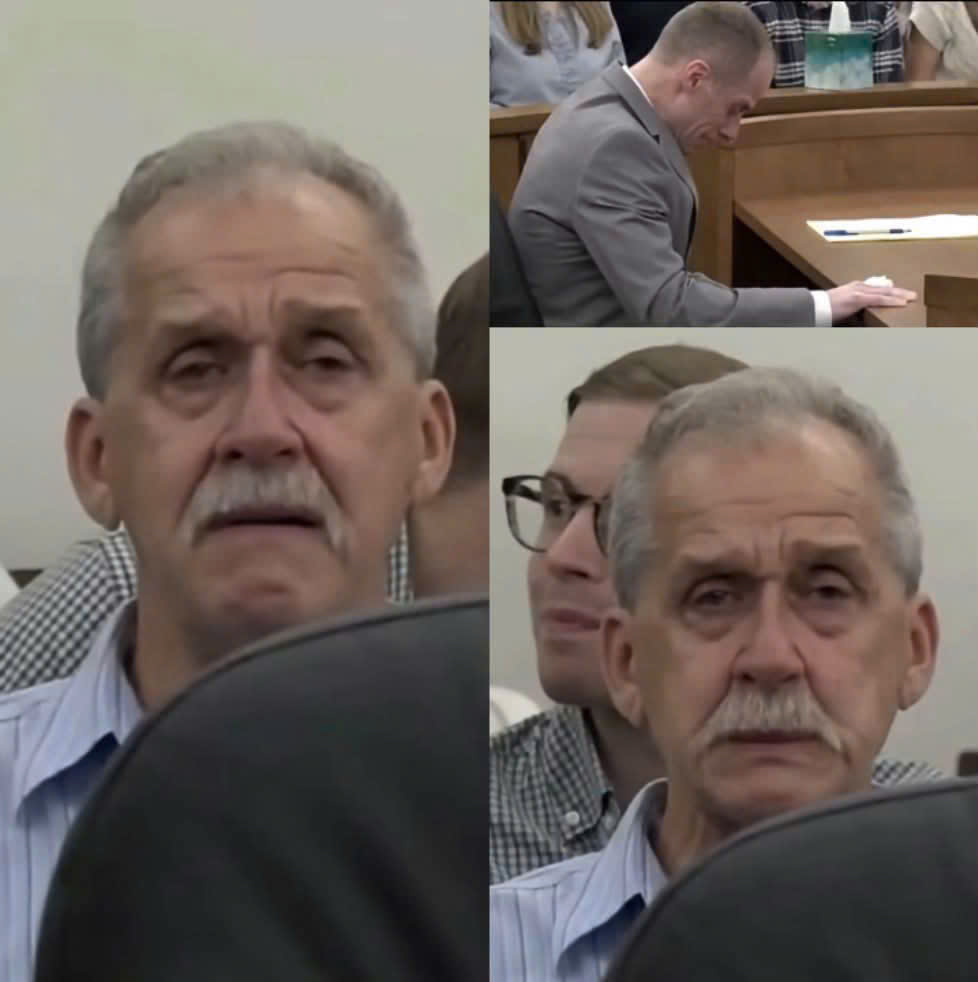
As Judge John Roach Jr. read the verdict sentencing Karmelo Anthony to 35 years in prison, the atmosphere inside the courtroom turned heavy. Hunter Metcalf, the victim’s twin brother, who was permitted into the courtroom for the first time (having been barred previously due to being on the witness list), silently leaned forward. On the other side, Anthony’s mother burst into tears. The defendant himself, Karmelo Anthony, collapsed in tears before being escorted away by Collin County Sheriff’s deputies. By law, Anthony will not be eligible for parole until he serves at least half of his sentence (amounting to 17.5 years).
The profound pain and division of the case were most vividly captured through the tearful and bitter impact statements delivered by the parents of both families during the court session. Mrs. Megan Metcalf, Austin’s mother, choked back tears as she addressed Anthony regarding the permanent grief of losing her child:
“Now I only have videos and memories of his laugh. You may have been given a sentence of 35 years. You should feel lucky. I’ve been sentenced to a lifetime without my son.”
Mr. Jeff Metcalf, Austin’s father—who had previously faced heavy public backlash for making highly offensive racially charged remarks about Anthony’s family in videos circulated online—also delivered a powerful statement to the court. He called the public reactions to his son’s death “sickening” and asserted:
“With a gag order, I can’t defend myself when people want to tear down my son’s memory. That time is over. I said from day one this was never about race. It’s about right and wrong. We are all humans. We all bleed the same color. You will face those consequences starting today.”
Meanwhile, on the defendant’s side, only Anthony’s mother took the stand during the sentencing phase. She offered a sincere apology to the victim’s family on behalf of her son and desperately pleaded with the jury for leniency.
Outside the courthouse, as soon as the verdict was announced, chaos and clashes erupted instantly between opposing protest groups. Anthony’s supporters gathered in large numbers to condemn the sentence, chanting slogans lambasting a justice system they perceived as deeply biased and discriminatory against Black people. Dwayne Turner, a 53-year-old Black man participating in the protest, expressed immense frustration and helplessness:
“How can they reach a verdict like this in a case like this? Americans have shown they don’t care about Black people.”
Mr. Turner added that the sentence made him feel like he had “lost faith in America.”
Conversely, those standing with the Metcalf family and conservative groups maintained that justice was served transparently and that no racial bias occurred inside the courtroom. They argued that Anthony’s punishment was entirely justified for unlawfully taking another person’s life without cause. Trey Snider, a local small business owner who had previously participated in a rally organized by a right-wing activist, shared his viewpoint:
“I knew he wasn’t going to walk free. Had he walked free, I would have said there’s no justice in that courtroom. But I’m not rejoicing in that kid going to jail. There’s nothing to celebrate here.”
The intense face-off between the two factions outside the courthouse led to heated physical altercations, forcing police to intervene and make at least two arrests to restore order.
A Lingering, Painful Aftermath and a Clouded Legal Future
The 35-year sentence has been handed down, but the controversies surrounding the case of Karmelo Anthony and Austin Metcalf will undoubtedly endure as a painful dilemma for American society. Texas State Representative Jared Patterson (R-Frisco), in an official statement following the trial, called Metcalf’s death “a senseless and heartbreaking tragedy” that changed the Frisco community forever, while expressing hope that the verdict would allow the victim’s family to begin the healing process.
However, for many legal analysts and civil rights advocates, the case stands as a prime example of the deep racial fractures embedded within the American justice system. Prominent commentators and cultural figures also weighed in on the debate. Renowned sports and cultural commentator Stephen A. Smith took a direct stance, stating that while he deeply empathizes and never wishes to see another young Black man sent to prison, the objective facts of the case did not allow him to excuse Anthony’s actions. He emphasized that racial debates must not obscure the reality that a 17-year-old life was unlawfully taken:
“I don’t give a d**n about what your race or ethnicity is. Just because you’re white and young doesn’t mean you deserve to be murdered. And just because you’re black and young doesn’t give you a license to murder someone. That’s what happened.”
In contrast, figures like former host Jemele Hill expressed deep sorrow and skepticism regarding the fairness of the justice system after watching Anthony get tried by a jury with zero Black representation, drawing parallels to other highly contested self-defense precedents in American legal history.
The legal battle is far from entirely over. Less than 24 hours after the jury delivered its verdict, on June 10, 2026, Karmelo Anthony’s defense team officially filed a notice of appeal in Collin County. According to Dallas-based appellate attorney David Coale, Anthony’s legal team possesses relatively compelling arguments for the appellate phase. This appeal will not focus on re-arguing the factual events that occurred under the track tent, but will instead hone in on procedural issues—specifically, jury selection and whether prosecutors violated the law by systematically excluding Black jurors from the panel.
The upcoming legal battle in the court of appeals will determine whether Anthony’s 35-year sentence stands. However, one thing remains certain: the emotional wounds of the Metcalf family, the Anthony family, and the profound racial divide within the community of Frisco, Texas, will take a very long time to heal.