TRAGEDY ON THE SKELETON BRIDGE: HORRIFIC NEGLIGENCE CLAIMS THE LIFE OF A 21-YEAR-OLD GIRL, SOUNDING THE ALARM ON ILLEGAL EXTREME SPORTS OPERATORS
Introduction: The Fateful Photo and the Jump of No Return
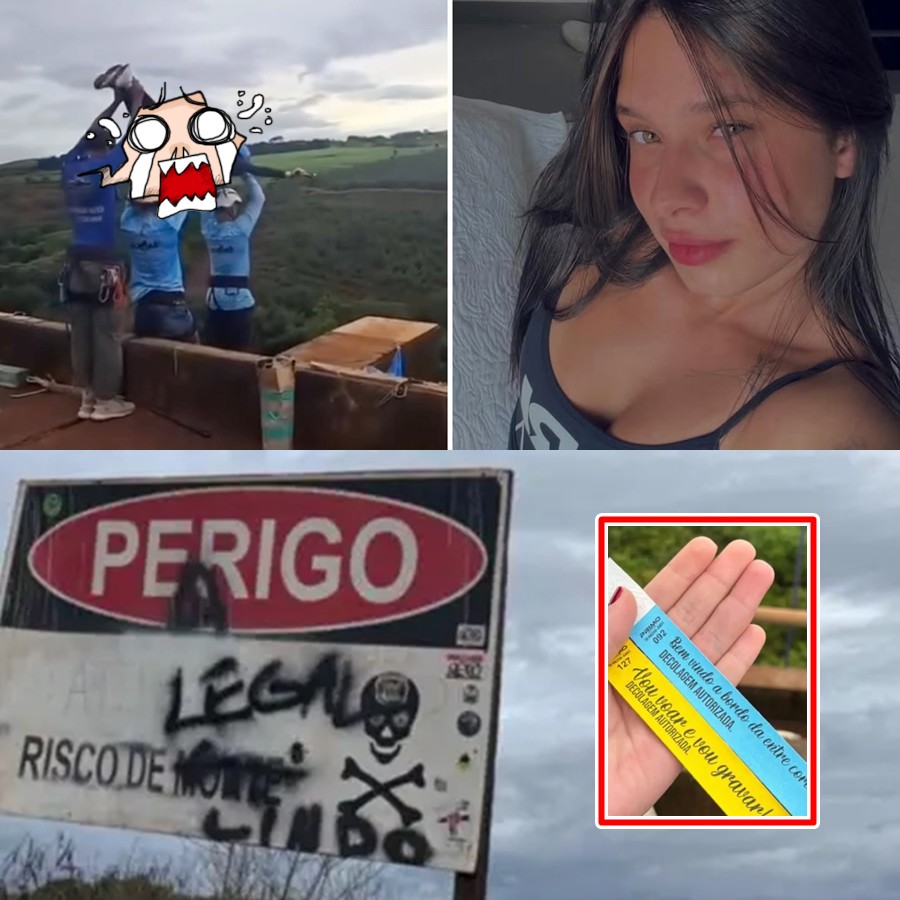
“What crazy person let me come here and jump off a bridge?” – This brief caption, accompanied by a photo of a check-in wristband posted on Instagram on the morning of Saturday, June 13, 2026, was initially just a lighthearted joke from a vibrant young woman. Filled with energy and a passion for exploration, Maria Eduarda Rodrigues de Freitas, a 21-year-old physical education and sports management graduate, could never have imagined those would be her final words to the world.
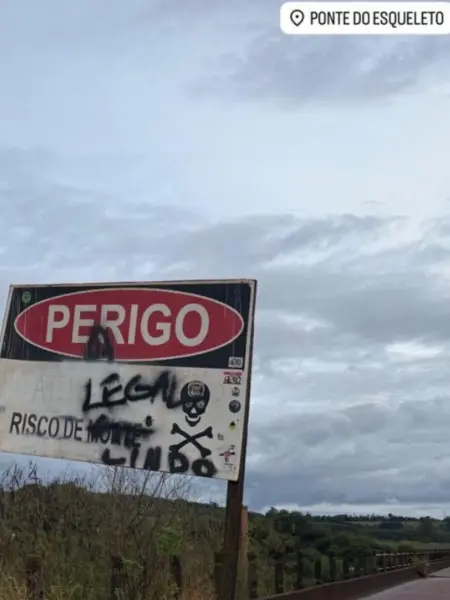
Just minutes after the photo was uploaded, a horrific tragedy unfolded at the Ponte do Esqueleto (Skeleton Bridge) in the municipality of Limeira, São Paulo, Brazil. A chilling video capturing the entire sequence of events soon spread like wildfire across the internet, leaving millions of viewers shuddering in disbelief at an unimaginable act of negligence. Maria Eduarda plunged 40 meters (approximately 130 feet) to her death—not because of a gear malfunction or a snapped rope, but due to a bitter reality: she was launched off the bridge without even being attached to the lifeline.
The Incident: A Fatal Mistake Driven by Utter Carelessness
On that fateful day, Maria Eduarda, alongside her fiancé and a group of friends, visited the Ponte do Esqueleto—an abandoned bridge renowned among Brazilian thrill-seekers—to participate in a “rope jump.” It is crucial to clarify that while international media initially reported this as a bungee jumping accident, the activity was actually rope jumping. Unlike bungee jumping, which uses highly elastic rubber cords to bounce the jumper vertically, rope jumping utilizes static or dynamic climbing ropes anchored to a fixed point. After a brief freefall, the jumper swings like a pendulum beneath the bridge or cliff.
According to witnesses and footage from the scene, Maria Eduarda was ecstatic about the jump. She specifically requested the instructors to let her experience a “Superman style” launch—an extreme technique where, instead of stepping off the ledge, the jumper is lifted horizontally by the staff and hurled forward into the air like an airplane.
The horrifying footage shows Maria wearing a full-body harness, complete with waist and thigh straps. Two male instructors wearing white helmets approached her, each holding one side of her arms and legs, lifting her up, and counting down. Maria placed her absolute trust in their professionalism. She relaxed her body, ready for the sensation of weightlessness.
“One, two, three!” – The two staff members forcefully threw Maria off the edge of the bridge.
But instead of a spectacular pendulum swing beneath the valley, the 21-year-old’s body plummeted vertically at a terrifying speed. The exact moment her body left the ledge, spectators standing behind froze in sheer terror. The primary lifeline—the very rope that should have been securely locked into Maria’s safety harness—was left coiled completely untouched on the concrete floor of the bridge, right behind the backs of the two instructors who had just thrown her off.
A gut-wrenching scream from a witness echoed in the video: “Guys, the rope! Look at the rope!”. But it was already too late. Maria Eduarda fell straight down into the rocky valley below from a height equivalent to a 13-story building. The sickening thud of the impact left everyone at the scene completely paralyzed.
A Grim Scene and the Grief of Those Left Behind
Immediately after the fall, chaos and panic engulfed the Ponte do Esqueleto. Maria’s fiancé, who just minutes prior had been eagerly waiting to cheer her on, collapsed on the spot upon witnessing the horrific sight. Other jumpers and event organizers scrambled down the steep valley in a desperate attempt to rescue her.
By the time they reached Maria, she lay motionless on the rocky terrain, having sustained fatal multiple trauma from the massive impact. Several individuals with medical knowledge desperately attempted cardiopulmonary resuscitation (CPR), while others frantically called emergency services. However, when firefighters and medical personnel from the Limeira municipality arrived at the scene with specialized retrieval gear, they could only pronounce the victim dead at the scene.
Maria’s fiancé fell into a state of severe psychological shock, weeping and screaming hysterically, to the point where medical staff had to administer sedatives and rush him to the nearest hospital for intensive care.
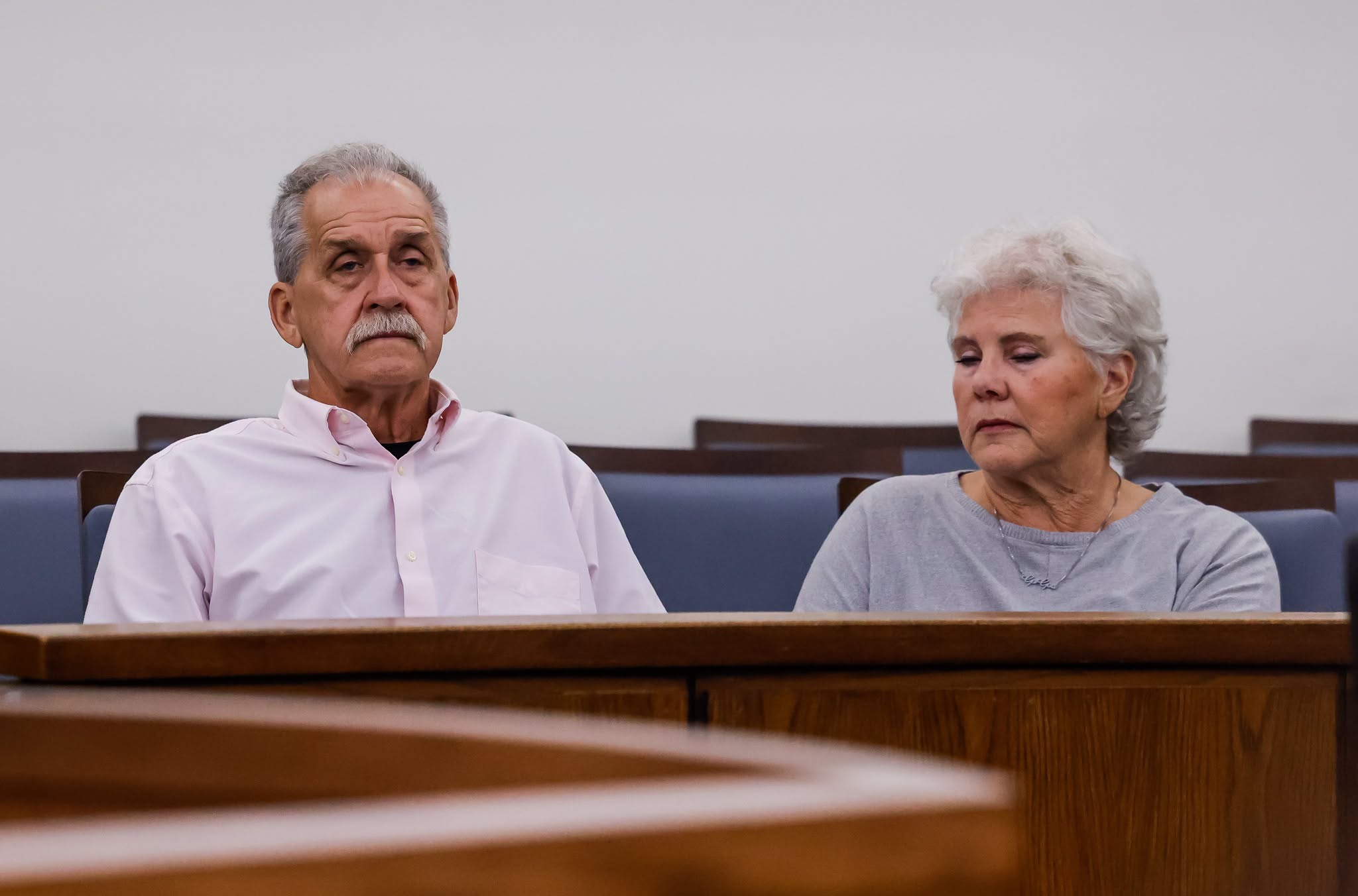
The sudden passing of a talented young woman, who had just completed her university degree and stood on the precipice of a bright future filled with aspirations, has left an unhealable wound in the hearts of her family and friends. Just a day after the accident, on Sunday, June 14, 2026, Maria Eduarda’s funeral was held amid the tears of hundreds of local residents and classmates from the sports academy.
The Police Investigation: Unmasking an Unlicensed Operator
Following the report of the accident, the Civil Police of São Paulo immediately cordoned off the area and launched a comprehensive investigation. The initial findings exposed an infuriating truth regarding the absolute lack of responsibility and negligence of the event organizer.
The company behind the extreme jumping excursion was named “Entre Cordas” (Between Ropes). On social media platforms, the company marketed itself as a highly professional agency specializing in extreme tours, climbing, and rope jumping, boasting the promising slogan: “You dream it, we make it happen.” However, it was all a facade.
Upon reviewing legal documentation, the police established that:
- The business was entirely illegal: “Entre Cordas” possessed no legal business registration or operating licenses from tourism or sports regulatory bodies. They also lacked authorization from the Limeira municipal government to host commercial extreme activities at the Ponte do Esqueleto—an abandoned structure already fraught with inherent safety hazards.
- A complete absence of basic safety protocols: The group’s operational workflow was incredibly reckless. In extreme sports like rope jumping or bungee jumping, the golden rule is “cross-checking”—meaning at least two independent technicians must verify every carabiner, knot, and harness on the participant before authorizing a jump. In Maria’s case, however, the two frontline staff members (who were dressed deceptively professionally) skipped the most fundamental step: clipping the rope to the jumper. They were so distracted or complacent that they casually threw a human life into an abyss without checking where the lifeline was.
Upon learning of Maria’s death and realizing the horrific footage had leaked online, the management of “Entre Cordas” immediately deactivated and deleted their website, Instagram, and Facebook accounts in a cowardly attempt to evade accountability and erase evidence.
However, justice moved swiftly. Police detained a total of six individuals at the scene for questioning. Based on the undeniable evidence from the video footage and eyewitness testimonies, prosecutors ordered the emergency arrest of three men (aged 27, 32, and 42)—including the two instructors who threw Maria and the primary coordinator of the event.
The charges faced by these individuals go far beyond standard involuntary manslaughter through negligence. The police decided to indict them on charges of “Murder with indirect intent” (Dolo eventual) under Brazilian criminal law. This severe legal framework applies when a person commits an act with such extreme negligence or recklessness that they are fully aware their actions could result in someone else’s death, yet they deliberately choose to ignore the risk. If convicted, these individuals could face harsh prison sentences ranging from 12 to 30 years.

A Wake-Up Call for the Global Extreme Tourism Industry
The tragic death of Maria Eduarda Rodrigues de Freitas is not an isolated incident, but it stands as one of the most gruesome demonstrations of the consequences of lax oversight in extreme sports. It leaves behind profound lessons for both participants and regulatory authorities:
1. The Peril of “Cheap Thrills” and Unauthorized Outfits
In recent years, the trend of filming extreme experiences to post on platforms like TikTok and Instagram has grown exponentially. Capitalizing on this craze, many individuals with rudimentary climbing knowledge have purchased gear, set up “adventure tour companies” on social media, and charged money from unsuspecting clients. They attract customers with cheap rates and visually stunning “Instagrammable” backdrops, but aggressively cut corners on safety systems, insurance, and proper staff training. Participants who entrust their lives to these entities are effectively playing a game of Russian Roulette with death.
2. The Vital Importance of the “Double-Check” Protocol
In aviation or international-standard extreme sports industries, no one is permitted to rely solely on an individual’s memory. Every preparatory step must strictly adhere to a rigorous checklist. For a heavy lifeline weighing dozens of kilograms to remain fully exposed on a bridge floor without being noticed by either instructor or the supervisor before pushing a client off is a total failure of protocol. It reveals that these employees either lacked any legitimate professional certification or operated in a state of extreme complacency, treating human life with absolute disregard.

3. The Responsibility of the Participant: Be a Smart Thrill-Seeker
Courage and a passion for exploration are admirable qualities in young people, but they must be accompanied by vigilance. Before participating in any life-threatening extreme sport, participants must actively demand that the operator present:
- A valid operating license issued by local authorities.
- Safety certificates for the equipment (ensuring ropes and harnesses are within their expiration dates).
- A specialized insurance policy tailored for extreme sports.
- Furthermore, participants should personally inspect the locking mechanisms on their own bodies and absolutely refuse to jump if they feel unsafe or notice signs of haste and carelessness from the operators.
Conclusion
The Ponte do Esqueleto has now been strictly cordoned off, its once-bustling weekend atmosphere replaced by a somber silence. A small memorial adorned with white roses and a picture of a smiling Maria Eduarda has been solemnly placed by friends along the edge of the bridge—the precise spot where she took her final, tragic plunge.
The death of Maria Eduarda was an entirely preventable tragedy, a painful scar inflicted by sheer human negligence. It is hoped that the passing of this 21-year-old girl will not be in vain. It must serve as a stark warning and an urgent wake-up call that compels authorities in Brazil and across the globe to tighten legal regulations and eradicate “underground” extreme tourism operators. No one else should ever have to lose their life so senselessly because they placed their trust in the wrong hands in the pursuit of adventure.