THE FINAL WITNESS SPEAKS OUT: 21-YEAR-OLD GIRL WAS STILL ALIVE AFTER THE 130-FOOT PLUMMET AND A WHISPER AT THE BOTTOM OF THE ROPE JUMP TRAGEDY CANYON
Introduction: A Plot Twist from a Medical Witness at the Scene
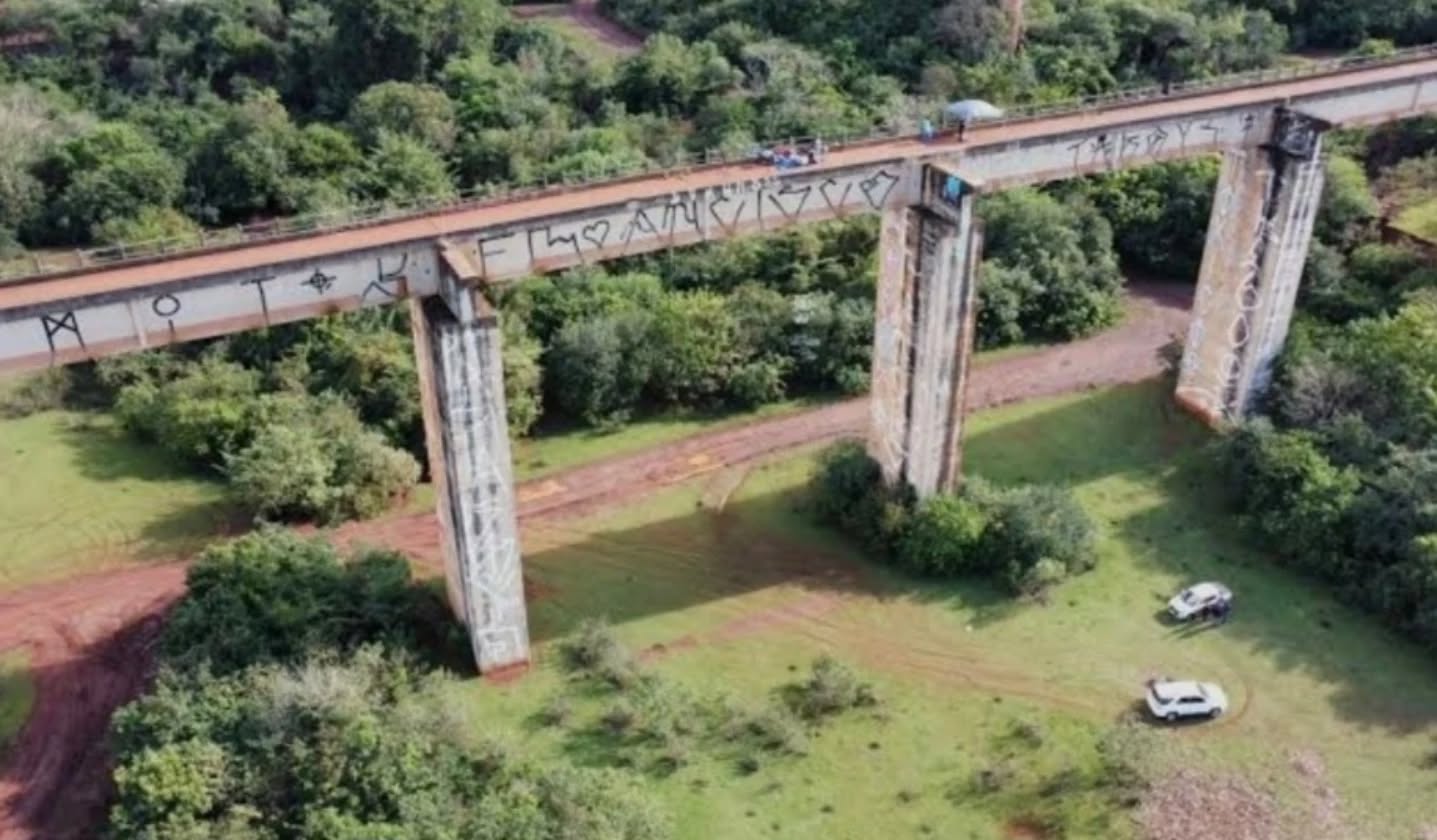
The dossier on the horrific extreme sports tragedy that claimed the life of Maria Eduarda Rodrigues de Freitas—the 21-year-old girl launched off the Ponte do Esqueleto (Skeleton Bridge) in Limeira, São Paulo, Brazil, without a safety cord—has just taken a shocking turn that is reverberating globally. Until now, based on the staggering height of 130 feet (approximately 40 meters) and the treacherous, rock-strewn terrain at the bottom of the ravine, both authorities and the public firmly believed that the victim had died instantly upon impact.
However, the tearful testimony of an off-duty nurse who happened to be at the scene, broadcast on the Brazilian national television network Domingo Espetacular, has completely shattered that assumption. Maria Eduarda did not pass away in an instant. She endured a suffocating, life-or-death struggle, fighting through agonizing pain at the bottom of the deep canyon, and was still breathing when the first rescuer reached her side. This newly revealed detail cuts like a knife into the already profound grief of her family, while simultaneously fueling public outrage over the gross negligence and delayed emergency response of the operating crew.
Part I: The Race into the Abyss and the Blood-Stained Hands of the Nurse
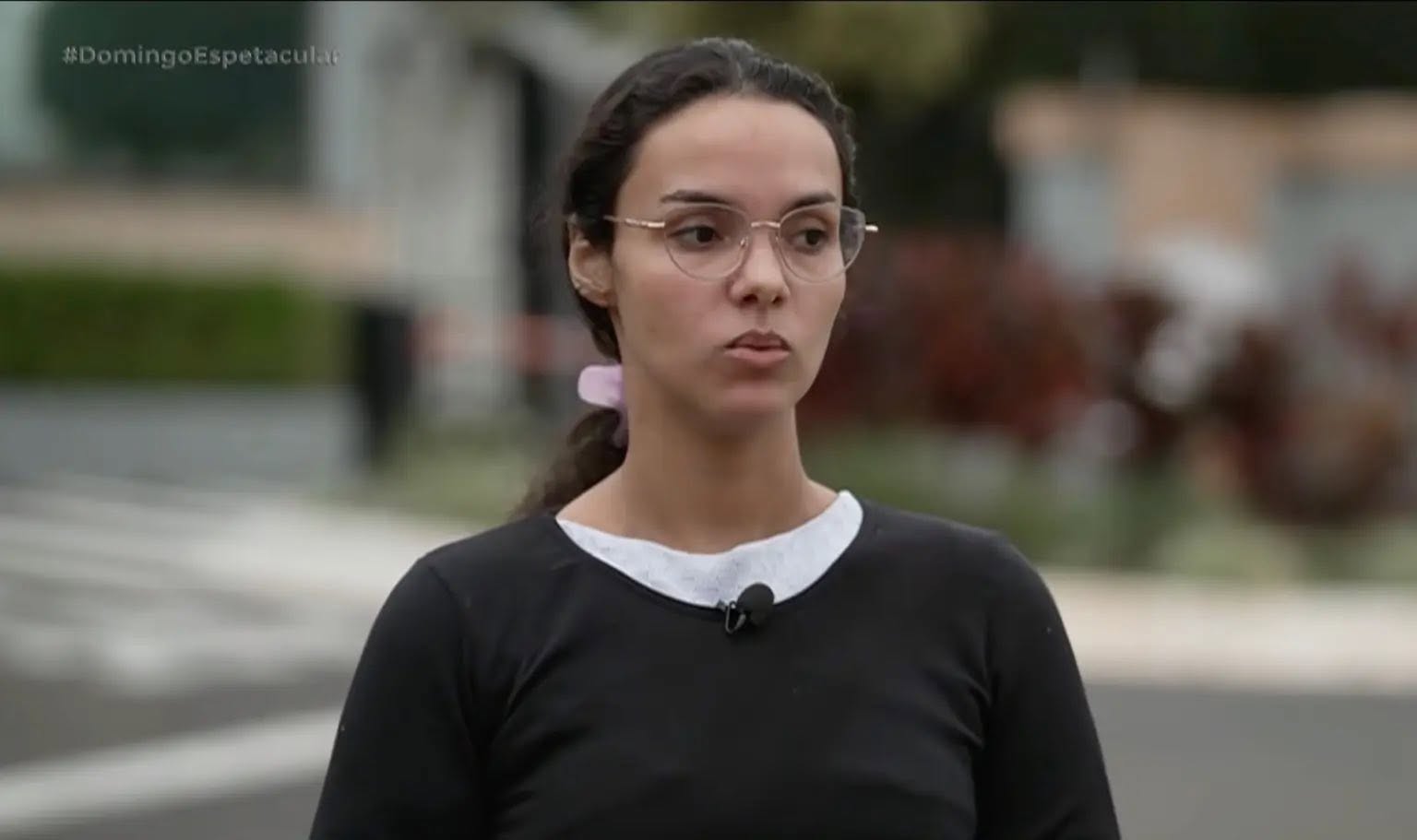
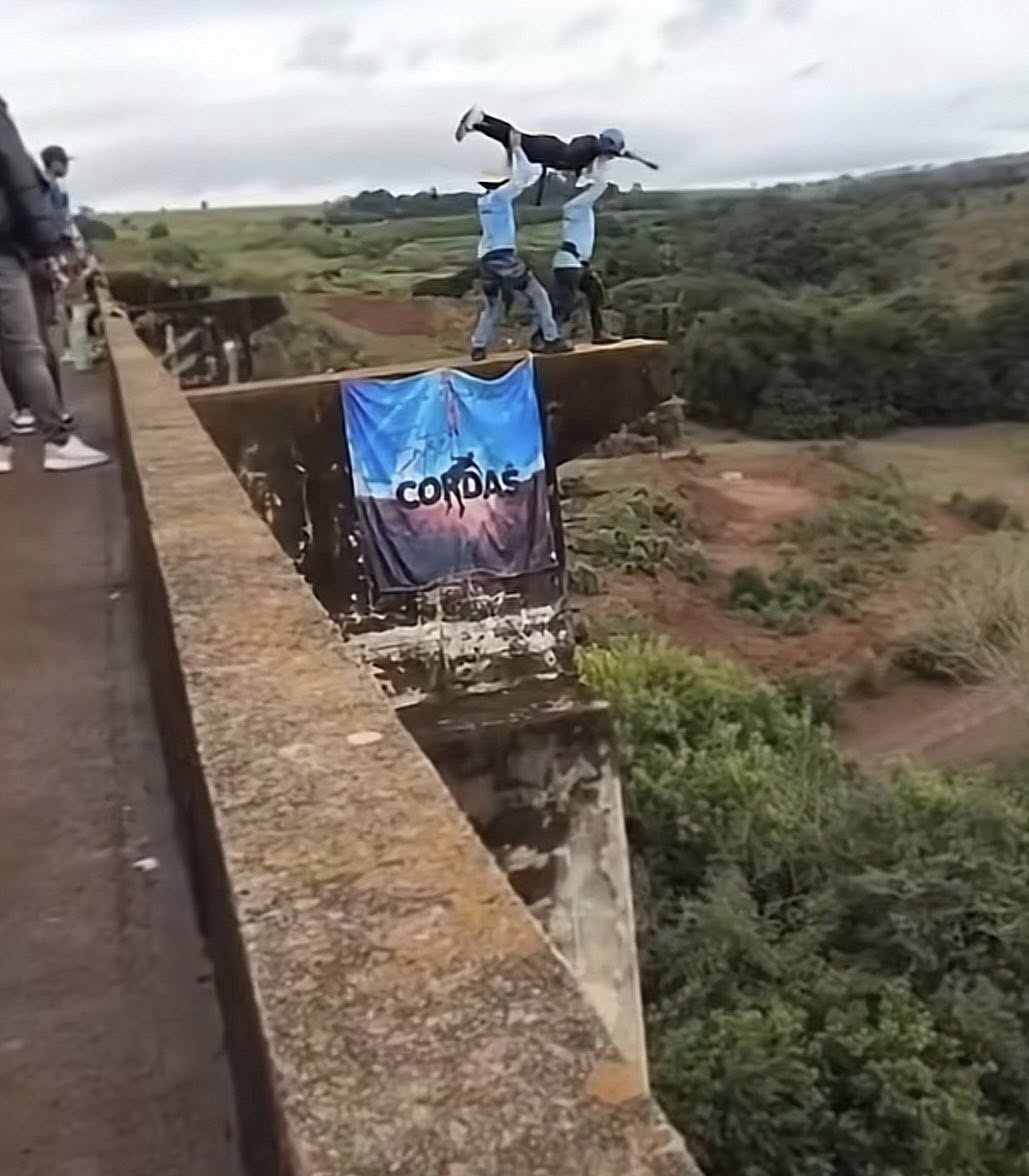
On that fateful Saturday morning, Rayza Dias—a professional nurse who was enjoying her day off—happened to be visiting the abandoned infrastructure of the Ponte do Esqueleto. When the disturbing video capturing the reckless staff members lifting Maria Eduarda horizontally and throwing her into the open void while the lifeline sat coiled on the platform went viral, utter chaos erupted among the crowd on the bridge. Yet, while three operators of the “Entre Cordas” outfit cowardly fled into the dense forest, nurse Rayza Dias made the exact opposite choice: she raced against time to salvage the victim’s life.
During an exclusive interview on Domingo Espetacular, Dias emotionally recalled her harrowing journey to reach the bottom of the canyon:
“It’s a steep slope down there, extremely dangerous. I scraped my whole hand because there’s a steep slope down there and only one rope for us to climb down. The path was completely covered in mud. But I couldn’t stop; I kept lowering my center of gravity, sliding down, and frantically walking and crawling through the brush to get down there as fast as possible.”
The immense bravery of this nurse stood in stark, glaring contrast to the cowardice of the perpetrators—who, just a few hours later, would face a tactical sweep by a military police helicopter while trying to hide deep in the woods.
Part II: A Tearful Whisper: “Duda, Nobody Dies on My Shift!”
As Rayza Dias navigated through the jagged boulders and finally reached the broken body of Maria Eduarda (affectionately known as Duda) lying motionless on the cold ground, a biological miracle unfolded: the 21-year-old girl still had a pulse and was breathing. The fall from a height equivalent to a 13-story building had catastrophic effects on Maria’s body, but the fierce will to live of a young physical education graduate was still burning like a dim ember.
Breaking into tears as she recounted that sacred yet agonizing moment, nurse Dias shared:
“I reached her and realized she was still alive. I even talked to her in an effort to keep her conscious. In the medical field, I have a habit, a personal motto I tell myself as a joke: ‘Nobody dies on my shift.’ And right then, I leaned in close to her ear and whispered, ‘Duda, nobody dies on my shift, hold on!’ Even though, in reality, I wasn’t on duty at all—I was just a passerby…”
The profoundly humane declaration from the nurse brought a flicker of ultimate hope, but fate proved too cruel for Maria. The massive internal trauma resulting from the extreme velocity impact slowly stripped away the young woman’s final breaths right in the arms of the kind-hearted nurse, long before professional rescue units equipped with spinal stretchers could extricate her from the rugged rocky ravine.
Part III: Legal Differentiation of Accountability – 3 Individuals Released, 3 Killers Prosecuted
The latest updates from the São Paulo State Civil Police have also clarified the legal accountability structure for the individuals involved. After detaining a total of six operators connected to this rogue, unlicensed extreme thrill venture, civil authorities subjected each individual’s testimony and role to a strict, rigorous screening process.

Consequently, three of the six individuals initially detained have been fully released from custody and will face no criminal charges. These individuals were staff members handling indirect, outer-layer tasks such as ticket collection, parking direction, or general logistics—personnel who held no technical authority or operational oversight on the launch deck itself.
Conversely, a strict preventative detention order remains active for the three primary suspects. These are the handlers who stood directly on the jumping platform, bore the explicit responsibility of securing the safety cords, and executed the physical launch of the victim off the bridge structure. Police investigators assert that throwing a human being into an open abyss without connecting the carabiner lock to the safety harness far exceeds ordinary negligence. With the new element proving the victim survived the initial impact and endured prolonged agony before passing away, the foundation of the charge of “Homicide with implied malice” (Dolo eventual) against these three individuals becomes indisputably solidified. They were fully aware of the extreme mortal risk but acted with a callous, calculated indifference toward their customer’s life.
Conclusion: The Ultimate Warning Against Rogue Extreme Thrill Operations
The homicide investigation at the “Skeleton Bridge” has entered a much fiercer phase. The testimony of nurse Rayza Dias not only honors the resilient, fighting nature of Maria Eduarda in her final moments of life but also stands as definitive evidence exposing the utter ruthlessness of an underground, black-market operation. If on-site emergency medical equipment had been available, or if the accident-response protocol had not been paralyzed by the cowardly flight of the operators, could the outcome have been different?
The passing of Maria Eduarda Rodrigues de Freitas leaves behind a void that can never be filled, but the newly uncovered details from this medical witness ensure that the three main perpetrators will have no room for manufactured excuses to evade justice in a Brazilian court of law. Rest in peace, Duda; the ultimate hand of justice will be served so that your soul may find eternal rest.