Alabama Hospital Parking Lot Shooting of Nurse: Heartbroken Husband Recounts Final Phone Call with Wife, Hearing Her Plead for Her Life Before Being Shot Dead by Killer
TUSCALOOSA, ALABAMA — What should have been a routine May 2026 evening at the DCH Regional Medical Center turned into the scene of one of the most shocking tragedies to hit the American healthcare community this year. Ada Chapman Doss, a 27-year-old nurse manager and mother of two young children, was brutally murdered in her workplace parking lot as she walked to her car after finishing her shift. She passed away while on the phone with her husband, who was left completely helpless, forced to listen to his wife’s final pleas for her life moments before the fatal gunshot rang out.
More than a month after the horrific event on May 12, 2026, the case has escalated far beyond a standard criminal prosecution of the perpetrator. It has sparked a wave of outrage across the healthcare community regarding workplace safety, while simultaneously igniting a web of complex civil lawsuits, with various parties trading blame in a tragedy marred by severe security oversights.
1. “Please don’t. I have babies”: Terrified Final Words Over the Phone
According to investigators from the Tuscaloosa Police Department, the incident occurred near the conclusion of shift changes on May 12, 2026, in the south parking lot designated for DCH employees.
Ada Doss, a dedicated and deeply respected nurse manager, had just finished providing patient care and packing her belongings to head home. In a routine familiar to any loving family, she pulled out her phone to call her husband, Andrew Doss. Over the line, the couple warmly chatted about dinner plans and coordinated their nightly routines for bathing and putting their two young daughters—aged 6 months and 2 years—to bed.
Tragically, that warm conversation was permanently shattered.
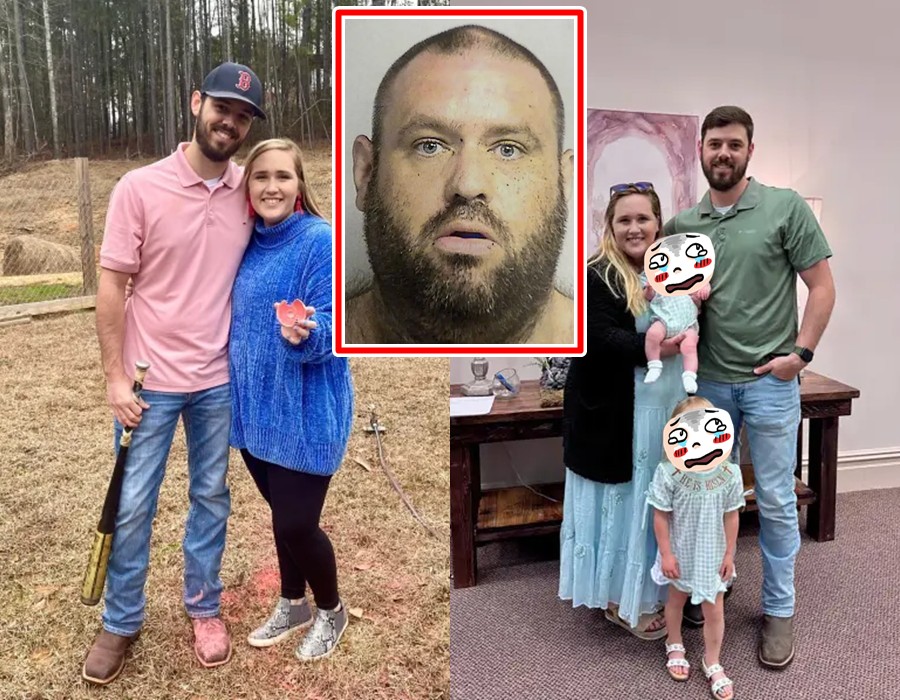
As Ada approached her vehicle, an aggressive stranger abruptly ambushed her. The man was identified as 41-year-old Matthew James Taylor. Brandishing a handgun, Taylor repeatedly screamed at Ada, demanding her purse and car keys.
On the other end of the line, a horrified Andrew Doss listened as the confrontation unfolded, hearing rushed footsteps and his wife’s escalating panic. Ada tried to quicken her pace to evade her stalker, but Taylor cornered her right by her car door. Staring down the barrel of the gun pointed directly at her, the young mother could only plead for her life:
“Please don’t. I have babies.”
Those were the final words Andrew would ever hear from his wife. A deafening gunshot echoed through the phone. Taylor pulled the trigger at close range, firing a single bullet into Ada that caused her to collapse instantly onto the pavement. The cold-blooded killer snatched her belongings and fled the scene, leaving the young nurse bleeding out while her husband screamed in absolute desperation on the other end of the line. Despite medical staff and ER physicians rushing to the parking lot within minutes, Ada Doss succumbed to her catastrophic injuries.
2. A Glaring Security Failure: The Perpetrator Loitered for Three Hours
Surveillance footage retrieved by DCH hospital security later exposed a chilling reality that has left the public furious: Ada Doss’s death was entirely preventable.
According to a prosecution report published by AL.com, Taylor was dropped off at the DCH campus by a friend or family member earlier that afternoon on May 12. Investigators explicitly determined, however, that Taylor never once stepped inside the physical building or the emergency room to seek or register for medical care.
Instead, he spent over three consecutive hours loitering completely unchecked throughout the parking lots and campus grounds. For hours, an individual exhibiting erratic behavior and carrying a concealed firearm roamed freely around a highly sensitive hospital area without ever being approached, questioned, or escorted off the property by security personnel.
This severe oversight allowed Taylor to target Ada Doss when she walked out to the parking lot alone during a quiet shift transition. Police later confirmed that Taylor and the victim had absolutely no prior relationship; it was a purely opportunistic, ruthlessly violent armed robbery.
3. Profile of the Suspect and Forcible Medication Orders in Jail
Matthew James Taylor was apprehended shortly after the attack thanks to eyewitness accounts and municipal traffic cameras. In early June 2026, a Tuscaloosa County Grand Jury officially indicted Taylor on charges of Capital Murder—the highest level of homicide under Alabama law, making him eligible for either the death penalty or life imprisonment without the possibility of parole. He also faces additional charges, including first-degree robbery and illegal possession of a firearm.
However, the legal proceedings against Taylor have run into major roadblocks due to the defendant’s severely unstable mental state. According to recent updates from county court dockets, Taylor has exhibited violent, paranoid behavior and has continuously refused to cooperate with jail staff and his defense counsel.
In response, a Tuscaloosa County judge issued a special order authorizing jail medical personnel to forcibly administer psychiatric medication to Taylor in an effort to stabilize his behavior. The court is currently finalizing arrangements to transfer Taylor to the Taylor Hardin Secure Medical Facility—a maximum-security state forensic psychiatric hospital—for a formal evaluation regarding his mental competency to stand trial. Subsequent hearings will determine whether Taylor is legally fit to face a jury.
4. A Multi-Faceted Legal Battle: The Blame Game Turns to Civil Court
The fallout of Ada Doss’s murder has extended well past the criminal justice system. It has expanded into a complex, highly unusual web of civil litigation in Alabama, featuring two completely conflicting legal actions brought against the DCH Health System.
The First Front: The Victim’s Family Sues Over Negligent Security
Devastated by the loss of his wife, Andrew Doss filed a civil wrongful death lawsuit on behalf of himself and their two young children against two entities: DCH Health Care and Universal Protection Services (the private security company contracted to safeguard the hospital campus).
The lawsuit alleges that both organizations committed gross negligence in failing to protect staff:
- They maintained a surveillance camera network but lacked the personnel to monitor feeds in real-time, failing to spot a suspicious individual loitering for three hours.
- Parking lot security patrols were severely understaffed and failed to fulfill their duty to protect healthcare workers coming off late-night or early-morning shifts.
- The hospital was well aware of historical security risks in the Tuscaloosa area but failed to implement high-intensity lighting or effective security checkpoints.
The Second Front: The Suspect’s Family Countersues for Refusal of Care
In a stunning twist that has captured national media attention, Amanda Taylor—the mother of the suspect, Matthew Taylor—has also filed a formal civil lawsuit against the DCH Regional Medical Center.
The suspect’s family offers a radically different narrative. They argue that on May 12, Matthew Taylor was experiencing a severe, acute psychiatric crisis and manic episode, exhibiting behaviors that rendered him a danger to himself and others. His family claims Taylor went to DCH specifically to seek emergency medical intervention at the ER. However, the lawsuit alleges that DCH medical staff and screening personnel “indifferently turned him away, failing to conduct a proper medical screening as mandated by the Emergency Medical Treatment and Labor Act (EMTALA).”
Amanda Taylor’s lawsuit states:
“The hospital’s negligent refusal to treat a man in the midst of a mental break pushed an unstable individual back into the streets, causing him to wander the parking lot in an agitated state, directly triggering this heartbreaking tragedy for the Doss family.”
5. DCH Hospital Fires Back Amid Broad Outcry Over Worker Safety
Faced with legal pressure from both sides, executive leadership at the DCH Health System broke their silence with an explicit statement strongly rejecting the claims brought by the suspect’s family.
A spokesperson for DCH stated:
“We have thoroughly reviewed our entire system logs, intake records, and employee statements from May 12, 2026. The defendant, Matthew Taylor, never set foot inside our emergency department or any of our facilities. He never registered as a patient, nor did he ever make any request for medical care or psychiatric evaluation at DCH that day. The allegations made by the defendant’s family are entirely baseless and represent an attempt to deflect blame away from a heinous crime.”
Regarding the wrongful death lawsuit filed by Andrew Doss, the hospital expressed its deepest condolences but declined further comment due to ongoing litigation. Nevertheless, DCH announced they are urgently working alongside leading national security consultants to overhaul their safety protocols. Newly implemented measures include introducing 24/7 armed security patrols across all employee parking lots, installing high-intensity lighting systems, and deploying on-demand security escorts for any staff member walking to their vehicles during late hours.
| Key Fact Summary: The Ada Doss Case (2026 Update) |
|---|
| Victim: Ada Chapman Doss (27, Nurse Manager at DCH, mother of two young children). |
| Suspect: Matthew James Taylor (41, indicted on Capital Murder charges). |
| Time & Location: May 12, 2026, at the South Parking Lot, DCH Regional Medical Center, Tuscaloosa, AL. |
| Motive: Armed robbery (theft of purse/car keys); no prior relationship between parties. |
| Current Legal Status: Suspect under court-ordered medication ahead of a psychiatric competency evaluation. |
| Civil Litigation: Husband is suing the hospital for negligent security; Suspect’s mother is countersuing the hospital for allegedly refusing psychiatric emergency care. |
The tragedy of Ada Doss has once again raised red flags regarding the epidemic of violence against healthcare workers in the United States. According to nursing advocacy groups like Nurse.org, hospital parking lots have long acted as dangerous “blind spots” where nurses—who are predominantly female—frequently walk out alone after exhausting shifts in the middle of the night, turning them into vulnerable targets for violent criminals.
The death of Ada Doss leaves behind immeasurable grief for a widowed husband and two toddlers who lost their mother. It serves as a stark, costly reminder: those who dedicate their lives to caring for and saving others must first be kept safe at the very places they work. The American healthcare community continues to call for stricter legislation mandating that all medical facilities elevate parking lot security standards to the highest degree so that tragedies like Ada Doss’s are never allowed to happen again.