My father remarried 5 years after my mother walked out; 12 years later, my mother returned wanting to rekindle their old flame—my father quickly agreed, but what about my stepmother now?
My father remarried 5 years after my mother walked out; 12 years later, my mother returned wanting to rekindle their old flame—my father quickly agreed, but what about my stepmother now?
The rain poured down as if it wanted to wash the entire city away. I stood by the window, watching the droplets streak down the glass, as blurred and hazy as the memories of my biological mother—whom I hadn’t seen since I turned ten. That night, twelve years ago, she left without a single word of goodbye, abandoning my father and me in a cold, hollow house in the middle of a financial storm. My father, once a successful businessman, had lost everything after a failed investment. With a cold look in her eyes, my mother left behind nothing but a scrap of paper: “I can’t live like this.” From that moment on, I stopped believing in promises of forever.
When I was fifteen, my father remarried. My stepmother, Sarah, stepped into our lives like a breath of fresh air. She didn’t try to replace my biological mother, nor did she force herself upon us. She simply cared for us quietly, cooked warm meals, and listened to me talk about my teenage dreams. Gradually, I began calling her “Mom” without any awkwardness. Thanks to Sarah’s encouragement, my father rose from the ashes and rebuilt his career. Now, with me at twenty-two, my father owns a small but stable company, and our home is no longer a place defined by sorrow.
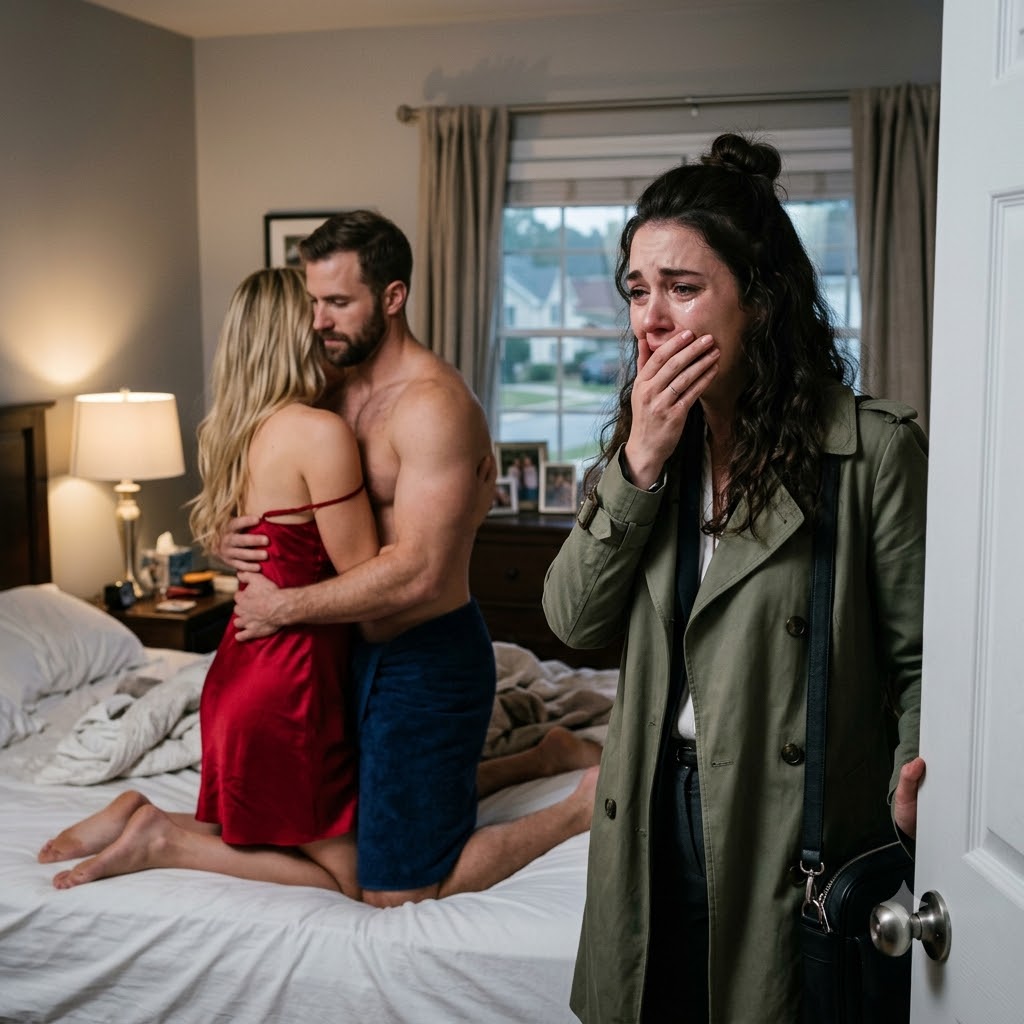
Tonight, the doorbell rang in the middle of the downpour. My father opened it, and I heard a voice that was both deeply familiar and distant: “Arthur, it’s me… Mary.” I froze, my heart pounding against my chest. My biological mother, the woman who had walked out twelve years ago, stood there drenched, a faint smile on her lips. She was still beautiful, but her eyes had lost the haughty pride of her youth. “Can I come in?” she asked, her voice trembling. My father looked at her, said nothing, and opened the door wide.
With a strange calmness, my father simply nodded. “Mary, it’s good that you’re back. But you need time, and so do we.” My mother nodded frantically, as if terrified he would kick her out. Sarah, my stepmother, quietly brought over an extra blanket and draped it over her shoulders. “You should stay here tonight, it’s freezing outside,” Sarah said gently, though I caught a flicker of wariness in her eyes. Over the next few days, my mother stayed at our house. She tried to get close to me, asking about my college classes and my friends, but every word she spoke only pushed me further away. I couldn’t forget the image of her leaving, abandoning me in an empty room with a torn doll.
Strangely, however, my father treated her with great warmth. He chatted with her often and even took her out to dinner once. Sarah, though still attentive and hospitable, began to grow quiet. I was consumed by anxiety, terrified that my father would be swayed by my mother and forget the years Sarah had faithfully stood by his side.
Then, one evening, everything changed. My mother called the whole family into the living room, announcing that she wanted to get back together with my father and “rebuild their home.” My father, maintaining that same calm demeanor, stood up and retrieved a thick legal folder from a drawer.
“Mary, you’re right. This is my family,” he said, placing the folder directly in front of her. “But there is something you need to know first.”
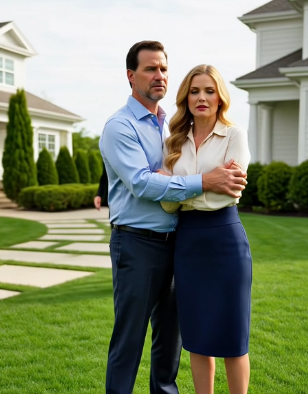
The living room fell into a dead, suffocating silence. The rhythmic patter of the rain outside seemed to amplify the tension bouncing off the walls. Mary looked down at the thick manila folder resting on the mahogany coffee table, her eyes blinking rapidly. She forced a light, nervous laugh, brushing a stray lock of her damp hair behind her ear.
“Arthur, honey, what is this?” she asked, her voice carrying an artificial, sweet pitch. “I thought we were talking about our future. About putting our family back together.”
Sarah sat perfectly still on the opposite armchair, her hands resting calmly in her lap. She didn’t look at the folder, nor did she look at Mary. Her eyes were fixed on my father, her expression a mix of quiet dignity and absolute trust. I stood by the hallway entrance, my heart hammering violently against my ribs, terrified of what my father was about to say.
Arthur sat down next to Sarah, his face an unreadable mask of absolute composure. He rested his hand over Sarah’s, his fingers intertwining with hers in a slow, deliberate gesture of solidarity.
“Open it, Mary,” my father said quietly.
Mary’s smile faltered. With trembling fingers, she flipped open the cover of the folder. As her eyes scanned the top document, the faint color left in her cheeks drained entirely. She gasped, her hand flying to her mouth as she rapidly turned the pages, her eyes widening with a mixture of panic and deep-seated horror.
It wasn’t a marriage certificate, nor was it a nostalgic scrapbook of their past. It was a comprehensive, forensic asset portfolio and a legally binding post-nuptial corporate restructuring agreement.
“This… this says that everything is in her name,” Mary stammered, her voice cracking as she pointed a manicured finger at Sarah. “The company, the real estate, the liquid assets… Arthur, your entire net worth is legally tied to her private corporation. You don’t own any of it.”
“Exactly,” my father replied, his voice dropping into a calm, resolute register. “Seven years ago, when Sarah and I married, I was a broken man drowning in debt. I had a ruined credit score, a mountain of collection notices, and a shattered spirit. Sarah didn’t just give me love, Mary; she invested her life savings into my vision. To protect her investment from my past creditors, we structured the new company under her name. Legally, I am merely a salaried employee and a minority consultant. I own exactly zero percent of this estate.”
Mary stared at him, utterly dumbfounded. The elegant, repentant woman who had spent the last week trying to win us over with soft words and maternal affection vanished in a split second. A cold, sharp light of desperation flared up in her eyes.
“But you took me out to dinner last week!” Mary argued fiercely, standing up, her voice losing its gentle facade. “You talked about the old days! You smiled at me! You told me you were glad I came back!”
“I took you to dinner to see if you had truly changed, Mary,” my father said, standing up smoothly to face her. “I wanted to know if you came back because you genuinely missed our daughter, or if you discovered through the grapevine that the man you abandoned in poverty had managed to become successful again. And tonight, by demanding that we ‘rebuild our home’ and casually assuming you could step back into the life I built, you gave me my answer.”
The True Ledger of Abandonment
I stepped fully into the living room, the crushing weight of anxiety that had plagued me for days completely evaporating, replaced by a profound sense of pride in my father. I looked at Mary—the woman who had left me with nothing but a torn doll and a broken heart twelve years ago.
“You thought you could just walk back in because the storm was over,” I said, my voice steady and clear, cutting through the heavy silence of the room.
Mary turned to look at me, her eyes pleading. “Lily, sweetie, no! I loved you. I always loved you. I just couldn’t handle the stress back then. I was young, I was terrified—”
“You weren’t terrified, Mom,” I said, using the title with a cold detachment that made her flinch. “You were selfish. When the bank accounts emptied out, you emptied yourself out of our lives. You didn’t leave because of the stress; you left because you didn’t want to do the hard work of building a life from scratch. You wanted a finished product, not a construction site.”
I walked over to Sarah and placed a hand on her shoulder. Sarah looked up at me, a soft, tearful smile breaking through her quiet reserve.
“Sarah was the one who stood by the construction site,” I continued, looking directly into Mary’s eyes. “She was the one who helped paint the walls of our small, rented apartment when we couldn’t afford a real house. She was the one who sat up with me when I had panic attacks about the future, and she was the one who celebrated every single small victory my father achieved. You didn’t build this home, Mary. You have no right to live in it.”
Mary looked back at my father, her hands balling into tight fists. “Arthur, you can’t do this to me. I am the mother of your child! We have a history!”
“Our history ended the moment you signed that scrap of paper and walked out into the rain twelve years ago,” my father said, his voice hard as iron. “I welcomed you into this house this week because I wanted to afford you the dignity of closure, and because I wanted Lily to see that the ghost she had been running from for twelve years was just a fragile, deeply flawed human being. But the show is over.”
He reached over, closed the manila folder, and picked it up from the table.
“Sarah and I have already arranged a comfortable hotel room for you downtown for the next three days, and we have paid for a one-way flight back to where you came from,” my father said, extending a set of keys and a boarding pass toward her. “We will not be reconciling, Mary. My past belongs to you, but my present, my wealth, and my future belong entirely to the woman who loved me when I had nothing.”
The Eviction of the Past
Mary stood frozen, looking at the boarding pass in my father’s hand. The realization of her absolute defeat finally settled over her features. The haughty pride of her youth was gone, replaced by the bitter, haggard reality of a gambler who had played her cards wrong and lost the entire board.
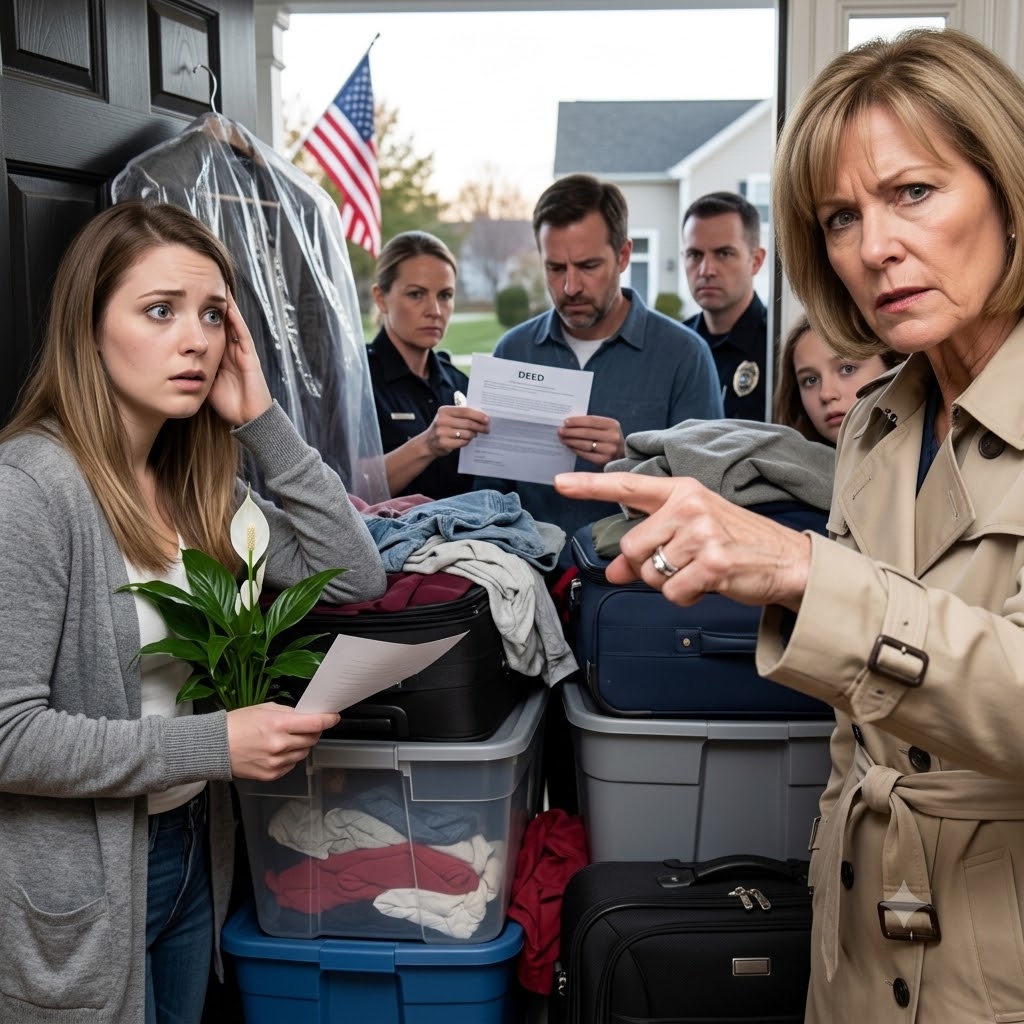
Without saying another word, she snatched the keys and the boarding pass from his hand. She didn’t look at me, she didn’t look at Sarah, and she didn’t say goodbye. She pulled her wet trench coat tightly around her shoulders, grabbed her single suitcase from the corner of the foyer, and walked out the front door, slamming it firmly behind her.
The heavy thud of the door resonated through the house, followed by the immediate, beautiful return of the quiet rain. The shadow that had hung over our family for twelve years had finally been cast out into the dark.
My father turned around, his shoulders dropping as the heavy posture of defense left his body. He fell to his knees in front of Sarah’s chair, burying his face in her lap.
“I’m so sorry, Sarah,” he whispered, his voice cracking with a vulnerability I had rarely seen in him. “I’m so sorry I had to play along with her for a few days to get the legal documentation and the proof of her intent finalized. I hated every single second of making you feel like you were being pushed aside.”
Sarah smiled, her tears finally overflowing as she ran her fingers through his silver hair. “I know, Arthur. I always knew. I never doubted you for a second. I just wanted you to be absolutely certain of your own heart before we closed that chapter for good.”
I walked over, kneeling down beside my father, throwing my arms around both of them. We sat there on the living room floor for a long time, the three of us, holding onto each other as the storm outside raged on. But inside our home, the air was warm, safe, and completely whole.
The Dawn of a True Home
Three months later, the spring sun broke beautifully through the suburban treeline, casting a bright, golden glow over our backyard garden. The gray, suffocating storms of the winter were completely gone, replaced by the vibrant green of new blossoms and the clear, blue expanse of a fresh season.
We were hosting a small backyard barbecue to celebrate my college graduation. Friends, neighbors, and colleagues from my father’s small company milled about the patio, their laughter and chatter filling the afternoon air with a genuine, effortless joy.
I stood by the screen door, holding a glass of iced tea, watching my father stand by the grill. He wore a simple apron, a bright, unburdened smile on his face as he laughed at a joke made by one of his foreman. He looked younger, lighter, and completely free from the ghosts of his past.
Sarah was standing next to him, handing him a platter of fresh vegetables she had grown in her own garden. As their fingers brushed, my father paused, looked down at her, and kissed her gently on the forehead. It wasn’t a grand, theatrical gesture for an audience; it was the quiet, habitual devotion of two people who had weathered the absolute worst of life together and emerged victorious on the other side.
I looked down at my wrist, where a small, elegant silver bracelet sat—a graduation gift from Sarah. Engraved on the inside was a simple phrase: The storm passes, but the roots remain.
I realized then that family isn’t defined by the blood that abandons you when the ground gives way. Family is defined by the hands that reach down into the mud to help you rebuild your foundation. Mary had given me life, but Sarah had given me a home. She had given my father a purpose, and she had taught us that true security doesn’t come from a booming bank account or a high-society pedigree—it comes from the fierce, unwavering loyalty of the people who choose to stand by you in the dark.
I walked out onto the sun-drenched patio, the warm breeze ruffling my hair, and joined my parents in the light. The door to the past was locked, the keys were gone, and for the first time in my twenty-two years, I knew exactly what a real family looked like.