Shock and Anguish in Hamden After 16 Feral Children Rescued
Residents of Hamden are reeling and agonizing over how no one discovered sooner that a group of children had been abused for years right in their own village.
The Ohio State Highway Patrol announced on July 1 that they had rescued 16 children, ranging in age from 18 months to 18 years, from a house filled with trash and waste in the village of Hamden, where they were believed to have lived in total isolation from society for years under horrific conditions.
Following an investigation, police transported seven children to the hospital, two of whom had to be airlifted to trauma centers in the state capital of Columbus. One child was reportedly in critical condition, but local officials have not yet provided an update.
The incident has shocked the public, not only because of what authorities discovered inside the home, but also because of a heartbreaking question that haunts both the local community and the nation: how 16 children could be imprisoned and vanish from daily life for years without anyone in the village noticing.
Neighbors and investigators at the scene have also been unable to fully explain this question. The children did not attend school, almost never appeared in daily life, and were believed to have been kept in a small room for most of the time.
“It happened right under our noses, yet none of us knew so we could help those kids sooner,” said Emily Collins, 27, owner of a flower shop in the nearby town of McArthur.
As a mother of three, Collins said she was heartbroken to learn that such a horrific event occurred in her community, which residents have always taken pride in for being tight-knit and peaceful.
“It’s unbelievable. Our small town has so many good things, but now people will only know this place because of that case. It breaks my heart,” Collins said as she used chalk to draw flowers and stars in front of her shop to prepare for the 4th of July, as a way to cope with the shock.
The village of Hamden has a population of fewer than 1,000 and is located about 60 miles (97 km) southeast of the state capital, Columbus. The house where police rescued the children is situated on a low-traffic road, right next to a railroad embankment, separated from the nearest neighbors by trees and thick brush.

Inside the “House of Horrors”
The house spans about 1,335 square feet ($124 \text{ m}^2$), consisting of five rooms and one bathroom, along with a basement of nearly 516 square feet ($48 \text{ m}^2$). A total of 20 people were believed to have lived there, including 16 children and 4 adults. Children’s toys were seen scattered amidst piles of cluttered belongings.
Ohio Attorney General Andy Wilson stated that investigators had to wear masks when entering the scene. Inside, piles of trash were stacked so high that they could not access the entire house.
“This case continues to reveal the unimaginable living conditions these children were subjected to. I said yesterday that this scene was the embodiment of evil, and the evidence obtained since then only solidifies that opinion,” he said.
Joseph Stewart, 60, who lives just three houses away from the scene, said he had never seen any children there in the past six years. Josh O’Dell, another resident, said the house “looked abandoned” and that he had never seen children playing in the yard either.
On July 2, all windows and doors of the house were boarded up with plywood. Police crime scene tape remained in place, along with piles of trash stacked high around the property. The wooden back deck was piled with old tires, high chairs, and various other scrap metal.

Slipping Through the Cracks
Police arrived at the house to execute a search warrant in a separate domestic violence investigation, not because they received a tip about 16 children being locked up in such deplorable living conditions.
The Vinton County Local School District had no enrollment records for any children associated with this house. Authorities believe the family moved multiple times over the span of about two decades, avoiding the creation of medical histories or government paperwork. “They were very good at hiding the children,” Attorney General Wilson said.
According to Vinton County Sheriff Ryan Cain, many of the children could only communicate in a very limited capacity, and some were completely non-verbal. Prosecutor William Archer stated that the oldest child had a developmental disability and could not even spell their own name. Attorney General Wilson described the children upon rescue as “almost feral.”
The four adults in the family—Gary Siders Jr., Elizabeth Siders, Gary Siders Sr., and Christina Siders—were arrested on charges of endangering children. All pleaded not guilty and bond was set at $300,000 each.
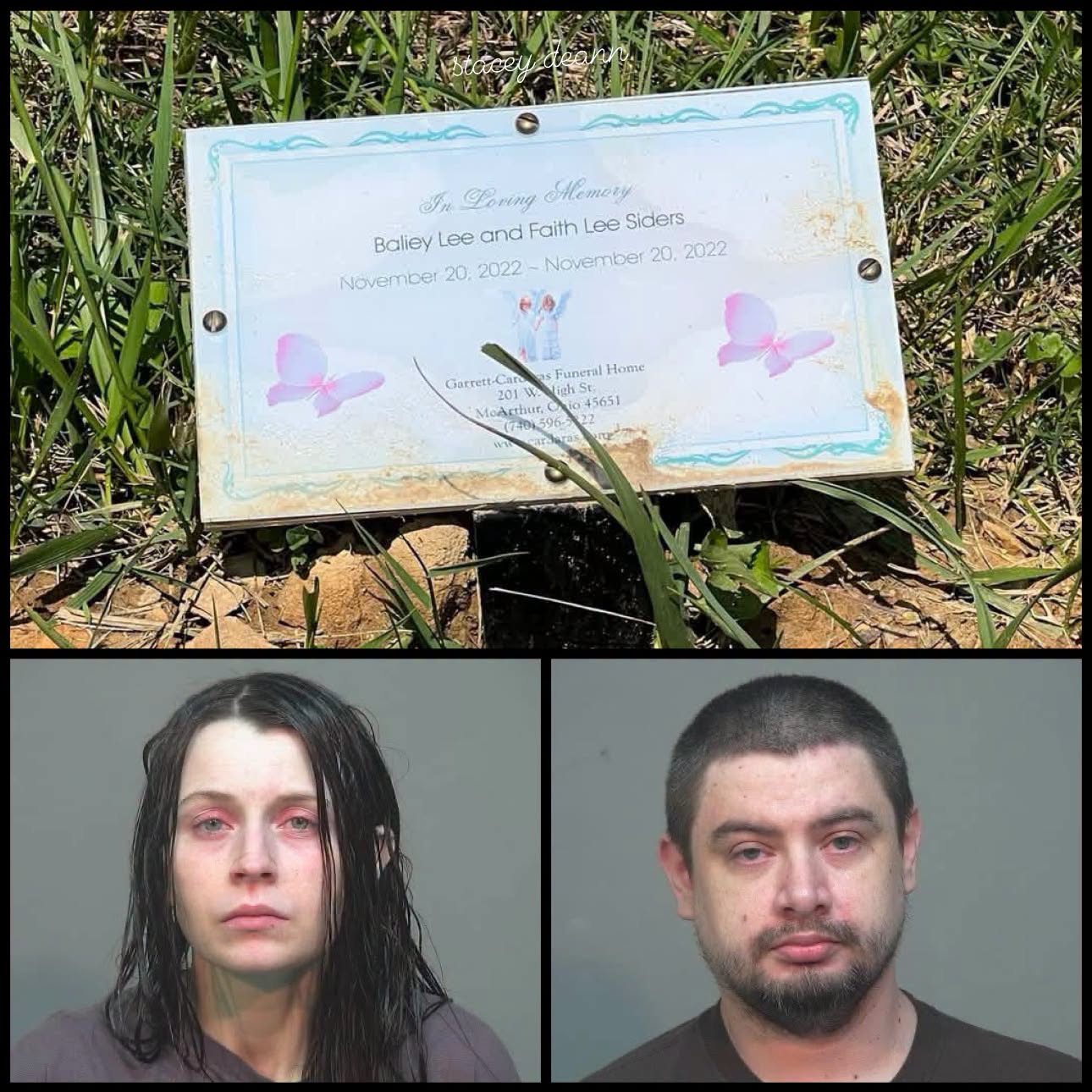
Defense attorney Thomas Stolly stated that Elizabeth is the mother of all 16 children. She married at age 15, dropped out of school after the 11th grade, and her husband worked as a food delivery driver. The suspect claimed that all 16 children were born at local hospitals, though it remains unclear whether they received routine checkups after birth.
Stolly said his client was “crying and exhausted” when he met her in jail. Elizabeth’s first question was not when she would be released, but whether her children were safe, where they were, and when she could see them again.
The prosecutor’s office has not yet provided evidence to Stolly, so he believes it is too early to agree with Attorney General Wilson’s description of what happened in the house as “extreme cruelty.”
Jacqueline Yahn, an associate professor at Ohio University who studies rural education and poverty, suggested that because the children did not attend school and had virtually no contact with the healthcare system, any red flags were missed.
“When children are isolated and not participating in social activities, it’s not easy to notice warning signs. Routine health checks exist for a reason, as they help track the growth and well-being of children,” she said.