Shadows of the Horn Island Tragedy: When “Privilege” and Racial Bias are Left Between the Lines of Life and Death
The tragic death of 18-year-old football star Nolan Xavier Wells on a remote island off the Mississippi coast was no ordinary drowning. It has exposed a brutal reality about racial division, “white privilege,” and a toxic brand of friendship where the life of the only young Black man in the group was treated with an updated degree of disregard that has sparked widespread outrage.
A Divided Vessel: A Single Black Face in a “White Sea”
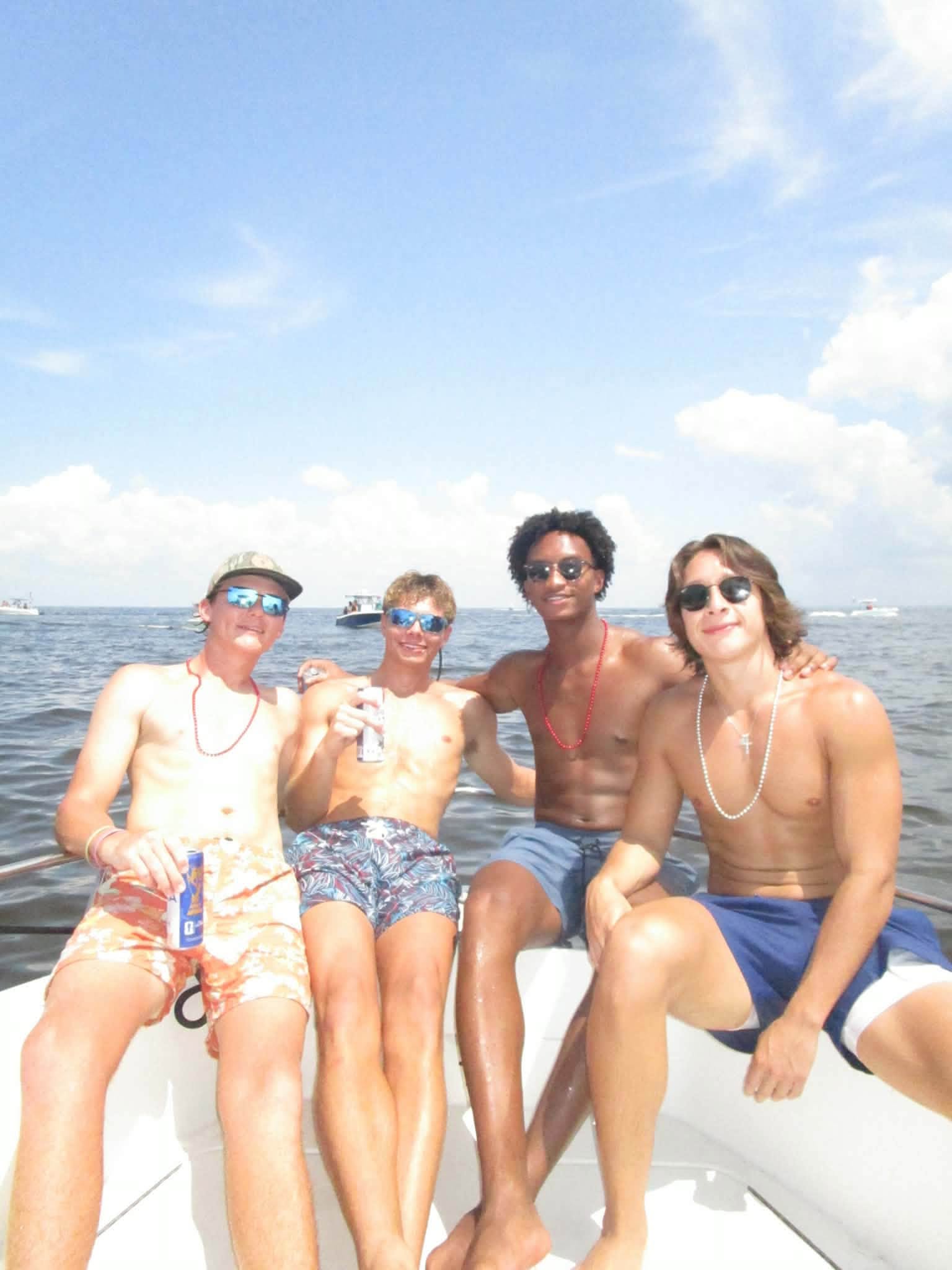
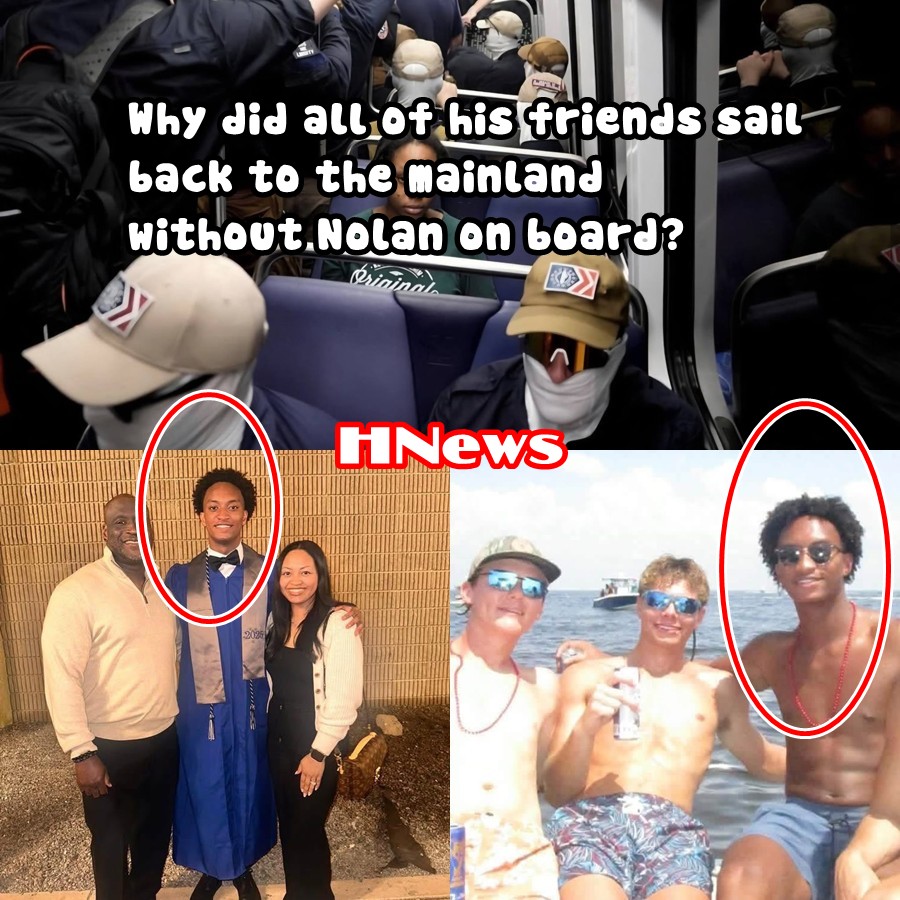
To understand the fury that has erupted across the United States in recent days, one must look directly at the social fabric and background of that fateful July 4th trip. Nolan Xavier Wells was a gifted athlete, a highly anticipated freshman wide receiver for the Southwest Mississippi Community College football team. He possessed a radiant future, yet on the excursion to Horn Island to celebrate Independence Day, he was the sole Black youth boarding a boat with an otherwise all-white group of peers.
In Southern states like Mississippi, holiday boat parties have long been viewed as a cultural space overwhelmingly dominated by middle- to upper-class white youth. The presence of a young Black man in such a circle often comes with two implicit assumptions: either he is a “sports star” welcomed for his status, or he is a peripheral figure trying to navigate a social circle to which he does not truly belong.
The fact that Nolan was the only person of color on that boat is seen by many social justice advocates and African American community members as a flashing red light, rather than a mere coincidence of casual friendship. When an individual from a minority group places themselves in a space where everyone else belongs to a privileged majority, their margin of safety shrinks. Amid an island packed with thousands of partying white youths, Nolan became uniquely vulnerable—and bitterly, the very individuals who shared the responsibility of having his back were the first to turn away.
“They Assumed He Found a Way Home”: Carelessness or Privileged Apathy?
The most agonizing and haunting question in this entire case remains: How could a group of white teenagers comfortably pack up their gear, start the engine, and sail away knowing full well a member of their party was missing from the boat? The explanation offered by his friends—that they “assumed” Nolan had found another vessel to hitch a ride back to the mainland—is not just an irresponsible cop-out; it reflects a deeply ingrained mindset: privileged apathy.
In social psychology, “white privilege” manifests not just as navigating life with fewer systemic hurdles, but as the inherent luxury of assuming safety—the default belief that the world is naturally designed to protect you. The white youth on that boat could easily depart because they believed that if they were left behind, they could effortlessly secure help from any of the other white-owned boats nearby. They projected their own secure worldview onto Nolan, forgetting—or choosing to ignore—a stark truth: an 18-year-old Black teenager left stranded alone on a barrier island at night, without a phone or family, faces levels of prejudice and danger vastly higher than they ever would.
“If Nolan were a white teenager and the friends he was with were Black, would they have dared to start the engine and leave him behind? Would the media and police have remained silent this long?” — This question has populated discussion forums at a staggering frequency.
Departing the island short-handed was more than gross negligence; it was a betrayal of the fundamental tenets of friendship and basic human decency. On any maritime excursion, counting heads before weighing anchor is a golden rule of survival. That they bypassed this step so casually exposes Nolan’s actual standing in that social circle: he may have been a teammate on the field or a friend to “diversify” holiday photos, but once the party ended and personal security took priority, he instantly became expendable.
A Abandoned Phone and a Haunting Silence
Suspicion surrounding the group’s motives escalated dramatically when Nolan’s cell phone was discovered isolated on the island by a stranger, rather than being kept or searched for by his friends. For today’s youth, a smartphone is an inseparable lifeline. Anyone preparing to leave an island on an alternate vessel would certainly not leave their phone sitting in the sand.
Nolan’s friends knew he lacked his phone and was unreachable, yet they chose silence and went home. Furthermore, upon returning to the mainland late on July 4th, the group made no proactive effort to contact Nolan’s family to inform them their son had been left behind. The alarm was raised and the search only commenced when Nolan’s mother, Christine Wonsley, recognized the anomaly and sought answers herself.
The silence and indifference of the white youths after returning to shore present massive legal and moral question marks. Did an altercation occur on the island? Was Nolan isolated before he disappeared? The narrative that Nolan was last seen “talking to a girl” could very well be a convenient script designed to redirect public scrutiny, reframing the friends’ abandonment as a “voluntary stay for romance” by the victim.
Double Standards in the Eyes of Justice and Media
The case of Nolan Xavier Wells once again highlights systemic racial disparities in Mississippi—a state with a profoundly deep history of racial division. Onlookers quickly pointed out the asymmetry in how authorities and mainstream media approached the case during the critical initial 24 hours.
When a young Black man goes missing under the watch of a white peer group, the initial societal reflex often leans toward normalizing the disappearance: “He’s probably just partying,” or “They probably had a small disagreement and he walked off.” Yet, if the script were flipped—if a white teenager vanished after going out with a group of Black youth—the media landscape would instantly detonate with headlines of “kidnapping” and “foul play,” and the Black individuals would likely be detained and interrogated overnight.
The delay in aggressively questioning the white companions and the initial willingness of investigators to accept the “we thought he found a way home” alibi deeply wounded the victim’s family and the Black community. It left a painful impression that the life of an 18-year-old Black man, even a standout athlete, did not carry the same weight as protecting the identities and futures of the well-connected white youths involved.
Public Outrage and Exploding Questions
Nolan Xavier Wells’ death did not stop at being a tragic accidental drowning; it ignited a fierce and furious debate across social media platforms like TikTok, X (Twitter), and Facebook. The public, particularly young people, are fiercely questioning the actions of the friends who accompanied Nolan.
Many are demanding answers: How could a group of friends callously sail away without ensuring their friend was safe? How could they abandon an 18-year-old on a barrier island in the middle of the ocean and simply “assume” he would find his own way back? The situation escalated further when some social media users pointed out that Nolan was the only person of color in the group that day, sparking rumors and speculation regarding racial dynamics.
Faced with mounting online outrage and threats directed at Nolan’s friends, the victim’s grandfather had to step in to call for calm. He pleaded with the online community to stop making baseless judgments and assumptions on social media, urging everyone to give authorities the time to conduct a thorough and impartial investigation.
A Moral Verdict from the Community
Though Nolan’s grandfather stepped forward to call for calm and requested that the public halt unfounded speculation to let the police work, the public fury on TikTok and X (Twitter) has proven unstoppable. The online community has not waited for autopsy results to deliver a moral verdict.
Nolan’s white companions are currently facing a devastating “digital life sentence.” Their identities, images, and social media accounts are being systematically unearthed. Even if the investigation ultimately concludes that Nolan passed away from an accidental drowning, the label of “the friends who abandoned their boy” and the stain of implicit racial apathy will follow these individuals for the rest of their lives.
This outrage is rooted in historical pain. It is not just a demand for justice for Nolan; it is a collective scream of frustration built upon a long lineage of similar incidents in American history, where people of color have been placed at a disadvantage and left to perish due to systemic indifference.
Conclusion: A Bitter Lesson on Skin Color and Friendship
The passing of Nolan Xavier Wells on the white sands of Horn Island writes a sorrowful new chapter in the ongoing narrative of racial heartache in America. It leaves a savage cautionary lesson for the younger generation: true friendship cannot be measured by smiles on a football field or bright afternoon parties; it is tested by responsibility and mutual protection when the darkness falls.
Nolan’s journey ended at just 18 years old, leaving his dreams of reaching the professional leagues forever unfulfilled. Jackson County authorities must deliver a transparent answer—not just regarding the biological cause of Nolan’s death, but concerning the accountability of those who hauled in the anchor and left a human life behind to the mercy of the ocean out of cold, calculated selfishness. Justice for Nolan must be served to prove that a human life can never be evaluated or discarded based on the color of their skin.