THE JOURNEY TO LIGHT OF THE 16 OHIO RESCUED CHILDREN: AGONY IN THE ICU AND THE CRUEL RISK OF SEPARATION AFTER THE RESCUE
The rescue of the 16 children (ranging from 18 months to 18 years old) from the horrific house ridden with trash and waste in the village of Hamden, Vinton County, Ohio, has closed its first dark chapter with all four Siders adults behind bars. However, for these 16 poor souls who were isolated for so many years to the point of being “almost feral,” the real battle to reclaim the right to be a normal human being has only just begun.
Recently, updated updates from Ohio’s healthcare and social welfare systems have revealed the heartbreaking current status of the children after being rushed to the hospital. Behind the dry medical reports are tears of physical agony, and another grim reality awaits them: the risk of being torn apart and losing their biological siblings once again as they enter the foster care system.
1. Polarized Medical Conditions: 9 Children Discharged and a Battle for Survival in the ICU
Immediately following their rescue by authorities, all 16 children underwent emergency medical triaging. Among them, 7 children suffered such severe physical trauma and extreme malnutrition that they had to be airlifted directly to trauma centers in the state capital of Columbus via medical helicopters.
According to the latest updates from officials:
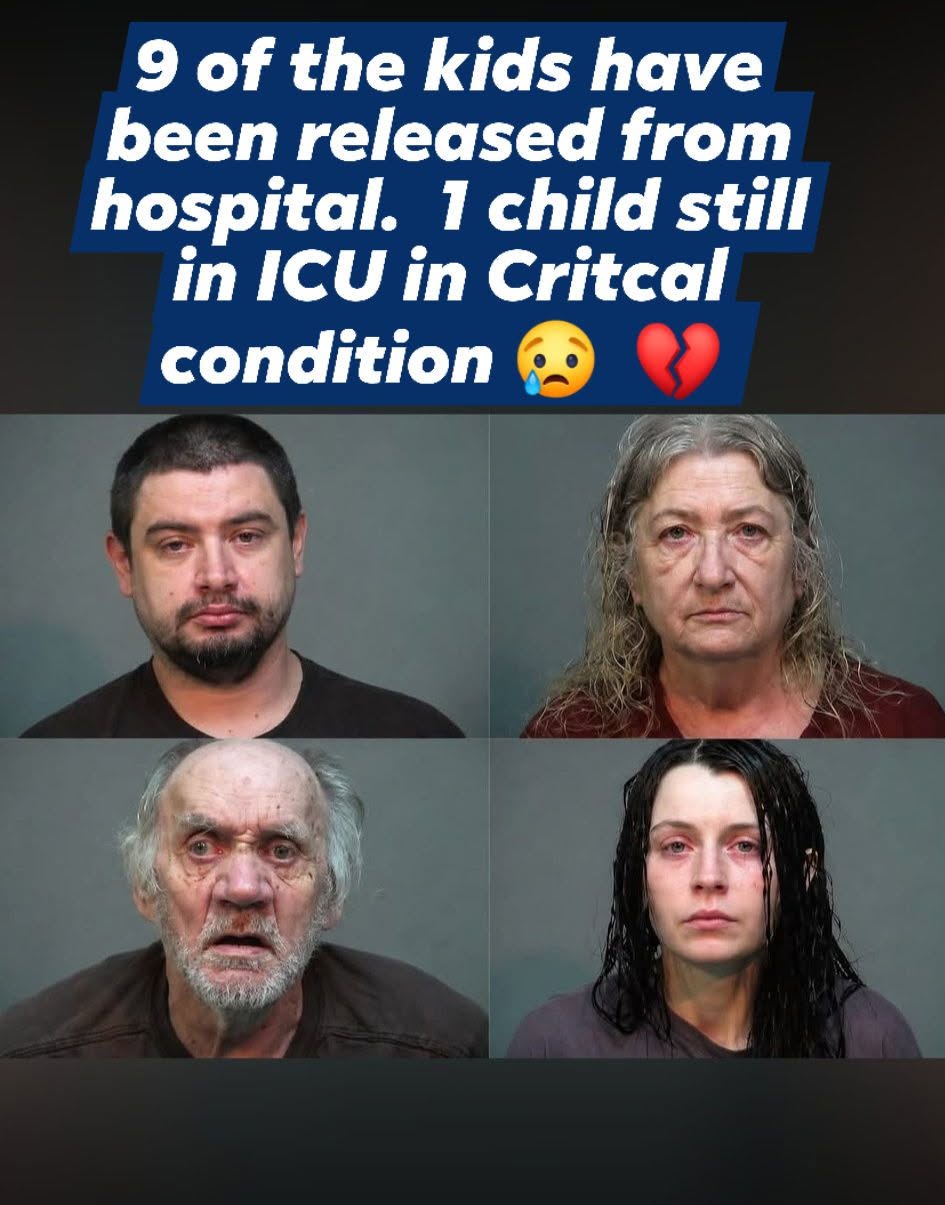
- 9 children have been released from the hospital: Following comprehensive physical examinations, treatment for skin infections, and basic nutritional rehabilitation, 9 children whose conditions have stabilized were officially discharged. They were immediately transferred to the Vinton County Department of Job and Family Services to arrange emergency shelter.
- The remaining children are still undergoing active treatment: Several children must remain hospitalized under strict medical supervision. Most notably and heartbreakingly, sources report that at least one child is still in very critical condition and hanging onto life inside the Intensive Care Unit (ICU).
The child in the ICU is facing profound complications from prolonged neglect, chronic starvation, and the toxic, bacteria-infested living environment beneath the family home. The entire local community and people across America are turning their hearts toward Columbus, praying for a miracle to save this young life.
2. Emotional Agony from a Grim Reality: “They Might Lose Each Other”
Beside the deep scars engraved on their bodies, social workers and child psychologists in Ohio are confronting another severe mental crisis within this group of children. As their psychological states began to stabilize, an announcement—procedural yet cutting through their hearts like a knife—was delivered to them: They might lose each other because they will not all go to the same foster home or family in the future.
The American foster care and adoption system faces a stark reality: it is exceptionally rare for a single foster family to possess the financial capacity, space, and time to take in 16 children at once—especially when these children carry unique physical and psychological traumas (many are entirely non-verbal, communicating only through primitive sounds, and the oldest 18-year-old child suffers from severe developmental disabilities).
| Number of Children | Current Status | Expected Destination | Looming Risk |
| 9 children | Discharged following an overall medical screening. | Temporary emergency shelters / Foster homes. | Psychological trauma from sudden environmental changes. |
| The remaining children | Continue to receive specialized inpatient treatment. | Ongoing medical monitoring in Columbus. | Long-term physical sequelae from extreme malnutrition. |
| 1 special child | Very critical condition, fighting for life in the ICU. | Specialized intensive care, fighting day by day. | Risk of mortality or permanent organ/brain damage. |
Having to inform these children—who only knew how to cling to one another to survive in a dark basement for up to 18 years—that “you might soon have to say goodbye to enter separate families” is a agonizing decision. For the Siders children, their biological siblings are the only anchor binding them to the concept of “humanity” and “family.” Now, having just escaped hell, they must face the prospect of being splintered apart and placed into completely foreign environments without their loved ones by their side.
3. Wild Survival Instincts and the Barriers to Reintegration
Child psychologists at Ohio University state that the recovery process for these 16 children will not be measured in months, but in decades. The fact that Attorney General Andy Wilson described them as “almost like wild animals” upon being rescued underscores the severe gravity of extreme isolation syndrome.
When a child is locked inside a trash-filled room from birth, their brain automatically activates primitive survival mechanisms. They are entirely unacquainted with basic societal norms, such as wearing clothes, using utensils, or communicating through spoken language. Being abruptly brought to a modern hospital with blinding white neon lights, beeping medical equipment, and strangers clad in hazmat protective gear threw the group into utter panic.
An anonymous medical staff member shared that merely approaching the children to draw blood or administer IV fluids was an immense hurdle; they reacted by tightly huddling together, growling, or shrinking back in terror at any loud noise. Sending the 9 discharged children to foster homes is merely a makeshift solution for shelter; teaching them how to function as a “human being” in the proper sense is a long journey filled with tears.
4. A Wave of Prayers and Outrage Targeted at the Perpetrators
The update regarding the critical condition of the child in the ICU and the risk of separation for the 16 siblings has triggered a massive wave of sorrow and fury across American social media platforms. Hashtags such as #SaveTheSidersKids and #PrayForOhioChildren continue to receive millions of shares.
Netizens are collectively calling on major charitable organizations or philanthropists to step forward and establish a dedicated trust fund, hoping to find or build a specialized care facility specifically for the 16 Siders siblings so they do not have to be divided. “They have suffered far too much being imprisoned together, please do not inflict the pain of separation upon them now that they are free,” one Facebook comment read, gaining tens of thousands of interactions.
This outpouring of grief for the young victims simultaneously fuels the flames of absolute condemnation toward Gary Siders Jr. and Elizabeth Siders. The public is demanding the strictest sentences, with no chance of parole, for the abusive father and the adults who condoned this crime for nearly two decades.
5. Conclusion: The Light of Freedom and the Cost of Delay
The 16 Siders children have been pulled out of the trash-piled house in the village of Hamden, but their souls remain trapped in the darkness of years of abuse. The image of the ICU hospital bed in Columbus where a child is fighting for breath, alongside the lonely memorial plaque for the conjoined twin girls who died in 2022 on the grass outside, stands as painful testaments to the devastating delays of the social welfare system.
The light of freedom has arrived, but it comes at a staggering physical and psychological cost. Right now, as 9 children step dazedly into new foster homes and the others cling to survival on hospital beds, the only thing the community can do is continue raising their voices to protect their rights, sound the alarm against neglect, and send up their deepest prayers for a miraculous rebirth of these 16 tragic lives in Ohio. Please, prayers up.