The Husband Who Abandoned His Terminally Ill Wife for Her Best Friend Stunned as Attorney Reads the Will
That day, the room on the fifth floor of the Oncology Center was draped in a suffocating shade of gray. Outside, a light drizzle blurred the world, while inside, a frail woman lay curled on her hospital bed. Her sunken eyes remained fixed on the door, as if waiting for a figure that had long since stopped appearing.
Clara was only forty-two. She should have had decades left to live, to care for her family, and to fulfill her modest dream of opening a small flower shop on a quiet street corner. But aggressive ovarian cancer had stolen those years, replacing her dreams with waves of unrelenting pain. For three months, she had been an inpatient, her body wasting away until she was little more than skin and bone. Every afternoon, the dying sunlight would filter through the window, casting a pale glow over her face and highlighting the quiet desperation of a woman living her final days.
Clara’s husband, David, had been attentive at first. However, as the weeks turned into months, his visits grew rare, always citing “urgent deadlines” at work. It wasn’t until Clara accidentally overheard a nurse’s whispered conversation that the truth shattered her world: David was having an affair with Sarah, Clara’s best friend since high school.
The betrayal cut deeper than any surgical blade. Sarah had been the one to sit by her bed and offer comfort during the early days of her diagnosis. But as David vanished, Sarah stopped calling, too, leaving only a few hollow, polite text messages. Clara understood everything. Though the agony was immense, she chose silence. The physical pain of the cancer was no longer as terrifying as the spiritual death of being betrayed by those she loved most.
Every morning, Clara asked the nurse to open the window so she could breathe in the outside air. “Let me smell the sun and the rain,” she would whisper. “I want to remember them when I’m gone.” While everyone thought she was weak and despairing, Clara was secretly and meticulously arranging her affairs. She called upon a private attorney—an old family friend of her father’s—to draft her will. Every word was carefully weighed, written not for herself, but for her seventeen-year-old daughter, Maya.
Maya, currently buried in applications for college, visited her mother every day. She loved Clara fiercely, but she was far too young to carry the weight of this tragedy. Clara simply took her hand and said: “Promise me, Maya. Live a life of kindness. Do not hold onto grudges; do not let hate consume you. I believe in you.” Maya sobbed and nodded, unable to speak. Clara looked at her daughter and turned away, hiding the hot tears streaming down her hollow cheeks. She knew the road ahead was short, but she would walk it in peace. She was ready.

The day Clara passed away, the entire floor fell into an eerie silence. In the hallway, the only sounds were the soft padding of footsteps and the steady, rhythmic drip of IV fluids—a somber melody for a final departure. Clara closed her eyes and left this world peacefully, a faint, fragile smile lingering on her lips. Before she slipped away, she gripped Maya’s hand one last time: “I am leaving everything to you, my brave girl. Take care of it.”
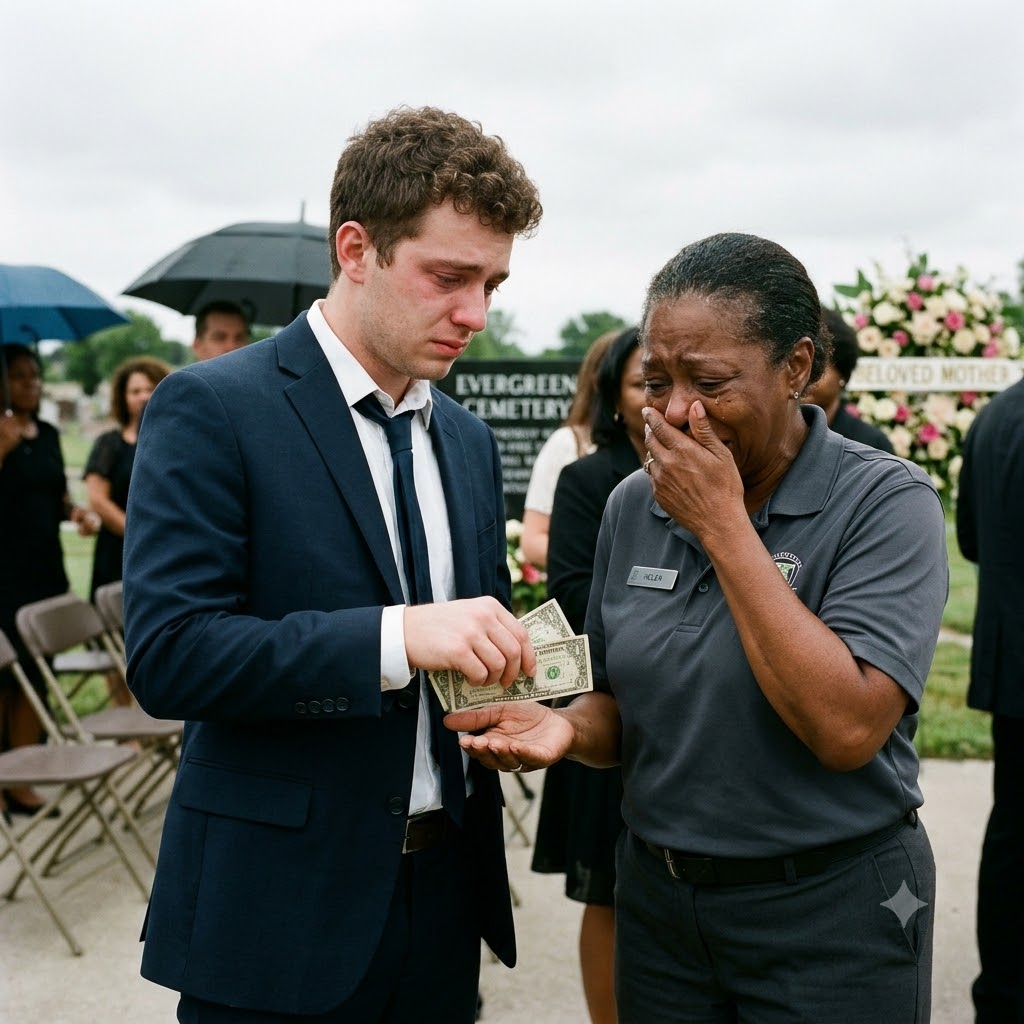
News of Clara’s death brought many mourners, but David arrived late. He walked in wearing a sharp, tailored suit, hand-in-hand with Sarah—boldly ignoring the judgmental stares of the room. Seeing them together nearly broke Maya’s heart, but remembering her mother’s plea, she didn’t scream or cast blame. She stood silently by the casket, her eyes red from crying but her gaze steady and steel-like.
The funeral was simple, exactly as Clara had requested. When the service concluded, Clara’s attorney stepped forward, carrying a thick leather folder. He spoke with a calm, commanding voice: “According to the legal will executed and notarized by Mrs. Clara Miller, I shall read the contents today.”
Every eye in the room turned toward him. David narrowed his eyes, appearing impatient. He assumed Clara would leave the estate, the house, and their joint savings to him, and he would be the one to distribute it as he saw fit. But as the attorney read the opening lines, David’s face turned deathly pale.
Clara had left her entire estate—the house, the savings, and her life insurance—to Maya. Furthermore, she had appointed a trusted cousin to act as a temporary trustee until Maya turned twenty-one. Most devastatingly, the will contained a specific clause: “I leave no assets or rights to my husband, David Miller, for in my final days, he failed to uphold his most basic duties as a husband and a human being.”
The room went silent. Maya sobbed, overwhelmed by both grief and the realization of her mother’s protection. The relatives began to whisper. David stood frozen, his eyes bloodshot and bewildered, before glancing sharply at Sarah. Sarah avoided his gaze, her face tight with tension.
With a single document, Clara had stripped away their masks. She had known everything. She hadn’t fought or screamed; she had simply chosen to leave with dignity, delivering a fatal blow to her husband’s selfishness and betrayal from beyond the grave.
In the weeks following the funeral, Maya began cleaning out their small home. Every corner held a memory of her mother, from the orchids by the door to the notebooks filled with floral arrangement sketches. Maya sat in the middle of the room, clutching her mother’s diary, tears flowing uncontrollably. Yet, amidst the pain, she felt a strange new strength: the courage her mother had passed down to her.
Meanwhile, David began to face the consequences of his actions. Friends distanced themselves, and his family looked at him with undisguised contempt. Sarah, unable to handle the social pressure and the fact that David was now effectively penniless, eventually stopped seeing him. The house and the money belonged to his daughter; he had no right to touch a single cent. For the first time in his life, David was truly empty-handed.
One afternoon, he returned to the house to pick up a few remaining belongings. Maya met him at the door, her voice firmer than he had ever heard it. “You have no rights here anymore, Dad. This was Mom’s house, and now it is mine.”
David stood stunned. He looked at the girl who used to run to him for hugs, now standing before him as a strong, resilient woman—a younger, fiercer version of Clara. In that moment, he felt a sharp pang of regret, but it was far too late.
Maya was determined to fulfill her mother’s unfinished dream. After settling the legalities, she used a portion of her inheritance to attend college while simultaneously renting a small storefront. She named the shop “August Memories”—after the month her mother departed. The bouquets she sold were simple and elegant, mirroring Clara’s personality.
Customers who came for flowers often heard Maya talk about her mother—a woman who, despite her illness, lived with immense grace. Every story and every bouquet served as a reminder: love never truly dies; it simply transforms into the strength that allows those left behind to keep walking.
David was often seen standing across the street from the shop, watching his daughter from a distance. He wanted to walk in, but he was paralyzed by shame. Sarah had long since vanished from his life. He was left with nothing but a haunting, belated remorse.
And in Maya’s heart, her mother’s voice continued to echo: “Do not hold onto hate. Just live a good life.”
She smiled, looking up at the sky, knowing her mother was watching. Deep down, she knew Clara was still there—in every petal, every breath, and every beat of her new life.