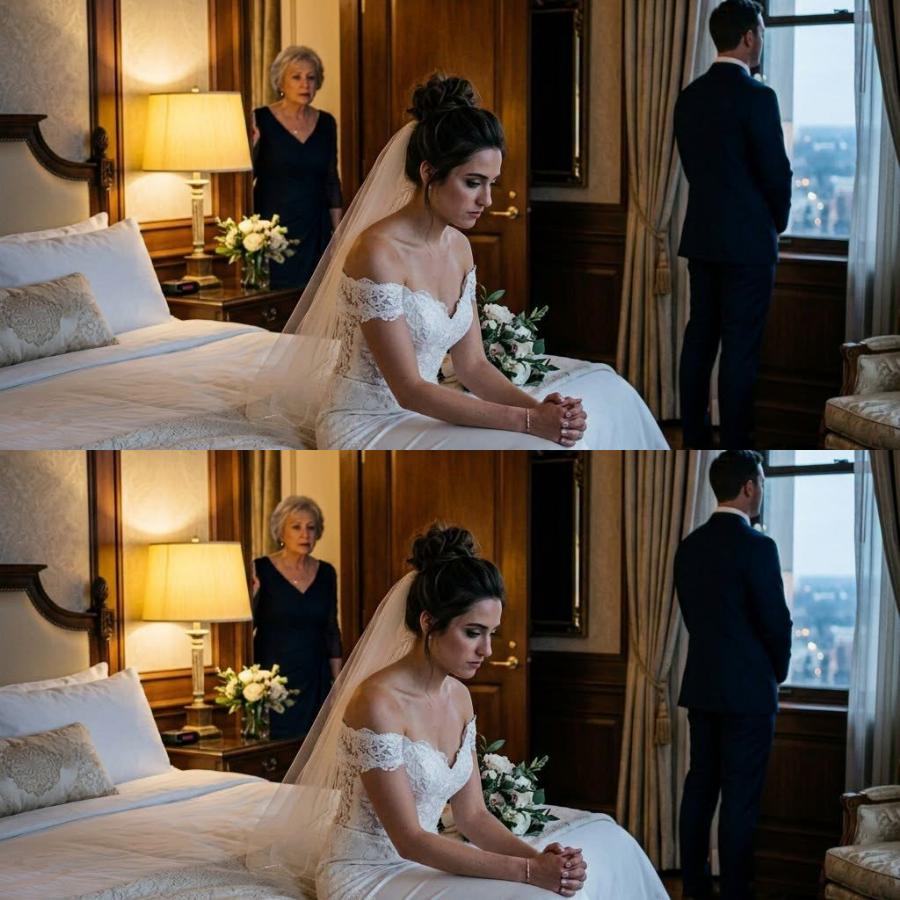
Lauren wasn’t just my best friend; she was the woman I trusted with my home
Lauren wasn’t just my best friend; she was the woman I trusted with my home, my secrets, and my newborn son. Then, less than two months later, she was sleeping beside my husband while he demanded ownership of the business my late father had helped me protect.
The rain was coming down in sheets over the coastal town of Ipswich, Massachusetts, blurring the yellow streetlights into smeary watercolor spots on the windshield of my SUV. It was 11:42 p.m. In the backseat, four-month-old Leo was fast asleep in his rear-facing car seat, his tiny chest rising and falling to the soft hum of the heater.
I had driven back early from my mother’s house in Gloucester. I was exhausted, my shoulders aching from hours of nursing and carrying diaper bags, but I had a quiet, affectionate warmth in my chest. I wanted to surprise my husband, Mark. I had even picked up his favorite clam chowder from the diner off Route 1, holding the paper bag on my lap so it wouldn’t spill.
I used the garage key code, pressed the button, and pulled inside. The house was dark, save for the ambient glow of the kitchen under-cabinet lights.
I carefully unbuckled Leo, cradle-holding his heavy, sleeping body against my neck, and stepped through the mudroom. I set the paper bag of food on the island, kicked off my rain-soaked boots, and tiptoed down the hardwood hallway toward the master suite.
I expected to find Mark asleep, his phone glowing on the nightstand, exhausted from what he claimed was an eighty-hour work week managing the expansion of Vance Maritime Supply—the commercial vessel logistics firm my father, Arthur Vance, had spent forty years building from the ground up.
Instead, as I reached the slightly parted door of our bedroom, I smelled something that made my stomach lurch.
It was Santal 33—a distinct, expensive perfume laced with sandalwood and violet. It was a signature scent. A scent I had bought for my maid of honor as a thank-you gift on my wedding day.
My breath hitched in my throat. I stood frozen in the dark hallway, my heart hammering like a trapped bird against my ribs.
I pushed the door open an inch further.
The low light from the hallway spilled across the king-sized bed. Mark was lying on his back, his shirt discarded on the floor, one arm wrapped tightly around a woman buried under our cream-colored duvet. Her long, dark blonde hair was spread out across my pillow.
Her back was to the door, but on her right shoulder blade was a tiny, crescent-moon tattoo—a tattoo we had gotten together in our sophomore year at Boston College.
Lauren.
My soul sister. The woman who had held my hand in the delivery room when my blood pressure dropped to dangerous levels four months ago. The woman who had slept on my couch, folded my baby’s onesies, and wept with me when my father died of pancreatic cancer just six months before Leo was born.
They were asleep, wrapped around each other in the bed I had picked out, in the house my father had helped us buy.
I didn’t scream. I didn’t drop to my knees. When trauma hits you with absolute, crushing force, your nervous system doesn’t always roar—sometimes it goes completely, terrifyingly silent.
My primary instinct was survival: Protect the baby.

I pulled Leo tighter against my chest, backed away inch by inch until my heels hit the living room rug, and slipped quietly out through the mudroom. I got back into the SUV, clicked Leo into his base, and backed out into the torrential rain.
I drove straight to a 24-hour diner three miles away, parked under the glaring neon sign, and sat in the driver’s seat with my hands glued to the steering wheel, staring into the dark.
My father, Arthur Vance, had been a sharp, methodical man. He grew up working the docks in Gloucester, grease under his fingernails and sea salt in his skin. By the time he was fifty, he owned three warehouses, a fleet of supply barges, and a lucrative network of commercial shipping contracts along the New England coast.
When Arthur was diagnosed with terminal cancer, he knew his time was short. He also knew Mark.
Mark Harrison was a charismatic, smooth-talking senior financial analyst whom I had married four years earlier. To the world, Mark was an ambitious rising star. But my father, with the cynical eyes of a man who had negotiated with harbor union bosses for forty years, saw through Mark’s polished exterior.
Two weeks before he passed, Dad called me and his long-time corporate attorney, Thomas Miller, into his hospice room.
“Nora,” my father had said, his voice raspy, his frail hand gripping mine. “I love Mark because he makes you smile. But love is an emotion; business is a structure. Vance Maritime is your birthright. It was built on my sweat, and it will support my grandson. I’m placing ninety percent of the voting shares into an irrevocable living trust under your sole name. Mark will serve as the Chief Operating Officer with a generous salary, but he will never hold an equity stake. If anything ever happens to your marriage, the company remains untouched, untouchable, and yours.”
I had cried that day, telling Dad he was being paranoid. Mark loved me. Mark was my partner.
How blind I had been.
By 7:00 a.m. the next morning, the rain had cleared, leaving behind a cold, gray New England mist.
I didn’t sleep a single minute. I spent the night in the diner booth, nursing cold herbal tea, watching Leo sleep in his infant carrier beside me. I pulled up my bank accounts, pulled up company filings, and began connecting the dots with a terrifying, icy clarity.
Lauren had stepped in as our “household coordinator” and temporary administrative manager at Vance Maritime while I was on maternity leave. She had access to our house key, my calendar, my father’s old digital archives, and Mark’s schedule.
She hadn’t just stepped into my home; she had been systematically stepping into my life.
At 8:30 a.m., I drove back to the house. I left Leo with my trusted neighbor, Evelyn, an elderly woman who had lived next door since I was a child.
“Keep him for a couple of hours, Evelyn,” I murmured, my voice flat. “I have some trash to clean out of the house.”
Evelyn looked at my pale face, my dark-circled eyes, and gave me a firm, knowing squeeze of the hand. “Take all the time you need, Nora.”
I walked up the front path, unlocked the heavy oak door, and stepped inside.
The house was quiet. In the kitchen, the scent of fresh espresso filled the air. Mark was standing by the island, dressed in a tailored charcoal suit, adjusting his cufflinks.
Sitting on the barstool right next to him, wearing my beige cashmere robe and sipping from my favorite ceramic mug, was Lauren.
They were talking in low tones, laughing softly over something on Mark’s iPad.
When the mudroom door clicked shut, they both turned.
Lauren didn’t flinch. She didn’t drop the mug. In fact, a slow, calculated, almost pitying smile spread across her face.
Mark, on the other hand, froze for a second, then smoothed his tie and leaned against the counter, putting on his familiar, patronizing corporate grin.
“Nora,” Mark said smoothly, stepping forward as if to kiss my cheek. “You’re back early. I thought you were staying in Gloucester until dinner.”
I stepped back, avoiding his reach entirely. I looked at Lauren, then at Mark.
“Get out of my house, Lauren,” I said, my voice barely above a whisper, but laced with iron.
Lauren set the mug down on the quartz countertop with a soft clink. She crossed her legs, looking at me with cold, detached eyes.
“Nora, don’t be dramatic,” Lauren said smoothly, her voice completely devoid of the warmth she had used with me for fifteen years. “You were going to find out eventually. Honestly, it’s a relief. Hiding it was getting exhausting.”
I felt a sharp, cold sting in my chest, but I held my ground. “Fifteen years, Lauren. You sat at my father’s funeral. You held my son.”
“And I spent fifteen years living in your shadow,” Lauren snapped back, her eyes narrowing. “Nora, the sweet heiress. Nora, who got the trust fund, the coastal house, the perfect company handed to her on a silver platter while I worked sixty hours a week as a mid-level manager. You didn’t earn any of this. Mark earned his position. I earned mine.”
“She’s right, Nora,” Mark chimed in, taking a step toward Lauren and placing a protective hand on her shoulder. The sight of his hand on her made my stomach turn, but it also burned away the last lingering remnants of my hesitation.
“Mark,” I said, looking at my husband. “You have twenty minutes to take your clothes and leave.”
Mark let out a dry, condescending laugh. He walked over to the kitchen table, picked up a thick leather folder, and tossed it onto the island.
“I’m not going anywhere, Nora,” Mark said, his tone turning cold, aggressive, and calculated. “And neither is Lauren.”
I stared at the folder. “What is that?”
“That is a formal demand for an emergency restructuring of Vance Maritime Supply,” Mark announced, leaning against the counter with his arms crossed. “Over the past six months—while you were busy being a hysterical, grieving daughter and an incapacitated, stay-at-home mother—I have been running the entire operation.”
“You were paid a salary to run it,” I retorted.
“I built the new distribution channels in Maine and Rhode Island!” Mark shouted, his composure slipping into anger. “Your father’s old methods were archaic! I brought in eighty percent of our current active client contracts! And while you were sitting around feeling sorry for yourself, Lauren and I documented every single operational decision.”
He tapped the folder with his index finger.
“This is a petition for interim management control, filed with the Essex County Probate and Family Court this morning,” Mark declared, a triumphant smirk returning to his lips. “We are asserting that due to post-partum mental instability and severe emotional distress following Arthur’s death, you are legally unfit to act as the sole trustee of Vance Maritime. We are requesting the court transfer fifty-one percent of the voting equity to me as acting CEO to protect the financial stability of the firm and its sixty employees.”
I stood there, processing his words. They hadn’t just slept together. They had spent months building a legal and psychological trap to strip me of my father’s legacy.
“Mental instability?” I repeated softly.
“You’ve been seeing a therapist twice a week since October, Nora,” Lauren interjected, a smug smile playing on her lips. “You take prescription sleep medication. We have logs of every time you broke down crying in the nursery. We have emails you sent to staff where you sounded overwhelmed. To a probate judge, you look like a fragile, unstable widow’s daughter who can’t handle a multi-million-dollar maritime logistics firm.”
Mark stepped closer, his voice dropping into a sinister, coercive murmur.
“Sign the equity transfer agreement voluntarily, Nora,” Mark urged. “We’ll give you the house, a generous monthly alimony allowance, and joint custody of Leo. You get to stay home and be a full-time mom, which is all you’re really good at anyway. Fight us, and we will use your medical records to take the company and push for full physical custody of Leo on grounds of maternal incompetence.”
They stood shoulder to shoulder in my kitchen—my husband and my best friend—looking at me like two wolves who had cornered a lamb.
They thought I was weak. They thought my grief had made me soft. They thought that because I didn’t scream or fight back when I saw them in bed, I was going to roll over and sign my life away.
They forgot who raised me.
I looked Mark dead in the eyes. I looked at Lauren.
A slow, cold smile crossed my face—a smile that looked so much like my father’s when he was about to gut a rival contractor that Mark actually hesitated.
“You have nineteen minutes left to pack your bags, Mark,” I said, my voice dead calm. “Because at 9:00 a.m., my attorney is filing our response.”
I didn’t waste a second. The moment I left the house, I drove straight to the downtown Boston law offices of Miller, Vance & Thorne.
Thomas Miller, my father’s lifelong best friend and senior legal counsel, was waiting for me in his corner office overlooking Boston Harbor. Sitting beside him was a sharp, formidable woman in her late forties named Diane Vance-Cross—a top-tier forensic accountant and corporate litigator.
“They bit the bait, Thomas,” I said, setting my phone on the conference table.
Thomas took a sip of his coffee and smiled grimly. “Arthur always said Mark was too arrogant for his own good. He thought he was playing chess while everyone else was playing checkers.”
What Mark and Lauren didn’t know was that my father hadn’t just set up an irrevocable trust—he had installed a “failsafe clause” in the corporate bylaws of Vance Maritime Supply.
My father knew that after his death, people would come for his company. He knew that Mark was ambitious. So, four months before he died, Dad had secretly hired Diane’s firm to run an ongoing, background audit on all executive-level accounts.
I had known about Mark’s shift in behavior for three months. I hadn’t been crying in the nursery out of “hysteria”—I had been spending those late nights scanning receipts, bank transfers, and internal corporate server logs, uploading them directly to Diane.
“Let’s go over the numbers before the preliminary hearing,” Diane said, opening a heavy laptop.
“Mark believed he was clever,” Diane explained, turning the screen toward me. “To fund his life with Lauren—including leasing an oceanfront condo in Marblehead under a shell company named LLH Holdings—Mark began diverting vendor rebates from our primary fuel supplier in Portland.”
“How much?” I asked.
“One point four million dollars over the last eleven months,” Diane revealed. “He used Lauren’s administrative credentials to authorize false invoices for ‘maritime consulting services.’ That constitutes grand larceny, corporate wire fraud, and breach of fiduciary duty.”
Thomas leaned forward, his hands clasped over his stomach. “And as for their claim that you are mentally unfit to serve as trustee?”
He pulled out a signed, notarized document from my lead psychiatrist at Mass General Hospital.
“Your doctor’s report explicitly states that your therapy sessions were standard grief counseling following the death of your father and post-partum adjustment, and that you possess exceptional cognitive clarity and emotional stability,” Thomas read aloud. “Furthermore, we have the security footage from Vance Maritime’s main server room showing Lauren downloading confidential client lists at 2:00 a.m. last Tuesday.”
I looked out the window at the gray waters of Boston Harbor. The pain of their betrayal was still there—a deep, jagged wound that would take years to fully heal. Lauren had been my sister in every way that mattered; Mark had been the man I gave my youth to.
But beneath that pain, a cold, unyielding fire had taken root. They tried to take my father’s legacy. They tried to threaten my son.
“Serve the papers, Thomas,” I said quietly. “All of them.”
The emergency hearing at the Essex County Probate and Family Court in Salem was scheduled for 2:00 p.m. the following afternoon.
Mark and Lauren arrived together, dressed impeccably in sharp corporate attire. Mark walked in with a cocky, confident stride, whispering instructions to his high-priced divorce attorney, Richard Sterling. Lauren walked half a step behind him, carrying a designer leather briefcase, casting triumphant glances in my direction as we entered the mahogany-paneled courtroom.
I sat at the petitioner’s table beside Thomas and Diane. I wore a tailored black suit, my hair pulled back into a sleek, professional bun, holding a single manila folder in my lap.
Judge Harrison, a stern, sharp-eyed woman in her sixties, took the bench and rustled through the filings.
“We are here today on an emergency petition filed by Mr. Mark Harrison seeking interim management control of Vance Maritime Supply, alongside a cross-petition for emergency divorce and asset freezing filed by Mrs. Nora Vance-Harrison,” Judge Harrison announced.
Richard Sterling, Mark’s lawyer, stood up immediately, adopting an overly dramatic, sympathetic tone.
“Your Honor,” Sterling began, “my client, Mr. Harrison, has served as the operational backbone of Vance Maritime for four years. Since the unfortunate passing of Arthur Vance, Mrs. Harrison has suffered severe emotional and psychological collapse. She is currently incapable of managing a corporate entity with sixty employees. We ask that the court temporarily suspend her voting rights under the Vance Living Trust to prevent commercial ruin.”
Judge Harrison looked over her glasses at our table. “Mrs. Vance-Cross, your response?”
Diane stood up smoothly, buttoning her jacket.
“Your Honor, Mr. Harrison’s petition is not an act of corporate preservation; it is a desperate attempt to cover up a massive, multi-million-dollar criminal enterprise,” Diane stated, her voice echoing clearly through the courtroom.
Mark’s attorney scoffed. “Your Honor! This is wild speculation meant to slander my client!”
“I have here certified forensic accounting records, bank transfer logs, and sworn affidavits from the Special Investigations Unit of the Massachusetts State Police,” Diane replied calmly, handing a thick stack of bound documents to the bailiff.
Lauren’s face visibly paled. Mark shifted uncomfortably in his seat, his cocky smirk beginning to flicker.
“Over the past eleven months,” Diane continued, “Mr. Harrison, in active conspiracy with Ms. Lauren Hayes, has embezzled $1.42 million from Vance Maritime Supply into an offshore account owned by LLH Holdings—a shell entity created by Ms. Hayes. Furthermore, we have keycard access logs and IP tracking showing that Ms. Hayes systematically stole trade secrets and client databases to sell to a competitor in Rhode Island.”
“That’s a lie!” Lauren blurted out, standing up impulsively from her seat behind the counsel table. “Nora made this up! She’s crazy!”
“Sit down, Ms. Hayes!” Judge Harrison barked, slamming her gavel once.
The courtroom was dead silent.
Thomas Miller then stood up, stepping toward the center of the room.
“Your Honor,” Thomas said, “under Section 12 of the Vance Maritime Corporate Charter, any executive officer indicted or under active criminal investigation for financial felony offenses against the corporation is subject to immediate, automatic termination without severance, and their corporate indemnification is voided.”
Thomas turned around, looking directly at Mark.
“Thirty minutes ago, the Attorney General’s Office for the Commonwealth of Massachusetts issued a formal arrest warrant for Mark Harrison and Lauren Hayes on charges of commercial wire fraud, grand larceny, and corporate tax evasion.”
As if on cue, the heavy double doors at the back of the courtroom swung open.
Two uniformed Massachusetts State Troopers, accompanied by a white-collar crime investigator in a dark suit, stepped into the aisle.
Mark’s face went completely ghost-white. He whipped his head around to look at Richard Sterling, but his lawyer was already stepping back, closing his leather folder with a grim, helpless look.
“Your Honor,” the investigator announced, stepping up to the bar. “We have a warrant for Mark Harrison and Lauren Hayes.”
Lauren let out a high-pitched, hysterical shriek as the female trooper approached her, grabbing her arms and pulling them behind her back.
“Mark! Do something! Tell them!” Lauren screamed, her composure entirely shattering as the metal cuffs clicked around her wrists. “You said you had this handled! You said she was helpless!”
Mark didn’t say a word. He looked like a man who had stepped off a cliff and was just realizing there was no ground beneath his feet.
As the second trooper cuffed Mark’s wrists behind his back, he turned his head, his eyes desperate, wide, and filled with a terrifying, hollow panic as he looked at me.
“Nora… please,” Mark choked out, his voice cracking, all his slick corporate charm reduced to ash. “Nora, talk to them! It was Lauren! She convinced me to do it! She pushed me! I love you, Nora… think about Leo!”
I stood up slowly from my chair. I walked over to the wooden railing separating the gallery from the counsel table, looking down at the man I had once loved, and the woman I had once called my sister.
“Don’t you dare say my son’s name,” I said, my voice low, icy, and sharp as a razor. “My father saw through you from the day he met you, Mark. He built a fortress to protect me and Leo from men like you. You thought you were taking my father’s company. You were just walking into his vault.”
Mark stared at me, his lip trembling, unable to utter another word.
“Take them away,” Judge Harrison ordered firmly.
The troopers led Mark and Lauren out through the central aisle of the courtroom. Lauren was sobbing hysterically, her designer shoes dragging against the polished floor, while Mark walked with his head bowed down, the flashing red lights of the police cruisers visible through the tall glass windows outside.
Six months later.
The early autumn wind was blowing across Ipswich Bay, bringing with it the sharp, clean scent of salt water and pine.
I stood on the timber dock behind the main warehouse of Vance Maritime Supply. The ocean was a deep, brilliant blue under the afternoon sun, dotted with whitecap waves and gulls soaring high above the masts.
Beside me, a massive, brand-new commercial supply barge sat tied to the pylons, its steel hull gleaming under a fresh coat of blue paint.
Hanging proudly across the bow was the vessel’s name in bold, gold lettering: THE ARTHUR VANCE.
Thomas Miller stepped up beside me, handing me a warm paper cup of coffee.
“She’s a beauty, Nora,” Thomas smiled, looking at the barge. “Your father would have been bragging about this vessel to every harbor master from Boston to Bar Harbor.”
“He probably is,” I smiled softly, taking a sip of the warm coffee.
The past six months had been grueling, but transformative.
Mark had pled guilty to state wire fraud and grand larceny to avoid a lengthy federal trial; he was currently serving a six-year sentence at a state correctional facility in Norfolk. Lauren, unable to post her two-hundred-thousand-dollar bail, had accepted a plea bargain that included full restitution, four years in prison, and permanent disqualification from working in corporate administration.
Their petition for interim management was thrown out, their assets were frozen and liquidated to pay back the stolen funds, and I had finalized my divorce with full legal and physical custody of Leo.
I took over as CEO of Vance Maritime Supply three days after the court hearing.
I didn’t hire a replacement for Mark. I sat in my father’s old corner office, rolled up my sleeves, and leaned on the veteran dock managers who had known me since I was a little girl. In two quarters, we didn’t just recover the lost funds—we expanded our contract lines into Maine, increasing our net revenue by twenty-four percent.
A soft babble sounded behind me.
Evelyn was pushing a sleek stroller down the wooden boardwalk. Ten-month-old Leo was sitting up straight, wearing a tiny blue captain’s hat, his bright blue eyes—so much like my father’s—staring out at the big ships in the harbor.
I walked over, unbuckled him, and lifted him into my arms. He pressed his cool, chubby cheek against mine, letting out a delighted, squealing giggle as the sea breeze ruffled his fine hair.
I held my son close, looking out over the open Atlantic Ocean.
The betrayal had been deep, and the wounds were real. But as I looked at the ship bearing my father’s name, and felt the warm, heavy weight of my son in my arms, I realized something fundamental.
They thought they could break me because they mistook my kindness for weakness and my grief for vulnerability. They didn’t realize that I was Arthur Vance’s daughter.
I didn’t just survive the storm they brought into my life—I took the wheel, steered through the dark waters, and brought my family safely home.