Fourteen years after my mother threw me out to make room for her new family
Fourteen years after my mother threw me out to make room for her new family, she saw my face in a business magazine and reached out with tears in her voice. She told me she had exiled me to make me strong, but within minutes, federal agents surrounded my building to reveal the horrifying truth about what she had really done with my name while I was sleeping on the streets.
Chapter 1: The Magazine on the Coffee Table
The glossy cover of Fortune & Vision magazine featured a high-resolution photograph of my face beneath a bold, dark blue header: THE UNSTEELABLE EMPIRE: How Caleb Vance Rebuilt the American Supply Chain.
I stared at it from across my corner office on the forty-second floor of the Vance Tower in downtown Chicago. The glass wall behind me offered a sweeping, panoramic view of Lake Michigan, shimmering under a pale September sky.
Fourteen years ago, I didn’t own a desk, let alone a tower. Fourteen years ago, my entire world fit into a soaked nylon backpack that smelled of rain and cheap laundry detergent.
My desk phone buzzed—a sharp, discreet triple chime that meant my executive assistant, Brenda, was breaking my strict “no-interruption” rule during my morning strategy review.
I pressed the speaker button. “Yes, Brenda?”
“Caleb… I’m sorry to interrupt,” Brenda’s voice sounded hesitating, almost uncomfortable. “There’s a woman on line three. She’s been calling every fifteen minutes since six o’clock this morning. She wouldn’t leave a message with the front desk, but she insists she’s your mother.”
The word landed in the quiet office like a stone dropped into a deep, icy well.
My mother.
Eleanor Vance.
I hadn’t heard her voice since a bitter, freezing Tuesday night in November 2012. I was sixteen years old. My father had passed away from pancreatic cancer fourteen months prior, leaving us with a small life insurance payout and a two-story home in suburban Oak Park. Within eight months of my father’s funeral, Eleanor had met and married Richard Hayes, a smarmy, mid-level regional manager for a medical device distributor who brought two bratty, pampered teenage sons into our house.
There wasn’t enough room in Richard’s new vision of his family for the quiet, grieving son of the man whose memory he wanted erased.
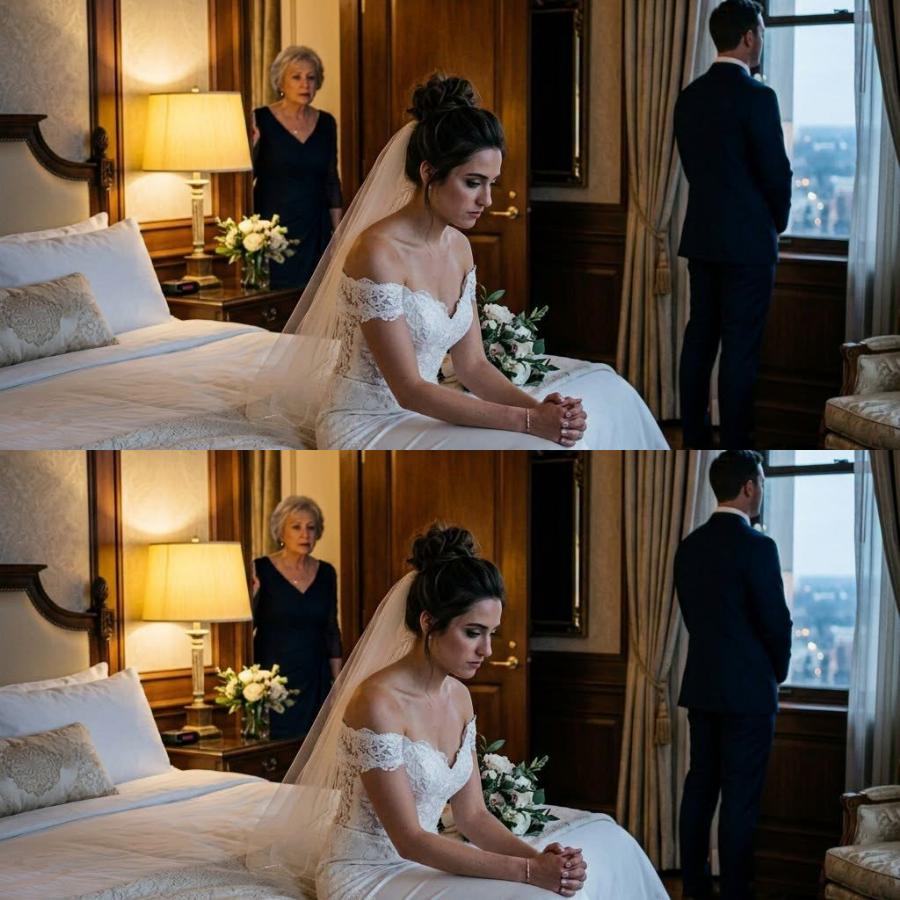
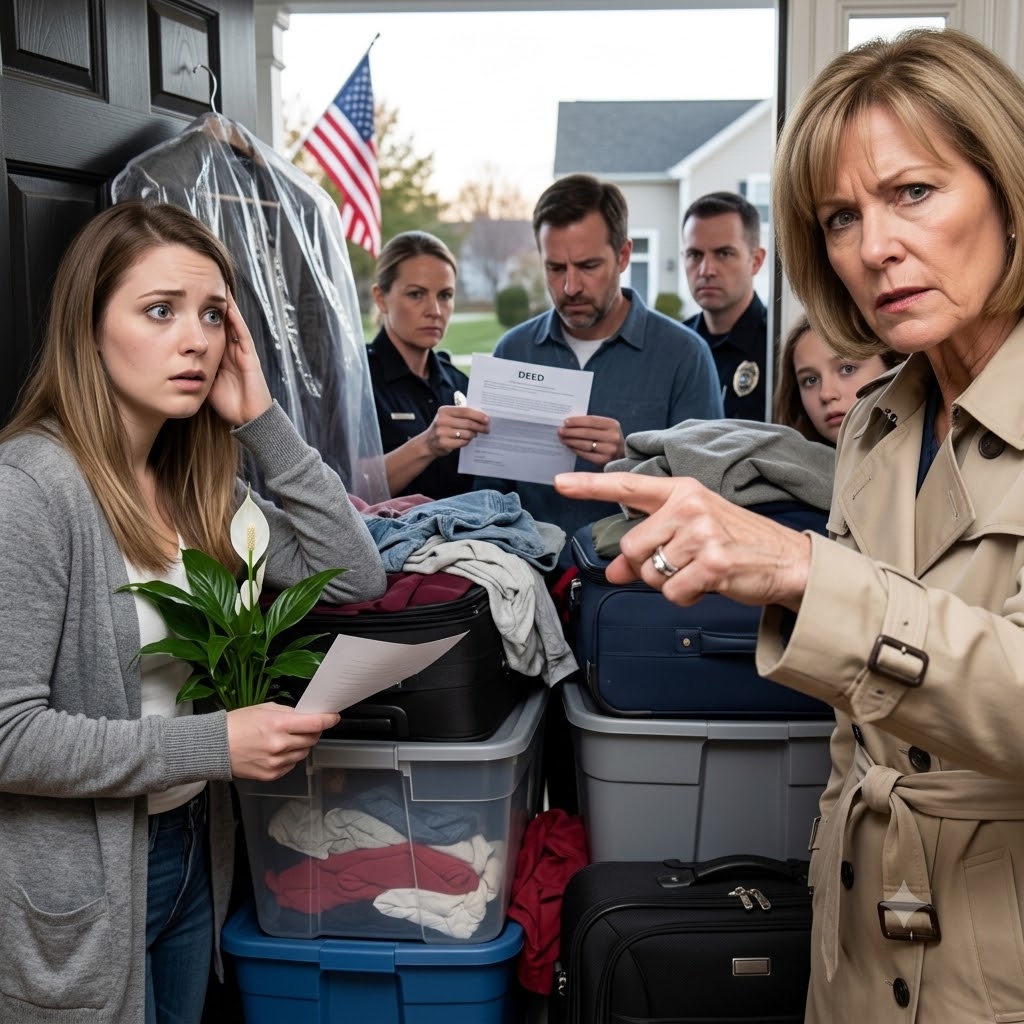
One evening, I came home from my part-time job stocking shelves at a local grocery store to find my belongings packed into three black garbage bags sitting on the wet front porch. The locks had been changed. When I knocked, Eleanor opened the door two inches, her face cold, unreadable, and dead.
“Richard says it’s time for you to find your own way, Caleb,” she had said, not looking me in the eye. “You’re almost seventeen. Men make their own luck. Don’t come back.”
She slammed the door. That night, I slept on a wooden bench inside a bus shelter on 95th Street, wrapped in an old navy blanket, shivering as the Chicago wind whipped through the cracks in the plexiglass.
“Caleb?” Brenda’s voice brought me back to the present. “Should I transfer her to voicemail?”
I pulled a slow breath into my lungs, steadying the sudden beat of my pulse. “Put her through.”
A soft click echoed over the line, followed by the wet, ragged sound of heavy breathing.
“Caleb…?”
Her voice was older, thinner, raspy around the edges, but instantly recognizable.
“Speaking,” I replied, my tone flat, stripped of all warmth.
“Oh, God… Caleb!” She burst into a desperate, choked sob that sounded almost theatrical over the high-definition speakerphone. “I’m staring at it right now… I bought three copies at the airport newsstand. You look so handsome… so strong…”
“Why are you calling me, Eleanor?”
“Eleanor…?” She gasped, her breath catching in her throat. “Caleb, please… don’t call me that. I’m your mother. I know… I know what you must think of me. I know you hate me for what happened fourteen years ago.”
“I don’t hate you,” I said truthfully. “Hate requires energy. I simply erased you.”
“Listen to me, please!” she wept, her voice trembling with a frantic, desperate intensity. “You don’t understand why I did it! I had to throw you out, Caleb! Richard… Richard was a hard man, but I saw something in you that you didn’t see in yourself. You were soft, Caleb! You were grieving your father, sinking into comfort! I knew if I kept you in that house, you would end up ordinary! I exiled you to make you strong! I sacrificed my relationship with my own son so you would become the giant you are today!”
I sat back in my leather chair, a cold, dark smile touching my lips. “You sacrificed me so I would become a giant? Is that the story you tell yourself at night to sleep?”
“It’s the truth!” she pleaded, her voice rising in pitch. “And it worked, didn’t it?! Look at you! You’re on the cover of magazines! You’re a billionaire! I made you this way, Caleb! My tough love created Caleb Vance!”
Before I could answer her sickening, delusional rewriting of history, a sudden commotion rattled the hallway outside my office suite.
Heavy footsteps—dozens of them—were echoing down the carpeted corridor.
“Caleb? Are you still there?” Eleanor’s voice continued whining through the speaker. “I’m down in the lobby right now! Security won’t let me up, but I just want to hug my boy—”
The heavy mahogany doors of my office were shoved open with a loud, wooden slam.
Brenda stood in the doorway, her face pale, surrounded by six tall men in tailored dark charcoal suits, wearing tactical earpieces and gold-and-silver shields clipped to their belts.
The man leading them—a burly agent with short-cropped iron-gray hair and sharp, predatory hazel eyes—stepped forward, holding a thick red leather folder in his hand.
“Caleb Vance?” the lead agent demanded, his voice carrying the immovable weight of federal authority.
I stood up, adjusting my jacket, keeping my voice steady. “I am. Who are you, and why are you barging into my private office?”
The agent pulled out a heavy gold badge from his suit pocket.
“I am Special Agent Marcus Brody, United States Department of the Treasury, Criminal Investigation Division. Beside me are officers from the Federal Bureau of Investigation.”
I frowned, looking at the squad of federal officers securing the perimeter of my office. “If this is about my corporation’s international tax filings, my legal counsel handles—”
“This isn’t about your company, Mr. Vance,” Agent Brody interrupted, stepping up to my desk and flipping open the red leather binder. “And you aren’t under arrest. At least… not yet.”
Over the speakerphone, Eleanor’s weeping abruptly stopped.
“Caleb…?” her voice came through the speaker, suddenly thin, sharp, and terrified. “Caleb, who is that…? Who is in your office?”
Agent Brody glanced down at the speakerphone, then back at me. A slow, grim smile crossed his face.
“Is that Eleanor Vance on line three?” Brody asked.
“Yes,” I said.
Agent Brody reached down, hit the mute button on the phone, and looked at me with deep, chilling pity.
“Mr. Vance,” Brody said softly. “Your mother didn’t throw you out fourteen years ago to ‘make you strong.’ She threw you out because fourteen years ago, she and her husband opened forty-seven offshore shell corporations, three straw-donor mortgage portfolios, and a forty-million-dollar cartel money-laundering pipeline… entirely in your name.”

Chapter 2: The Paper Ghost
The air in the forty-second-floor office seemed to thin until I couldn’t pull enough oxygen into my lungs.
“What did you just say?” I asked, my knuckles turning white as I leaned against the walnut edge of my desk.
Agent Brody gestured to his team. Two agents stepped forward, setting three heavy metal lockboxes onto my coffee table and unlocking them with silver keys. Inside were thousands of pages of financial documents, bank wire receipts, real estate deeds, and tax filings—all bearing a clean, elegant signature: Caleb Vance.
“Fourteen years ago, when you turned sixteen,” Agent Brody explained, pulling a chair up to my desk and sitting down, “your late father’s estate was closed out. Because you were a minor, your mother was appointed as the sole custodian of your social security number and your legal trust identity until your eighteenth birthday.”
Brody pulled out a glossy sheet from the binder and slid it across to me.
“Three weeks after she kicked you out of her house,” Brody continued, his voice dropping into a low, clinical cadence, “Eleanor and her second husband, Richard Hayes, traveled to Panama City. They registered an entity called Vance Global Logistics S.A. They used your clean credit history, your social security number, and a forged power-of-attorney document claiming you were an adult operating under an emancipation order.”
I stared at the document. My name was signed at the bottom in crisp black ink. The date was December 14, 2012.
That was the night I had been beaten up by two older teenagers behind a dumpster near the train station for a half-eaten sandwich. I had been bleeding in an alley while my name was being signed to a twenty-million-dollar Panamanian bank account.
“For fourteen years,” Brody explained, “while you were building your legitimate supply chain business from scratch, your mother and step-father were using your ‘paper identity’ as a shield. Every time Richard’s medical supply firm bribed foreign officials, the payments were routed through your straw accounts. Every time they defaulted on predatory real estate loans in Florida and Texas, the debt was attached to your social security number. And for the last six years, they have been washing dirty capital for a Eastern European syndicate operating out of Miami.”
“Why didn’t this show up on my credit checks when I applied for business loans?” I asked, my voice barely a whisper, my brain struggling to connect the dots of a fourteen-year nightmare.
“Because they paid off the interest on the debt using the washed funds,” Brody said grimly. “They kept your paper identity pristine on the surface—just clean enough to pass automated checks—while burying eighty million dollars of illegal liability beneath forty layers of offshore shell companies. They built a financial nuclear bomb, Caleb. And they tied the detonator directly to your pulse.”
“And why are you telling me this today?” I asked, looking up into Brody’s eyes.
Brody leaned forward, placing his hands flat on my desk.
“Because six months ago, the European syndicate realized the Treasury was closing in on their operations in Miami. They demanded their eighty million dollars back from Richard and Eleanor. But Richard lost forty million of it in failed crypto ventures and bad real estate deals in Dubai.”
A cold realization began to creep down my spine.
“Richard and Eleanor panicked,” Brody said. “They knew the syndicate was going to kill them, and they knew the Federal government was about to issue grand jury indictments. So, they spent the last three months executing a final exit strategy.”
Brody pulled out a final document—a transfer order dated three days ago.
“They transferred the entirety of the eighty-million-dollar debt, along with forty-seven criminal counts of tax evasion, wire fraud, and money laundering, directly onto your personal tax filing ID,” Brody revealed. “They framed their own son to take the fall for a federal life sentence so they could slip out of the country with the remaining forty million in cash.”
The room spun. Fourteen years of pain, of cold nights, of working three jobs while attending community college at night, of building an honest, honorable life out of the ashes of my childhood—all of it had been an obstacle to her.
She hadn’t reached out to me because she was proud of my magazine cover.
She had reached out to me because she needed to make sure I was in town when the federal hammer came down on my head.
Brody unmuted the desk phone and pressed the speaker button.
“Caleb?!” Eleanor’s frantic voice echoed through the room once more. “Caleb, answer me! What’s going on up there?! Why are there police cars surrounding the lobby?!”
I looked at the phone. I didn’t feel rage. I didn’t feel sadness. I felt a cold, crystalline stillness—the same survival instinct that had kept me alive on the streets of Chicago when I was sixteen years old.
I leaned down to the microphone.
“I’m still here, Eleanor,” I said, my voice completely devoid of emotion. “And so are the Feds.”
Chapter 3: The Trapper Trapped
The silence on the line was absolute.
For five long seconds, no one breathed. Then, the sound of glass breaking echoed faintly through the background of her call, followed by the muffled shouts of building security down in the main lobby.
“Caleb… please…” Eleanor gasped, her voice completely stripped of its theatrical warmth, replaced by a raw, animal terror. “You… you don’t understand… Richard made me do it! He said if we didn’t use your name, the bank would take our house! He said you were on the streets anyway, so you didn’t have anything to lose—”
“I had my life to lose,” I interrupted, my tone icy and precise. “I had my name. Which was the only thing my father left me.”
“Caleb, you’re rich now!” she screamed, dropping all pretense, her true, monstrous nature spilling out like black sludge from a broken pipe. “You have billions! Eighty million is nothing to you! You can hire the best lawyers in the country! You can take the deal! They won’t put you in prison for long! But if Richard and I go to prison, we’ll die there! I’m your mother, Caleb! You owe me your life!”
Agent Brody looked at me, his finger hovering over the record button on a federal recording device plugged directly into the line. He gave me a single, questioning nod.
I looked at Brody, then down at the documents bearing my forged sixteen-year-old signature.
“Where is Richard right now, Eleanor?” I asked softly.
“He’s… he’s at the private airfield in Gary, Indiana,” she stammered, weeping hysterically. “We have a charter flight to Montenegro at one o’clock! Caleb, please… tell the agents you authorized the accounts! Tell them it was a family trust! If you just sign the legal indemnity form, Richard and I can get on the plane, and your lawyers can handle the rest!”
“And where are you right now?” I asked.
“I’m in a black Lincoln Town Car parked in the garage beneath your building,” she whimpered. “I came here to drop off the legal papers for your assistant to sign… I thought… I thought you’d be happy to see me…”
“Agent Brody,” I said, looking up from the phone. “Is the wire recording active?”
“Every word, Mr. Vance,” Brody confirmed, hitting a red switch on his console. “Fully admissible in federal court.”
I leaned close to the speakerphone.
“Fourteen years ago, Eleanor,” I said, each word calculated and sharp, “you closed the door on a sixteen-year-old boy in the middle of a winter storm. You told me that men make their own luck. You told me to find my own way.”
“Caleb… no… please—”
“Today, I’m making my own luck,” I said. “And your way ends right here.”
I pressed the red button, cutting the line mid-scream.
Agent Brody immediately tapped his earpiece. “Tactical Team Two, move in on the black Lincoln Town Car in the lower parking garage. Target is Eleanor Vance. Secure the perimeter at Gary Private Airfield for Richard Hayes. Do not let that charter plane take off.”
Through the floorboards beneath my feet, a faint, rhythmic thud echoed—the heavy boots of federal agents swarming the basement garage of my building.
Brody stood up, extending his hand across my desk. “Mr. Vance… I apologize for the dramatic entry into your office. We had to be certain you weren’t complicit in your mother’s operation before we moved on her.”
I shook his hand, my grip firm. “What happens to the eighty million dollar liability?”
“With this confession and the Panamanian forgery records, your name will be completely cleared by nightfall,” Brody assured me. “Your credit, your reputation, and your business remain untouched. As for Eleanor and Richard… they are looking at thirty years in federal maximum-security confinement.”
Brody and his team gathered their boxes and strode out of my office, leaving the mahogany doors open behind them.
I walked over to the floor-to-ceiling glass window, looking down at the street forty-two floors below.
Four black armored SUVs were parked at the curb, their red and blue lights flashing against the wet pavement. Down in the garage entrance, I could see officers escorting a woman in an expensive camel-hair coat, her hands cuffed tightly behind her back, her face buried in her lapel as she was pushed into the rear of a federal vehicle.
I watched until the doors closed and the sirens faded into the noisy Chicago traffic.
Then, I turned around, walked back to my desk, picked up the copy of Fortune & Vision magazine, and tossed it into the recycling bin.
I sat down in my leather chair, adjusted my cuffs, and pressed the button on my speakerphone.
“Brenda?”
“Yes, Caleb?” her voice came back, quiet and respectful.
“Reschedule my ten o’clock strategy meeting for eleven,” I said calmly. “And bring me a fresh cup of black coffee.”
“Right away, sir.”
I leaned back, looking out over the quiet blue expanse of Lake Michigan. For fourteen years, I had carried the phantom weight of a abandoned child on my shoulders. Today, the phantom was gone. The boy on the bench had finally come home, and the house he built belonged to him alone.
Chapter 4: The trial of Shadows
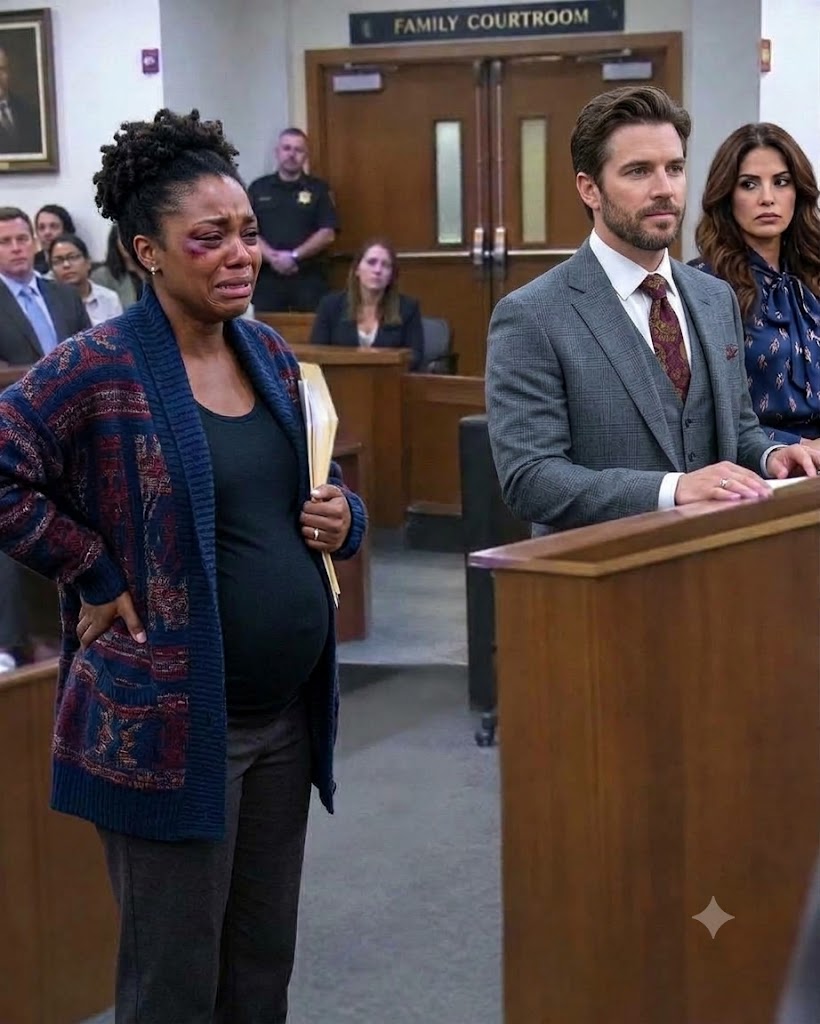
Six months after the raid at Vance Tower, the United States District Court for the Northern District of Illinois opened the case of United States v. Richard Hayes and Eleanor Vance.
The courtroom was packed with journalists, legal analysts, and federal investigators. The story of a mother who had abandoned her teenage son only to use his identity for an eighty-million-dollar cartel money-laundering operation had become a national sensation.
I sat on the prosecution side of the gallery, dressed in a sharp, dark charcoal charcoal suit, my hands resting calmly on my knees.
Across the aisle sat Eleanor and Richard.
Richard Hayes looked broken. The smarmy, arrogant man who had thrown my clothes into the rain fourteen years ago was now thin, bald, wearing an oversized orange jumpsuit, his ankles chained together with heavy iron links.
Eleanor sat beside her defense attorney, wearing a simple gray prison uniform. Her silvering hair was unstyled, her skin pale and paper-thin. When she looked over her shoulder and saw me sitting in the gallery, her eyes welled with tears—not tears of repentance, but tears of deep, agonizing self-pity.
She mouthed a single word across the quiet courtroom: “Please.”
I stared back at her, my expression completely unreadable, giving her nothing.
The lead prosecutor, Assistant U.S. Attorney Sarah Jenkins, stood before the jury, holding up the original Panamanian shell company registration from 2012.
“Ladies and gentlemen of the jury,” Jenkins’s voice resonated through the room. “The defense will tell you that Eleanor Vance was a desperate mother caught in an abusive relationship with Richard Hayes. They will tell you she didn’t understand the financial documents she was signing. But the evidence tells a far darker, far more calculated story.”
Jenkins walked over to the defense table, pointing a finger directly at Eleanor.
“When Caleb Vance was sixteen years old, grieving his dead father, his mother didn’t just throw him out onto the street,” Jenkins continued, her tone sharp as a razor. “She systematically stole his future before he even had a chance to build one. She monitored his life from afar—not to check if her son was warm, not to check if he had food, but to make sure he was alive long enough to keep her shell corporations legal.”
The jury—twelve men and women from across Illinois—looked at Eleanor with cold, undisguised contempt.
When it came time for my testimony, I walked up to the witness stand with steady steps. I swore the oath, sat down, and looked directly into the eyes of the judge.
“Mr. Vance,” Attorney Jenkins asked softly. “Did you ever give your mother, Eleanor Vance, or your step-father, Richard Hayes, permission to use your name, your social security number, or your legal identity for any business venture?”
“Never,” I replied clearly.
“And when your mother called you on September 12th of last year, claiming she threw you out to ‘make you strong’… what was your understanding of her motivation?”
I paused, letting the silence fill the marble courtroom.
“My mother didn’t view me as a son,” I said, my voice echoing off the high plaster ceiling. “She viewed me as an asset container. She kept me alive on paper so she could remain free in reality. She threw me away when I was sixteen because I was inconvenient to her new life, and she tried to destroy me when I was thirty because I was convenient for her escape.”
At the defense table, Eleanor buried her face in her hands, sobbing uncontrollably as her attorney tried in vain to comfort her.
The jury deliberated for less than two hours.
The verdict was unanimous: Guilty on all forty-seven counts.
When the judge read the sentences—thirty-two years for Richard Hayes, twenty-eight years for Eleanor Vance—no sound came from Eleanor except a dry, choking gasp as federal marshals unlocked her seat and led her toward the heavy steel door at the back of the courtroom.
As she passed my row, she stopped for a brief second, her guards pausing behind her.
“Caleb…” she whimpered, her hands trembling in their steel cuffs. “I’m your mother… you can’t let them leave me in there… I’ll die in prison…”
I stood up, adjusting my tie, looking down at the woman who had given me life only to sell it away for dirty money.
“You won’t die in prison, Eleanor,” I said softly, my voice filled with a quiet, final mercy. “You’ll just live there. The same way I lived on the streets—one day at a time, learning how to be strong.”
She stared at me, realizing with absolute, horrifying clarity that there was no key left to turn, no lie left to tell, no motherly card left to play.
The marshals pulled her through the door, and the steel latch clicked shut behind her with a heavy, final thud.
Chapter 5: The Heritage
One month after the trial concluded, I drove my car out of downtown Chicago, heading west toward suburban Oak Park.
It was a crisp, golden October afternoon. The oak trees lining the residential avenues were turning deep shades of red and amber, their leaves drifting lazily through the cool autumn air.
I parked my car at the curb in front of 1428 Elmwood Avenue—the two-story craftsman house where I had spent the first sixteen years of my life.
The house had been seized by the federal government as part of the asset forfeiture proceedings against Richard and Eleanor. It was currently vacant, a simple white sign staked into the front lawn reading: U.S. MARSHALS SERVICE – PUBLIC AUCTION.
I stepped out of the car, walking slowly up the cracked concrete walkway.
I stood on the front porch—the exact spot where my three black garbage bags had sat fourteen years ago on that freezing November night.
I reached out and touched the dark brown wood of the front door. The pain that had burned inside my chest for over a decade was completely gone. In its place was something hollow, clean, and peaceful.
A car pulled up behind mine at the curb.
Special Agent Marcus Brody stepped out, wearing a tweed jacket over his shirt, holding a manila envelope in his hand.
“I thought I’d find you here,” Brody said, walking up the steps and standing beside me on the porch.
“Is the paperwork finished?” I asked, looking at the house.
“Signed by the federal judge an hour ago,” Brody said, handing me the envelope. “Because the property was originally purchased using your father’s legitimate life insurance funds before Eleanor commingled it with cartel capital, the Department of Justice approved the full title restoration. The house is yours, Caleb. Clean, clear, and unencumbered.”
I opened the envelope, pulling out the deed to 1428 Elmwood Avenue. My father’s original signature was attached to the back as a historical attachment.
“What are you going to do with it?” Brody asked, looking at the quiet residential street. “Sell it?”
“No,” I replied, tracing my thumb over my father’s signature. “I’m turning it into a shelter for homeless youth and displaced teenagers in Cook County. Full funding, full educational scholarships, and a safe place to sleep when the world locks its doors on them.”
Brody turned to me, a warm, genuine smile breaking across his weathered face. “Your father would have been proud of you, Caleb.”
“He was a good man,” I said softly, looking up at the bedroom window on the second floor where I used to sit with my father, reading books on history and mechanics. “He taught me that a man’s name is the only thing he owns that nobody can take away unless he gives it up.”
“And you never gave yours up,” Brody said, clapping his hand firmly on my shoulder.
We walked down the steps together into the warm afternoon sunlight.
I looked back at the house one last time. The door was no longer a barrier; it was just wood and nails. The cold streets of Chicago had tried to break me, my mother’s greed had tried to bury me, but the foundation my father had laid was too deep to be torn down.
I stepped into my car, started the engine, and drove away, leaving the shadows of the past far behind me as I headed toward the bright, wide horizon of the life I had built with my own two hands.
Chapter 6: The Uninvited Guest
Two years had passed since the court decree brought an end to the trial of Eleanor Vance and Richard Hayes.
In that time, 1428 Elmwood Avenue had transformed. The cracked concrete porch was replaced with polished teak, and the faded exterior was painted a warm slate gray. Rebranded as The Arthur Vance Haven for Youth, the home now provided housing, mental health support, and full college scholarships to twenty-four teenagers who had been abandoned by the child welfare system.
I sat in the Haven’s renovated library on a quiet Tuesday evening, reviewing the quarterly operational budgets. Across the room, two seventeen-year-old boys were debating a calculus problem at a mahogany study table.
My life had reached a state of profound, stable equilibrium. My supply chain enterprise, Vance Logistics, was expanding into sustainable maritime shipping, and my heart was no longer weighed down by the ghosts of my adolescence.
The heavy oak front door of the shelter opened, letting in a gust of cool October wind.
Marcus Brody, now retired from the Department of the Treasury and serving as the Chief of Security for my charitable foundation, walked into the library. He carried a sealed, official envelope stamped with the seal of the Illinois Department of Corrections.
“Caleb,” Marcus said quietly, his boots clicking softly against the hardwood floor. “We have a situation.”
I set my pen down. “What is it, Marcus?”
“Your mother,” he said, setting the envelope on my desk. “She was transferred from the federal facility in Pekin to the medical wing at Logan Correctional Center three weeks ago. Stage-four liver failure. The doctors give her less than ten days.”
I stared at the envelope. The paper was crisp, bearing her inmate registration number: #88419-053.
“Is she asking for money?” I asked flatly.
“No,” Marcus replied, leaning against the edge of the desk. “She signed a medical power of attorney waiving all extraordinary life-support measures. But under Illinois law, as her next of kin, you are required to sign the compassionate release authorization or the state custody disposal decree. If you do nothing, she dies in a state ward, and her remains are processed by the county coroner.”
I looked over at the two teenagers studying across the room. Fourteen years ago, I was sitting on a cold street corner, wondering if anyone would ever care if I lived or died. Eleanor had made her choice with cold, calculated precision. She had traded my life for forty million dollars of cartel capital.
“I’ve already signed her out of my life, Marcus,” I said, sliding the envelope back toward him. “Let the state handle it.”
“There’s one more thing,” Marcus added, his voice dropping an octave. “Her attorney called my office an hour ago. Richard Hayes died in his cell six months ago from a heart attack. Before he died, he gave Eleanor a safety deposit key hidden inside an old Bible. She refuses to give the key to the federal prosecutors unless you come to the infirmary to receive it personally.”
“I don’t want her money,” I said sharply.
“It’s not money, Caleb,” Marcus said, looking directly into my eyes. “The attorney said it’s a journal. Kept by your father, Arthur Vance, during the final four months of his life.”
Chapter 7: The Logan Infirmary
The Logan Correctional Center sat in the flat, windswept plains of central Illinois.
The air inside the medical wing smelled of floor wax, industrial disinfectant, and stale fear. The fluorescent lights overhead buzzed with an irritating, low-frequency hum as a prison guard escorted me down a narrow corridor lined with locked steel doors.
Marcus walked two paces behind me, his eyes scanning the hallway out of old habit.
The guard unlocked door 112-B and stepped aside. “Ten minutes, Mr. Vance. Wardens’ orders.”
I stepped inside.
The room was tiny, windowless, and cold. Resting on a narrow hospital bed was a woman who barely resembled Eleanor Vance. The expensive camel-hair coats, the tailored silk scarves, and the theatrical demeanor were gone. What remained was a frail, hollow shell weighing no more than eighty pounds, her skin yellowed by jaundice, her eyes sunken deep into her skull.
An IV line dripped saline into her bruised arm, the slow tick of the heart monitor the only sound in the room.
When the heavy door clicked shut, her eyelids fluttered open. She turned her head slowly, her foggy, yellowed eyes taking a moment to focus on my face.
“Caleb…” she rasped, her voice sounding like dry leaves sliding across concrete.
I stood at the foot of the bed, my hands tucked into the pockets of my overcoat. I felt no anger, no satisfaction, and no lingering grief. Sitting in that room was simply a dying stranger whose actions had inadvertently forced me to become strong.
“I’m here, Eleanor,” I said. “Where is my father’s journal?”
She let out a faint, rattling laugh that turned into a painful cough. She reached her trembling hand under her pillow, pulling out a small, tarnished brass key attached to a piece of faded red string.
She held it out toward me. Her fingers shook so violently the key rattled against her fingernails.
“You… you look just like him,” she whispered, tears leaking from the corners of her bloodshot eyes. “Every time I looked at you… after he died… I saw Arthur. His eyes. His refusal to bend… his stubborn pride…”
“Is that why you gave me to Richard?” I asked, taking the brass key from her trembling palm. “Because you couldn’t stand looking at an honest man?”
Eleanor closed her eyes, a tear trailing down into the deep wrinkles of her cheek.
“Richard… Richard promised me I would never be poor again,” she murmured, her breathing shallow and labored. “Your father… Arthur was a good man, Caleb… but he died with four hundred dollars in his bank account. He left us with debt and a house with a leaking roof. When Richard came along… he offered me the world. All I had to do was turn a blind eye.”
“You didn’t turn a blind eye, Eleanor,” I corrected her gently. “You signed my name forty-seven times while I was freezing on 95th Street. You tried to send me to a federal penitentiary so you could fly to Montenegro.”
“I was afraid…” she sobbed, her chest heaving under the thin white hospital blanket. “I was so afraid of dying alone in the dark… like this…”
I looked around the sterile, concrete room. The irony was absolute. In her desperate, ruthless pursuit of financial security, she had ended up in the very place she feared most: broken, utterly alone, surrounded by cold steel and gray walls, dependent on the mercy of the son she had discarded.
“Your father’s journal…” Eleanor whispered, her strength fading rapidly. “It’s in a box… at the First National Bank on Marion Street… box 408. Richard stole it from Arthur’s desk the week after the funeral… because Arthur knew… Arthur knew what Richard was doing before he died…”
I froze. “What are you talking about?”
“Arthur found out… that Richard was running fraudulent medical equipment through Oak Park…” she rasped, her voice dropping to a faint breath. “Arthur was going to report him to the state police… two days before he collapsed…”
The room seemed to pause. The ticking heart monitor sounded louder, sharper.
“Did Richard have something to do with my father’s death?” I asked, stepping closer to the bed, my voice dropping into a dangerous, low register.
Eleanor opened her eyes, looking up at me with a terrifying mixture of guilt and relief.
“Richard… swapped Arthur’s heart medication… during his final month,” she confessed, a final, heavy truth spilling from her lips like poison leaving a wound. “I found the extra pills in Richard’s desk three years later… I kept quiet… because I was already part of it… I was already damned, Caleb…”
The heavy weight of her confession settled into the air of the infirmary. My father hadn’t died simply from an inevitable illness; his passing had been accelerated by the man Eleanor chose to bring into our home.
I stood over her bed for a long moment.
“Caleb…” she whimpered, reaching her hand out toward me, her yellowed fingers twitching in the air. “Please… hold my hand… just once… tell me… tell me you forgive me…”
I looked down at her outstretched hand—the hand that had slammed the door on a sixteen-year-old boy, the hand that had signed forged documents to steal my freedom, the hand that had stayed quiet while my father was destroyed.
I did not take her hand.
“Forgiveness is between you and God, Eleanor,” I said calmly. “I’m just the boy who survived you.”
I turned my back on her bed, walked to the heavy steel door, and knocked twice for the guard.
As the door swung open, her faint, weeping voice followed me into the corridor: “Caleb… please… don’t leave me in the dark…”
The heavy door clicked shut behind me, sealing her inside her chosen fate.
Chapter 8: The Father’s Legacy
Two days later, Eleanor Vance passed away due to systemic organ failure.
In accordance with her final legal filings, there was no public service. She was buried in a simple, unmarked plot in a state cemetery outside Peoria, paid for by the state of Illinois.
On Thursday afternoon, Marcus and I stood inside the underground vault of the First National Bank on Marion Street in Oak Park.
A bank officer turned his key alongside mine, pulling out a long, metallic safety deposit box labeled 408. He set the box on a private viewing table, bowed politely, and left the room, closing the heavy privacy door behind him.
I opened the lid.
Inside sat a worn, brown leather-bound notebook with the initials A.V. embossed in faded gold leaf on the cover. Beside it was a small audio cassette tape labeled March 14, 2011.
My hands shook slightly as I lifted my father’s notebook. I opened the first page. His clean, precise handwriting filled the lined paper—the handwriting of a man who had worked thirty years as a structural engineer, a man who measured the world in straight lines, integrity, and load-bearing truths.
I flipped to the final entries, dated two weeks before his passing.
October 18, 2011
The pain in my chest has grown worse, but my mind is clear. Today I discovered invoices in Richard Hayes’ office files regarding counterfeit defibrillators being sold to regional clinics. He is a predator, devoid of honor. Eleanor is blind to his nature, blinded by her terror of hardship. I have recorded our phone conversation from yesterday on tape and placed the original shipping manifests in this ledger.
October 22, 2011
If my health fails before I can deliver these files to the State Attorney, I leave this record for my son, Caleb. Caleb, my brave boy: if you are reading this, know that wealth without honor is merely a golden cage. Do not seek vengeance against those who choose the dark. Build something that stands against the storm. Protect your name, for it is the only true monument a father leaves to his child. I love you.
I closed the journal, resting my forehead against the cool leather cover as silent, cleansing tears finally washed over my face.
For fourteen years, I had believed my father had left me helpless, caught in the chaos of a broken home. But he hadn’t. He had fought until his final breath to protect people from Richard Hayes, leaving behind a blueprint of courage that had reached across a decade to find me.
Marcus stepped forward, placing a warm hand on my shoulder. “What do we do with the shipping manifests and the tape, Caleb?”
I wiped my eyes, standing tall, placing my father’s journal safely inside my coat pocket.
“The federal investigation into Richard Hayes’ former medical supply company is still open,” I said. “We give the tape to Agent Brody’s replacement at the Treasury. Every asset Richard hid, every pension he stole from his victims—we restore it to the families who were hurt.”
“And the journal?” Marcus asked.
I looked down at the brown leather notebook. “The journal stays with me.”
Chapter 9: The Unbroken Thread
Five years later. October 2031.
The autumn sun was setting over the grounds of the Vance Institute of Supply Chain Engineering at the University of Chicago—a fifty-million-dollar research facility I had funded to develop ethical, transparent trade networks across developing nations.
A crisp breeze swept through the courtyard, carrying red and gold leaves across the slate walkways.
I sat on a stone bench near the entrance, watching a group of young engineering students carrying textbooks, laughing as they walked toward the main lecture hall.
A car pulled up at the curb.
Out stepped a twenty-one-year-old young man wearing a navy suit, carrying a leather briefcase. It was Marcus Jr., the first young man who had entered The Arthur Vance Haven for Youth seven years ago. He had just graduated top of his class at Chicago-Kent College of Law and was starting his clerkship at the U.S. District Court the following morning.
He walked up the steps, a bright, confident smile on his face.
“Caleb!” Marcus Jr. called out, stepping over to the bench. “I just signed my lease for the apartment in Lincoln Park.”
“Congratulations, Marcus,” I said, standing up to shake his hand firmly before pulling him into a warm hug. “Your father would be proud. I know I am.”
“I brought you something,” Marcus Jr. said, reaching into his briefcase and pulling out a framed photograph.
It was a picture taken earlier that afternoon at the Haven: twenty-four young men and women standing on the teak porch of 1428 Elmwood Avenue, holding college acceptance letters, smiling brightly into the camera. In the center of the group hung a simple bronze plaque mounted to the brick wall: DEDICATED TO ARTHUR VANCE — A MAN WHO BUILT FOR OTHERS.
I looked at the photograph, feeling a profound, quiet warmth fill my chest.
Eleanor Vance had believed that survival required cruelty. She believed that to make a child strong, one had to break his spirit and abandon him to the dark. She spent her life running from poverty, only to die in a prison infirmary, forgotten by the world she tried so hard to conquer.
She was wrong.
Strength was not born from betrayal or coldness. It was born from resilience, from choosing to build a sanctuary out of the very stones the world threw at you.
“Are you coming to the dinner tonight, Caleb?” Marcus Jr. asked, looking at me with admiration. “All the alumni from the Haven are coming back. They want you to give the opening toast.”
I took a deep breath of the crisp October air, looking out over the grand stone buildings of the university campus.
“I’ll be there,” I smiled, sliding the framed photograph into my briefcase alongside my father’s leather journal. “Let’s go home.”
We walked down the steps together into the golden twilight, leaving the cold shadows of the past behind forever, walking forward into a future built on honor, love, and an unbroken name.