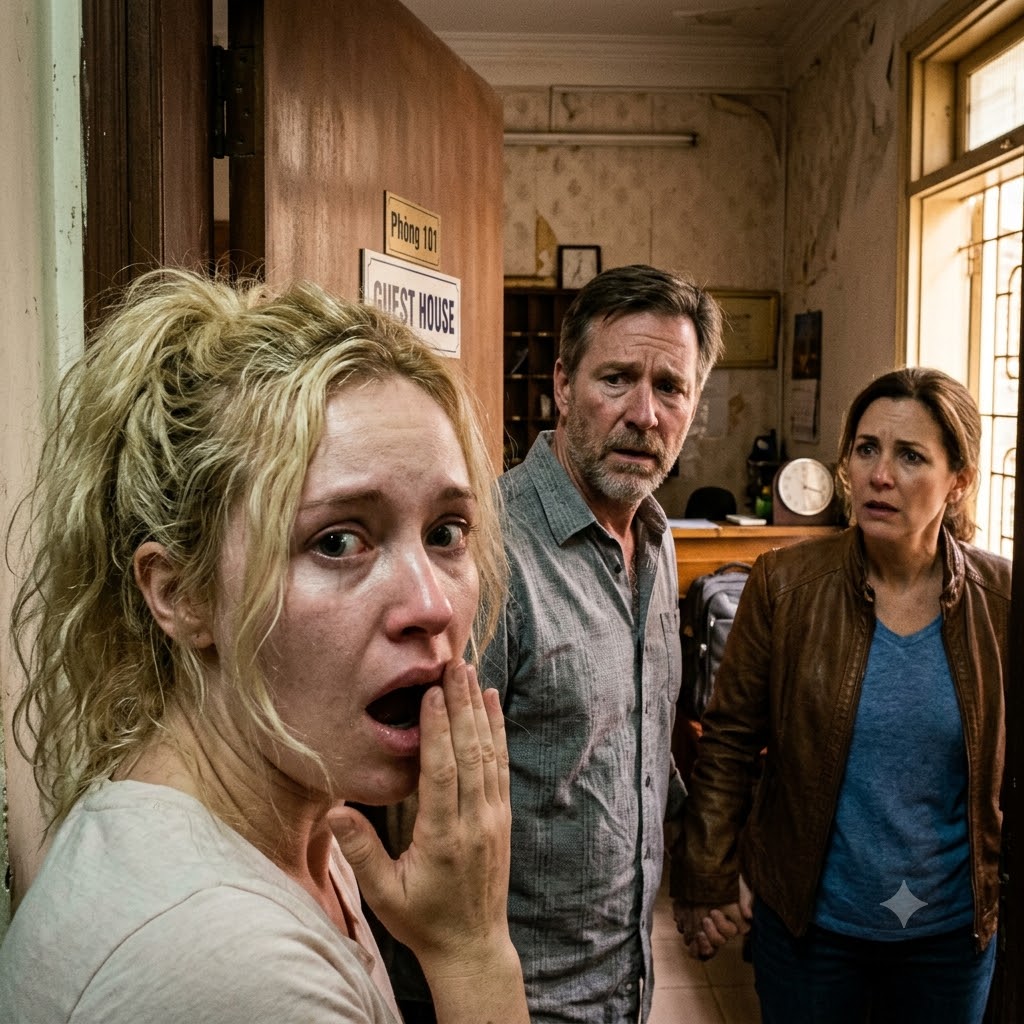
I walked into my husband’s office carrying homemade soup and found him asleep on the couch with his assistant curled against his chest
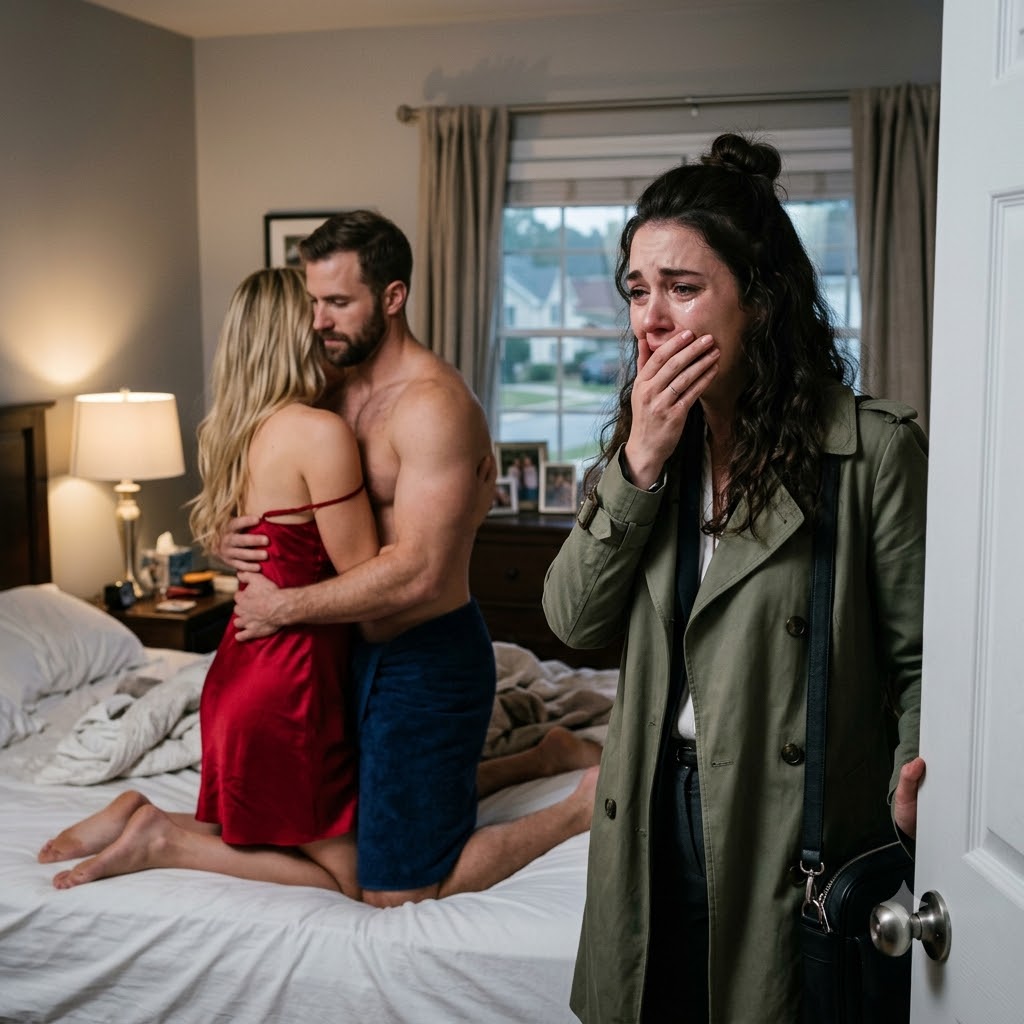
I walked into my husband’s office carrying homemade soup and found him asleep on the couch with his assistant curled against his chest, his arm wrapped around her waist like it belonged there. That night, I would send Daniel four words that changed the way he understood our marriage forever. And I still didn’t know the scene in front of me was only the first truth I was about to uncover.
Chapter 1: The Glass Tower on Wilshire
The steam rising from the stainless-steel thermos carried the warm, rich aroma of roasted garlic, wild rice, and chicken—a recipe my mother had taught me when the rainy winters in Portland felt too heavy to bear.
It was 8:30 PM on a dreary Tuesday in downtown Los Angeles. The glass-and-steel facade of Vance & Mercer Asset Management loomed thirty stories above Wilshire Boulevard, largely dark except for the floor-to-ceiling windows on the top level.
My name is Clara Mercer. For eleven years, I was the quiet anchor of Daniel Mercer’s universe.
We had met in our late twenties when Daniel was a low-level analyst working out of a cramped cubicle with a leaking ceiling, and I was a junior curator at a local art institute. Back then, dinner was three-dollar street tacos eaten on the hood of his battered sedan, and our dreams were modest, glowing things. Over the next decade, I watched Daniel transform into a shark—brilliant, relentless, and increasingly cold. As his firm grew into a multi-billion-dollar hedge fund, our humble life shifted into a sprawling, quiet estate in Bel-Air.
Lately, Daniel had been slipping away. There were late-night “emergency portfolio restructurings,” sudden weekend trips to Palo Alto, and a growing, impenetrable wall of reserve behind his piercing blue eyes. He looked exhausted, his handsome jawline constantly tight with stress.
So, like a dutiful, loving wife who still believed in the ghost of our early romance, I had spent the afternoon simmering his favorite soup, packed it into a tote bag, and driven through gridlocked freeway traffic to surprise him.
The night security guard recognized me instantly, offering a polite nod as he badged me through the private executive elevator. The ride to the thirtieth floor was silent, smooth, and sickeningly fast.
When the elevator doors slid open, the grand reception area was quiet. The marble floors gleamed beneath dimmed recessed lighting. I walked softly past the empty cubicles, my suede boots making no sound against the thick wool carpet.
The door to Daniel’s corner office was frosted glass, left ajar by a couple of inches. A warm, golden light spilled out onto the dark floorboards.
I reached out to push the door open, a soft smile forming on my lips. “Daniel, I brought—”
The words froze in my throat.
The thermos slipped inside my canvas tote bag, thumping heavily against my hip.
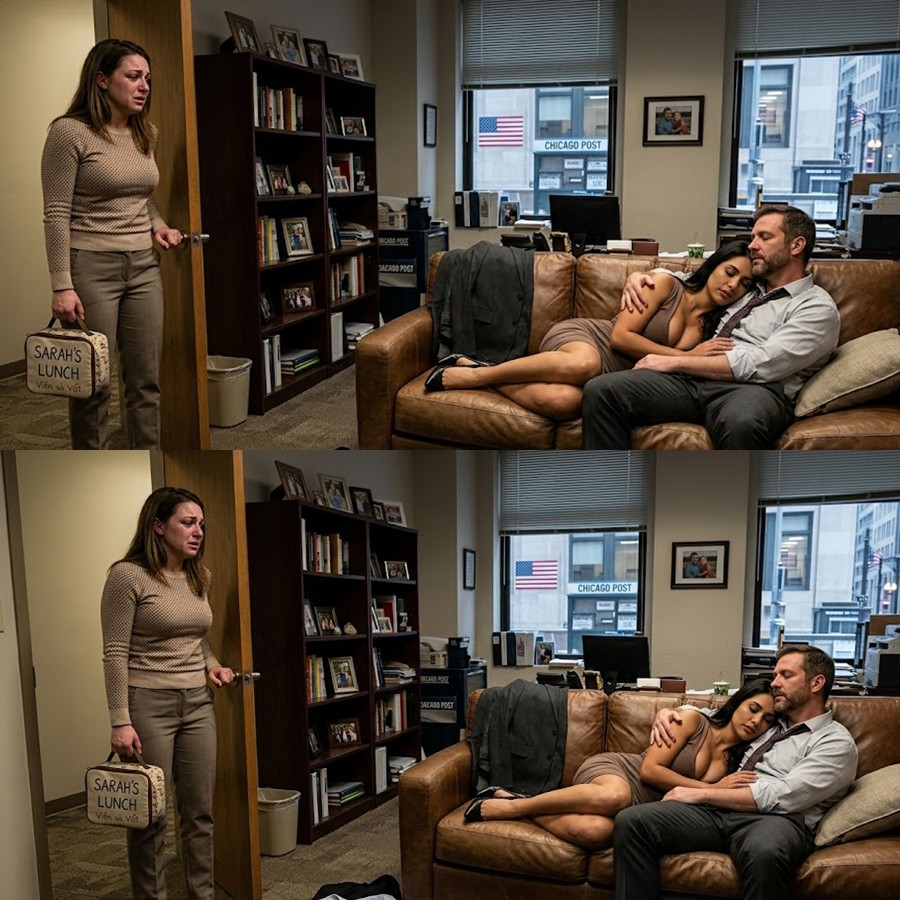
Inside the office, the massive mahogany desk was covered in unread prospectuses and glowing monitors. But Daniel wasn’t at his desk. He was lying on his back on the broad leather sofa near the floor-to-ceiling window, his eyes closed, his chest rising and falling in deep, rhythmic slumber.
Curled against his chest was Chloe Adams.
Chloe was twenty-six, hired six months ago as his executive assistant. She was striking in a delicate, fragile way—petite, with soft auburn hair and an air of helpless reverence around Daniel that I had initially brushed off as professional admiration.
She lay tucked completely under his right side, her head resting on his shoulder, her arm draped over his ribcage. Daniel’s thick, muscular arm was wrapped securely around her narrow waist, his fingers resting casually on her hip as if pulling her closer even in his sleep.
They didn’t look like two tired colleagues who had accidentally fallen asleep after a long shift. They looked like a couple who had spent years learning the contours of each other’s bodies. They looked settled. They looked natural.
I stood in the doorway for a full minute. My heart didn’t race; my hands didn’t shake. Instead, a profound, bone-deep frost settled over my lungs. It was the icy clarity that comes when a long-held suspicion finally solidifies into undeniable reality.
I didn’t open the door further. I didn’t scream, throw the soup against the glass, or drag Chloe out by her auburn hair.
I slowly backed away from the frosted glass door, step by step, until I reached the elevator bank. I pressed the call button, stepped inside, and descended into the dark parking garage below.
Chapter 2: Four Words
The drive back to Bel-Air was a blur of red taillights and rain-slicked asphalt.
Our house—a ten-thousand-square-foot contemporary mansion overlooking the city lights—felt hollow. I walked into the dark kitchen, set the thermos of soup down on the marble island, and walked straight into Daniel’s home study.
I opened his private floor safe behind the oil painting near his desk. I knew the combination; he had given it to me five years ago when we bought the property, assuming I would never have a reason to look inside.
Inside were stacked land deeds, international bearer bonds, passport files, and a secondary, encrypted mobile phone plugged into a charging dock.
I took out the secondary phone. The screen lit up, requiring a passcode. I tried his birthday—incorrect. I tried our wedding anniversary—incorrect.
I tried Chloe’s birthday: 10-14.
The phone unlocked instantly.
I scrolled through the messages. There were hundreds of them stretching back eight months—months before Chloe was even officially hired at Vance & Mercer. Messages detailing secret weekends in Santa Barbara, wire transfers to a private account in the Cayman Islands under the name Adams Holdings LLC, and photos of architectural blueprints for a luxury villa in Cabo San Lucas.
One message from Daniel, sent three weeks ago, caught my eye:
“Once the Mercer-Vance merger clears next month, the buyout capital hits my personal escrow. Clara gets the Bel-Air house and a quiet settlement. You and I get the rest. Just hold tight, my sweet girl.”
He hadn’t just cheated on me. He was systematically stripping our marital assets, inflating shell companies, and preparing to dump me with a depreciating piece of real estate while he walked away with tens of millions in untraceable capital.
He thought I was the sweet, naive curator who lived in a world of oil paintings and garden tea parties. He forgot that before I studied art history, I had earned a bachelor’s degree in forensic accounting at UCLA—a degree I had shelved to support his rise in the financial world.
I placed the secondary phone back in the safe, pulled out my own personal phone, and composed a text message to his primary number.
At 11:45 PM, I heard his car pull into the circular driveway below. I heard the front door open, his heavy footsteps echoing in the foyer, followed by the quiet sound of him kicking off his Italian leather shoes.
He walked up the grand staircase, his tie loosened, looking exhausted and rehearsed. He stopped in the doorway of our master bedroom, offering a tired, practiced smile.
“Hey, honey,” he murmured, rubbing his temples. “Sorry I’m so late. The Mercer-Vance merger files are a nightmare. I fell asleep at my desk around eight and just woke up.”
I sat in the armchair by the balcony window, wearing a silk robe, my hands resting calmly in my lap. I looked at him—really looked at him—for what felt like the last time.
“It’s fine, Daniel,” I said softly. “I left something for you on your phone.”
Daniel pulled his phone from his suit pocket, frowning slightly as he tapped the screen to read the text message I had sent him five minutes earlier.
The smile vanished from his face. The color drained from his skin so fast he looked as if he had been struck by lightning. His eyes widened in sheer, paralyzing horror.
The message contained just four words:
“I brought the soup.”
Chapter 3: The Shell Game
Daniel’s mouth opened, but no sound came out.
The four words weren’t a scream or an accusation; they were a death sentence for his carefully constructed lie. He realized instantly that I had walked into his office, seen him holding Chloe on the sofa, and walked out without making a sound.
“Clara…” he stammered, taking an unsteady step into the room, his phone trembling in his grip. “Clara, wait… listen to me. It—it’s not what you think. Chloe was upset… her mother is sick, she was crying, she collapsed on the couch, and I—I was just comforting her and fell asleep—”
“Save it, Daniel,” I said, my voice as calm as a frozen lake. “You’re embarrassing yourself.”
“Clara, please!” He rushed toward my chair, dropping to his knees, reaching out to take my hands. “I love you! You’re my wife! I made a mistake, a terrible mistake, but it was just stress! It meant nothing!”
I pulled my hands back, stepping out of the armchair and walking toward the doorway.
“Where are you going?” he begged, his face pale, sweat breaking out across his forehead.
“To sleep in the guest room,” I replied smoothly. “We have a very busy month ahead of us, Daniel. You should get some rest, too.”
For the next two weeks, I didn’t file for divorce. I didn’t change the locks. I didn’t hire a private investigator to throw photos in his face.
Instead, I went to work.
I called Arthur Vance—Daniel’s senior partner at Vance & Mercer. Arthur was sixty-eight, a legendary titan of West Coast finance, and a man who valued integrity and personal honor above all else. He was also a man who considered me like a second daughter, having known my late father through the art restoration board.
I met Arthur for breakfast at a quiet private club in Pasadena. Over Earl Grey tea, I laid out three leather-bound binders.
Inside were not just proof of Daniel’s affair with Chloe, but detailed forensic breakdowns of the Adams Holdings LLC transactions. Daniel had been using his executive authority to divert funds from Vance & Mercer’s primary client liquidity pools into shell accounts, framing the missing capital as “market volatility losses” before routing them toward his private offshore escrow.
He wasn’t just cheating on his wife; he was robbing his senior partner.
Arthur sat in silence for five minutes, reading through the ledger entries, his face hardening into dark granite.
“He thought he was clever,” Arthur said, his deep voice trembling with suppressed rage. “He used my trust to build his reputation, and now he’s trying to gut the firm from the inside before the merger.”
“The merger closes in three weeks, Arthur,” I said, leaning forward. “If you fire him now, he’ll trigger his executive severance package and liquidate the offshore accounts before the SEC gets involved. You’ll be left holding the liability.”
Arthur raised his eyes, looking at me with fresh respect. “What do you propose, Clara?”
“Let him think he’s winning,” I smiled softly. “Let him proceed with the merger meeting on the 24th. Give him total access to the final transfer protocols. And on the morning of the closing… we spring the trap.”
Chapter 4: The Mirage of Control
For twenty-one days, Daniel lived in a state of quiet, agonizing paranoia.
He tried everything to appease me. He sent dozens of white roses to the house, bought a diamond necklace from Cartier that sat unopened on my vanity, and abruptly transferred Chloe to a different administrative department on another floor.
“See?” Daniel had pleaded one evening in the kitchen, standing five feet away as I poured my morning coffee. “She’s gone, Clara! I cut all personal ties with her. It’s over. We can fix this. We can go to marriage counseling. Just tell me what you want!”
“I want you to focus on your merger, Daniel,” I replied with a tight, serene smile. “It’s the biggest deal of your career. You wouldn’t want anything to distract you from what you deserve.”
He took that as a sign of eventual forgiveness. A man consumed by greed will always interpret quietness as weakness. He convinced himself that I was simply a hurt wife who would eventually accept a grand financial gesture and settle back into my comfortable life in Bel-Air.
In the office, Chloe grew desperate. Cut off from Daniel’s direct contact and realizing her access to the offshore accounts was stalling, she began leaving frantic voice notes on his secondary phone—voice notes that were automatically routing straight to my forensic team’s server.
“Daniel, what is going on?!” Chloe whispered frantically in one recording. “The escrow transfer for the Cabo property was rejected by the bank this morning! You told me we were leaving for Mexico the day after the merger! Is your wife stopping this?!”
Daniel didn’t answer her. He couldn’t. He was locked in a vice of his own making—trying to keep his mistress quiet, trying to keep his wife placated, and trying to pull off a fifty-million-dollar corporate theft under the nose of Arthur Vance.
By the night of September 23rd—the eve of the final merger sign-off—Daniel was a nervous wreck. He spent three hours in his study, drinking scotch, frantically reviewing the digital transfer keys on his laptop.
I stood in the doorway, watching him through the shadows.
He looked up, catching my reflection in the glass window. “Tomorrow morning at ten, Clara,” he said, trying to force a confident grin. “The deal closes at the Beverly Hills Hotel conference hall. Once the ink is dry… our lives change forever.”
“Yes, Daniel,” I whispered into the dark room. “They certainly will.”
Chapter 5: The Beverly Hills Ballroom
The Crystal Ballroom at the Beverly Hills Hotel was bathed in the warm glow of crystal chandeliers and morning sunlight streaming through towering arched windows.
Over fifty high-profile investors, corporate attorneys, press reporters, and board members from both Vance & Mercer and the acquiring New York firm sat at round mahogany tables. At the front of the room was a long stage set with a press podium, microphone stands, and a large digital screen displaying the merger branding.
Daniel stood near the stage, looking impeccable in a bespoke navy Tom Ford suit. He was smiling, shaking hands with billionaires, nodding at reporters, soaking in the adulation of a man who believed he was reaching the pinnacle of the financial world.
Beside him stood Arthur Vance, calm, stoic, wearing a sharp charcoal suit, his arms crossed over his chest.
At 9:55 AM, I stepped through the double doors at the back of the ballroom.
I wore a tailored emerald-green silk dress, my dark hair styled in elegant waves, my posture straight and regal. Beside me walked David Vance—Arthur’s youngest brother and one of the most ruthless forensic matrimonial attorneys in the state of California.
Daniel saw me walking down the center aisle. A flash of relief crossed his face. He thought I was showing up to play the supportive corporate wife for the press cameras. He smiled, stepping off the stage to meet me half-way.
“Clara,” he whispered, reaching out to take my elbow. “You look beautiful. I’m so glad you came.”
“I wouldn’t miss this for the world, Daniel,” I said, stepping past his grip and walking straight up the wooden stairs onto the main stage.
Daniel frowned, his eyes darting nervously toward the audience. “Clara? What are you doing? The signing ceremony starts in five minutes—”
Arthur Vance stepped up to the podium’s microphone. The room fell silent as the titans of finance looked up, expecting the opening remarks for a multi-billion-dollar acquisition.
“Ladies and gentlemen,” Arthur’s deep, commanding voice resonated through the loudspeakers. “Thank you for joining us today. Before we execute the final signatures for the Vance & Mercer acquisition, there is an urgent structural amendment to the leadership protocol that must be presented to the board.”
Daniel froze at the edge of the stage, his brow furrowing. “Arthur? What are you talking about? The board approved the agenda yesterday—”
Arthur didn’t look at him. He simply clicked a small wireless remote control in his hand.
The massive digital screen behind the podium flickered.
Instead of the corporate merger slides, a high-resolution document appeared on the thirty-foot screen.
It was a certified copy of an international arrest warrant issued by the Department of Justice, accompanied by a forensic audit map detailing twenty-four illegal wire transfers from Vance & Mercer accounts directly into Adams Holdings LLC.
Below the audit map were five crystal-clear surveillance photographs taken by federal investigators three days prior—photographs showing Chloe Adams meeting with an undercover SEC agent in a Santa Monica cafe, handing over copies of Daniel’s forged ledger keys in exchange for full immunity.
The entire ballroom gasped. Cameras began flashing frantically like a sea of strobe lights.
Chapter 6: The Unraveling
Daniel’s face transformed from confusion to sheer, unadulterated terror. He stumbled backward, his back hitting the mahogany podium.
“What is this?!” Daniel shrieked, his voice cracking, looking around at the sea of flashing cameras and horrified investors. “This is a mistake! Someone hacked our servers! Arthur, turn that off!”
“It’s not a mistake, Daniel,” I said, stepping toward the microphone.
My voice echoed calmly across the vast, frozen room.
“For eight months, you utilized shell corporations to embezzle forty-two million dollars from Vance & Mercer,” I said, looking down at him with cold precision. “You believed that by burying the funds in offshore accounts under your assistant’s name, you could force a corporate liquidation during this merger, leave Arthur with the liability, and walk away clean.”
“Clara, stop!” Daniel sobbed, stepping toward me, his hands raised in desperate supplication. “You’re ruining everything! They’ll ruin us!”
“There is no ‘us,’ Daniel,” I replied softly.
David Vance stepped forward, pulling a thick stack of legal documents from his leather briefcase and handing them directly to Daniel in front of thirty news cameras.
“Daniel Mercer,” David announced loudly. “You have been officially served with a petition for dissolution of marriage in the Superior Court of Los Angeles County. Simultaneously, a temporary restraining order and an asset freeze have been placed on all accounts associated with your name, including the Bel-Air estate, your personal investment portfolios, and the escrow funds at Adams Holdings.”
Two men in sharp dark suits stepped through the double doors at the back of the ballroom—agents from the Federal Bureau of Investigation, accompanied by representatives from the Securities and Exchange Commission.
They walked down the center aisle with steady, unhurried strides.
Chloe Adams stepped into the back of the room behind them, escorted by two federal marshals, her face red from crying, wearing handcuffs around her small wrists. She looked up at Daniel with eyes full of anger and betrayal, realizing that the man who had promised her a luxury villa in Cabo had simply used her name as a human shield for his financial crimes.
“Daniel Mercer?” the lead FBI agent asked, stepping onto the stage and pulling a pair of steel handcuffs from his belt. “You are under arrest for federal wire fraud, grand larceny, and corporate embezzlement. You have the right to remain silent.”
“No! Wait!” Daniel screamed as the agent grabbed his arms, pinning his wrist behind his back. The metal clicked shut. “Clara! Tell them! Tell them it’s a mistake! You know me! I did this for us! I did it for our future!”
As the agents turned him around to lead him off the stage, Daniel looked at me—his eyes wild, desperate, weeping, pleading for a shred of the unconditional devotion I had given him for eleven years.
I stood on the stage, framed by the bright morning light streaming through the arched windows, surrounded by the ruins of his empire.
I didn’t yell. I didn’t smile.
I simply looked into his eyes and whispered four words:
“Enjoy the soup, Daniel.”
Epilogue: The Canvas of Tomorrow
One year later.
The morning sun over the Pacific Ocean in Malibu was golden, warm, and crisp.
On a grassy bluff overlooking the crashing waves of El Matador Beach sat a beautifully renovated, Spanish-style art gallery. The painted sign above the carved wooden doors read: The Mercer Gallery of Modern Art.
Inside, the polished concrete floors were filled with light, displaying brilliant contemporary paintings and sculptures from emerging female artists across the country.
I stood near the grand glass doors, wearing a white linen jumpsuit, holding a warm cup of coffee, looking out at the endless horizon where the blue sky met the ocean.
After the bankruptcy and criminal proceedings, Daniel had been sentenced to nine years in a federal correctional facility in Victorville. His assets had been fully liquidated to pay restitution to Vance & Mercer and the SEC. Under California law, because I had assisted the forensic team in recovering the stolen firm capital, Arthur Vance had ensured I received a generous, clean share of our legitimate marital liquidations.
I bought the gallery in Malibu with my own money, under my own name.
The gallery door chimed softly.
Arthur Vance walked inside, wearing a comfortable cardigan and slacks, holding a rolled-up architectural plan for our upcoming winter exhibition.
“Morning, Clara,” Arthur smiled, stepping over to the window. “The new lighting layout for the main hall just came in.”
“Thank you, Arthur,” I smiled back, taking the plans and spreading them out across the wooden display table.
“You look happy,” Arthur noted gently, looking at my face. “Real peace suits you.”
I looked out the window at the ocean.
I remembered the quiet, lonely nights in Bel-Air; I remembered the cold, heavy realization when I looked through the frosted glass door on Wilshire Boulevard and saw my husband holding another woman.
Back then, I thought my life was over. I thought eleven years of sacrifice had been reduced to a cruel joke.
I turned back to Arthur, a genuine, radiant smile illuminating my face.
“My life didn’t end that night, Arthur,” I said, leaning over the architectural plans, feeling the warmth of the sun on my skin. “It was just the moment I decided to start painting my own canvas.”
Chapter 7: The Shadows Behind the Canvas
The soft rhythm of the Pacific waves crashing against the cliffs beneath The Mercer Gallery of Modern Art had become my heartbeat over the past twelve months. In Malibu, time moved differently than it did in the sterile, high-pressure glass box on Wilshire Boulevard. Here, light was something you caught on canvas, not something reflected off corporate monitors.
It was a Tuesday evening in late October. The public gallery had closed at five, leaving only the soft glow of track lighting aimed at a new series of large-scale oil paintings by a young, talented female artist from Chicago.
I was in my private second-floor office—a sunlit room filled with the scent of linseed oil, fresh coffee, and ocean salt—reviewing the gallery’s quarterly tax filings. For the first time in my life, every single dollar that passed through my hands was accounted for, earned through honest curation, and entirely under my control.
The gallery’s front bell chimed downstairs.
I frowned slightly, glancing at my watch. It was nearly 6:30 PM. The front doors were locked from the outside, but staff members had keycard access.
“Arthur?” I called out, leaning over the wooden balustrade that overlooked the main exhibition hall. “Did you forget your glasses again?”
No one answered.
The silence that followed was heavy, deliberate, and cold.
Slowly, the sound of measured, leather-soled footsteps echoed across the polished concrete floor below. A tall, slender woman stepped out from beneath the shadow of the grand archway into the warm spotlight illuminating a crimson abstract canvas.
She wore a tailored black trench coat, her dark hair pulled back into a tight, severe bun. Her face was pale, thin, and worn, but her eyes—sharp, dark, and burning with a toxic mixture of desperation and malice—were unmistakable.
It was Chloe Adams.
She had been released three weeks ago after serving a reduced fourteen-month sentence at a federal women’s facility in San Bernardino, having secured a plea bargain in exchange for her testimony against Daniel.
I didn’t panic. The icy composure that had sustained me through the destruction of my marriage settled over my spine like armor. I walked slowly down the open wooden staircase, my eyes fixed on her, keeping my hands visible and my posture steady.
“The gallery is closed, Chloe,” I said, my voice smooth and devoid of fear, stopping five steps from the bottom of the stairs. “And you are trespassing.”
Chloe let out a dry, rasping laugh that sounded like dead leaves dragging across pavement. She reached into her coat pocket, pulling out a heavy brass keycard—an old master pass from the building’s previous owner that should have been deactivated months ago.
“You really thought you wiped the slate clean, didn’t you, Clara?” Chloe hissed, her voice trembling with suppressed rage. She took two steps toward the stairs, her dark eyes scanning my white linen outfit, my diamond stud earrings, and the beautiful, light-filled space around us. “Look at you. Living in Malibu. Playing the patron saint of the arts. While I spent fourteen months eating prison slop because of you!”
“You went to prison because you helped a thief steal forty-two million dollars, Chloe,” I replied calmly. “You were an adult who made a calculated choice to ruin another woman’s life for a villa in Cabo.”
“He loved me!” Chloe screamed, her voice echoing violently off the gallery walls. “Daniel loved me! He was going to give me everything! You were just the boring, dutiful wife he couldn’t wait to dump! If you hadn’t walked into his office that night—if you hadn’t dug through his safe—we would be in Mexico right now!”
She pulled her right hand out of her trench coat pocket.
Glinting beneath the gallery spotlights was a heavy glass bottle of industrial-grade paint stripper—a caustic, acid-based solvent used for stripping oil paint down to raw canvas.
“He built this for you,” Chloe spat, her face twisting into a hideous mask of envy. “The settlement money… the capital Arthur Vance gave you… it all came out of Daniel’s ruin. You took my future, Clara. Now I’m going to take yours.”
She unscrewed the cap, raising the bottle toward a two-hundred-thousand-dollar original painting hanging beside the stairs.
Chapter 8: The Price of Creation
In the past, I might have tried to reason with her. I might have pleaded, offered her money, or backed away in terror.
But I was no longer the woman who stood weeping in the dark foyer of a Bel-Air mansion while her husband lied to her face. I was a woman who had audited financial webs, outsmarted corporate sharks, and rebuilt her soul from scratch.
“If you throw that solvent, Chloe,” I said, my voice dropping into a register so cold it stopped her mid-swing, “the chemical vapor will trigger the gallery’s automated fire suppression system instantly. The doors will seal automatically, high-expansion foam will flood this floor in twenty seconds, and the silent alarm will hit the Malibu Sheriff’s station.”
Chloe froze, her arm trembling, the open bottle hovering inches from the canvas.
“You’re already on federal probation,” I continued, taking a slow, deliberate step down the stairs, closing the distance between us without a hint of hesitation. “If you commit a felony hate crime and destruction of property here tonight, you won’t do fourteen months in a minimum-security camp. You will do ten years in a state penitentiary for commercial terrorism and arson.”
Chloe looked at the ceiling, then back at me, her confidence wavering as she realized she was dealing with a woman who understood system mechanics far better than she ever would.
“You think you’re so smart,” Chloe whimpered, tears of pure frustration springing to her eyes. “You think you won! Daniel hates you! He sits in Victorville cursing your name every single day!”
“Daniel doesn’t hate me, Chloe,” I whispered, stepping off the last stair onto the concrete floor, standing just three feet from her. “Daniel doesn’t even think about me. And he certainly doesn’t think about you. He is a narcissist who only mourns the loss of his own power.”
I looked into her tear-streaked face—this young woman who had traded her dignity, her freedom, and her youth for the cheap promises of a married coward.
“He used you as a human shield,” I said softly, allowing a touch of genuine pity to enter my tone. “He put the shell company in your name so that if the federal government came knocking, you would take the fall while he claimed ignorance. I didn’t put those handcuffs on your wrists in the Beverly Hills Hotel, Chloe. Daniel did. The moment he typed your name on those Cayman bank accounts.”
Chloe stared at me, her chest heaving. The realization hit her like a physical blow—the cold, undeniable truth that she had been nothing more than a disposable tool in Daniel Mercer’s grand illusion.
Her hand slowly sank.
The glass bottle slipped from her numb fingers, crashing onto the concrete floor. The clear, harsh chemical liquid spilled out, pooling harmlessly near her shoes, missing the artwork entirely.
Chloe collapsed onto her knees in the middle of the gallery, burying her face in her hands, sobbing uncontrollably—not out of rage, but out of the sheer, crushing weight of her own foolishness.
I didn’t touch her. I pulled my phone from my pocket, dialed Arthur Vance’s private line, and kept my eyes on the broken girl weeping on the floor.
“Arthur,” I said quietly when he answered. “Please call Sheriff Miller. We have a trespasser at the gallery. And bring a cleaning crew for the main floor.”
Chapter 9: The Final Ledger
Winter arrived in Southern California with crisp, cold mornings and dramatic grey skies over the ocean.
Two months after the incident at the gallery, Chloe Adams agreed to a court-ordered psychiatric facility placement and a permanent restraining order, effectively removing her from my life forever.
On a chilly morning in mid-January, I received a certified letter bearing the official blue seal of the United States District Court, Central District of California.
It was the final decree of corporate restitution and bankruptcy liquidation for Vance & Mercer Asset Management, along with the definitive asset division summary from my divorce proceeding.
Attached to the legal paperwork was a personal note from David Vance, my attorney:
Clara,
The final liquidation of Daniel’s seized private assets—including his offshore accounts in the Caymans, his personal stock options, and the forfeiture of his deferred compensation—has been completed by the federal receiver. After full restitution was paid to Arthur’s firm, the remaining marital estate balance of $14.2 million has been cleared for final transfer.
Because Daniel was convicted of marital fraud, asset concealment, and corporate felony embezzlement, the court has awarded you 100% of the remaining liquid capital.
Daniel signed the final release papers from his cell in Victorville yesterday morning. He declined to attach a personal note.
You are completely, legally, and financially free.
— David
I set the letter down on my oak desk.
I looked out the window at the Pacific Ocean. Fourteen million dollars. It was a massive sum of money—the very wealth Daniel had ruined his life trying to hoard, manipulate, and steal. He had traded his reputation, his freedom, his marriage, and his youth for a pile of gold that had ultimately been handed directly to the woman he tried to deceive.
The irony was absolute.
That afternoon, I drove my sedan into the city. I didn’t go to Bel-Air, nor did I go near Wilshire Boulevard.
Instead, I drove to the Los Angeles Community Foundation in downtown LA—a non-profit organization that funded shelter construction, vocational education, and legal defense resources for women escaping domestic abuse, financial coercion, and coercive control.
I met with the foundation’s director in a modest conference room overlooking the city skyline.
“Mrs. Mercer,” the director said, reviewing the wire transfer authorization form I had placed on the table. Her eyes widened in utter disbelief. “Is… is this amount correct? Seven million dollars?”
“It is,” I said, holding her gaze with a quiet, unwavering smile. “I want it used to establish a dedicated forensic legal aid fund. I want women who are being financially trapped by abusive partners to have access to the best accountants, the best attorneys, and the best investigators in the state—free of charge.”
The director’s hands shook as she signed the acceptance documents. “This will save thousands of lives, Clara. I don’t even know how to thank you.”
“You don’t need to thank me,” I replied, standing up and buttoning my coat. “Just make sure that when those women walk away… they get to keep everything they built.”
Chapter 10: The Visitor in Victorville
I had one final debt to settle—not with the law, not with the bank, but with my own past.
On a bleak, windy Tuesday in February, I drove two hours inland through the dry desert floor of the High Desert to the Federal Correctional Institution in Victorville.
The facility was a bleak, sprawling compound of tan concrete walls, razor wire, and guard towers rising starkly against the barren desert landscape. The air smelled of sand, exhaust, and cold dust.
Passing through security was a cold, dehumanizing process—metal detectors, background checks, and the heavy, mechanical clanking of iron doors closing behind me.
I sat down at a small laminate table in the center of the visitation hall. The room was noisy, filled with crying children, quiet whispering, and the constant hum of overhead fluorescent lights.
Ten minutes later, the inner door opened.
Daniel Mercer stepped into the room.
He looked unrecognizable. The bespoke Tom Ford suits, the sculpted hair, and the arrogant, commanding posture were gone. He wore a loose, ill-fitting khaki prison jumpsuit. His hair was shaved close to his scalp, showing streaks of grey at his temples, and his handsome face was gaunt, his eyes hollow and ringed with dark circles.
He froze when he saw me sitting at the table.
For a moment, he looked as if he wanted to turn around and walk back to his cell. But his feet moved forward, dragging his heavy prison boots across the linoleum floor until he pulled out the plastic chair opposite me and sat down.
We sat in silence for a long moment.
“You look good, Clara,” Daniel said. His voice was raspy, stripped of the smooth, booming confidence that had once ruled boardrooms across the country.
“I am good, Daniel,” I replied quietly.
He looked down at his rough, unwashed hands resting on the table—hands that had once signed multi-million-dollar contracts, now scarred and dry from institutional labor.
“Why are you here?” he asked, his tone a mix of bitterness and quiet shame. “To gloat? To tell me about your new gallery in Malibu? To show off how much of my money you took?”
“It wasn’t your money, Daniel,” I said softly, leaning forward slightly. “It was our life. And you sacrificed it for nothing.”
Daniel clutched his hands together, his jaw working as he tried to maintain his composure. “I made a mistake, Clara. I got greedy. I got caught up in the high-stakes game… I thought I could control everything.”
“You couldn’t even control yourself,” I said.
He raised his eyes, looking at me with a desperate, flickering hope—the same pathetic look he had given me on the stage at the Beverly Hills Hotel.
“Do you ever think about us?” Daniel whispered, his voice trembling. “Before the firm? Before the money? Back in Portland, when we had nothing?”
I looked at him—really looked at the man I had loved for over a decade, the man for whom I had shelved my own dreams, the man who had slept on a sofa with his assistant while plotting to strip me of my dignity.
I felt no rage. I felt no hatred. I felt only a profound, liberating emptiness.
“I think about that girl in Portland sometimes,” I said, my voice steady and quiet. “She was kind, loyal, and loving. But she died the night she walked into your office on Wilshire Boulevard.”
Daniel swallowed hard, a single tear slipping down his gaunt cheek, tracing a path through the dust on his skin.
“I signed the papers,” Daniel rasped. “You have everything now. The money, the house proceeds, the gallery… my freedom.”
“You gave those things away, Daniel,” I said, standing up from the table, pulling my leather gloves onto my hands. “I simply picked up what you dropped.”
I turned my back on him.
“Clara!” he called out, his voice cracking, raising his hands as the corrections officer stepped toward his chair. “Clara, please… look at me!”
I didn’t stop. I walked past the guard station, through the heavy iron doors, and out into the crisp, bright desert sunlight.
Chapter 11: The Unbroken Horizon
Spring arrived in Malibu with a violent, beautiful burst of life.
The coastal hills were carpeted in bright yellow mustard flowers, and the Pacific Ocean sparkled like a field of crushed diamonds beneath a cloudless blue sky.
The Mercer Gallery of Modern Art had officially removed the name Mercer from its facade. The new wooden sign, carved from reclaimed coastal redwood, read simply:
THE CLARA GALLERY
It was our grand reopening night for the Spring Collection—an exhibition featuring ten emerging female painters whose work focused on themes of resilience, rebirth, and personal sovereignty.
The gallery was packed. Over two hundred guests—collectors, art critics, local residents, and friends—filled the sunlit halls. Laughter, ambient string music, and the clinking of champagne glasses drifted out onto the open wooden deck overlooking the ocean.
Arthur Vance stood near the grand entrance, holding a glass of sparkling water, chatting warmly with a prominent art critic from the Los Angeles Times. When he saw me walking toward him, his weathered face lit up with a proud, paternal smile.
“The review from the Times is going to be sensational, Clara,” Arthur said, clinking his glass against mine. “They’re calling this space the most important cultural sanctuary on the West Coast.”
“Thank you, Arthur,” I smiled, looking around the room at the vibrant colors, the smiling faces, and the light reflecting off the ocean waves. “For everything.”
“You did this yourself, my dear,” Arthur said softly, his eyes full of warmth. “I just provided the tea.”
Later that evening, after the last guests had departed and the gallery staff had finished cleaning the floor, I walked out onto the wooden deck alone.
The night air was cool, carrying the fresh, salty spray of the tide below. The moon hung high in the dark velvet sky, casting a brilliant silver path across the moving surface of the ocean.
I leaned against the railing, holding a warm cup of roasted garlic and wild rice soup I had made for myself earlier that evening.
I thought about the night it all began—the rainy Tuesday in downtown LA, the thermos slipping in my bag, the frosted glass door, and the sight of my husband holding another woman on the couch.
If I could go back in time to that dark thirtieth floor on Wilshire Boulevard, if I could stand beside that younger, broken version of myself as she backed away from the door in tears, I wouldn’t tell her to stay. I wouldn’t tell her to fix it.
I would lean in, press my hand against her trembling shoulder, and whisper into the dark:
Watch carefully. Pay attention. Because this moment isn’t the end of your life—it is the birth of your freedom.
I took a slow, deep breath of the cool Pacific air, feeling the steady, rhythmic beat of my heart, completely whole, completely unburdened, and entirely my own.
I looked out at the vast, unbroken horizon, smiled into the quiet night, and stepped inside to close the door.