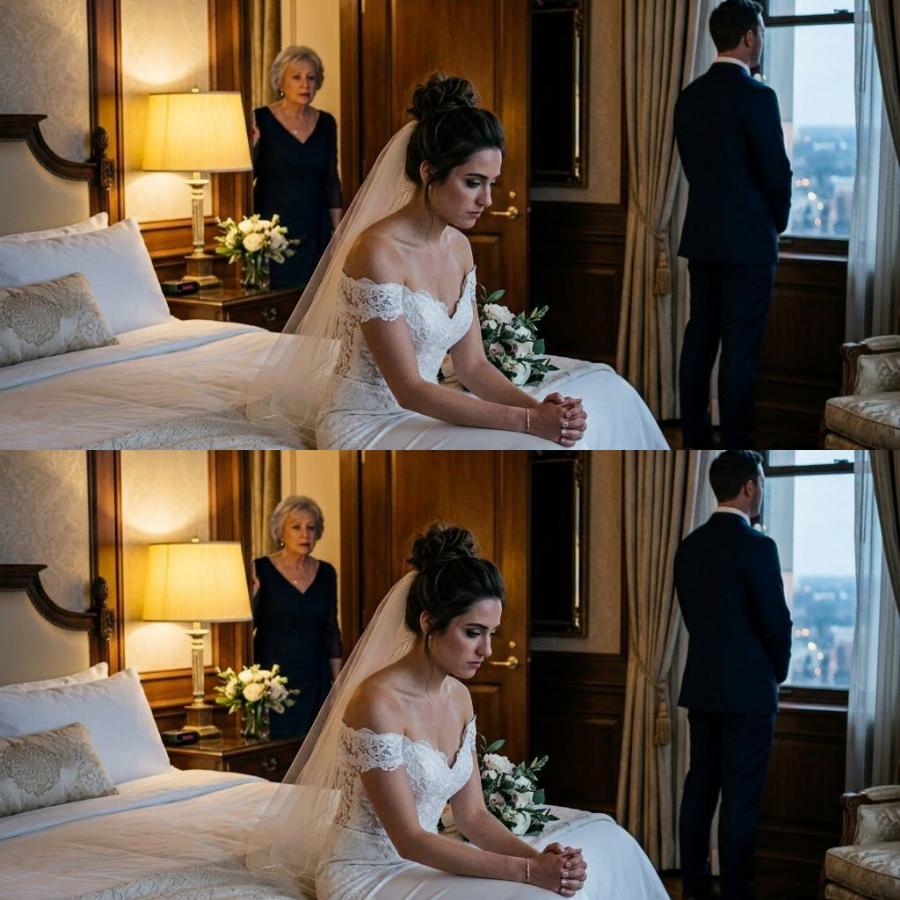
His mistress was wearing my white sable coat while she ordered the bellmen to put my luggage on the sidewalk, and my husband stood beside her telling four hundred guests that I was too unstable to accept our separation
His mistress was wearing my white sable coat while she ordered the bellmen to put my luggage on the sidewalk, and my husband stood beside her telling four hundred guests that I was too unstable to accept our separation. What Bennett did not know was that three hours earlier, I had signed a document that could take the entire building away from him. And even that was not the most shocking thing waiting for him that night.
Chapter 1: The Sidewalk at the Saint-Regal
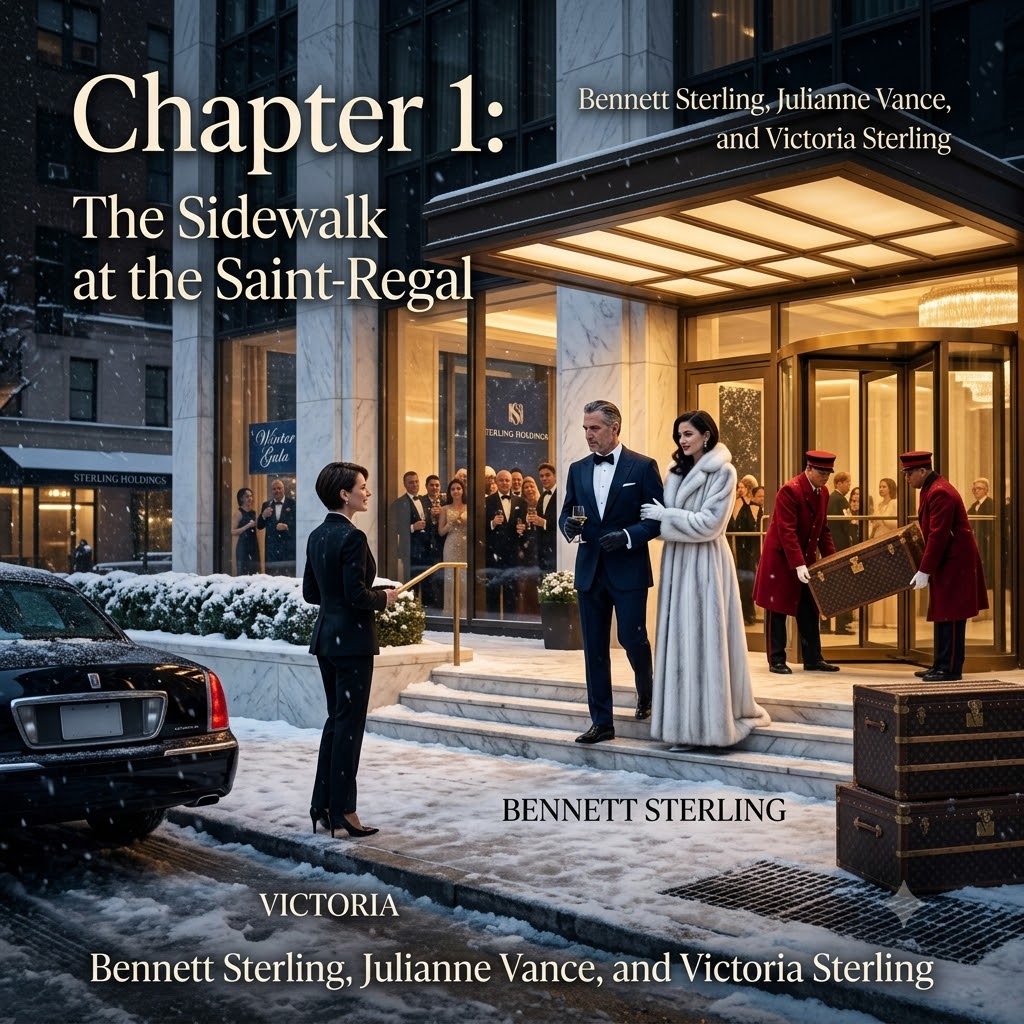
The snow falling over East 64th Street was wet and heavy, clinging to the black velvet collar of my tailored suit jacket like crushed salt.
I stood on the icy curb outside the main entrance of the Saint-Regal Residences—a seventy-story residential tower of white marble and dark glass that dominated the Manhattan skyline—and watched my life being dumped onto the pavement.
Two bellmen in crimson wool coats, their faces stiff with quiet embarrassment, hauled three heavy monogrammed Louis Vuitton trunks out of the grand revolving doors. They stacked them near the valet stand, right next to a slush-covered drainage grate.
Behind them stood Julianne Vance.
She was twenty-six, a former equestrian from Greenwich who had spent the last fourteen months serving as the “Creative Consultant” for Bennett’s private equity firm. Tonight, she was wearing my white Russian sable coat—a bespoke floor-length piece designed by Dennis Basso that Bennett had given me for our tenth anniversary. The coat’s silver-white fur caught the amber glow of the hotel canopy, framing her small, striking face and dark eyes.
And beside Julianne stood my husband of twelve years, Bennett Sterling.
Bennett looked immaculate, as he always did when he was staging a public execution. He wore a midnight-navy Brioni tuxedo, his silvering hair slicked back, a glass of vintage Dom Pérignon held loosely in his gloved right hand. Through the double-height glass lobby windows behind them, four hundred guests—the absolute crest of Manhattan society, Wall Street hedge fund managers, art collectors, and real estate dynasties—were gathered for the annual Sterling Holdings Winter Gala.
“Victoria, please,” Bennett’s voice echoed clearly over the hum of idling town cars and the hiss of snowfall. He spoke with the smooth, practiced resonance of a seasoned corporate raider addressing a hostile board meeting. “Don’t make this any more humiliating for yourself than it already is. You’ve had a severe emotional breakdown. Everyone inside understands.”
Julianne leaned against Bennett’s arm, her gloved hand resting possessively on his lapel. She looked down at me from the marble top step, her lip curling into a triumphant, mocking smile.
“We just want you to get the help you need, Victoria,” Julianne called out, her voice dripping with artificial sympathy sharp enough to slice glass. “Bennett has already arranged a private suite for you at the clinic in Greenwich. The driver will take you as soon as you clear your belongings off the residential driveway.”
Through the glass lobby doors, I saw the faces of our “friends.”
Lady Penelope Vance holding her diamond opera glasses up to her eyes. Marcus Gable, the senior managing partner at Goldman Sachs, sipping his bourbon with a smirk. They were watching the fallen queen of Sterling Holdings get swept out into the storm like street trash.
Bennett leaned down toward me, stepping down one marble stair. His tone dropped to an icy, vicious whisper that the guests inside could not hear.
“You’re finished, Victoria,” he said, his blue eyes hard as flint. “You fought me on the prenuptial restructuring. You fought me on the penthouse ownership. So now, you leave with what you brought into this marriage twelve years ago: three trunks and a reputation as a hysterical, mentally unhinged ex-wife. The board voted at four o’clock. I am now the sole managing general partner of the Saint-Regal Tower. You have no standing here. Get off my plaza.”
I stood perfectly still in the falling snow.
I did not scream. I did not cry. I did not throw the champagne glass Bennett’s security team had pulled from my hand ten minutes earlier.
Instead, I adjusted the lapels of my wet jacket, looked Bennett directly in his eyes, and let out a long, quiet breath that misted into the freezing air.
“You’re right about one thing, Bennett,” I said softly, my voice carrying with precise, calm clarity across the snow-covered marble. “The board did meet at four o’clock.”
Bennett’s brow furrowed slightly, a faint flicker of annoyance crossing his sharp features. “What are you talking about?”
“And you’re right that Julianne looks lovely in my coat,” I added, looking up at Julianne with a small, serene smile that made her fingers tighten nervously around Bennett’s sleeve. “Though she really should check the interior silk lining near the left pocket. The craftsmanship of the lining in that particular coat is… historical.”
“Take her luggage to a taxi, Arthur,” Bennett snapped to the head bellman, turning his back on me to guide Julianne back toward the warm, gilded lobby. “We have a gala to host.”
“Enjoy the party, Bennett,” I called after him, stepping into the back of a black Lincoln Continental that had pulled up to the curb. “Drink the ’96 Krug. It’s the last bottle in the building that actually belongs to you.”
Chapter 2: The Phantom Partner
Inside the warm, leather-scented rear seat of the Lincoln, I pulled out a dark blue leather folio from my briefcase.
Sitting beside me was Eleanor Vance—no relation to Julianne, but a fierce, seventy-two-year-old senior partner at Skadden, Arps who had spent four decades dismantling Wall Street hubris with surgical precision.
“Did he give the speech?” Eleanor asked without looking up from her iPad, where live financial feeds were rapidly updating.
“Word for word,” I replied, leaning back against the headrest and closing my eyes for a brief second. “He told the entire room I was mentally unstable. He had Julianne wear the sable coat to ensure maximum public humiliation.”
“Men like Bennett Sterling are depressingly predictable,” Eleanor said dryly, tapping a red button on her screen. “They mistake arrogance for leverage. Did you sign the final schedule?”
I pulled a Montblanc pen from my pocket, flipped to the last page of the three-hundred-page corporate restructuring deed inside the blue folio, and pressed my signature onto the heavy parchment line: Victoria Elizabeth Sterling (née St. Claire).
Three hours before Bennett had ordered his private security guards to escort me out of our seventy-first-floor duplex penthouse, I had sat in a private conference room on the forty-eighth floor of the JPMorgan Tower on Park Avenue.
Bennett believed he owned the Saint-Regal Residences. He believed he had bought out the original master ground lease three years ago using Sterling Holdings’ offshore capital reserves.
What Bennett’s army of corporate lawyers had failed to realize—because they were too busy burying assets in Cayman Island trusts to hide them from me during our quiet divorce negotiations—was the foundational history of the ground beneath his feet.
The Saint-Regal Tower did not rest on standard Manhattan bedrock. It rested on a ninety-nine-year commercial ground lease established in 1934 by the St. Claire Maritime Trust—my great-grandfather’s estate.
When Bennett purchased the physical building structure three years ago, he bought the concrete, the glass, the elevators, and the air rights. But the ground lease—the legal anchor without which a Manhattan skyscraper is nothing more than an unauthorized trespass on private soil—remained tied to an obscure holding company called Aethelgard Terra LLC.
For twelve years, Bennett had treated me as his stylish, quiet socialite wife—the woman who curated his art collection, organized his political fundraisers, and stood silently beside him while he built his financial empire. He assumed my family’s old Knickerbocker wealth was long exhausted, reduced to antique silver and family portraits.
He did not know that forty-eight hours ago, Aethelgard Terra LLC had executed its contractual option to convert fifty years of unpaid ground-rent index adjustments into an immediate, non-negotiable debt call.
And three hours ago, I had signed the document transferring 100% of Aethelgard Terra LLC into a public community land trust, triggering a clause that placed the entire Saint-Regal structure into court-ordered receivership.
As of 7:15 PM tonight, Bennett Sterling did not own the Saint-Regal Tower.
He was a tenant whose lease had expired twelve minutes ago.
“The filing has cleared the New York Supreme Court registry,” Eleanor said, setting her iPad down with a satisfying click. “The emergency receivership order has been dispatched. The Sheriff’s department is en route to 64th Street right now.”
“Good,” I said, looking out the tinted window at the glowing tail lights of Fifth Avenue. “What about the second matter?”
Eleanor turned to look at me, her sharp green eyes softening with a rare, deep shadow of gravity.
“The forensic accounting team finished the audit of the Cayman accounts at six o’clock, Victoria,” Eleanor said softly. “You were right about the offshore wire transfers. But Bennett wasn’t just hiding sixty million dollars from you to skew the divorce settlement.”
“What was he doing with it?”
Eleanor opened a black folder on her lap and slid a single sheet of paper across the leather seat.
“He wasn’t hiding it from you, Victoria,” Eleanor whispered. “He was paying it to someone else. Someone who has been living under an assumed identity in Zurich for eleven years.”
I looked down at the photograph attached to the top of the paper.
My heart stopped. The breath vanished from my lungs. The quiet composure I had maintained while standing in the freezing snow on 64th Street collapsed into a jagged, suffocating vacuum.
Staring back at me from the black-and-white surveillance print was a face I had buried in my heart twelve years ago—a face I had wept over beside an empty mahogany casket in the rain of a Connecticut graveyard.
“No…” I whispered, my hand trembling so violently the paper rattled in the dark car. “No… she died in the car accident in Lake Como. Bennett flew to Italy… he brought back the death certificate… he identified the remains…”
“Bennett lied,” Eleanor said grimly. “Your sister, Charlotte, is alive.”
Chapter 3: The Anatomy of a Lie
The rain outside turned back into a torrential, freezing sleet as the Lincoln circled Central Park, moving slowly back toward East 64th Street.
My fingers were ice-cold against the glossy paper of the file.
Charlotte.
My younger sister. She was twenty-two when her sports car supposedly veered off a cliff edge above Lake Como during a summer storm in 2014. Bennett had been the one to receive the late-night phone call from the Italian Carabinieri. He had boarded his private Gulfstream within an hour, telling me to stay in New York because the scene was “too traumatic” for me to endure.
He had returned five days later with an urn of ashes, a signed Italian police report, and a quiet, comforting shoulder for me to cry on for three years.
In my grief, I had leaned into Bennett’s strength. Within eighteen months of Charlotte’s death, I had married him, handing over the management of my family’s remaining real estate portfolio to Sterling Holdings so I wouldn’t have to deal with the painful paperwork of my past.
“Look at the ledger entries, Victoria,” Eleanor said quietly, her hand resting over mine.
I turned the page.
Every month for eleven years, on the fifteenth day of the month, a wire transfer of forty-five thousand Swiss francs had been executed from a shell account controlled by Sterling Holdings to a private psychiatric facility in Kilchberg, on the shores of Lake Zurich.
The patient’s registered name was Claire St. Claire.
The diagnostic notes attached to the Swiss facility’s billing records were devastatingly precise: Medically induced amnesia through prolonged pharmacological administration. High-security guardianship held exclusively by Bennett Sterling.
“He didn’t just steal your family’s real estate ground lease, Victoria,” Eleanor explained, her voice burning with a cold, righteous anger. “Charlotte was the co-trustee of the St. Claire Maritime Trust. Under your great-grandfather’s original deed, the ground lease could only be sold or mortgaged if both surviving sisters signed the transfer.”
The truth unraveled in my mind like a venomous snake uncoiling in the dark.
If Charlotte died, her voting rights in the trust passed automatically to me—and as my husband, Bennett gained functional control of those rights. But if Charlotte was officially dead, her share of the physical trust assets could be frozen in probate court for years.
So Bennett had staged her death.
He had paid an Italian official to sign a fraudulent accident report, transferred a heavily drugged, traumatized twenty-two-year-old girl to a secretive private clinic in Switzerland under a fake name, and kept her sedated for over a decade while he forged her signature on ground-lease subordination agreements that built his entire real estate empire.
He hadn’t thrown me out tonight because he was tired of our marriage.
He had thrown me out tonight because the ten-year Swiss clinic contract was expiring this month, and he was preparing to liquidate the Saint-Regal Tower before anyone realized the signatures on his master ownership deeds belonged to a ghost.
“Where is she now, Eleanor?” I asked, my voice dropping into a tone so cold, so terrifyingly flat, that even Eleanor looked startled.
“Two federal marshals and a team from the Swiss Federal Department of Justice entered the clinic in Kilchberg three hours ago,” Eleanor said. “Charlotte is safe. She is currently on board a U.S. State Department transport flight to JFK International Airport. She lands at midnight.”
I looked out the window. The black glass façade of the Saint-Regal Tower was visible through the snow ahead, towering into the storm like a glowing, arrogant obelisk.
Inside that building, four hundred people were currently clinking champagne glasses, laughing at Bennett Sterling’s jokes, and admiring Julianne Vance as she walked through the grand ballroom wearing my sable coat.
“Pull up to the main canopy,” I told the driver.
“Victoria,” Eleanor warned softly. “The Sheriff’s department is already inside executing the receivership writ. You don’t need to go back in there. Let the federal authorities handle him.”
I looked down at the photograph of my sister—at her soft blue eyes, stolen from her for eleven years so a greedy, sociopathic monster could wear four-thousand-dollar suits and buy floor-length furs for his mistress.
“No, Eleanor,” I said, setting the file back inside my briefcase. “The Sheriff is closing the building. But I am going to close Bennett.”
Chapter 4: The Closing of the Gala
The grand ballroom on the third floor of the Saint-Regal was a cathedral of gold leaf, crystal chandeliers, and white orchids.
When the heavy bronze double doors swung open at 8:45 PM, the brass quartet near the stage was playing a lilting waltz by Strauss. Guests were gathered around the towering ice sculpture of the Saint-Regal, watching Bennett Sterling stand on the marble dais with a glass of champagne in his hand.
Julianne was standing beside him, her cheeks flushed with wine, my white sable coat slung casually over her shoulders like a regal cape.
“Ladies and gentlemen,” Bennett’s voice echoed smoothly through the room’s hidden Bose sound system. “As Chairman of Sterling Holdings, I want to thank you all for joining us tonight to celebrate the tenth anniversary of this magnificent tower. They say Manhattan real estate is built on stone, but I believe it is built on vision—on the courage to look at a sky and decide you own it.”
A round of polite, polite applause rippled through the tuxedoed crowd.
“Tonight,” Bennett continued, smiling down at Julianne, “we mark not only a decade of financial triumph, but a new chapter of leadership for Sterling Holdings—”
CLANG.
The sound of heavy metal striking stone echoed from the back of the ballroom.
The music died instantly. Conversations snapped shut.
Standing at the entrance of the ballroom were six uniformed officers from the New York County Sheriff’s Office, led by Chief Deputy Miller—a tall, weathered man with a thick grey mustache and a brass star pinned to his brown wool jacket.
Beside Chief Deputy Miller stood two representatives from the New York State Attorney General’s Division of Financial Crimes, holding thick yellow folders.
And walking right between them, dressed in a simple, immaculate black velvet gown, was me.
A audible gasp swept through the four hundred guests.
Lady Penelope Vance dropped her champagne flute, the crystal shattering against the parquet floor. Marcus Gable took an involuntary step back toward the bar.
Bennett’s smile froze. His knuckles turned white around the stem of his champagne glass.
“Victoria?” Bennett said, his voice straining to maintain its authoritative pitch across the sudden, heavy silence of the room. “What is the meaning of this theatrical nonsense? I had security escort you off the premises an hour ago. Chief Deputy, my security team can handle this trespasser—”
“Mr. Sterling,” Chief Deputy Miller said, his booming voice cutting across the ballroom without the aid of a microphone. “Keep your hands where we can see them, sir. Do not step off that stage.”
Julianne gasped, taking a panicked step back, her heels clicking loudly against the marble dais. “Bennett… what is happening?”
Chief Deputy Miller pulled a thick white document bearing the gold seal of the New York Supreme Court from his coat.
“Pursuant to an emergency order issued by Justice Catherine Holbrook at 6:30 PM today,” Miller announced loudly, reading from the document, “the property known as The Saint-Regal Residences at 150 East 64th Street has been placed into immediate judicial receivership due to structural ground-lease default and fraud.”
A chaotic whisper erupted across the room like a swarm of hornets.
“That’s absurd!” Bennett shouted, his face turning an unsightly, blotchy red. “I own the master deed! My lawyers verified the title three years ago!”
“You own a building built on ground you don’t lease, Mr. Sterling,” Eleanor Vance spoke up, stepping into the ballroom behind me, her sharp voice carrying total authority. “As of seven o’clock tonight, Aethelgard Terra LLC—which owns the underlying land—has terminated your ground lease for non-payment of fifty-two million dollars in indexed arrearages.”
“Aethelgard Terra is a dead shell company!” Bennett roared, stepping to the edge of the stage, his smooth persona completely cracking. “I bought their voting proxies!”
“You bought forged proxies, Bennett,” I said quietly, walking slowly up the center aisle between the rows of tables. The guests parted like the Red Sea before me, staring at me in total, bewildered shock.
I stopped ten feet from the stage, looking up at him.
“You thought you were buying the proxies from a Swiss trust,” I said softly. “But you were buying them from an account that required two signatures. And you only had one.”
Bennett’s eyes widened. A sudden, cold terror flashed across his face—a terrifying realization that the floor beneath his feet was shifting into quicksand.
“You…” Bennett whispered, his jaw trembling slightly. “You don’t know what you’re talking about…”
“Oh, I know everything, Bennett,” I said, my voice ringing out across the silent ballroom. “I know about the forty-five thousand Swiss francs paid on the fifteenth of every month to the clinic in Kilchberg.”
Julianne looked at Bennett, her face pale. “Bennett? What clinic? What is she talking about?”
“I know about the forged medical declarations filed in Lake Como in 2014,” I continued, stepping up the first stair of the dais. “And I know that for eleven years, you kept a twenty-two-year-old girl drugged in a private ward so you could steal her voting rights and build this pathetic, fragile tower of cards.”
“Shut up!” Bennett screamed, his composure completely shattering. He threw his champagne glass against the wall, the glass shattering into a thousand sparkling shards. “Shut your mouth, Victoria! Security! Clear this room! Clear this room now!”
None of his security guards moved. They stood near the doors, their heads bowed, looking at the floor.
“Your security works for the building, Bennett,” I said calmly. “And the building works for me.”
I turned my eyes to Julianne, who was trembling violently, clutching my white sable coat around her shoulders like a shield against the cold truth filling the room.
“And as for you, Julianne,” I said gently.
I reached out, grabbed the soft, thick lapels of the white sable coat, and pulled it smoothly off her shoulders. Julianne offered no resistance; she stood there in her thin green silk dress, looking small, pathetic, and entirely exposed before four hundred of Manhattan’s elite.
I slipped the coat over my own shoulders, feeling its familiar weight and warmth.
“It really is a lovely coat,” I murmured, buttoning the silver clasp at my neck. “Too bad it never fit you.”
Chapter 5: The Ghost in the Light
“This is a lie!” Bennett shouted, stepping off the dais toward Chief Deputy Miller, pointing a finger wildly at me. “She’s insane! I told you all earlier tonight—she’s had a mental collapse! She’s fabricating stories to ruin my firm’s stock valuation! Check her medical records! She’s unhinged!”
The guests were staring in horror, not at me, but at Bennett.
The dignified, brilliant financial titan of Sterling Holdings had vanished. In his place stood a sweating, terrified man clawing at the air, trying desperately to keep a monster’s mask from slipping off his face.
“Mr. Sterling,” Chief Deputy Miller said calmly, pulling a pair of steel handcuffs from his belt. “We aren’t here just for the receivership.”
The heavy double doors at the back of the ballroom opened once more.
Two special agents from the Federal Bureau of Investigation walked in, wearing navy jackets with yellow letters on the back.
And between them walked a woman.
She wore a soft cream cashmere sweater and dark trousers. Her blonde hair was cut short, resting neatly against her chin. Her skin was pale—the skin of someone who had lived in shadows for a decade—but her blue eyes were clear, sharp, and shining with an incredible, blinding light.
She leaned lightly on the arm of a female federal agent, walking slowly up the center aisle of the grand ballroom.
The silence in the room became absolute. It was a silence so heavy that you could hear the soft patter of snow against the high arched windows.
Bennett froze.
His breath caught in his throat with a wet, rattling gasp. His skin turned from blotchy red to the grey color of cold ash. His knees buckled slightly, his hand reaching out to grab the edge of a mahogany table to keep himself from falling.
“No…” Bennett choked out, his voice a pathetic, wheezing whisper. “No… it’s not… she’s… she’s dead…”
Charlotte stopped five feet from him.
She looked at Bennett Sterling—the man who had stolen eleven years of her youth, her name, her freedom, and her memory.
She did not scream. She did not raise her hand.
She simply reached into her coat pocket, pulled out a small, worn silver locket that our mother had given her on her sixteenth birthday, and held it up into the light of the crystal chandeliers.
“Hello, Bennett,” Charlotte said, her voice soft, slightly raspy from years of disuse, but filled with a quiet, terrifying strength. “The clinic in Zurich had a wonderful view of the lake. But I think I prefer Manhattan in the winter.”
“Charlotte…” Bennett whispered, collapsing onto his knees on the marble floor right in front of the dais. “Charlotte… I did it to protect the estate… I did it for the family…”
“You did it for yourself,” Charlotte said quietly. “And now you’re going to pay for every single day.”
Special Agent Harris stepped forward, placing a heavy hand on Bennett’s trembling shoulder and clicking the steel cuffs around his wrists with two sharp, metallic snaps.
“Bennett Sterling,” Agent Harris read in a flat, monotonous tone. “You are under arrest for federal kidnapping, wire fraud, conspiracy, corporate forgery, and obstruction of justice.”
As the federal agents pulled Bennett up from his knees and began guiding him down the long aisle in handcuffs, the four hundred guests sat in total, paralyzed shock.
Julianne Vance sank onto the stairs of the stage, weeping hysterically into her hands, completely abandoned by the high-society world that had cheered her on two hours earlier.
Bennett passed by me near the entrance of the room. He stopped for a brief second, his eyes bloodshot, his face wet with tears of shame and ruin.
“Victoria…” he rasped, his voice desperate. “Please… talk to them… we can work this out… Sterling Holdings still has assets in London… I can give you everything…”
I looked at my ex-husband—the man who had dumped my trunks on a cold sidewalk and called me unstable before four hundred people.
I reached out, gently took the champagne glass he had dropped onto a waiter’s tray earlier, and held it up to him.
“You’re standing on my land, Bennett,” I whispered into his ear. “And you’re trespassing.”
Chapter 6: The Dawn on 64th Street
By midnight, the grand ballroom of the Saint-Regal was empty.
The guests had been evacuated by the Sheriff’s department as the building’s operations were officially transferred to the receivership team. The news camera vans from NBC, CBS, and Bloomberg were parked three-deep along East 64th Street, their bright floodlights illuminating the wet snow falling over the white marble plaza.
Inside the quiet, towering seventy-first-floor duplex penthouse, the floor-to-ceiling windows offered a breathtaking, panoramic view of Central Park, dark and silent under a fresh blanket of white snow.
I stood by the glass, holding two warm cups of chamomile tea.
Behind me, sitting on the plush white velvet sofa, was Charlotte. She was wrapped in a soft cashmere blanket, sipping her tea, looking around the cavernous, beautiful room with quiet, peaceful wonder.
“It’s so quiet here,” Charlotte whispered, looking up at me as I sat down beside her. “In Zurich… there was always the sound of the medical monitors. The soft hum of the air scrubbers. Eleven years felt like one long, gray afternoon.”
I set my cup down on the glass table, reached over, and took my sister’s small, pale hands in mine. Tears filled my eyes, hot and fast, spilling over my cheeks for the very first time that night.
“I’m so sorry, Charlotte,” I sobbed quietly, leaning forward to press my forehead against hers. “I’m so sorry I didn’t see through his lies. I let him keep you in the dark for eleven years…”
“You didn’t know, Victoria,” Charlotte said softly, squeezing my hands with surprising strength. “Bennett was a monster who built a fortress out of lies. But you tore it down in three hours.”
The heavy oak doors of the penthouse opened softly.
Eleanor Vance walked in, carrying a fresh leather folder under her arm. She looked tired, but her sharp green eyes were glowing with a quiet, triumphant satisfaction.
“Bennett’s bail hearing was denied thirty minutes ago,” Eleanor reported, taking a seat in the armchair across from us. “The Southern District of New York has frozen all assets associated with Sterling Holdings across fourteen countries. His board of directors has officially voted to remove him as Chairman, and his primary financial backers are filing for immediate bankruptcy protection.”
“And Julianne?” I asked.
“She was released from police custody an hour ago after handing over all gifts, jewelry, and credit cards provided by Bennett,” Eleanor said dryly. “She left the precinct in a yellow taxi, crying into a paper towel.”
Eleanor opened her folder and slid a set of fresh white documents onto the coffee table.
“As of midnight,” Eleanor said, pointing to the seal at the bottom of the page, “the receivership court has formally dissolved the master lease of Sterling Holdings. The Saint-Regal Tower, its residential units, its commercial spaces, and its underlying ground rights have been officially restored to the St. Claire Maritime Trust—co-owned equally by Victoria St. Claire and Charlotte St. Claire.”
Charlotte looked at the documents, then looked up at the vast, glowing city outside the window.
“What do we do with a seventy-story tower, Victoria?” Charlotte asked with a small, quiet laugh.
I stood up from the sofa, walked over to the grand glass window, and looked down at the street below.
The snow was falling softer now, dusting the white marble plaza where my trunks had been dumped four hours ago. The bellmen were gone. The valet stand was empty. The arrogant, gilded world that Bennett Sterling had built on lies, theft, and cruelty had collapsed into dust in a single evening.
I turned back to my sister, my white sable coat draped comfortably over the back of my chair, my heart lighter than it had been in twelve long years.
“We keep the ground, Charlotte,” I said softly, smiling at her under the soft glow of the penthouse lights. “And we rebuild the rest together.”
Chapter 7: The Currency of Public Shame
The news cycle in Manhattan moves with the speed of a guillotine, but the fall of Bennett Sterling was not merely a headline; it was a spectators’ sport.
By 6:00 AM on the morning following the gala, the snow outside the Saint-Regal Tower had turned into a thin, gray slush under the heat of dozens of satellite broadcasting trucks. Wall Street executives, international art dealers, and high-society matrons who had cheered Bennett twelve hours earlier were now feverishly deleting his contact information from their encrypted phones.
Inside the sprawling duplex penthouse on the seventy-first floor, the silence was absolute.
I stood at the kitchen island, watching a silver espresso machine drip dark roasted coffee into a porcelain cup. Charlotte was sleeping peacefully in the guest suite down the gallery hallway—her first night of unmedicated, undisturbed sleep in over four thousand days.
Eleanor Vance entered the kitchen, setting her iPad onto the white marble counter beside my coffee cup.
“The Southern District grand jury is convening at ten o’clock,” Eleanor said, her voice dry and precise. “Bennett’s defense counsel, Arthur Goldblatt—the most expensive corporate criminal attorney in New York—tried to post a twenty-million-dollar cash bail at dawn. The magistrate judge denied it instantly. The flight risk is simply too high, given the Swiss banking connections.”
“And Julianne?” I asked, taking a slow sip of coffee.
Eleanor leaned against the counter, a cold, sharp smile playing at the corners of her lips. “Julianne Vance is discovering that when a woman lives as a trophy, she is treated as an asset during a liquidation.”
I looked up at Eleanor. “Explain.”
“When Julianne signed her employment contract as the ‘Creative Consultant’ for Sterling Holdings fourteen months ago, Bennett had his CFO include a standard morality and reputation clause,” Eleanor said, sliding a document across the marble. “Bennett wanted to ensure that if Julianne ever tried to blackmail him with details of their affair, he could void her stock options and freeze her accounts.”
I scanned the dense legal text. “And because Bennett is currently indicted on federal kidnapping and wire fraud charges…”
“Because the entire corporate structure of Sterling Holdings has been seized by the receivership court,” Eleanor corrected smoothly, “every single asset registered under Julianne’s name that was funded by Sterling Holdings—her Park Avenue apartment, her Mercedes-Benz G-Wagon, her luxury wardrobe allowance, and her offshore holding accounts—has been automatically frozen as suspected proceeds of corporate embezzlement.”
I set my cup down. A quiet, calculated plan, honed over three hours of silence while looking down at the frozen streets of Manhattan, began to lock into place.
“Freezing her accounts is a legal procedure, Eleanor,” I said softly, looking my attorney in the eye. “It isn’t a lesson. Julianne didn’t just sleep with my husband; she actively participated in the public theatricality of my destruction. She wore my coat to mock my grief. She stood on that marble stair and told four hundred people I was insane.”
“What are you thinking, Victoria?”
“I’m thinking that legal penalties settle bank balances,” I replied, standing up and reaching for my coat. “Public humiliation requires a personal touch.”
Chapter 8: The Inventory of Illusion
At 2:00 PM that afternoon, Julianne Vance sat on a folding metal chair in the center of her glass-walled penthouse apartment on Park Avenue.
The apartment—a three-million-dollar duplex that Bennett had purchased for her through a Panama shell company—was stripped of its glamour. Four forensic accountants from the court-appointed receivership team were walking through the rooms, sticking neon-pink inventory barcodes onto every piece of furniture, every oil painting, and every bronze sculpture.
Julianne was wearing a plain gray sweatshirt and oversized sunglasses, her swollen red eyes hidden behind the dark lenses. Her phone was ringing constantly on the floor beside her—callers from her modeling agency canceling her contracts, credit card companies notifying her of immediate account terminations, and journalists offering five-figure sums for an exclusive interview about her affair with the “Manhattan Monster.”
The front door chimed.
Julianne didn’t look up. “I told you people, my lawyer said I don’t have to answer any more questions until tomorrow morning!”
“Your lawyer isn’t paying the rent on this building, Julianne,” a voice echoed through the high-ceilinged foyer.
Julianne snapped her head up.
I walked into the living room, wearing a bespoke charcoal wool trench coat and leather gloves. Behind me walked two uniformed officers from the Sheriff’s department and a tall, sharp-featured woman carrying a heavy digital camera and an iPad—Sarah Jenkins, the chief society editor for The New York Observer.
Julianne stood up so fast her chair screeched against the hardwood floor. “What are you doing here? You can’t just barge into my home!”
“This isn’t your home, Julianne,” I said calmly, looking around the minimalist living room. “This apartment was purchased with funds stolen from the St. Claire Maritime Trust. As of twelve o’clock today, the receivership court transferred total ownership of this residence, and everything inside it, to the Trust.”
Julianne turned pale, her hands trembling as she pointed at Sarah Jenkins. “Who is she? Why does she have a camera?”
“Miss Jenkins is here to document the public auction inventory,” I explained, taking a seat on a pristine white sofa that already bore a pink inventory tag. “You see, Julianne, when you stood on the stairs of the Saint-Regal last night, wearing my sable coat and holding my husband’s champagne glass, you made our private life a public performance. It seems only fitting that your exit from high society follows the same script.”
“You can’t do this!” Julianne shrieked, her voice cracking with desperation. “Bennett bought these things for me! They’re gifts!”
“Under New York State corporate law,” Sarah Jenkins spoke up, her camera shutter clicking rapidly as she photographed Julianne’s distressed face, “gifts purchased using embezzled corporate capital are subject to immediate clawback and public liquidation to satisfy creditor claims.”
I pointed toward the grand walk-in closet off the master bedroom suite.
“In that closet,” I said, looking at the two Sheriff’s deputies, “are eighty-four designer handbags, forty pairs of Christian Louboutin shoes, twenty-two evening gowns, and a collection of diamond jewelry provided by Sterling Holdings over the last fourteen months.”
“Leave my clothes alone!” Julianne screamed, rushing toward the hallway, but a deputy smoothly stepped into her path, blocking her with an outstretched arm.
“We are not seizing your clothes to hide them in an evidence locker, Julianne,” I said, standing up and walking toward her until I was standing barely three inches away. “We are hosting the Julianne Vance Liquidation Sale tomorrow afternoon at noon. Right here in this living room.”
Julianne stared at me in horror. “A… a liquidation sale?”
“Every socialite, fashion blogger, and journalist who received an invitation to the Saint-Regal Winter Gala has been invited,” I whispered, my voice cold and smooth as polished marble. “They will walk through these rooms, inspect your wardrobe, bid on your jewelry, and buy your shoes for ten cents on the dollar. The proceeds will go directly into the education fund for young women managed by the St. Claire Foundation.”
Tears began to spill from behind Julianne’s dark sunglasses, running down her pale, makeup-free cheeks. “You’re trying to destroy me…”
“You destroyed yourself the moment you believed that taking a married woman’s life was as easy as putting on her coat,” I replied. “You wanted to be the center of attention in Manhattan society, Julianne. Tomorrow at noon, you will be.”
I turned to Sarah Jenkins. “Make sure you get a clear shot of her face for tomorrow’s front page, Sarah. Use the caption: The Cost of the Coat.“
Chapter 9: The Anatomy of Isolation
While Julianne’s gilded life was being unraveled thread by thread on Park Avenue, Bennett Sterling was sitting in a six-by-eight-foot holding cell at the Metropolitan Correctional Center in Lower Manhattan.
The MCC is not a country-club prison for white-collar executives. It is a bleak, concrete fortress where the fluorescent lights hum twenty-four hours a day and the sound of steel doors slamming echoes endlessly down damp corridors.
At 4:00 PM, a correction officer rattled a heavy ring of keys against Bennett’s cell bars.
“Sterling. Visiting room. Your attorney is here.”
Bennett stood up quickly, smoothing down his orange jumpsuit—a garment that fitted horribly compared to his Brioni suits. His silver hair was unwashed, his jaw covered in a rough, gray stubble. For sixteen hours, he had been waiting for Arthur Goldblatt to tell him that the high-court judges had been contacted, that the emergency bail writ had been processed, and that he would be sleeping in his private townhouse by nightfall.
The guard led Bennett into a small, sterile visiting room divided by a thick pane of bulletproof glass.
Bennett sat down on the stool, picked up the black plastic receiver, and looked across the glass.
It was not Arthur Goldblatt sitting on the other side.
It was me.
Bennett’s breath hitched. He stared at me through the smudged glass, his bloodshot eyes filling with a volatile mix of rage, humiliation, and desperate hope.
“Victoria,” Bennett rasped into his telephone receiver. “Where is Goldblatt? Why aren’t my defense attorneys here?”
“Arthur Goldblatt resigned as your lead counsel two hours ago, Bennett,” I said, holding my receiver loosely, my voice calm and completely unbothered by the bleak surroundings. “It turns out that when the Justice Department freezes every single offshore bank account registered to a defendant, top-tier criminal defense attorneys lose interest in representing them.”
Bennett’s face went pale. “What are you talking about? Sterling Holdings has twenty-five million in liquidity at Deutsche Bank in London—”
“Deutsche Bank terminated its relationship with Sterling Holdings at noon today,” I interrupted smoothly. “They cited international anti-money laundering regulations tied to your Swiss transfers. You currently have no legal representation, Bennett. The public defender’s office has assigned a junior attorney named David Miller to your case. He will meet you twenty minutes before your arraignment on Monday.”
Bennett slammed his fist against the bulletproof glass, the loud THUD echoing through the tiny room. “You can’t do this, Victoria! I built that company! I built that tower! You were nothing before you married me! A washed-up socialite sitting on a dead family name!”
I didn’t flinch. I didn’t lean back. I sat perfectly still, watching him pant against the glass like a caged animal.
“I gave you that name, Bennett,” I said softly. “You were a second-rate private equity raider from New Jersey who couldn’t get a table at Le Bernardin until my family’s trust guaranteed your first credit line. You didn’t build Sterling Holdings. You built an altar to your own ego using my sister’s stolen life as the foundation.”
Bennett leaned his forehead against the cold glass, his chest heaving. “What do you want, Victoria? Tell me what you want. I’ll sign the divorce settlement. I’ll give you the penthouse. I’ll give you sixty percent of the liquid reserves. Just call off the federal prosecutors… tell them Charlotte was an offshore medical estate management agreement… tell them it was a misunderstanding…”
I let out a low, gentle laugh that made Bennett’s eyes snap open in terror.
“You still don’t understand where you are, do you, Bennett?” I asked. “You think this is a business negotiation. You think you can trade equity shares for your freedom.”
I pulled a thin, leather-bound document from my handbag and pressed it flat against the bulletproof glass so he could read the bold header across the top page:
UNITED STATES DISTRICT COURT – SOUTHERN DISTRICT OF NEW YORK NOTICE OF COMPREHENSIVE ASSET FORFEITURE AND CORPORATE DISSOLUTION
“Under the Racketeer Influenced and Corrupt Organizations Act—RICO,” I explained, pointing to the legal citations, “the Federal Government is seizing every asset, every account, every piece of real estate, and every intellectual property right ever associated with Sterling Holdings.”
Bennett read the lines, his lips moving silently, his skin draining of all color until he looked like a ghost.
“You aren’t just going to prison for kidnapping and fraud, Bennett,” I whispered through the receiver. “You are going to prison as a pauper. When you walk into that courtroom on Monday morning, you will not have a Brioni suit. You will not have Arthur Goldblatt. You will not have a single dollar to your name.”
“Victoria… please…” Bennett begged, his voice breaking into a pathetic, trembling sob. He pressed his palms flat against the glass, weeping openly. “Please… I’m fifty-four years old… if I go to federal prison for twenty years, I’ll die in there…”
“Charlotte was twenty-two when you locked her away in Kilchberg, Bennett,” I said, my voice dropping into a tone of absolute, icy finality. “She spent eleven years in a quiet room, watching the snow fall over Lake Zurich, wondering why her life had been stolen from her. You have twenty years to think about the answer.”
I hung up the plastic receiver.
I stood up, adjusted my coat, and turned my back on Bennett Sterling as he beat his fists frantically against the reinforced glass, screaming my name into an silent room.
Chapter 10: The Public Execution
At 12:00 PM on Saturday, the Park Avenue penthouse formerly occupied by Julianne Vance was standing-room only.
Over two hundred of Manhattan’s most prominent figures—art collectors, fashion editors, real estate moguls, and high-society reporters—were packed into the high-ceilinged living room. They crowded around velvet-covered display tables where Julianne’s vast collection of luxury goods was laid out like museum artifacts, each item marked with a large white tag reading: PROPERTY OF THE ST. CLAIRE FOUNDATION LIQUIDATION.
Sarah Jenkins stood near the grand staircase, live-streaming the auction to over three hundred thousand viewers online.
Standing near the floor-to-ceiling windows, wearing an elegant cream silk blouse and tailored black trousers, was Julianne Vance.
She had not been permitted to leave the apartment until the inventory was complete. Under the supervision of two Sheriff’s deputies, she was forced to stand in the corner of her own living room, watching the very women she had tried to impress bid on her private belongings.
“We have a bid for three thousand dollars on the Hermès Birkin thirty-five in crocodile,” the auctioneer’s voice boomed through the room. “Three thousand once… three thousand twice… Sold to Lady Penelope Vance in the front row!”
Lady Penelope—the very woman who had held her opera glasses up to laugh at me on the night of the gala—smiled triumphantly, holding up her auction paddle as her assistant collected the crocodile bag from the display table.
Julianne bit her lip so hard a thin trickle of blood appeared on her mouth, tears streaming down her pale face as her prized possessions were bought up like second-hand goods at a yard sale.
Every ten minutes, another item was sold.
Her diamond earrings were bought by a rival fashion influencer for a fraction of their retail price. Her collection of designer shoes was auctioned off in bulk lots to a local theatre company for wardrobe stock.
And then came the final item of the afternoon.
The auctioneer held up a large, dark blue garment bag. He unzipped it slowly, pulling out a floor-length, shimmering coat of silver-white fur.
The white Russian sable.
A sharp gasp swept through the crowded room. Conversations died down instantly. Everyone in the room turned their eyes toward the back of the living room, where I had just walked in beside my sister, Charlotte.
Charlotte looked radiant. Her short blonde hair caught the afternoon sunlight streaming through the windows, her posture straight, her blue eyes clear and calm.
The auctioneer looked toward me. “Item number two hundred and forty-two. A bespoke floor-length white Russian sable coat by Dennis Basso. We will open the bidding at fifty thousand dollars—”
“One dollar,” a voice echoed clearly across the room.
The crowd turned.
It was Charlotte who had spoken.
She walked slowly up the center aisle of the living room, stopping right in front of the auctioneer’s podium. She looked at the white sable coat—the coat that Bennett had given to his mistress to symbolize the total erasing of our family’s dignity.
“One dollar,” Charlotte repeated, pulling a single crisp silver dollar coin from her pocket and laying it gently on the auctioneer’s stand.
The auctioneer looked around the room. “I have a bid of one dollar from Miss Charlotte St. Claire. Is there any other bid?”
The room fell into an absolute, respectful silence. Not a single person in Manhattan society—not even the most ruthless art collector or competitive socialite—dared to lift an auction paddle.
“Going once for one dollar,” the auctioneer announced, his voice dropping into a tone of quiet reverence. “Going twice… Sold to Miss Charlotte St. Claire for one dollar.”
The auctioneer handed the heavy, magnificent coat to Charlotte.
Charlotte didn’t put it on. She held it in her arms for a brief second, then turned toward the open fireplace burning in the center of the living room wall.
Without a single word, without a moment of hesitation, Charlotte tossed the floor-length white sable coat directly into the roaring wood flames.
A collective, terrified gasp filled the room.
The white fur caught the fire instantly, blazes of orange and red wrapping around the silver pelts, the smell of burnt silk and fur filling the air as the ultimate symbol of Bennett Sterling’s vanity turned into dark, swirling ash.
Julianne let out a choked, pathetic sob, collapsing onto her knees in the corner, hiding her face in her hands.
Charlotte turned away from the fire. She looked at Julianne, then looked at the crowd of Manhattan elites staring at her in absolute awe.
“It was never about the coat,” Charlotte said softly, her voice carrying clearly through the silent room. “It was about the land beneath it.”
Charlotte walked back toward me, took my arm, and together we walked out of the apartment, leaving the ashes of Bennett Sterling’s empire burning behind us.
Chapter 11: The Rebuilding of the Light
Six months later.
Spring had arrived in Manhattan. Central Park was a sea of blooming pink cherry blossoms and fresh green grass, visible through the high arched windows of the seventy-first-floor penthouse at the Saint-Regal.
The sign above the main entrance of the tower on East 64th Street had been changed three weeks ago.
The word Sterling had been completely removed, carved away from the white marble façade by stonemasons. In its place, rendered in elegant gold leaf, were the words: THE ST. CLAIRE MARITIME BUILDING.
The criminal trial of Bennett Sterling had lasted less than four days.
Faced with overwhelming forensic evidence provided by Swiss federal authorities, sworn testimony from Charlotte, and a total lack of financial capital to pay for a private defense, Bennett had accepted a blind guilty plea to charges of federal kidnapping, wire fraud, and grand larceny.
He was sentenced to twenty-four years at the United States Penitentiary in Canaan, Pennsylvania—a high-security federal facility where he spent his days working six hours a day in the prison laundry room, wearing plain denim shirts and canvas shoes.
His application for a sentence reduction had been summarily rejected by the Second Circuit Court of Appeals three weeks prior.
Julianne Vance had left New York entirely.
After her apartment and wardrobe were liquidated, she was forced to declare personal bankruptcy to satisfy outstanding legal fees. She had moved back to her parents’ small horse farm in rural Connecticut, taking a job as an assistant at a local riding school, her name permanently blacklisted from every fashion house and PR agency in Manhattan.
Inside the seventy-first-floor penthouse, the morning sun poured across the polished oak floors.
Charlotte sat at a large mahogany dining table covered with architectural floor plans, blueprints, and landscape designs.
Beside her sat Eleanor Vance and three young female architects from the Pratt Institute.
“The conversion of the bottom ten floors is nearly complete, Victoria,” Charlotte said, looking up at me with a bright, luminous smile as I walked into the room carrying a tray of fresh tea. “The emergency shelter units for women fleeing domestic and financial abuse will open next month. We have fifty suites ready for occupancy.”
“And the foundation’s endowment?” I asked, setting a cup of tea beside her blueprints.
“The liquid proceeds from the ground-lease restructuring have generated thirty-two million dollars in interest yield this quarter alone,” Eleanor reported, turning a page on her iPad. “The St. Claire Foundation is now fully self-sustaining. You never have to ask a Wall Street board for funding again.”
I walked over to the floor-to-ceiling windows, holding my cup of tea, looking out over the magnificent skyline of New York.
Down on the street seventy-one floors below, the cars moved like tiny specks of light along Fifth Avenue. The city was alive, rushing, indifferent to the fallen empires and forgotten names buried beneath its stone streets.
Twelve months ago, I had sat in this very room, believing that my marriage, my family’s legacy, and my personal identity were entirely controlled by a man who treated me as an accessory to his vanity.
I had watched my luggage get dumped onto a snow-covered sidewalk. I had heard myself called unstable before four hundred people.
I reached out, touching the cool, clear glass of the window.
The wind outside was soft and warm, blowing the scent of blooming spring flowers up from the park below.
Beside me, Charlotte walked up to the window, leaning her shoulder gently against mine, looking out at the endless blue sky above Manhattan.
“Do you ever think about him, Victoria?” Charlotte asked quietly. “In that cold room in Pennsylvania?”
I took a slow, peaceful sip of my tea, watching the sunlight play across the white marble towers of the city.
“No, Charlotte,” I said softly, turning my back on the skyline to look at the bright, beautiful room we had built together. “I don’t think about dead men.”