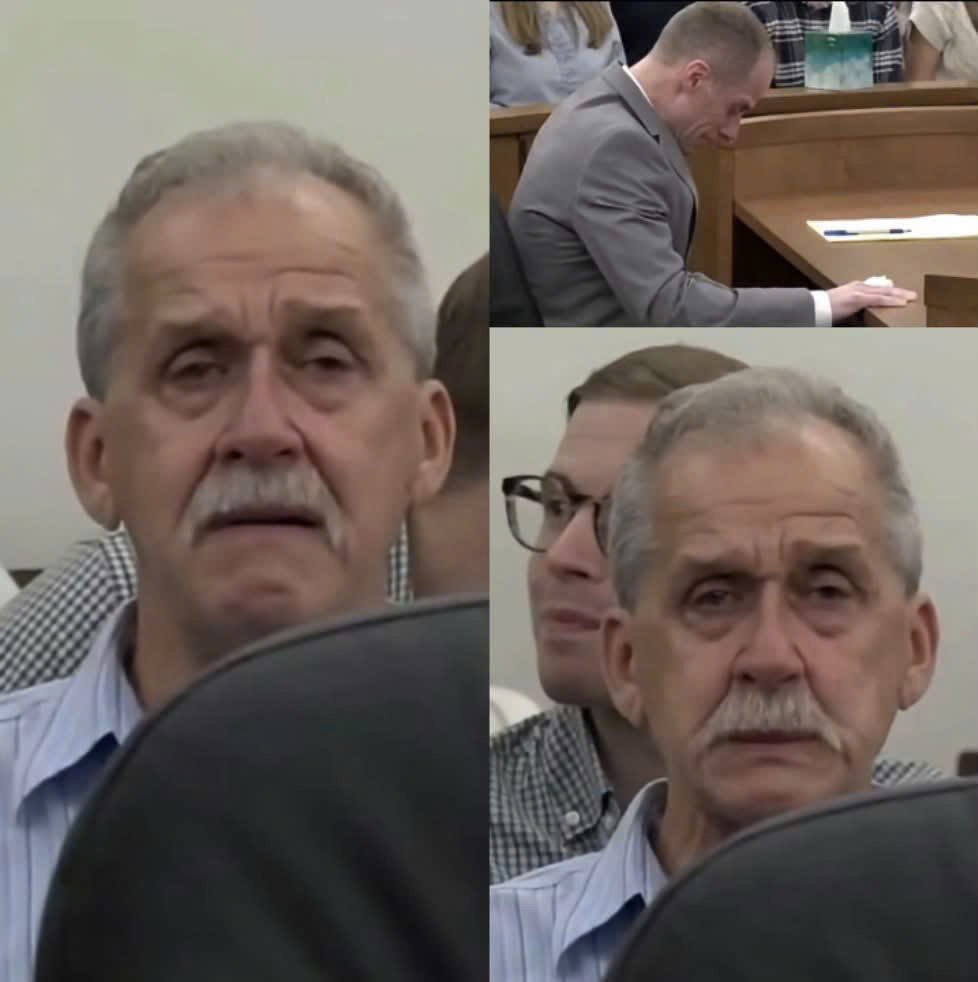
My sister pushed me off the yacht and shouted, “Say hello to the sharks for me!” And my parents? They just stood there, smiling. Their plan was to steal my 5.6-billion-dollar fortune. But when they returned home… I was already waiting. “I have a gift for you too.”
My sister pushed me off the yacht and shouted, “Say hello to the sharks for me!” And my parents? They just stood there, smiling. Their plan was to steal my 5.6-billion-dollar fortune. But when they returned home… I was already waiting. “I have a gift for you too.”
Chapter 1: The Dark Salt Water
The night air off the coast of Newport, Rhode Island, was bitter and sharp.
I stood near the polished teak railing of the Seraphina—our family’s 180-foot luxury superyacht—watching the black waves crash against the hull. The ocean was endless, cold, and merciless.
Behind me, the soft clinking of champagne flutes stopped.
My younger sister, Chloe, stepped out onto the aft deck wearing an emerald silk gown that rustled softly in the sea breeze. Her smile was sweet, angelic, and thoroughly poisonous.
“Beautiful night, isn’t it, Valerie?” she murmured, taking a sip from her glass.
“It’s freezing,” I said, wrapping my coat tighter around myself. “Why did Dad call this emergency family meeting out here? We could have signed the trust transfer documents at the family office in Manhattan.”
“Because out here,” a cold, smooth voice spoke from the shadows of the salon door, “there are no witnesses.”
My father, Arthur Sterling, stepped into the moonlight. Beside him stood my mother, Eleanor, draped in a mink stole, her diamond rings catching the ambient light of the deck lamps. Neither of them held a pen. Neither of them carried the legal portfolio we had discussed earlier that afternoon.
“What is this?” I asked, my instincts suddenly screaming at me. “Where are the lawyers?”
“Oh, sweetie,” Eleanor chuckled, her voice lacking even a shred of maternal warmth. “There are no lawyers coming. You’ve been so incredibly tedious since your grandfather passed. Always double-checking the audits, always demanding transparency…”
“Grandfather left the $5.6 billion controlling stake in Sterling Global Energy to me,” I reminded them, my voice tightening. “Because he knew what the two of you were doing with the hedge fund accounts. He knew you were bankrupting the firm.”
“And that was his mistake,” Arthur snapped, his jaw setting hard. “He passed the crown to a girl who thinks ethics matter in business. For three years, we’ve been forced to beg you for capital allocations. We’ve had to ask for permission to live the life we built.”
Chloe set her champagne glass down on a glass table. She walked up behind me, her movements deceptively slow, like a cat cornering a bird.
“You never shared, Valerie,” Chloe whispered, her eyes burning with a deep, ugly envy. “You sat on top of five point six billion dollars while I had to ask you for an allowance. But Grandfather’s trust has a very clear clause: if you die without issue, the entire controlling interest reverts to Dad and Mom.”
Realization struck me like a physical blow. “You’re insane. You can’t just—”
Before I could finish my sentence, Chloe lunged forward.
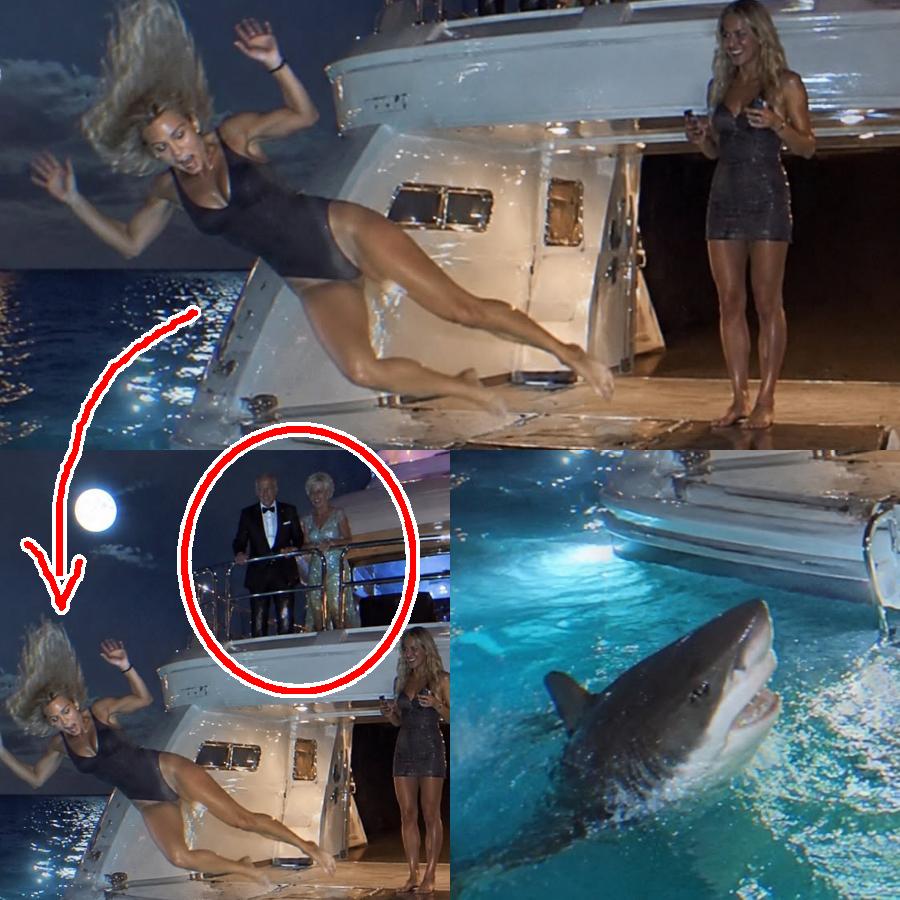
Her hands slammed violently into my shoulders. The slick wooden deck gave my heels no traction. My body tipped backward over the waist-high railing.
For a split second, I saw their three faces illuminated by the deck lights.
Arthur’s face was set in a stone-cold glare. Eleanor was smiling—a thin, cruel curving of her painted lips. And Chloe was leaning over the edge, her cheeks flushed with adrenaline.
“Say hello to the sharks for me!” Chloe shouted, her laugh echoing across the dark water.
Then the freezing Atlantic swallowed me whole.
Chapter 2: The Abyss
The shock of eighty-degree water crashing into my lungs almost killed me instantly.
The ocean was a heavy, black weight pressing down from all sides. My heavy coat dragged me down into the darkness like an anchor.
Above me, the towering white stern of the Seraphina churned the water into a boiling froth of white foam and bubbles. The massive propellers roared like underwater thunder, creating an immense, violent down-draft that pulled me toward the blades.
Move, Valerie! Move! my mind screamed.
I fought against the violent drag. I kicked off my designer heels, unbuttoned my waterlogged coat, and wriggled free from the heavy wool.
My lungs were burning, screaming for oxygen as I kicked frantically away from the boat’s wake. I surfaced ten seconds later, gasping for air, coughs wracking my body as seawater burned my throat.
Fifty yards away, the Seraphina’s running lights were already fading into the dense ocean fog. They didn’t slow down. They didn’t deploy a life ring. They didn’t even turn off the aft deck music.
They simply sailed away into the night, assuming thirty minutes in thirty-eight-degree water would erase their problem forever.
I bobbed in the rising swells, the freezing cold creeping into my bones, numbing my fingers and toes within minutes. Hypothermia would set in before midnight.
They had planned this down to the minute. They picked a stretch of water twelve miles off the coast of Block Island—far from standard commercial shipping lanes, where the currents were notoriously aggressive.
Except for one detail.
My father and sister were corporate predators, but they were not sailors. They didn’t know these waters.
I did.
When I was sixteen, Grandfather had spent two summers teaching me how to navigate the waters of the Long Island Sound and the Rhode Island coastline. He had taught me about the local fishing routes, the tide schedules, and the private security patrols maintained by the offshore wind farms three miles west.
I pulled off my watch—a waterproof, custom-built titanium smartwatch Grandfather had given me upon my graduation from Wharton.
I pressed the recessed side button three times.
A tiny blue LED light flickered to life on the bezel. It was not connected to a commercial cell network; it was hardwired into a encrypted satellite transceiver linked directly to the private security network of Vanguard Maritime Security—a defense firm I had quietly acquired forty percent of eighteen months ago.
I floated on my back, controlling my breathing, staring up at the cloudy, starless sky.
Fifteen minutes passed. The cold had turned my limbs completely numb. My jaw was locked, my vision narrowing into a dark, blurry tunnel.
Then, through the heavy fog, I heard it.
The deep, thumping rumble of twin-turbine engines.
A high-speed, 50-foot stealth interceptor vessel swept through the mist, its powerful spotlight cutting through the dark water. The light flickered over me, held its beam, and reversed its throttles with a roar of white water.
Two divers in black wetsuits plunged into the ocean, pulling me onto a rescue net.
Chapter 2: The Abyss
The shock of eighty-degree water crashing into my lungs almost killed me instantly.
The ocean was a heavy, black weight pressing down from all sides. My heavy coat dragged me down into the darkness like an anchor.
Above me, the towering white stern of the Seraphina churned the water into a boiling froth of white foam and bubbles. The massive propellers roared like underwater thunder, creating an immense, violent down-draft that pulled me toward the blades.
Move, Valerie! Move! my mind screamed.
I fought against the violent drag. I kicked off my designer heels, unbuttoned my waterlogged coat, and wriggled free from the heavy wool.
My lungs were burning, screaming for oxygen as I kicked frantically away from the boat’s wake. I surfaced ten seconds later, gasping for air, coughs wracking my body as seawater burned my throat.
Fifty yards away, the Seraphina’s running lights were already fading into the dense ocean fog. They didn’t slow down. They didn’t deploy a life ring. They didn’t even turn off the aft deck music.
They simply sailed away into the night, assuming thirty minutes in thirty-eight-degree water would erase their problem forever.
I bobbed in the rising swells, the freezing cold creeping into my bones, numbing my fingers and toes within minutes. Hypothermia would set in before midnight.
They had planned this down to the minute. They picked a stretch of water twelve miles off the coast of Block Island—far from standard commercial shipping lanes, where the currents were notoriously aggressive.
Except for one detail.
My father and sister were corporate predators, but they were not sailors. They didn’t know these waters.
I did.
When I was sixteen, Grandfather had spent two summers teaching me how to navigate the waters of the Long Island Sound and the Rhode Island coastline. He had taught me about the local fishing routes, the tide schedules, and the private security patrols maintained by the offshore wind farms three miles west.
I pulled off my watch—a waterproof, custom-built titanium smartwatch Grandfather had given me upon my graduation from Wharton.
I pressed the recessed side button three times.
A tiny blue LED light flickered to life on the bezel. It was not connected to a commercial cell network; it was hardwired into a encrypted satellite transceiver linked directly to the private security network of Vanguard Maritime Security—a defense firm I had quietly acquired forty percent of eighteen months ago.
I floated on my back, controlling my breathing, staring up at the cloudy, starless sky.
Fifteen minutes passed. The cold had turned my limbs completely numb. My jaw was locked, my vision narrowing into a dark, blurry tunnel.
Then, through the heavy fog, I heard it.
The deep, thumping rumble of twin-turbine engines.
A high-speed, 50-foot stealth interceptor vessel swept through the mist, its powerful spotlight cutting through the dark water. The light flickered over me, held its beam, and reversed its throttles with a roar of white water.
Two divers in black wetsuits plunged into the ocean, pulling me onto a rescue net.
“We have target secured! Miss Sterling is alive!” a voice barked into a tactical radio as they pulled me onto the deck, wrapping me in thermal space blankets.
Commander Marcus Kane, a former Navy SEAL who headed my private security team, knelt beside me, handing me a flask of warm saline broth.
“They threw you over?” Marcus asked, his jaw tight with controlled fury.
I took a shuddering sip of the broth, feeling the warmth slowly seep back into my chest. My eyes, once filled with terror, hardened into cold, unbreakable steel.
“They think I’m at the bottom of the Atlantic, Marcus,” I whispered, my voice hoarse, dripping with icy focus. “Where is the boat heading?”
“Their flight plan and maritime clearance show they are docking at the private marina in Greenwich, Connecticut, at 2:00 AM,” Marcus replied, checking his tablet. “From there, your father’s driver is taking them directly to the main estate in Greenwich.”
“Good,” I said, sitting up, pulling the thermal blanket tight around my shoulders. “Get me a dry change of clothes, call my chief forensic accountant, and prepare the tactical team.”
“Are we calling the police, Miss Sterling?” Marcus asked.
I looked at him, a cold, merciless smile touching my lips.
“Not yet,” I said. “The police arrest people. I’m going to destroy them.”
Chapter 3: The Celebration
The Sterling Manor in Greenwich, Connecticut, sat on fourteen acres of gated, manicured land. It was a French Chateau-style estate valued at thirty-five million dollars—a home built on Grandfather’s sweat, currently occupied by three parasites.
By 3:15 AM, the main floor windows were brightly lit.
Inside the grand library, Arthur Sterling poured three glasses of fifty-year-old Macallan scotch at the mahogany bar.
Eleanor sat on the velvet sofa, her mink coat thrown carelessly over an armchair, humming a soft tune as she flipped through a luxury jewelry catalog. Chloe stood by the marble fireplace, warming her hands, a glass of scotch already halfway empty in her grip.
“To a new chapter,” Arthur said, raising his glass, a triumphant grin spreading across his weathered face. “To total control of Sterling Global Energy.”
“I still can’t believe how easy it was,” Chloe laughed, clinking her glass against his. “She didn’t even scream until she was halfway down. Do you think the sharks actually got her, or did she just freeze?”
“It doesn’t matter,” Eleanor said smoothly, not even looking up from her catalog. “The current carries everything south toward Montauk. By the time anyone finds anything—if they ever do—it will be classified as a tragic nighttime accident. An heiress slipping over a wet railing.”
“We file the missing person report tomorrow at noon,” Arthur directed, taking a deep sip of his drink. “We express deep sorrow. We tell the press Valerie was overwhelmed by the pressure of managing the estate. Within ninety days, the probate judge will sign off on the emergency executor transfer.”
“Five point six billion,” Chloe sighed happily, resting her head against the back of her chair. “Finally, I can buy the villa in St. Barts without asking for permission.”
“You can buy three villas,” Arthur smiled.
Suddenly, the heavy iron chandelier hanging from the center of the ceiling flickered once. Then twice.
The soft jazz music playing over the house’s integrated audio system abruptly cut out.
“What’s wrong with the power?” Eleanor frowned, looking up from her catalog. “Arthur, did you forget to pay the generator maintenance invoice again?”
“No, the backup system is fully automated,” Arthur muttered, setting his glass on the bar and walking toward the wall-mounted smart control panel.
He pressed the touch screen. The screen was dead black.
Before he could tap it again, the heavy oak double doors of the library slammed shut with a deafening CRACK.
The electronic magnetic locks engaged with a heavy, mechanical click.
“What the hell?” Chloe gasped, jumping up from her chair, dropping her glass onto the Persian rug. The crystal shattered, amber liquid soaking into the costly wool.
“Arthur! What is happening?!” Eleanor shrieked, standing up, clutching her diamond necklace.
From the corners of the dark room, high-definition digital screens—the ones usually hidden behind oil paintings—switched on simultaneously.
The screens did not display financial stock tickers or artwork.
They displayed a live, high-resolution video feed of the library itself, captured from three different hidden angles.
And in the center of the screen, floating over their live faces, was a running financial ledger descending in bright red numbers:
STERLING FAMILY PRIVATE TRUST: LIQUIDATED
ASSET FREEZE LEVEL: MAXIMUM (GLOBAL)
CURRENT ACCREDITATION STATUS: BANKRUPT
Chapter 4: The Ghost in the Library
“What is this nonsense?!” Arthur roared, rushing to the doors and pounding his fists against the solid oak. “Security! Paul! Get in here!”
The house intercom chime sounded softly through the hidden speakers.
A voice, calm, clear, and unmistakably alive, echoed through the room.
“Paul isn’t outside the door, Dad,” I said. “I gave him a five-hundred-thousand-dollar severance package ten minutes ago. He’s currently driving his new truck home to New Jersey.”
Arthur froze. His hands slid down the wood of the door.
Eleanor gasped, her face turning as white as a sheet. “No… no, that’s impossible…”
Chloe backed away from the fireplace, her eyes wide with unadulterated horror, staring at the ceiling speakers as if a demon were speaking through them. “Valerie?!”
The heavy magnetic lock on the library door clicked open.
The double doors swung inward slowly, revealing the dimly lit grand hallway.
I walked into the room.
I wore a sharp, tailored white pant-suit, my wet hair neatly dried and styled back. I held a sleek leather folder in my right hand, and behind me stood Marcus Kane along with four armed security operatives wearing tactical uniforms.
“I believe you left me in the Atlantic,” I said softly, stepping onto the Persian rug. “It was thirty-eight degrees, Chloe. A bit chilly for a midnight swim.”
Chloe screamed, dropping to her knees, hiding her face in her hands. “Ghost! She’s a ghost!”
“Shut up, Chloe!” Arthur snarled, though his own knees were shaking so violently he had to lean against the mahogany bar for support. He stared at me, his chest heaving as if he had just seen a dead woman walk out of her grave. “How… how did you survive?”
“You forgot that Grandfather actually loved me,” I said, stepping closer to them. “He taught me how to survive in those waters. You three, on the other hand, never learned how to survive anywhere without his money.”
“Valerie… sweetie…” Eleanor stammered, stepping forward, her hands outstretched in a grotesque fake display of maternal relief. “Oh thank God! You’re alive! We… we thought you fell! Chloe said you slipped! We were so horrified, we didn’t know what to do!”
“Save it, Eleanor,” I said, my voice dropping an octave, cold enough to freeze blood. “I heard everything you said over the intercom. Every single word was recorded on four separate audio channels.”
Eleanor’s hands dropped to her sides. Her mouth remained open, but no words came out.
“You came home to celebrate my death,” I said, opening the leather folder. “So I made sure I was already waiting for you. And I have a gift for you too.”
Chapter 5: The Dissected Empire
I pulled out the first set of legal documents and tossed them onto the glass coffee table.
“Gift number one,” I said. “At 1:30 AM, while you were drinking scotch on your boat, I executed an emergency insolvency buyback clause built into the Sterling Global Energy charter. Because you used company assets—specifically the Seraphina—in an attempt to commit a capital crime against the majority shareholder, your remaining twelve percent interest in the firm has been completely confiscated.”
Arthur’s eyes went wide. “You can’t do that! That’s my life work!”
“You didn’t build it, Dad. Grandfather did,” I replied coldly. “Gift number two.”
I tossed a second stack of papers onto the table.
“This estate—the Greenwich manor, the penthouse in Manhattan, the villa in Aspen, and the superyacht you just stepped off—were all held under the Sterling Family Property LLC,” I continued. “As of 2:15 AM, I bought out the underlying mortgage notes from Deutsche Bank for pennies on the dollar. You have exactly twenty minutes to pack one bag each before my security team removes you from the premises for unlawful trespassing.”
“You’re kicking us out of our own home?!” Eleanor screamed, her voice cracking into a hysterical screech. “I am your mother!”
“A mother who smiled while her daughter was pushed into the ocean,” I snapped, staring her down until she cowered backward. “You stopped being my mother the moment you chose five point six billion dollars over my life.”
I turned my attention to Chloe, who was still shivering on the floor, looking up at me with terrified, tear-streaked eyes.
“And for you, Chloe,” I murmured, pulling out a third, smaller document.
“Gift number three.”
I held up a dark blue USB flash drive.
“On this drive is the complete, unedited audio and video recording from the aft deck of the Seraphina,” I said. “It captures you pushing me over the rail. It captures Dad watching. It captures Eleanor smiling. And it captures you yelling, ‘Say hello to the sharks for me!’“
Chloe squeezed her eyes shut, sobbing hysterically. “Please, Valerie! Please don’t give it to the police! I’m your sister! I was stupid! Dad told me to do it! He said we had to!”
“You cowardly little rat!” Arthur yelled, turning on his own daughter. “You were the one who pushed her! You couldn’t wait to get your hands on her money!”
“Both of you shut up!” Eleanor shrieked, slapping Arthur across the face. “This is your fault! You said she wouldn’t have time to hit the beacon!”
I watched them tear each other apart like wild dogs over scraps of meat.
There was no honor among them. No loyalty. No love. They were nothing more than hollow, greedy ghouls who had spent their entire lives feeding off the labor of better people.
“Marcus,” I said quietly, stepping back toward the doorway.
“Yes, Miss Sterling?”
“The police are waiting at the front gate, aren’t they?”
Marcus checked his tactical watch. “New York State Police and the Federal Bureau of Investigation are entering the driveway right now, ma’am. Attempted murder, corporate fraud, and conspiracy.”
I looked at my family one last time—the three of them screaming, weeping, and clawing at each other in the center of their pristine, velvet-lined library.
“Give them five minutes to pack,” I said, turning my back on them. “Then throw them out.”
Chapter 6: The Fall
The arrest of Arthur, Eleanor, and Chloe Sterling became the biggest national media storm of the decade.
By 6:00 AM, news helicopters were hovering over the Greenwich estate, their spotlights capturing the humiliating downfall of one of America’s wealthiest dynasties.
Front-page headlines across every major newspaper read:
THE STERLING DYNASTY COLLAPSES: HEIRESS SURVIVES ATTEMPTED MURDER BY FAMILY
ARTHUR AND CHLOE STERLING ARRESTED ON ATTEMPTED FIRST-DEGREE MURDER CHARGES
ELEANOR STERLING INDICTED FOR CONSPIRACY AND ASSET FRAUD
The legal destruction was absolute.
Because the crime was committed on a vessel in navigable waters, the case fell under federal maritime jurisdiction. Federal prosecutors utilized the crystal-clear video and audio evidence provided by my security team to build an ironclad case within weeks.
There were no high-priced defense lawyers to save them. I had personally contacted every elite defense firm in New York, Boston, and Washington D.C., informing them that any firm taking on the Sterling defense would find themselves permanently blacklisted from representing Sterling Global Energy or any of its forty subsidiary corporations.
Left with secondary legal counsel, their defense evaporated under the weight of the evidence.
Six months after that cold night off Block Island, the final sentencing took place at the United States District Court in New Haven, Connecticut.
I sat in the front row of the gallery, wearing a simple, dark grey suit, surrounded by my legal advisors and Marcus Kane.
Arthur, Eleanor, and Chloe were led into the courtroom wearing orange prison jumpsuits, their hands and ankles bound by heavy steel chains.
The transformation was horrific.
Arthur had aged twenty years in six months. His hair was completely white, his skin dull and sallow. He looked like a broken old man who had finally realized that his status meant nothing inside a federal holding cell.
Eleanor was a shell of her former self, her eyes sunken, her hands trembling continuously as she stared at the defense table.
And Chloe—the sister who had laughed as I fell into the ocean—looked hollow, terrified, and utterly defeated. She didn’t look at the press. She didn’t look at her parents. She kept her eyes fixed on the floorboards, weeping quietly throughout the entire proceeding.
Federal Judge Harold Vance did not show a shred of leniency.
“In my thirty years on the bench,” Judge Vance stated, his voice booming across the packed courtroom, “I have rarely witnessed a display of human depravity as cold, calculated, and monstrous as the one presented in this trial. To attempt the premeditated murder of your own daughter—your own sister—for financial gain is an offense that shatters the very fabric of civilized society.”
He slammed his gavel down three times.
ARTHUR STERLING: Sentenced to 25 years in Federal Maximum Security Prison without the possibility of parole.
CHLOE STERLING: Sentenced to 20 years in Federal Prison for First-Degree Attempted Murder.
ELEANOR STERLING: Sentenced to 15 years in Federal Prison for Criminal Conspiracy and Fraud.
As the marshals stepped forward to lead them away, Chloe suddenly turned toward the gallery. She looked directly at me, her face contorted in desperate, ugly tears.
“Valerie! Please!” she screamed, her voice echoing off the high stone walls. “Please talk to the judge! Tell them to reduce it! I’m your sister! I’m your blood!”
I didn’t answer. I didn’t raise my hand.
I simply watched her being dragged through the side door into the dark hallway beyond, until the heavy door clicked shut, cutting off her screams forever.
Chapter 7: The Clear Horizon
One year later.
The summer sun reflected brilliantly off the blue waters of Newport Harbor.
I stood on the stone terrace of Grandfather’s original coastal estate—a home I had completely restored, stripping away the ostentatious luxury my parents had added, returning it to its classic, timeless beauty.
The Seraphina was gone. I had sold the yacht at auction three months prior, donating every dollar of the thirty-two million proceeds to marine conservation research and victims of domestic violence.
Beside me, Marcus Kane set down a freshly signed portfolio of corporate documents.
“The Q2 financial reports for Sterling Global Energy are finalized, Valerie,” Marcus said softly. “The board has unanimously approved the new renewable energy initiative. Stock value is up fourteen percent.”
“Good,” I said, taking a quiet sip of iced tea. “What about the bankruptcy liquidation of the Greenwich house?”
“It finalized yesterday,” Marcus reported. “The property was acquired by a local historic trust. All remaining debts incurred by your parents have been officially cleared. You are completely disconnected from them.”
“And their appeal petitions?”
“Denied,” Marcus replied flatly. “The Appellate Court refused to review the case. Arthur is serving his sentence in Pennsylvania, Eleanor is in Florida, and Chloe was transferred to a medium-security facility in upstate New York last week. None of them will see the outside of a prison cell until you are well into your fifties.”
I looked out toward the open horizon where the deep blue Atlantic met the clear summer sky.
There was a time when the thought of my family filled my heart with a heavy, crushing ache—a lingering wonder of why I had never been enough for them, why five point six billion dollars meant more to them than my life.
But standing here in the warm afternoon breeze, feeling the steady, rhythmic beat of my own heart, the pain was completely gone.
It had been burned away by the cold salt water, replaced by a deep, unbreakable peace.
They had thrown me into the dark ocean, expecting me to sink into the abyss.
They didn’t realize that the ocean wasn’t my grave.
It was where I learned how to swim.
Chapter 8: The Aftermath of the Storm
The afternoon breeze carried the crisp scent of salt water across the terrace, blowing through the high coastal grass surrounding the Newport estate.
Though the headlines had faded from the front pages of international newspapers, the name Valerie Sterling remained synonymous with an unprecedented corporate and legal reckoning. In the boardrooms of Wall Street and London, analysts spoke of the “Sterling Purge” in hushed, respectful tones. Over the course of twelve months, I had systematically dismantled every vestige of my father’s corrupt influence, firing over forty high-ranking executives who had turned a blind eye to his embezzlement and replacing them with a new tier of unassailable, independent leadership.
Yet, despite the victory, the quiet moments were the hardest.
I sat in the estate library, staring at an old, silver-framed photograph resting on the mahogany desk. It showed a twelve-year-old version of myself standing on the wooden dock, laughing alongside my grandfather. Behind us, Arthur, Eleanor, and Chloe stood near the yacht’s salon doors, their faces unsmiling, their eyes fixated on the horizon.
Even back then, the rift had been present. I had simply been too young, too eager for their affection, to see it.
The heavy brass handle of the library door turned softly. Marcus Kane stepped inside, holding a thick, manila legal folder stamped with the seal of the United States Department of Justice.
“Valerie,” Marcus said, his voice quiet as he crossed the room. “The warden’s office at the Federal Correctional Institution in Danbury just transmitted the official quarterly report.”
I didn’t reach for the folder immediately. I kept my eyes fixed on the photograph. “Which one?”
“Chloe,” Marcus replied. “Her legal counsel submitted an emergency application for a sentence reduction under the compassionate release framework. They claim she is suffering from severe clinical depression, anxiety, and an inability to adjust to the general population environment.”
A faint, bitter smile touched my lips. “An inability to adjust. She pushed her sister into a freezing ocean twelve miles off the coast, and she’s struggling to adjust to a concrete room.”
“Her attorney claims she was under psychological duress applied by your father,” Marcus continued, opening the folder to reveal a signed affidavit from Chloe’s prison psychiatrist. “She’s offering to sign a full, irrevocable waiver of any future trust claims, including her remaining personal effects, if you agree not to oppose the petition.”
I turned my head, looking directly at Marcus. “What did the prosecutor say?”
“ADA Vance told them that without your explicit non-opposition letter, the judge won’t even schedule a hearing,” Marcus said. “The decision is entirely yours.”
I looked out the floor-to-ceiling windows toward the cliffside where the Atlantic waves pounded relentlessly against the dark, granite rocks.
For months, people had asked me if I wanted revenge. The truth was, revenge was an active emotion—it required energy, heat, and constant attention. What I felt toward Chloe, Arthur, and Eleanor wasn’t revenge. It was absolute, unyielding coldness.
“Tell the prosecutor that I will not sign the letter,” I said flatly. “And tell Chloe’s attorney that if they file another petition based on frivolous medical grounds, I will instruct our legal team to launch an independent audit into her remaining off-shore dummy accounts in the Cayman Islands.”
Marcus nodded once, closing the folder with a sharp snap. “Understood. There’s one more thing.”
“What is it?”
“Your mother’s legal team has reached out,” he said carefully. “Eleanor has been transferred to a low-security medical facility in Florida due to early-stage cardiovascular complications. She… she asked if you would accept a written letter.”
I stayed silent for a long moment, listening to the rhythmic ticking of the antique grandfather clock in the corner of the room.
“Burn it,” I said quietly.
“Valerie—”
“Burn it, Marcus,” I repeated, my voice steady and completely devoid of tremor. “She didn’t write me a letter when I was in thirty-eight-degree water. I have no interest in reading her words now that she’s behind bars.”
Chapter 9: The Anatomy of Ruin
While my life moved forward into light and clarity, the world inside the federal prison system was a slow, grinding machine designed to strip away every shred of arrogance my family had possessed.
At the Federal Correctional Complex in Allenwood, Pennsylvania, Arthur Sterling was no longer the imposing corporate titan who commanded boardrooms and dictated multi-billion-dollar energy policies.
He was Inmate #84920-053.
Every morning at 5:30 AM, when the loud, metallic buzzer echoed through the concrete corridors, Arthur had to stand at the edge of his narrow bunk for headcount. The tailored Italian suits, the custom-made leather shoes, and the fifty-year-old scotch were gone—replaced by rough, ill-fitting khaki trousers, a stiff cotton shirt, and plastic slip-on shoes.
Because of his high profile and the nature of his crime, Arthur was shunned by the other inmates. In prison, a man who tried to murder his own child was viewed with intense disgust, even by hardened criminals serving life sentences for drug trafficking or armed robbery.
He was assigned to the institution’s facilities maintenance crew, spending six hours a day pushing a mop down the endless, fluorescent-lit hallways of the administrative building or scrubbing grease off the kitchen floorboards.
His hands, once pristine and manicured, became calloused, cracked, and stained with industrial detergent. His back, once straight and proud, bowed under the weight of severe arthritis and constant humiliation.
Once a month, his court-appointed public defender visited him in the sterile visitation room.
“Has Valerie called?” Arthur would ask every single time, his voice raspy, his fingers twitching against the metal table. “Has she checked on the appeal?”
The answer was always the same: No.
“She won’t talk to you, Arthur,” the lawyer told him during a visit in late winter. “She has restructured the entire parent company. The Sterling name has been scrubbed from the offshore accounts. The board has placed all remaining assets into a public charitable foundation focused on marine research and victim advocacy. You have no leverage, no money, and no family left.”
Arthur would sit there in silence, staring at his reflection in the thick, bulletproof glass, realizing the ultimate truth of his existence: he had traded his daughter, his freedom, and his soul for wealth he could never touch, in a world that had completely forgotten he existed.
In Florida, Eleanor’s reality was equally grim.
The woman who had spent forty years obsessed with high society, designer fashion, and social prestige was now confined to a sterile ward at the Federal Medical Center. Her daily routine consisted of structured meal times in a cafeteria, limited yard access surrounded by chain-link fences, and hours spent staring at a small wall-mounted television playing cable news.
Every time my face appeared on the screen—whether attending an international energy summit in Geneva or announcing a new clean-energy initiative at the United Nations—Eleanor would cover her face with her fragile, liver-spotted hands and weep silently.
The society women she had hosted at her Greenwich luncheons had long since scrubbed her from their social registries. Her name was spoken only as a cautionary tale of greed and maternal betrayal. She was entirely alone, trapped in a room that smelled of floor wax and stale air, watching the daughter she had abandoned build a legacy that eclipsed everything Eleanor had ever dreamed of.
And then there was Chloe.
In the maximum-security wing of the Bedford Hills facility in New York, Chloe’s vanity had been thoroughly destroyed.
Without her daily beauty regimens, expensive skincare products, and designer wardrobe, she looked years older than her age. Her hair was pulled back into a plain elastic band, her pale face devoid of makeup.
Her days were spent working in the prison laundry room, hauling heavy bags of damp uniforms through hot, humid rooms filled with the deafening roar of industrial dryers.
Every night, as she lay on her thin mattress staring up at the cold concrete ceiling, the silence of her cell would be filled with the phantom sounds of that dark night off Newport—the cold wind, the churning propellers, and the echo of her own voice shouting into the dark: “Say hello to the sharks for me!”
The words that had once given her a thrill of sadistic power had become her personal, inescapable hell.
Chapter 10: The Phoenix Directive
Eighteen months after the incident on the Seraphina, I stood on the top floor of the newly constructed Sterling Tower in downtown Manhattan.
The building was a marvel of modern architecture—a sleek, seventy-story structure powered entirely by integrated solar glass and geothermal systems. It stood as a physical testament to the new direction of Sterling Global Energy.
The boardroom was filled with twenty-four men and women: world-class scientists, clean-energy engineers, human rights advocates, and veteran financial leaders. Gone were the greedy cronies my father had surrounded himself with; in their place were individuals driven by purpose, integrity, and vision.
“Miss Sterling,” Sarah Lin, our new Chief Operating Officer, said, tapping her tablet screen to project a map onto the wall display. “The initial rollout of the North Atlantic Marine Research & Clean Power Grid is complete. We’ve secured regulatory clearance across four states, and the first offshore wind facility off Block Island went operational this morning at 6:00 AM.”
I looked at the map. The red glowing dot marking the location of the wind facility sat precisely twelve miles off the coast of Rhode Island—in the exact stretch of water where my family had thrown me overboard.
Where they had attempted to end my life, a clean, sustainable power grid now generated electricity for three hundred thousand homes.
“What is the official designation of the array?” a board member asked.
“Array Zero,” I replied smoothly, looking around the table. “A reminder that everything can be rebuilt from nothing, provided the foundation is solid.”
A brief, respectful applause echoed through the room.
After the meeting adjourned, I walked to the floor-to-ceiling glass wall overlooking the city skyline. Below, the yellow taxicabs swept down Fifth Avenue like small golden beetles, and far off to the east, the East River glinted under the bright afternoon sun.
Marcus Kane walked up behind me, carrying a quiet, unhurried presence.
“The press conference is scheduled for 2:00 PM in the main lobby, Valerie,” Marcus said. “Over fifty international news networks have confirmed attendance. They’re calling this the largest corporate transition in modern history.”
“Thank you, Marcus,” I murmured, keeping my eyes on the horizon. “How is the foundation setup progressing?”
“The Martha & Valerie Sterling Foundation for Justice was officially registered this morning,” Marcus reported. “We’ve allocated fifty million dollars to provide high-level legal defense resources for victims of domestic financial abuse and corporate exploitation. The first ten grants were disbursed two hours ago.”
I smiled—a genuine, warm smile that reached my eyes.
For a long time, I had believed that money was merely a tool for control, because that was how Arthur and Eleanor had raised me to view it. They saw capital as a weapon to subjugate others, to hide their flaws, and to purchase immunity from consequences.
It had taken being thrown into the cold abyss of the ocean to realize the truth: money was nothing more than energy. In bad hands, it corrupted and destroyed; in clear, determined hands, it could heal, rebuild, and protect.
“Valerie?” Marcus spoke up, his tone shifting slightly.
“Yes?”
“I received a call from the Federal Bureau of Prisons an hour ago,” he said carefully. “Arthur Sterling suffered a severe stroke in his cell last night. He is currently on life support at the regional medical center in Harrisburg.”
I didn’t turn around. I didn’t gasp. My heart rate didn’t even elevate.
“What do the doctors say?” I asked softly.
“They don’t expect him to survive the night,” Marcus said. “As his legal next of kin, the hospital administration is asking if you wish to sign a directive regarding extraordinary life-prolonging measures… or if you wish to fly down to see him.”
I looked at my reflection in the dark glass of the window.
I thought about the man who had stood on the deck of the Seraphina, his arms folded over his chest, watching his eldest daughter fall into the dark sea without moving a single muscle to save her. I thought about the three years I had spent trying to earn his respect, constantly met with coldness, calculation, and greed.
“Tell the hospital that I will not be flying to Pennsylvania,” I said, my voice steady, clear, and serene. “And as for the directive… instruct them to follow standard medical protocols. I will not decide whether he lives or dies. His fate is in hands far larger than mine.”
Marcus bowed his head slightly. “I’ll inform the hospital administrator immediately.”
Chapter 11: The Ocean’s Gift
Two weeks later, I returned to Newport.
The funeral for Arthur Sterling had been a quiet, private affair handled by a local mortuary in Pennsylvania, attended by no one. Eleanor remained in her hospital ward in Florida, unable to travel, and Chloe was denied temporary release by the correctional authorities.
I walked down to the stone pier at the edge of the Newport property.
The air was soft and warm, carrying the sweet scent of summer wild roses growing along the coastal dunes. The Atlantic Ocean stretched out before me—vast, deep, and brilliant blue under the clear sky.
I held a small wooden box in my hands. Inside was the old, silver-framed photograph of my grandfather and me that had sat on my desk for years.
I opened the box, took out the frame, and pulled the photograph free from the glass.
I looked at my grandfather’s smiling face, at his clear, steady eyes that had always seen the potential in me even when I couldn’t see it in myself.
“The sea doesn’t care about your wealth, Valerie,” he used to tell me when we navigated the coastal fog together. “It only cares about your resolve. When the wave hits, you don’t fight the water—you become the anchor.”
I took a deep breath, letting the clean sea air fill my lungs.
I folded the photograph gently and set it down inside the wooden box. Then, I closed the lid, walked to the edge of the stone pier, and tossed the box out into the water.
It splashed softly into the foam, floated for a brief moment on the rising swell, and then slowly drifted out toward the open horizon, carried away by the clear, deep tide.
I didn’t watch it sink.
I turned around and walked back up the green hill toward the house—toward my work, my life, and a future built not on fear, greed, or betrayal, but on an unbreakable foundation of truth.
They had thrown me to the sharks, expecting me to be devoured.
They didn’t realize that the storm was never meant to destroy me.
It was meant to set me free.