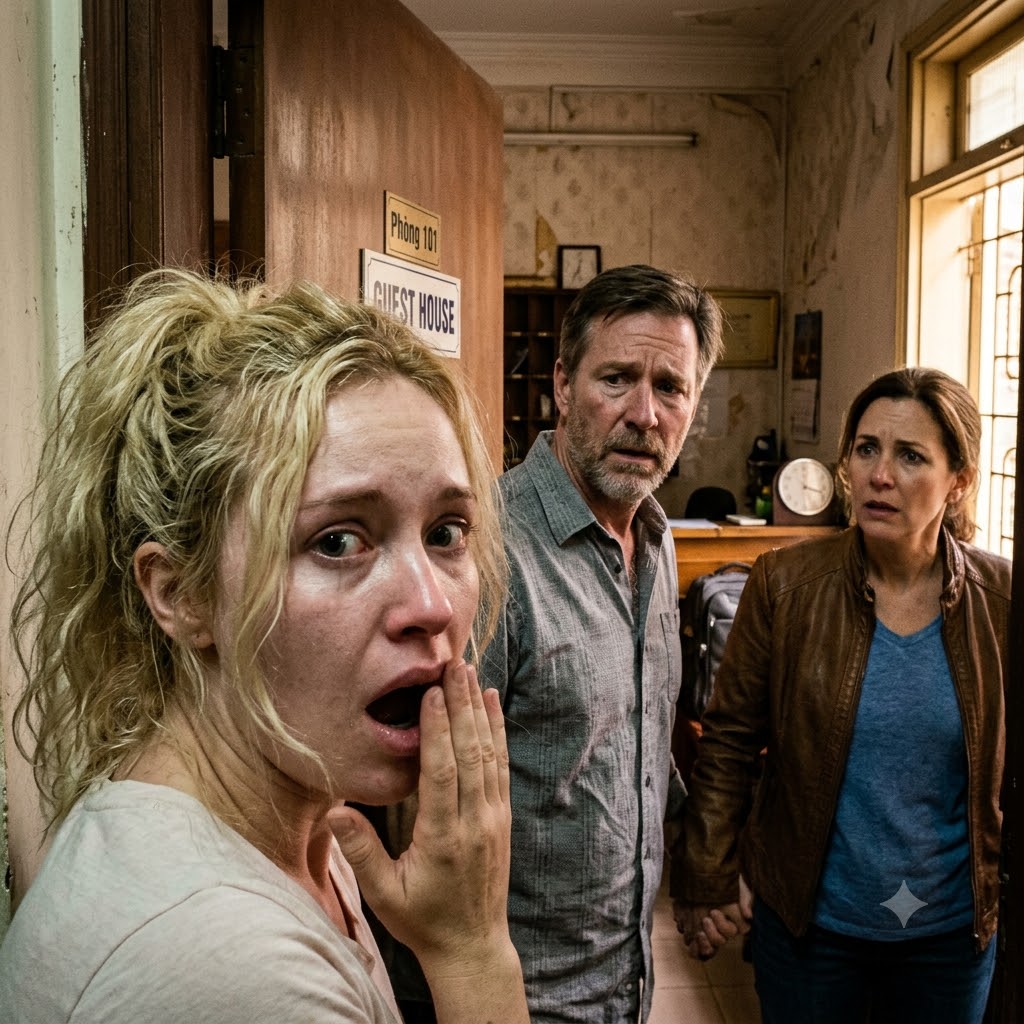
On my birthday, my husband introduced his mistress without saying a single word
On my birthday, my husband introduced his mistress without saying a single word. So I stood up, took off my wedding ring, placed it in her hand, and told her, “He’s all yours.” Everyone thought I’d finally broken. They couldn’t have been more wrong. Because the moment my husband proudly put that ring on her finger, every guest in the room witnessed the beginning of the biggest mistake of his life—not the end of mine.
The Silent Transfer
I. A Candle in the Dark
The chandelier in the main dining room of The Grandview Estate glowed with the warm, buttery light of three hundred hand-poured tallow candles. Out on the terrace, the Hudson River moved like a ribbon of black silk under the crisp October sky, reflecting the sharp white lights of the Westchester skyline.
Inside, sixty people were laughing, sipping Vintage Cristal, and waiting for my thirty-fifth birthday toast.
They were the elite of Upstate New York—real estate tycoons, venture capitalists, federal judges, and local politicians. Every single person in that room was there because of Vanguard Capital, the hedge fund my father had spent thirty years building before handing the controlling stake to me three months before his heart failed.
And at the center of the room stood Julian Vance.
My husband of seven years looked every bit the master of the universe. His charcoal tailored suit fit his tall, broad-shouldered frame impeccably. His thick, salt-and-pepper hair was swept back, and his smile—that practiced, dazzling smile that had won over my father and swept me off my feet at twenty-seven—was on full display.
“Gwen, darling, you look luminous,” whispered Clara Abernathy, the wife of our chief legal counsel, leaning in to brush her cheek against mine. “Julian outdid himself with this party. He’s been planning it for months.”
“Has he?” I smiled, taking a slow sip of sparkling water. “He’s always been exceptional at grand gestures.”
“Where is he going?” Clara asked, gesturing with her champagne flute.
I followed her gaze. Julian was walking toward the heavy, oak double doors at the entrance of the ballroom. He didn’t look nervous. He didn’t look guilty. He looked exultant, like a man who had spent months orchestrating a masterpiece and was finally ready to pull back the velvet curtain.
He opened the door. Standing in the foyer, framed by the white marble columns, was a young woman in her late twenties.
Her name was Sophia Miller.
I knew her name because six weeks ago, I had spent $40,000 on a private forensic intelligence firm to track the $1.2 million that had mysteriously migrated from our offshore venture accounts into an unregistered shell company in the Cayman Islands. The money had ended up purchasing a penthouse overlooking Central Park—registered under Sophia’s name.
She was stunning in a raw, obvious way. Her dress was an emerald silk gown that clung to her curves, cut entirely too low for a black-tie birthday dinner at a private estate. Her blonde hair fell in soft, loose waves over her shoulders.
Julian didn’t say a word to the room. He didn’t need to.
He reached out his hand, wrapped his fingers around hers, and led her into the center of the ballroom.
The laughter died first. It started near the bar, then rippled across the grand piano, until the entire hall fell into a suffocating, heavy silence. The only sound was the faint hum of the ice sculpture melting near the raw bar.
Julian brought Sophia to a stop directly in front of my table.
He didn’t introduce her. He didn’t offer a polite lie about her being a new associate or a family friend. He simply stood there, his hand locked tightly in hers, his chin lifted in open defiance. He stared directly into my eyes, his expression cold, triumphant, and utterly merciless.
It was an execution by public humiliation.
Julian knew the rules of our social circle. In high society, the wife was supposed to gasp, burst into tears, make a scene, or run out of the room in shame. By bringing his mistress to my thirty-fifth birthday party in front of my board members, my friends, and the press, he wasn’t just cheating—he was stripping me of my dignity, establishing dominance, and signaling to the room that I was broken, helpless, and discarded.
Sophia looked at me with a mixture of smug satisfaction and nervous anticipation. She held her chin up, expecting the hysterical, shattered woman Julian had undoubtedly promised her I was.
I didn’t blink. I didn’t cry. My heart rate didn’t even accelerate.
Instead, I took a calm, deliberate step forward. The room held its breath. Clara gasped softly behind me.
I reached down to my left hand. My fingers found the heavy, three-carat flawless emerald-cut diamond ring—the ring Julian had placed on my finger seven years ago in a cathedral in Manhattan. I twisted it slowly over my knuckle.
I took another step toward Sophia.
I took her right hand, brought it up between us, and laid the heavy platinum band directly into her open palm.
I looked her straight in the eyes, my voice clear, steady, and loud enough to carry to every corner of the silent room.
“He’s all yours.”
A collective murmur broke out across the crowd. Sophia stared down at the diamond sitting in her palm, her smug smile faltering into total confusion.
Julian’s eyes narrowed. This wasn’t the reaction he had engineered. He had expected tears. He had expected screaming. He had expected me to flee the estate, leaving him in total control of the narrative.
Determined to assert his victory, Julian grabbed the ring from Sophia’s hand. He grabbed her left hand, slid the heavy ring onto her ring finger, and looked at me with a sneer.
“Thank you, Gwen,” Julian said, his voice dripping with condescension. “I’m glad we understand each other.”
He raised Sophia’s ringed hand into the air, showing off the diamond to the stunned guests.
He thought he had just humiliated me. He thought he had just claimed his prize.
He had no idea that the moment he pushed that ring onto her finger, he had signed the death warrant on his entire existence.

II. The Architecture of Deceit
To understand why Julian Vance believed he could destroy me, you have to understand how he came into my life.
Eight years ago, I was a twenty-seven-year-old brilliant analyst who preferred financial spreadsheets to human interaction. My father, Arthur Montgomery, was a giant in the investment world, a self-made billionaire who ruled Vanguard Capital with an iron fist. But my father had a blind spot: he wanted me to be happy, and he worried my ruthless dedication to work would leave me lonely.
Enter Julian Vance.
Julian was a charismatic senior VP at a rival firm. He pursued me for fourteen months with relentless precision. He memorized my favorite books, sent single-origin coffee to my office every morning, and spent hours listening to my father talk about corporate restructuring. My father grew to love him like a son.
When we married, my father named Julian the Managing Director of Vanguard Capital, while I retained thirty percent of the voting shares, with the remaining seventy percent set to transfer to me upon my father’s passing.
When my father died six months ago, Julian changed.
He stopped coming home for dinner. He took private jets to Miami and London for “emergency fund raisers.” And then, three months ago, I noticed subtle anomalies in Vanguard’s quarterly audit reports. Minor variances—half a percent here, a million there—routed through a maze of offshore intermediaries.
Julian wasn’t just cheating on me. He was embezzling.
He believed I was a grieving, weak heiress who would never look beneath the surface of my father’s empire. He thought that if he publicly humiliated me, I would retreat to our country house in Aspen, sign a quiet divorce settlement out of shame, and leave him with Vanguard Capital and millions in stolen assets.
He didn’t realize that I was Arthur Montgomery’s daughter. And my father hadn’t raised a victim—he had raised a predator.
III. The Morning After
At 6:00 AM the morning after the party, I sat at the island in the kitchen of my penthouse on Park Avenue. The morning sun was just beginning to hit the glass skyscrapers of Midtown, casting long, sharp shadows across the concrete.
I wore a silk robe, a mug of black coffee sitting beside my open laptop.
The front door opened, and Julian walked in. He was still wearing his tuxedo from the night before, his tie undone, his jacket slung carelessly over his shoulder. He looked flushed, intoxicated by a mix of scotch and what he believed was absolute victory.
“Gwen,” he said, walking into the kitchen with a smug grin. “I see you didn’t stay at the estate.”
“I prefer my own bed,” I said calmly, without looking up from my screen.
Julian leaned against the counter, pouring himself a glass of cold water. “Look, let’s be adults about this. Last night was… sudden. But it’s time to face reality. Sophia and I have been together for over a year. The marriage is over.”
“I know,” I said, taking a slow sip of coffee.
Julian pulled a thick, stapled document from his leather briefcase and tossed it onto the marble island in front of me.
“That’s a property settlement agreement prepared by my attorneys,” Julian said, his tone casual, almost patronizing. “You keep the Aspen house and a five-million-dollar cash lump sum. In exchange, you relinquish your voting shares in Vanguard Capital and transfer full management control to me.”
I picked up the document, flipped to the last page, and glanced at the signature line.
“Five million dollars?” I asked softly. “Julian, Vanguard Capital is worth two point four billion dollars.”
“And I built it into what it is today over the last seven years!” Julian snapped, his charismatic mask slipping for a fraction of a second. “Your father gave me the helm because he knew you couldn’t run it! You’re a back-office analyst, Gwen. You don’t have the stomach for wall-street warfare. Sign the papers. Keep your pride. Don’t make this ugly.”
I looked at him for a long moment. He really believed it. He truly believed he was the mastermind behind Vanguard’s success.
“Leave the papers,” I said quietly. “My lawyer will review them.”
Julian chuckled, shaking his head. “You have forty-eight hours, Gwen. If you don’t sign by Thursday morning, I’ll file for divorce publicly on grounds of emotional instability and desertion. The press will have a field day with the ‘fragile Montgomery heiress’ losing her mind after her father’s death.”
He turned on his heel and walked toward his bedroom, leaving the scent of expensive cologne and cheap deceit lingering in my kitchen.
I didn’t scream. I didn’t throw my coffee mug against the wall.
I picked up my phone and dialed a private number.
“Evelyn,” I said when the call connected. “Initiate Phase Two.”
IV. The Trap Is Set
Evelyn Vance—no relation to Julian—was the head of Forensic Risk Management at Kroll Intelligence. She was a sixty-year-old former federal prosecutor with iron-gray hair and a mind like a razor blade. I had hired her six weeks before my birthday.
Two hours after my call, Evelyn stepped into my private office on the forty-second floor of the Vanguard Building.
“Julian made his move faster than we anticipated,” Evelyn said, sliding a thick leather binder across my glass desk. “He spent the last three weeks convincing the board that you are mentally unfit to retain your seventy percent voting share following your father’s death. He’s calling an emergency board meeting for Friday morning to vote on a resolution to permanently strip your voting rights.”
“And the Cayman accounts?” I asked.
Evelyn smiled—a cold, predatory expression. “We found everything. Julian didn’t just buy a penthouse for Sophia. Over the last fourteen months, he’s been using a ghost corporation named ‘Apex Global’ to siphon off thirty-five million dollars from Vanguard’s pension liquidity reserves.”
I leaned back in my chair, tapping my fingers together. “Thirty-five million from the pension fund? That’s a federal felony.”
“It’s twenty years in a federal penitentiary,” Evelyn corrected. “And here’s the best part: to authorize those transfers without your signature, he forged your father’s signature on a retroactively dated power of attorney document two weeks before Arthur passed away.”
I felt a cold rage blossom in my chest. Embezzling my family’s money was one thing. Using my dying father’s name to commit fraud was unforgivable.
“Does Sophia know?” I asked.
“Sophia Miller was a senior compliance secretary at the SEC before Julian hired her as his personal assistant,” Evelyn said. “She didn’t just know, Gwen. She was the one who cleared the offshore routing codes. She holds the secondary signatures on all the Apex Global accounts.”
I stared out the floor-to-ceiling windows, looking down at the yellow cabs crawling along Wall Street below.
When I gave Sophia my wedding ring last night, everyone in that ballroom thought I was surrendering. They thought I was handing her my husband and my dignity.
They didn’t know that the ring was tied to an irrevocable prenuptial agreement clause.
Under the terms of the Montgomery Trust agreement—a ironclad legal framework written by my father’s attorneys thirty years ago—any external third party who accepts a gift of real property or high-value personal assets (defined as assets valued over $100,000) from a Vanguard executive during an active marriage automatically becomes legally classified as an asset holder bound by Vanguard’s internal corporate audit jurisdiction.
By accepting that three-carat diamond ring publicly in front of sixty witnesses—and allowing Julian to put it on her finger—Sophia had legally subjected herself, her personal accounts, and all assets registered under her name to an immediate, unannounced forensic corporate audit by Vanguard’s compliance committee.
And who was the chair of Vanguard’s compliance committee?
Me.
“Call the compliance board,” I told Evelyn. “Schedule an emergency audit for Thursday morning at 9:00 AM. And send a formal summons to Sophia Miller.”
V. The Boardroom Execution
Thursday morning arrived with a biting, gray autumn rain that lashed against the glass facade of the Vanguard Building.
At 8:50 AM, Julian walked into the executive boardroom on the top floor. He was wearing a dark navy suit, carrying his leather portfolio, looking entirely relaxed. He assumed this was a routine preliminary meeting before his scheduled Friday takeover.
Beside him walked Sophia, dressed in an ivory business suit, wearing my diamond ring prominently on her left hand.
“Gwen,” Julian said smoothly, stopping at the head of the long mahogany conference table. “I didn’t expect you to be here. Have you brought the signed settlement papers?”
I sat at the far end of the table. I was dressed in a tailored black suit, my hair pulled back into a sleek, tight knot. Beside me sat Evelyn Vance and three senior partners from Gibson & Dunn, the most feared corporate litigation firm in Manhattan.
“Take a seat, Julian,” I said softly. “You too, Miss Miller.”
Julian frowned, noticing the presence of the litigators for the first time. “What is this? This isn’t on the official calendar.”
“It is now,” I replied. “This is an emergency forensic audit convened under Section 12 of the Montgomery Trust Charter.”
Sophia scoffed, tossing her blonde hair back. “Gwen, if this is some pathetic attempt to drag out the divorce, it’s not going to work. Julian and I—”
“Miss Miller,” I interrupted, my voice dropping an octave, cold enough to freeze water. “You are currently wearing a three-hundred-thousand-dollar flawless diamond ring gifted to you by the Managing Director of Vanguard Capital during an active marriage.”
“So what?” she sneered. “You gave it to me! In front of everyone!”
“I did,” I smiled tightly. “And under Section 12 of our corporate charter, by accepting a material gift from an executive officer, you officially submitted yourself to the jurisdiction of Vanguard’s internal compliance committee. Which means we spent the last thirty-six hours reviewing every bank account, property title, and wire transfer tied to your name.”
The color began to drain from Sophia’s face. She looked quickly at Julian.
Julian stepped forward, slamming his hand onto the table. “This is harassment! Gwen, you have no authority to inspect her personal accounts! I am the Managing Director of this firm!”
“Not anymore,” I said calmly.
I reached into my briefcase, pulled out a thick document, and slid it across the mahogany table toward Julian.
“That is a certified copy of the bank records for Apex Global, a shell corporation registered in the Cayman Islands,” I said. “Between March of last year and August of this year, thirty-five million dollars was transferred from Vanguard’s employee pension reserves into Apex Global.”
Julian stared at the document. His mouth opened, but no sound came out.
“The primary signature on those transfers belongs to you, Julian,” I continued. “And the secondary compliance clearance signature belongs to Miss Sophia Miller.”
“This… this is a mistake,” Julian stammered, his confident demeanor cracking like thin ice. “This is a misinterpretation of offshore investment allocations! I was hedging against inflation!”
“You used five million of those dollars to purchase a luxury penthouse on 57th Street under Sophia’s name,” Evelyn Vance added from beside me. “And another two million to purchase a eighty-foot yacht docked in Miami. That isn’t hedging against inflation, Mr. Vance. That is grand larceny and federal fraud.”
Sophia gasped, dropping onto one of the leather conference chairs. “Julian… you said the offshore accounts were completely clean! You said no one could track them!”
“Shut up, Sophia!” Julian shouted, his face turning a blotchy, furious red.
He turned on me, his hands shaking with rage. “You think you’ve won, Gwen? You think this stops me? I have the support of the board! They know I run this company! Without me, Vanguard collapses!”
“Julian,” I said softly, almost pityingly. “Look at the door.”
The heavy oak doors of the boardroom swung open.
Walking into the room were three men in dark gray suits. Behind them stood two uniformed officers from the New York Police Department and two special agents from the Federal Bureau of Investigation.
“Julian Vance? Sophia Miller?” the lead FBI agent said, stepping forward and pulling a pair of steel handcuffs from his belt. “You are under arrest for federal wire fraud, embezzlement, forgery, and grand larceny.”
Sophia burst into loud, hysterical sobs, pulling her hands up to her face—the heavy diamond ring sparkling under the fluorescent boardroom lights.
“Take it off!” she screamed, tearing at her left hand, trying to pull the ring off her finger as if it were burning her skin. “Take it off! It was all his idea! I didn’t forge anything! He made me sign those transfers!”
“You traitorous bitch!” Julian roared, lunging toward her, but the two federal agents tackled him to the floor, forcing his arms behind his back.
The heavy sound of metal cuffs snapping shut echoed through the silent boardroom.
Julian was pulled to his feet. His hair was disheveled, his expensive tie crooked, his eyes wild with terror and disbelief. He looked at me, begging for a lifeline.
“Gwen… please,” he choked out, his voice trembling. “We were married for seven years… your father loved me… please, talk to them! We can fix this! I’ll give back the money! I’ll sign whatever papers you want!”
I stood up from my seat, smoothing the front of my black blazer. I walked slowly over to where Julian stood pinned between the two federal agents.
I looked into the eyes of the man who had tried to humiliate me, rob me, and destroy my life.
“My father didn’t love you, Julian,” I whispered, so only he could hear. “He tolerated you because he thought you made me happy. But he always knew what you were. That’s why he gave me seventy percent of the voting shares—and left you with nothing.”
I turned my back on him and looked at the federal agents.
“Take them away.”
VI. The Dawn of Vanguard
The arrest of Julian Vance and Sophia Miller sent shockwaves through Wall Street.
By 2:00 PM that afternoon, Bloomberg, CNBC, and The Wall Street Journal were running breaking news alerts:
“VANGUARD CAPITAL CEO ARRESTED FOR $35M EMBEZZLEMENT; HEIRESS GWEN MONTGOMERY TAKES DIRECT CONTROL AS CHAIRPERSON.”
The press tried to frame it as a tragic corporate scandal, but inside Vanguard, there was no tragedy. Within forty-eight hours, I convened a full meeting of the board of directors. Sitting at the head of the table where my father had sat for three decades, I presented a comprehensive restructuring plan that restored the pension funds, streamlined offshore investments, and boosted shareholder confidence by twelve percent in a single trading session.
The board voted unanimously to confirm me as the permanent Chairperson and Chief Executive Officer of Vanguard Capital.
Julian and Sophia were held without bail at the Metropolitan Correctional Center, deemed flight risks due to their offshore assets. Their trial was set for the following spring, with federal prosecutors offering no plea deals. Julian was facing a minimum of twenty-two years in federal prison; Sophia was facing fifteen.
VII. A Life Rebuilt
Six months later.
It was a brilliant, clear spring morning in Westchester. The apple blossoms were in full bloom around the grounds of The Grandview Estate, casting delicate pink and white petals across the manicured lawns.
I stood on the terrace, watching the Hudson River flow silently past.
I wore a simple white linen dress, holding a cup of hot tea in my hands. The estate was quiet now—no three hundred candles, no loud laughter, no champagne flutes. Just the rustle of the wind through the oak trees and the crisp morning air.
A black town car pulled up the gravel driveway. Clara Abernathy stepped out, carrying a portfolio of legal documents under her arm.
She walked up the stone steps onto the terrace, smiling warmly as she set the papers on the outdoor wrought-iron table.
“Good morning, Chairperson,” Clara teased softly.
“Good morning, Clara,” I smiled, sitting down across from her. “Are those the final dissolution papers?”
“Signed by the judge an hour ago,” Clara said, handing me a pen. “You are officially a free woman, Gwen. Julian Vance has no legal, financial, or personal ties to your life ever again.”
I picked up the pen and signed my name on the final line: Gwen Montgomery.
I didn’t use his last name. I would never use it again.
“How is he doing in MCC?” I asked casually, taking a sip of my tea.
Clara sighed, shaking her head. “His public defender tried to apply for bail again last week. The judge denied it immediately. Sophia’s lawyers have turned completely against him—she’s testifying for the prosecution in exchange for a reduced sentence. Julian is completely alone.”
I looked out over the river, feeling no hatred, no anger, no bitterness. Just a deep, profound sense of peace.
Julian had believed that by bringing his mistress into my birthday party, he was orchestrating my public demise. He had thought that my silence was weakness, that my calm was defeat.
He never understood that true power doesn’t scream. It doesn’t make scenes. It doesn’t need grand gestures.
True power waits. It watches. And when the moment is right, it hands you the very rope you will use to hang yourself.
Clara looked at my bare left hand. “Do you miss the ring?”
I looked down at my long, slender fingers, free of platinum and diamonds, feeling the warm morning sunlight directly against my skin.
“Not at all,” I smiled, looking up at the clear blue sky. “It was the best gift I ever gave her.”
VIII. The Phantom Portfolio
The weeks following my official divorce decree should have been quiet, but high finance rarely respects a clean break.
While the financial press celebrated my permanent appointment as CEO of Vanguard Capital, a faint, persistent anomaly remained buried in the firm’s legacy archives. It was a minor discrepancy—so small that three separate forensic auditing teams had dismissed it as a rounding error during the $35 million pension recovery.
It was a ghost account labeled Vanguard Special Assets IX, holding exactly $100.
I sat in my Park Avenue office at 10:00 PM on a Tuesday, staring at the screen. The account had been opened eight years ago—one month before Julian and I were married. It had remained completely dormant, untouched by any of Julian’s offshore siphoning schemes.
Yet, when I cross-referenced the digital signature that created the account, my heart skipped a beat.
It wasn’t Julian’s signature. And it wasn’t my father’s.
It was signed with a private master key that belonged to Arthur Montgomery’s personal attorney of forty years: Harold Vance.
Julian’s estranged father.
The man my husband had claimed died of a heart attack when Julian was twenty years old.
I leaned back in my executive leather chair, the glow of the dual monitors reflecting off the dark glass windows overlooking Midtown. Julian had always presented himself as a self-made man, a brilliant street-smart hustle artist who climbed his way into my father’s good graces through sheer charisma.
I picked up the phone and dialed Evelyn Vance’s private line.
“Evelyn,” I said, my voice barely above a whisper. “I need you to pull the death certificate for Harold Vance. State of New York, 2012.”
There was a long silence on the other end of the line, followed by the rapid clatter of mechanical keyboard keys.
“Gwen,” Evelyn said after three agonizing minutes. “There is no death certificate for Harold Vance.”
“Check federal records,” I instructed. “Check tax registries. Check foreign corporate filings.”
“I don’t need to check foreign filings,” Evelyn replied quietly, her tone shifting into something icy and precise. “Harold Vance didn’t die in 2012. He retired to a private estate in Greenwich, Connecticut. And Gwen… he holds three percent of the preferred non-voting stock in Vanguard Capital.”
The air left my lungs.
My father hadn’t met Julian by chance at a financial conference eight years ago. Julian hadn’t stumbled into my life through a romantic twist of fate.
He was placed.
IX. The Greenwich Chessboard
The drive to Greenwich took less than an hour in the rainy darkness of early Wednesday morning.
The estate was tucked away behind twelve-foot wrought-iron gates and a dense perimeter of ancient weeping willows. Unlike the towering, modern glass monstrosities favored by Wall Street’s new money, Harold Vance’s home was a sprawling, stone English manor built in the 1920s—a fortress built on old money and quiet power.
A butler in a tailored gray suit greeted me at the grand oak entrance, showing me into a dimly lit library lined with leather-bound books and smelling of cedar wood, pipe tobacco, and vintage port.
Sitting by a roaring stone fireplace was an elderly man in a velvet smoking jacket. His hair was stark white, but his eyes—sharp, steel-gray, and utterly unyielding—were unmistakably the eyes of Julian Vance.
“Gwen,” Harold Vance said, his voice deep, resonant, and devoid of any weakness. “I wondered how long it would take you to find the ninth portfolio.”
I stopped five feet from his leather armchair, keeping my hands tucked into the pockets of my trench coat.
“You built him,” I said quietly.
Harold took a slow sip of amber liquid from a crystal tumbler. “I raised him. There is a difference. Julian was ambitious, talented, and profoundly stupid. He inherited his mother’s emotional volatile nature. He wanted the crown, but he lacked the patience to wear it.”
“You sent him after my father,” I said, the pieces assembling in my mind with terrifying clarity. “You knew Arthur was looking for a successor. You knew he worried about my happiness. You spent seven years orchestrating Julian’s rise inside Vanguard.”
Harold smiled—a cold, thin expression that held no warmth.
“Arthur Montgomery was a genius at building capital, but he was sentimental,” Harold murmured, staring into the flames. “He believed in merit, honor, and family. I believed in control. Vanguard was built on three decades of private agreements between your father and me. When Arthur began expanding into global markets, he wanted to privatize the firm, cutting my family out of our silent thirty percent shadow share.”
“So you sent Julian to marry me,” I breathed. “To consolidate the shares under your family’s line.”
“Julian was supposed to be the bridge,” Harold replied calmly. “He was supposed to be a loyal husband, a competent executive, and an obedient son. I instructed him to wait until your father passed, then gradually merge the voting shares into a joint family trust.”
Harold set his glass down on the mahogany side table with a soft clink.
“Instead,” Harold continued, his eyes darkening, “my idiot son got greedy. He met a secretary. He opened sloppy offshore accounts in the Caymans. He thought he was smarter than the system I built. And then, on your thirty-fifth birthday, he pulled that pathetic, arrogant stunt at The Grandview Estate.”
“He thought he was humiliating me,” I said.
“He humiliated himself,” Harold spat, his first display of genuine emotion. “He handed you the entire board on a silver platter. He triggered Section 12 of the charter—the one clause I specifically told him never to touch. By giving that girl your ring, he handed you the key to the entire compliance archive.”
I looked at the old man sitting in the leather chair. The mastermind behind the entire eight-year charade of my marriage.
“Why leave the $100 in Special Assets IX?” I asked. “Why leave a breadcrumb?”
Harold looked up at me, his sharp gray eyes locking onto mine with alarming intensity.
“Because, Gwen,” Harold said softly, “that account isn’t a breadcrumb. It’s a key.”
X. The Second Ledger
Harold reached into his jacket pocket and pulled out a small, metallic flash drive, laying it on the table between us.
“When Julian was arrested six months ago,” Harold said, “the federal authorities seized thirty-five million dollars from his Cayman accounts. What they didn’t know—what you didn’t know—is that those accounts were decoy funds.”
I froze.
“Julian was an idiot, but he wasn’t acting alone when he set up the offshore routing,” Harold explained, leaning forward. “He thought he was stealing $35 million for himself and Sophia. In reality, my attorneys were routing a secondary stream of liquid assets through Vanguard’s international trade clearinghouse.”
“How much?” I asked, my voice barely audible above the crackle of the fireplace.
“Four hundred million dollars,” Harold said calmly. “Nearly twenty percent of Vanguard’s total liquid capital reserve.”
My stomach turned to lead.
If four hundred million dollars had been secretly drained from Vanguard’s clearinghouse, the firm wasn’t currently standing on solid ground. It was sitting on a massive, hollow shell. The moment the Federal Reserve’s annual banking audit took place in three months, Vanguard Capital wouldn’t just face administrative fines—it would be declared insolvent, its banking licenses revoked, its stock plunged into total collapse.
Julian’s $35 million embezzlement scheme hadn’t been the main crime. It had been the smoke screen.
Julian had been used by his own father as a sacrificial lamb to distract me, the SEC, and the federal prosecutors while Harold Vance quietly drained the real wealth of Vanguard Capital into private shadow foundations.
“Julian is facing twenty-two years in federal prison,” I said, horror mounting in my chest. “You let your own son take the fall for grand larceny to cover your theft?”
“Julian was a failed investment,” Harold said without a trace of hesitation. “He exposed the operation because he couldn’t control his ego. A good investor cuts his losses on a compromised asset. He is currently where he belongs.”
Harold gestured toward the flash drive on the table.
“Inside that drive,” Harold said, “are the master private keys to the four hundred million dollars sitting in Zurich. I am seventy-eight years old, Gwen. I have no interest in spending my remaining years managing hedge funds or dodging federal indictments.”
“What do you want?” I demanded.
“I want a trade,” Harold said, his tone turning businesslike. “You return my three percent preferred non-voting shares to the company, sign a non-disclosure agreement regarding my existence, and allow me to retire in peace here in Greenwich. In exchange, I transfer the four hundred million back into Vanguard’s primary clearinghouse account before the federal audit in November.”
He smiled, leaning back against his leather cushions.
“You save Vanguard. You remain the heroic billionaire heiress who saved her father’s empire. And Julian stays in prison where he can’t harm either of us ever again.”
I stared at the small metal drive sitting on the mahogany table.
It was a masterclass in coercion. If I refused, Vanguard would fall within ninety days, taking my father’s legacy, my reputation, and the financial stability of thousands of employees down with it. If I accepted, I would become an accessory after the fact to the greatest financial heist in Wall Street history—and I would let the true monster walk away completely free.
“You have forty-eight hours to decide, Gwen,” Harold said, echoing the exact words his son had spoken in my kitchen six months ago. “Don’t let sentimentality ruin your intelligence. You are Arthur Montgomery’s daughter. Act like it.”
XI. The Wire and the Diamond
I drove back to Manhattan in total silence, the rain pouring over the Hudson River.
At 3:00 AM, I entered the underground parking garage of the Park Avenue building. Instead of taking the private elevator up to my penthouse, I walked down the hall to the secure basement storage facilities reserved for penthouse owners.
I pulled a small brass key from my purse and unlocked Storage Locker 412.
Inside sat a small, fireproof safe. I entered the code, pulled open the heavy door, and reached inside.
Nestled in a dark velvet box wasn’t gold or cash.
It was the three-carat flawless emerald-cut diamond ring—the ring I had taken off my finger on my birthday, handed to Sophia Miller, and which federal prosecutors had returned to me three weeks ago as evidence following her plea bargain.
I picked up the heavy platinum band, turning it over under the dim fluorescent light of the storage room.
When Sophia was arrested, her defense attorneys had surrendered the ring back to the legal estate. But before it was handed over to federal evidence lockers, I had sent it to a master jeweler in Manhattan’s Diamond District for a full structural appraisal.
Deep inside the mounting—underneath the center emerald-cut stone—the jeweler had discovered something unusual: a micro-etched serial code, invisible to the naked eye, paired with a tiny, passive RFID circuit.
Julian hadn’t bought the ring from Harry Winston in Manhattan seven years ago.
The ring had been custom-manufactured in Geneva nine years ago—paid for by a private account belonging to Harold Vance.
It wasn’t just a piece of jewelry. It was a physical key container—a hard-coded cryptographic key designed to authorize high-value wire transfers from Vanguard’s Swiss clearinghouse accounts.
Julian hadn’t just put that ring on Sophia’s finger out of arrogance or spite on my birthday.
He had put it on her finger because he knew his father was closing in on him. Julian had realized six months ago that his father was planning to frame him for the $400 million drain. In a desperate, frantic attempt to protect his loot, Julian had tried to transfer the Swiss cryptographic key to his mistress’s legal possession—disguising it as a dramatic public humiliation to keep it out of my hands.
Julian hadn’t been asserting his victory over me that night at The Grandview Estate.
He had been hiding the loot in plain sight.
And neither Julian nor Harold knew that I had already extracted the private Swiss codes from the ring’s mounting four months ago.
XII. The Mirror in the Cell
On Thursday afternoon, twenty-four hours before Harold Vance’s deadline, I walked into the visitor facility at the Metropolitan Correctional Center in Lower Manhattan.
The room was cold, smelling of industrial floor cleaner and stale sweat. A thick panel of bulletproof glass separated the two sides of the stainless-steel booth.
The heavy steel door on the inmate side opened, and Julian Vance walked in.
He was barely recognizable. His bespoke tailored suits had been replaced by a coarse, oversized navy prison jumpsuit. His thick hair was shaved short, his face gaunt, his eyes sunken and surrounded by dark, bruised shadows. The confident, dazzling smile that had won over my father was completely gone, replaced by a hollow, defeated stare.
He sat down on the metal stool, picking up the heavy plastic telephone receiver with trembling, hand-cuffed hands.
I picked up my receiver.
“Gwen,” Julian rasped, his voice thin and dry. “Why are you here? Have you come to watch me rot?”
“I met your father yesterday, Julian,” I said calmly.
Julian froze. His pale face went instantly chalk-white. The plastic phone receiver shook violently in his hand.
“Harold…” Julian whispered, a sudden, primal terror flashing across his features. “What did he tell you?”
“He told me you were an idiot,” I replied, keeping my voice cold and steady. “He told me you were a failed investment. He showed me how he drained four hundred million dollars from Vanguard’s clearinghouse while you were busy stealing thirty-five million for Sophia’s penthouse.”
Julian let out a bitter, choked laugh that turned into a dry cough.
“He used me,” Julian whispered, pressing his forehead against the cold glass. “My entire life… he used me. He promised me that if I married you, if I secured Vanguard, he would finally give me my share of the family trust. He told me you were weak, Gwen. He told me your father was an old fool.”
“And you believed him,” I said.
“I didn’t have a choice!” Julian yelled, his voice cracking through the crackling telephone speaker, causing the prison guard near the door to shift his posture warningly. “You don’t know him, Gwen! He doesn’t lose! He has judges in his pocket, he has offshore banks, he has political connections that go back forty years! He planned this whole thing from the day your father announced your appointment!”
“He gave me a choice, Julian,” I continued, ignoring his outburst. “He offered to return the four hundred million dollars to Vanguard if I sign a non-disclosure agreement and let him walk away.”
Julian looked up, his eyes wide with sudden desperation.
“Don’t do it!” Julian pleaded, slamming his hand against the glass. “Gwen, listen to me! If you take his deal, he will destroy you in two years anyway! He never leaves witnesses! He framed me, he’ll frame you next!”
“I know,” I said softly.
Julian stopped, blinking through his tears. “What?”
“I know he won’t stop,” I said. “That’s why I didn’t come here to ask for your advice, Julian. I came here to give you a choice.”
I reached into my purse and pressed a paper document against the glass divider.
It was a formal affidavit prepared by the United States Attorney’s Office for the Southern District of New York—a full federal state’s evidence agreement.
“Your father used a private Swiss cryptographic key embedded inside my wedding ring to authorize the $400 million transfer,” I explained, my voice steady and merciless. “I extracted those codes four months ago. I have already provided the full ledger, the Swiss routing numbers, and Harold’s private digital signatures to the Department of Justice and the Swiss Financial Market Supervisory Authority.”
Julian stared at the document against the glass, his mouth slightly open.
“The federal prosecutors don’t need your testimony to convict Harold,” I said. “The digital paper trail is absolute. He will be arrested before midnight tonight. His assets will be seized, his estate impounded, and the four hundred million dollars will be restored to Vanguard Capital by court order tomorrow morning.”
Julian swallowed hard, his eyes darting back to mine. “Then… why are you here?”
“Because the prosecutor is willing to reduce your sentence from twenty-two years down to seven,” I said softly. “On one condition: you sign that confession, confirming that Harold Vance was the sole architect of the Vanguard embezzlement scheme, and you agree to testify against your father in open court.”
Julian stared at the paper, then looked at me—the woman he had tried to humiliate, rob, and replace.
“You… you want me to put my own father in prison?” Julian choked out.
“He called you a failed investment, Julian,” I reminded him coldly. “He let you sit in this concrete cell for six months while he drank forty-year-old scotch in Greenwich. He was going to let you die in federal prison.”
Julian’s breath hitched. He looked down at his cuffed hands, then at the thick glass separating us.
Slowly, the terror in his eyes transformed into something dark, sharp, and utterly vicious—the same cold vengeance that ran through his father’s veins.
“Give me the pen,” Julian said.
XIII. The Collapse of the House of Vance
At 11:30 PM on Thursday night, three dark federal SUVs pulled up the long gravel driveway of the Greenwich estate.
Federal agents, backed by state troopers, executed a sweeping arrest warrant issued by the Southern District of New York. Harold Vance was brought out of his stone manor in handcuffs, dressed in his silk smoking jacket, surrounded by flashing blue and red lights.
Unlike his son, Harold didn’t scream or bargain. As he was led toward the police cruiser, his eyes caught mine.
I was standing near the iron gates, wrapped in my dark trench coat, watching the scene in total silence beside Evelyn Vance.
Harold stopped for a fraction of a second. His sharp gray eyes locked onto mine through the falling rain. There was no rage in his expression—only a profound, terrifying realization that he had been completely outmaneuvered by the daughter of Arthur Montgomery.
I didn’t smile. I didn’t nod. I simply watched as the rear door of the police cruiser closed, cutting off the legacy of the House of Vance forever.
By Friday morning, the financial world experienced an unprecedented earthquake.
The Department of Justice issued a joint press release with the SEC announcing the full recovery of $435 million in stolen corporate assets, the arrest of master manipulator Harold Vance, and the complete exoneration of Vanguard Capital’s current management.
Vanguard’s stock price didn’t fall. It skyrocketed by twenty-four percent in a single day—the largest single-day gain in the firm’s forty-year history.
XIV. The Master’s Daughter
Three months later. September 2026.
The sun rose crisp and clear over Manhattan, bathing the glass towers of Midtown in brilliant golden light.
I stood at the floor-to-ceiling windows of my executive office on the forty-second floor of the Vanguard Building. The desk behind me was clear—no open audit files, no legal summonses, no shadow ledgers. Just a clean, polished expanse of dark mahogany holding a single, framed photograph of my father smiling outside his first small office in Wall Street.
Evelyn Vance stepped into the office, carrying two mugs of fresh coffee. She set one down on my desk and leaned against the glass frame beside me.
“Harold’s legal team tried to file for a medical release yesterday,” Evelyn said softly. “The federal judge denied it in less than ten minutes. Harold and Julian will be serving their terms in separate federal facilities in Pennsylvania. They will never speak to each other again.”
“And Sophia?” I asked, taking a slow sip of hot coffee.
“She completed her plea bargain,” Evelyn replied. “Three years probation, full asset forfeiture. Her penthouse was liquidated, and the proceeds were returned to Vanguard’s employee pension fund. She moved back to her hometown in Ohio last week.”
I looked out at the city below. The yellow cabs crawled along Park Avenue like tiny golden beetles; the Hudson River glinted in the distance under the bright autumn sky.
A year ago, on my thirty-fifth birthday, I had stood in a crowded ballroom while my husband placed my wedding ring on his mistress’s finger.
The world had looked at me and seen a broken woman—a grieving, fragile heiress stripped of her dignity and discarded by the men around her.
They had failed to realize that the ring wasn’t a symbol of my submission. It was the first move in a game they didn’t even know they were playing.
Julian had thought he was taking my life. Harold had thought he was stealing my father’s empire.
In the end, they had simply handed me the keys to my own kingdom.
My phone rang on the desk behind me—a direct line from the floor of the New York Stock Exchange. The opening bell was about to ring, announcing the start of another trading day.
I turned away from the window, walked over to my desk, and picked up the receiver.
“This is Gwen Montgomery,” I said, my voice clear, strong, and entirely my own. “Let’s begin.”