The wife left her two small children home alone to go to a bar with her lover; the husband returned late from overtime only to collapse in tears at the sight—it was all too late
At thirty-four, Eleanor looked like she was born for the night. She possessed that rare, dangerous brand of American beauty that required very little effort to maintain—a tumble of blonde hair, a scattering of freckles that looked charming rather than childish, and eyes that always seemed to reflect the light, whether it was from the sun or, more often, a disco ball. But at twenty-four, she had married David, an upwardly mobile architect with an unshakable moral compass and a soul that craved stability like air.
By the time Eleanor turned thirty-one, the luster had dulled. David was thirty-five then, buried in bluesprints and the relentless pressure of a junior partnership. Then came Leo, their golden-haired boy, and two years later, Ava, a quiet girl with her mother’s restless eyes. The house in the leafy suburbs of Seattle was a quiet domestic machine, and it felt to Eleanor like it was slowly crushing her.
She loved her children, but she loved the idea of them more. The reality—the relentless demands of a five-year-old and a three-year-old, the sticky fingers, the sleepless nights, the way her world had shrunk to playdates and potty training—was a source of silent, suffocating resentment. David tried. He arrived home exhausted but always made time to read Goodnight Moon or to tickle Ava into a fit of giggles. But the space between him and Eleanor had grown too vast to be spanned by a bedtime story.
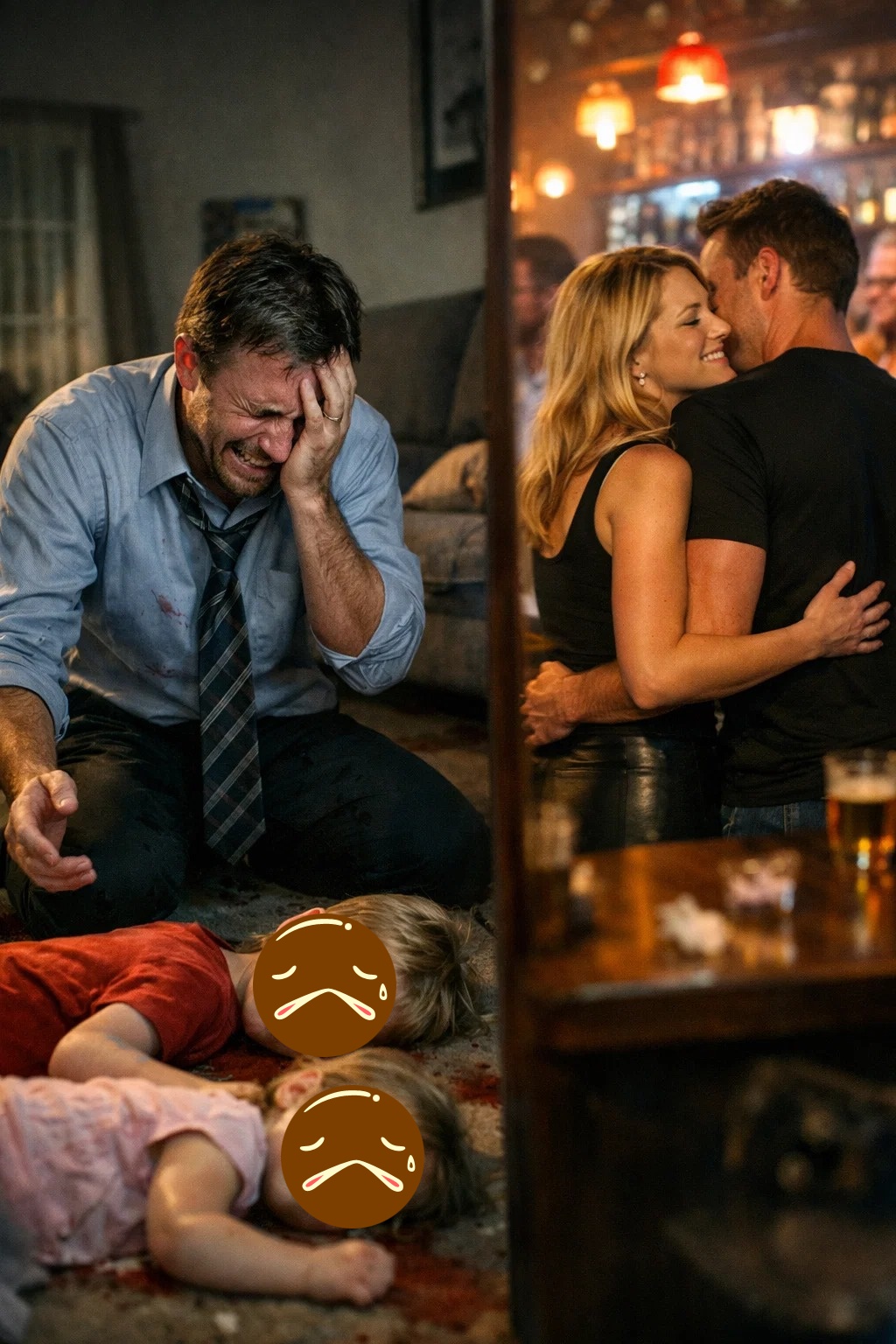
In the summer she turned thirty-four, the crack became a fissure. It started innocently enough—a “moms’ night out” that ended in a blurry cab ride and a forgotten hangover. But the feeling of liberation, of being seen as something other than “Mom,” was intoxicating. It was a dragon she couldn’t stop chasing.
Then she met Caleb. He was twenty-nine, a bartender with a crooked smile and a reckless streak that mirrored the one Eleanor had buried ten years ago. He was temporary, exciting, and utterly selfish. He didn’t care about blueprints or preschool enrollment. He just wanted to see her dance, and he was happy to let her.
The first time she left the kids alone was a terrifying, twenty-minute dash to a bar around the corner to drop off a forgotten wallet for Caleb. They were fast asleep, a baby monitor crackling with their soft breathing. When she got back, nothing had changed. The rush of doing it and getting away with it was a powerful, corrupted new high. Twenty minutes became forty, then an hour, and finally, a plan.
On a warm Friday evening in July, the plan was simple. David was working a crucial, unexpected shift at the firm; they were finalizing the bidding for a new museum downtown. He’d texted her that he wouldn’t be back until “after midnight, maybe later.” Eleanor, dressed in a silk slip dress that David had once loved, felt a thrill of cold, manic excitement.
“Okay, my angels,” she cooed, tucking Leo and Ava into their beds around 8:30 PM. Ava fought sleep, her three-year-old brain sensing the crackle of a change in the air. “Mommy has a very important, boring grown-up thing she has to go to, okay? But look, I’m turning on your favorite glow-in-the-dark stars.”
Leo, the serious five-year-old, watched her. “Is Daddy coming home?”
“Soon, sweetie. Very soon. You guys just watch the stars and have the best dreams, and Mommy will be right here when you wake up.”
The lie tasted metallic, like copper, in her mouth. She didn’t turn back. She didn’t check the baby monitor, which sat on the charger in the kitchen. In fact, in her frantic need to escape, she had unplugged it earlier and forgot to plug it back in. The screen was a black mirror.
Caleb’s car was idling at the curb. He saw her slip from the side door, the lights of the house dimming behind her. He offered a cigarette and a wink. “You made it.”
“I made it,” she breathed, her heart a wild bird in her chest, the suburban silence giving way to the thrum of a base-heavy playlist as they pulled away.
The club, The Velvet Lounge, was a sensory assault. It was all crimson lights, crushed velvet, and a DJ who understood the perfect cadence of longing and release. Eleanor, on her second whiskey, Caleb’s arm draped possessively around her, began to feel the heavy coat of motherhood slip from her shoulders. She was vibrant. She was nineteen again. She was anything but the woman who lived at 412 Maple Street.
Caleb leaned in, his voice a low growl above the music. “You look dangerous tonight.”
“Maybe I am,” she teased, a reckless smile plastered to her face. They danced, her silk dress clinging to her, her eyes closed, lost in the illusion of freedom. The alcohol worked its seductive magic, blunting any nagging sense of responsibility, any memory of the two little lives left in the quiet house with the black baby monitor.
They lost track of time. The club, which had been packed, was thinning, and the DJ was starting a slower, more intimate set. Eleanor, her head on Caleb’s shoulder, looked at her wrist, then remembered she wasn’t wearing a watch. A faint stir of unease, a cold thread of reality, tried to push its way through the alcoholic fog.
“What time is it?” she slurred.
Caleb glanced at his phone. “A little after 1:00 AM.”
A jolt of panic, like a physical blow, hit her. After one. “Caleb, I have to go. My husband—he’ll be home soon. I need to be there.”
“Come on, relax. Just one more, and I’ll take you.”
But the spell was broken. The music felt grating, and the red lights were too bright. “No, I can’t. Take me home. Now.”
Caleb, grumbling about “dampened fun,” obliged. The drive back was a blur of neon and dark suburban streets. As they approached the neighborhood, Eleanor’s fingers were white, gripping the edge of the passenger seat.
They rounded the final corner to Maple Street. “Okay, let me off here, I’ll walk the rest.”
Caleb pulled to the curb, a look of mild irritation on his face. “Call me when you’re… you know, free again.”
“I will, I will,” she said, her voice frantic as she stumbled out of the car. She ran the remaining block to the house, the night air chilling the sweat on her skin.
The house was dark. Thank God, she thought, a massive wave of relief crashing over her. The porch light was off, and David’s BMW was not in the driveway. She had won. She had gotten away with it.
She fumbled with her keys, her hands shaking, and unlocked the side door. The house greeted her with its familiar, comforting silence. But as she stepped inside, a faint, acrid smell—like ozone and singed plastic—registered in her nose. She dismissed it as a glitch, a figment of her overactive, guilty imagination.
She crept into the kitchen, expecting to see the baby monitor glowing. The dark, unplugged screen stared back at her. It’s fine, she told herself. They’re asleep. They haven’t made a sound all night.
She made her way to the stairs. The smell was stronger here. A primal, instinctive terror began to take root in her chest, a feeling that something was fundamentally wrong. She ran up the remaining steps and hurried to Leo and Ava’s room.
“Leo? Ava?” she called, her voice a fragile whisper.
She pushed open the door. The glow-in-the-dark stars casts a faint, surreal light on the ceiling. The room was deathly quiet. A strange, twisted logic kept her from flipping the light switch. Instead, she rushed to Leo’s bed.
It was empty.
A cry of pure animalistic dread escaped her. She spun around, her eyes darting across the room. Ava’s bed was also empty.
The smell was overwhelming now. She ran to the other side of the room, to the area near the old-fashioned floor lamp they kept in the corner for bedtime stories.
A scream tore through her, a sound that she barely recognized as human. It was a sound of absolute, irreversible negation.
There, in a heap, their small bodies were curled together, tangled near the lamp. The lamp cord had been chewed, a raw, exposed wire visible, and the power strip it was plugged into looked warped and burned.
Leo and Ava were not sleeping. Their faces were pale, their features unnervingly still. Eleanor stumbled, her legs giving out, and collapsed to the floor beside them. Her world, which she had so recklessly discarded for a few hours of neon lights, had just ended in the dark of a silent room.
David arrived forty minutes later, his partnership finalized, his heart bursting with a rare sense of professional triumph. As he pulled into the driveway, the sight that greeted him froze the very breath in his lungs. Maple Street, a bastion of quiet safety, was a chaos of flashing red and blue lights. Two ambulances were in front of his house, their engines running.
He parked on the lawn and ran, his briefcase abandoned, his shout of “Sarah! Kids!” cutting through the cacophony of sirens and a distraught, wailing neighbor.
As he reached the front porch, the front door opened, and a paramedic, his expression etched in professional sorrow, stepped out. “Mr. Miller?”
David pushed past him. He needed to find them. He needed this to be a mistake.
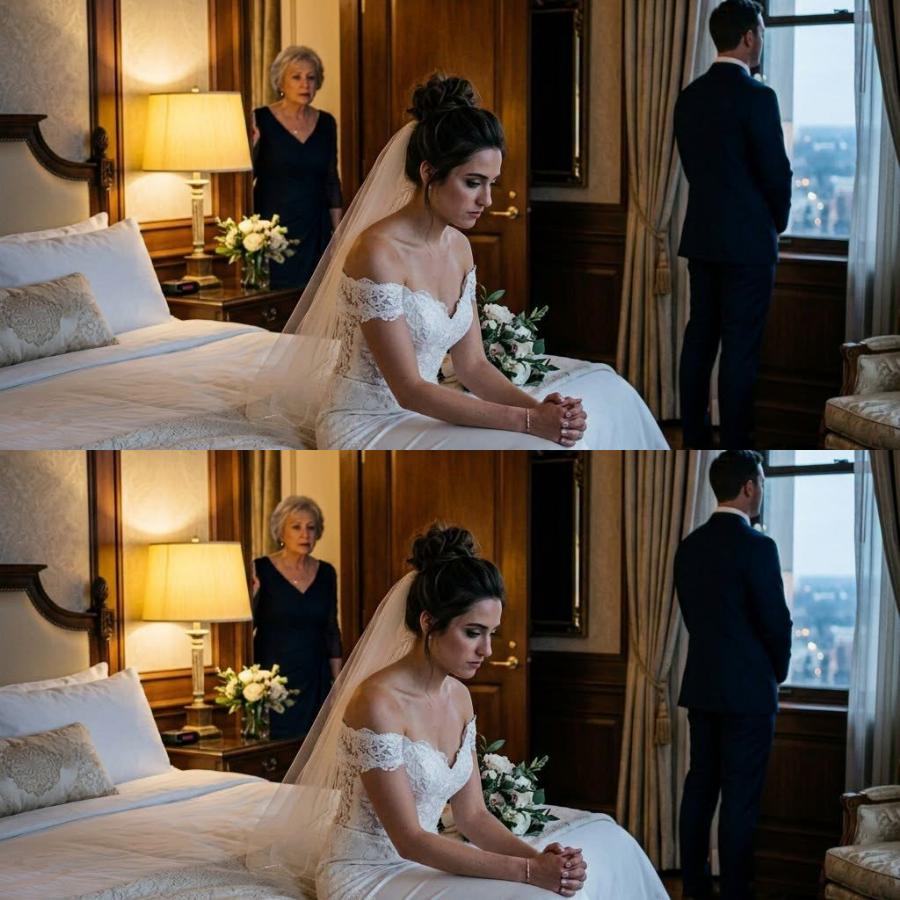
He found Eleanor in the master bedroom, sitting on the edge of the bed. She was still wearing the silk slip dress, but the luster was gone, and her eyes were empty. They weren’t reflecting any light. They were black mirrors.
David saw the small figures on the bed, covered by a white sheet. And he knew. The world didn’t just end; it collapsed, a structure of blueprints and safety falling to dust.
“I went to the museum,” he said, his voice a flat, dead calm that was more terrifying than any scream. “They told me you called, that you said you were working, too.”
Eleanor looked up at him. The alcohol was gone, and a terrible, crushing lucidity had taken its place. She saw the blueprints on the floor, the briefcase he had carried. She saw the husband she had betrayed and the children she had murdered.
A sound started in her chest, a low, keening mourn that was the language of an unimaginable grief. “David… David, I… I left them. I wanted to see… I wanted to see Caleb.”
The confession hung in the air, a final, brutal truth. David didn’t move. He didn’t offer a consoling word or a gesture of rage. He didn’t offer the comfort of a scream. He simply looked at her, and in his eyes, Eleanor saw the final, absolute verdict: a verdict of cold, everlasting silence.
The months that followed were a testament to the fact that sometimes, the hardest punishment is not a prison cell, but the quiet of an empty life. The legal system, after a brief, brutal media storm that labeled Eleanor a “Monster Mom,” was surprisingly quick. The lack of prior offenses, her profound, non-verbal grief during the hearings, and a skillful public defender led to a sentence of supervised probation and mandatory, near-daily psychological therapy. But David had his own sentence.
He left their home. He didn’t want the footprints in the hallways or the memories of the laughter. He sued for a no-fault divorce, a proceedings that Eleanor barely participated in, signing every paper he put in front of her. He refused all contact. The brief glimpse she caught of him a year later in a grocery store showed a man aged ten years, his shoulders permanently hunched, his eyes fixed on a future he could no longer imagine.
Eleanor was left with the house on 412 Maple Street. David, in a final, quiet act of revenge, had left her the home she had found so suffocating.
And so, she lived. The first year was a blur of medication, the therapist’s quiet office, and the echoing hallways of a house that seemed to have forgotten the concept of noise. She was haunted by shadows that looked like a running boy and a girl on tiptoes. Every sound—the settling of the house, the wind in the pines, the call of a crow—sounded like a cry of “Mom!” that was always cut short.
The therapist, a patient woman named Dr. Aris, tried to work through the layers of her guilt and grief. But some things are too broken to be repaired by words. Eleanor sat in her sessions, nodding, her eyes a haunted landscape of the past, the memories of The Velvet Lounge and Caleb (whom she never saw again) now a source of visceral nausea.
At thirty-eight, she should have been in the prime of her life. Instead, she looked sixty. Her blonde hair was thin, streaked with gray. The freckles were no longer charming, but like spots on old, neglected fruit. She worked an office job that required very little thought, a place where people spoke to her with the careful, distant pity reserved for a tragedy too profound to be discussed.
Her weekends were the hardest. The suburban neighborhood, which she had so despised for its domestic banality, was now a source of intense envy. She saw fathers mowing lawns, mothers setting up lemonade stands, and children, endless children, running with a freedom she had irrevocably stolen from her own.
Maple Street became a gallery of the life she could have had. She would sometimes sit in her darkened living room, her face pressed against the cool glass of the window, and watch a little boy on a bicycle, or a woman push a swing in the distance. The sight didn’t trigger jealousy; it triggered a profound, all-consuming ache, a longing that was like a living thing inside her.
One gray autumn afternoon, Dr. Aris brought up the concept of “moving forward.”
“Moving forward is not forgetting, Eleanor,” she said, her voice gentle. “It’s finding a way to integrate this experience into a meaningful life. Perhaps volunteering? Helping other women? Working with children?”
Eleanor looked at her. “I can’t be near children. It’s a risk. I’m dangerous.”
“You were reckless, Eleanor. You’ve learned a terrible lesson. That knowledge, properly directed, could save others from the same mistake.”
The suggestion settled in Eleanor’s mind, a small, tentative seed of a new idea. It wasn’t about redemption; she knew she would never find that. It was about usefulness, a way to justify her continued, painful existence.
She started volunteering at a local family shelter. The work was demanding and brutal. She saw poverty, neglect, and trauma in their most raw and unforgiving forms. But she also saw the ferocious, resilient power of a parent’s love for their child, even in the worst of circumstances.
She didn’t tell anyone who she was. She was simply Eleanor, the quiet volunteer who was a master at comforting a crying baby, who could listen to a stressed-out mother for hours without judgment.
In the shelter, she found a strange, twisted version of the domestic life she had once fled. She found sticky fingers and potty training, but she met them with reverence. In the shelter, she wasn’t a monster mom. She was just a pair of hands, a warm heart, and a witness to a love she had squandered.
One day, while folding blankets, a young woman, no more than twenty, with a defiant expression and a baby on her hip, approached her.
“Dr. Aris said you could… you could maybe talk to me about childcare? My boss says if I’m late one more time, I’m fired.”
Eleanor froze. The baby monitor on the counter (she had been hyper-aware of their presence ever since) seemed to crackle. Not me. Not me.
“I’m not a professional counselor,” Eleanor said, her voice shaking.
“Dr. Aris just said you… you were good with kids. And that you had… a lot of life experience.”
Eleanor looked at the young woman. She saw the desperation, the exhaustion, and a faint flicker of the same reckless longing she once had. She saw the crossroad, and she knew the terrible map of the wrong path.
She took a breath. Her therapist’s words, her memories of the museum barcodes, and the black eyes of David Miller all converged in a single moment of absolute clarity.
“You love your child,” Eleanor said, her voice a flat, steady authority.
The woman bristled. “Of course I do. Why do you think I’m working two shifts?”
“Because,” Eleanor said, and for the first time, she looked the young woman in the eyes, her gaze no longer empty. “You cannot be everywhere at once. And you cannot do everything alone. When you are a mother, your life isn’t yours anymore. You can’t leave them. Not for an hour, not for a moment. You can’t trust the silence. The silence is a lie.”
The young woman watched her, the defiance fading into a confused apprehension. “You… you sound like you’re speaking from experience.”
“I am,” Eleanor said, a tear finally escaping and tracing a slow, hot path down her aged face. “I am. Now, let’s talk about a childcare plan. A safe, secure plan. Because the price of an alternative is a blackout you never wake up from.”
Eleanor Miller would never find forgiveness, and her life would always be an empty house with the sound of phantom feet. But as she watched the young woman nod, her expression one of dawning understanding, Eleanor realized that while she had murdered her own children, she just might have helped save another’s. It was not a happy ending. It was a life lived in a quiet, eternal penance. And on Maple Street, the stars still glowed in the dark of a silent room, a light for a journey that was over before it had truly begun.