America’s Most Cruel BLACK WIDOW: U.S. Court Reopens Sensational Utah Husband-Poisoning Case; Widow Who Killed Husband with Fentanyl Released a Grief Book to Exaggerate Trauma, but the Reality is More Horrific Than Ever.
Grief Author Guilty: The Twisted Tale of Kouri Richins, Who Poisoned Her Husband to Preserve a Facade of Wealth
PARK CITY, UTAH — The standard narrative of grief is one of profound loss, confusion, and the slow, painful process of rebuilding. But in the Summit County Courthouse this evening, a jury declared that for Kouri Richins, grief was not an experience to be endured, but a tool to be wielded.
Richins, 35, a Utah mother of three who gained national attention for self-publishing a children’s book about coping with the death of a parent, has been found guilty on all counts in the 2022 murder of her husband, Eric Richins. The verdict was definitive: Kouri Richins is guilty of aggravated murder, attempted aggravated murder, insurance fraud, and forgery.
The conclusion of this high-profile trial shatters the last remnants of the image Richins carefully curated: that of a grieving widow dedicated to helping her sons navigate their father’s absence. Instead, prosecutors painted a picture of a cold, calculating woman whose ambition for affluence and a new life led her to systemically poison her husband, first through a failed attempt, and finally, with a lethal dose of fentanyl served in a celebratory cocktail.
The Backstory of Betrayal and Debt
The story begins years before the fatal night of March 3, 2022. While Kouri Richins presented herself as a successful real estate agent and “home-flipper,” court filings and forensic accounting revealed a darker financial reality. Richins was drowning in debt. She owed more than $4 million to various lenders and was struggling to keep her failing business afloat. The mansion she bought on impulse in Midway, Utah—against Eric’s wishes—was just one example of the “facade of privilege” she fought to maintain.
Eric Richins, 39, was a conservative man by contrast. The owner of a successful masonry company, he preferred a simpler life. For years, the couple clashed over Kouri’s relentless spending. As her debt mounted, Kouri reportedly began to look for an escape that would allow her to keep Eric’s estate, valued at $3.6 million, and his life insurance proceeds.
Authorities allege Kouri secretly took out multiple life insurance policies on Eric without his knowledge, totaling roughly $2 million. She later attempted to make herself the primary beneficiary of his estate. It was a move Eric reportedly discovered just weeks before his death, prompting him to secretly remove her from his will, change his insurance policies to benefit his sons and siblings, and seek legal counsel regarding a divorce.
The discovery of her husband’s tactical defense may have accelerated Kouri’s timeline.
Two Attempts, One Killer Cocktail
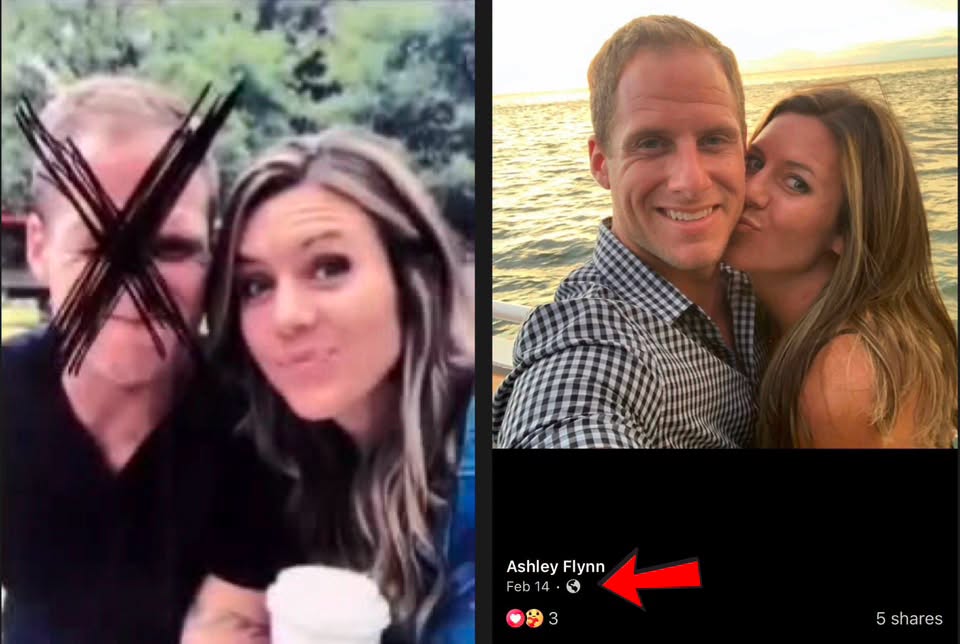
Prosecutors detailed a chilling, systematic pattern. The trial heard that Kouri made an earlier attempt on Eric’s life on Valentine’s Day, 2022. She allegedly slipped fentanyl into a sandwich she prepared for him. Eric became violently ill, blacked out, and later confided to a friend that he believed his wife had tried to poison him. He survived this attempt, but it didn’t stop her.
The state argued that Kouri again sourced fentanyl, contacting a former housekeeper, Carmen Lauber, multiple times to obtain “something stronger” than oxycodone. Lauber testified that she provided Richins with fentanyl pills shortly before the second, fatal poisoning.
On March 3, 2022, Kouri claimed the couple was celebrating a successful real estate sale. She prepared a Moscow Mule—Eric’s favorite cocktail—and brought it to their bedroom. Hours later, she called 911, screaming hysterically. She told investigators she had left Eric to sleep in their bedroom and went to sleep in her son’s bed after he had a nightmare. When she returned, she said, she found her husband unresponsive and cold.

Toxicology reports later showed Eric had died from a fentanyl overdose. The concentration of the synthetic opioid in his system was five times the lethal dose. Crucially, there were no signs of drug paraphernalia or track marks on Eric’s body, contradicting any suggestion that he had used drugs illicitly or accidentally. A digital forensic analyst testified that in the days before his death, Kouri’s internet search history included “what is a lethal dose of f*ntanyl,” “luxury prisons for the rich America,” and “if someone is poisned what does it go down on the death certificate as.”
The Ultimate Chutzpah: ‘Are You With Me?’
The most shocking aspect of the case, and the detail that initially propelled it into international headlines, came nearly a year after Eric’s death. In March 2023, just a month before her arrest, Kouri self-published a children’s book titled Are You With Me?
The 42-page illustrated book follows a young boy who loses his father but is comforted by the thought that his father’s presence still exists all around him, like an angel watching over him. Kouri dedicated the book to “my amazing husband and a wonderful father,” marketing it as a resource to help children cope with loss. She actively promoted it on local television shows, including Good Things Utah, where she gave an interview discussing how her sons were struggling with the death of their father.
“We wrote this book to kind of bring comfort to them,” she told the hosts, smiling and discussing the resilience of the human spirit. The book sold for $14.99 on Amazon and was advertised in support groups for grieving families until it was removed following her arrest in May 2023.
The dynamic shift from a grieving mother on a talk show to a suspect charged with aggravated murder was stark. During the trial, the jury learned that Kouri did not even write the book herself; she hired a ghostwriter, paying them to draft the comforting narrative that she would later present as her own “healing journey.”
The Verdict of the ‘Black Widow’
The case against Richins was built on thousands of records, digital forensics, financial filings, and dramatic testimony.
Kouri’s handyman and alleged boyfriend, Robert Josh Grossman, testified at the trial. According to court filings, Kouri texted Grossman shortly after the first, failed Valentine’s Day attempt, saying, “If [Eric] could just go away … life would be perfect.” In the days leading up to Eric’s death, she sent another message promising that “life is going to be different.” She had already planned a vacation for herself and Grossman for shortly after her husband’s death and spoke of their future together.
In closing arguments, deputy Summit County attorney Brad Bloodworth argued that Kouri killing her husband was “the only rational explanation for the evidence.” He said she “wanted to leave her husband but did not want to leave his money.” Bloodworth replayed a clip of Richins’ 911 call from the night of her husband’s death. That’s “not ‘the sound of a wife becoming a widow,’” he said, referencing the defense’s opening statement. “It’s the sound of a wife becoming a black widow.”
The defense, led by attorney Wendy Lewis, urged the jury to look for reasonable doubt, arguing that Eric may have accidentally overdosed due to Lyme disease and an addiction to painkillers. But without witnesses to call on their own behalf, the defense’s strategy failed to counter the state’s extensive timeline of debt, drug acquisition, and digital evidence.
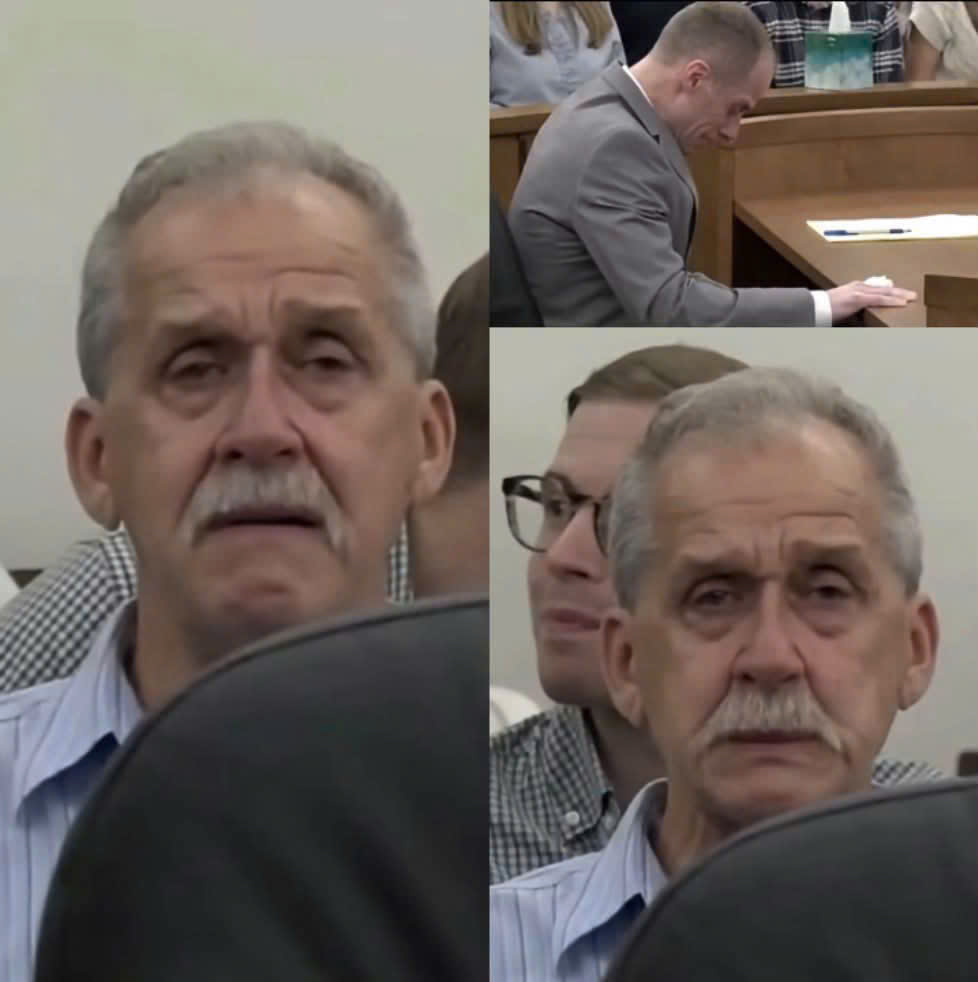
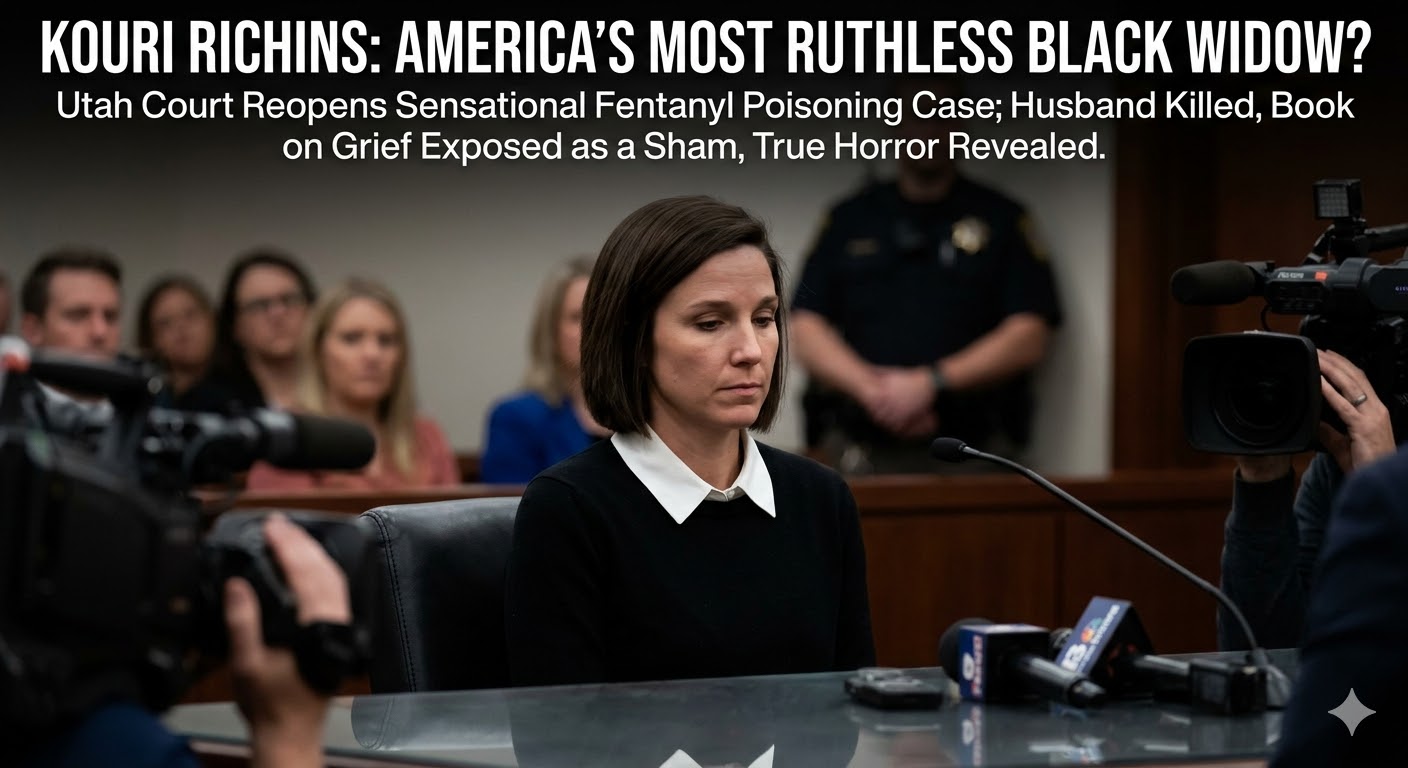
After just three hours of deliberation, the eight-member jury returned a unanimous verdict. Kouri Richins, wearing a white blouse with flowers, looked down and began breathing heavily as the clerk read “guilty” for the most serious charge: aggravated murder. Multiple family members of Eric Richins, including his sisters who had long suspected Kouri, were in tears after the verdict.
Richins has been jailed since her arrest and faces a potential sentence of 25 years to life in prison. Her sentencing hearing is scheduled for May 13—the day that would have been Eric Richins’ 44th birthday. The tragedy of the Richins family, once a domestic clash over finances, has finally culminated in a courthouse, revealing that the true author of Eric’s story was not a grieving wife, but a killer rewriting reality.