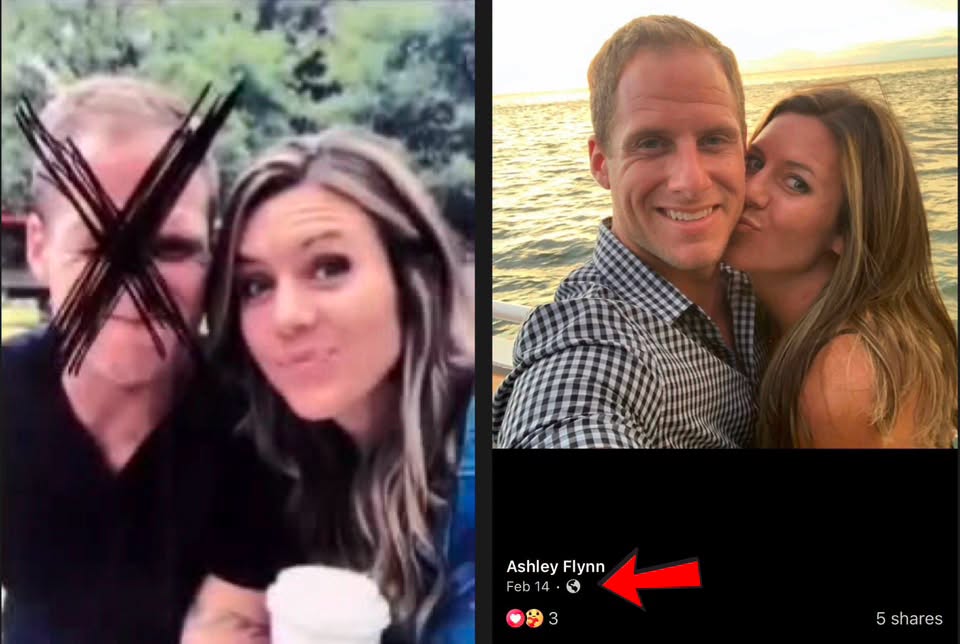
TRAGIC: Eric Richins lived in constant, paralyzing fear, having survived a near-fatal poisoning in Greece and a life-threatening “allergic reaction” on Valentine’s Day 2022, yet he stubbornly chose to stay with Kouri; the reason is truly heartbreaking.
The conviction of Kouri Richins for the aggravated murder of her husband, Eric Richins, has left the public grappling with a haunting question that sits at the very heart of this tragedy: Why did a man who clearly suspected his wife was trying to kill him continue to sleep under the same roof? As the trial unfolded in a Summit County, Utah courtroom, a mountain of evidence, consisting of 33 irrefutable points, painted a picture of a man who was living in a state of constant, low-level terror. Eric Richins was not a naive victim. He was a successful, intuitive businessman who had explicitly told his family members and close friends that if anything happened to him, “Kouri was to blame.” He had survived a near-fatal poisoning in Greece and a life-threatening “allergic reaction” on Valentine’s Day 2022. Yet, despite these harrowing red flags and the “sordid past” of the woman he called his wife, Eric chose to stay. The answer to this mystery, as revealed through testimony and intimate family accounts, is as noble as it is heartbreaking: Eric Richins stayed because he loved his three sons more than he valued his own life.
To understand Eric’s decision, one must first look at the calculated malice Kouri secretly sowed throughout their marriage. While she was busy projecting an image of a successful realtor and later a “grieving widow” and author, Eric was witnessing the slow disintegration of his trust. He had discovered Kouri’s financial infidelity—the stolen hundreds of thousands of dollars, the forged power of attorney, and the secret loans. He saw her obsession with a multimillion-dollar mansion she couldn’t afford and her cold, independent streak that seemed to view him only as a financial obstacle. More importantly, he felt the physical effects of her “gifts.” The prosecution detailed how Eric became violently ill after Kouri gave him a drink during a Mediterranean vacation. Later, on Valentine’s Day, a single bite of a sandwich she provided sent him into anaphylactic shock, requiring his son’s EpiPen to keep him breathing. Eric knew. He didn’t just suspect; he possessed a bone-deep certainty that the woman he shared a home with was a predator.

However, Eric Richins was a man defined by his role as a father. To those who knew him, his three young boys were his entire world. In the conservative, family-oriented life he envisioned—the one Kouri mocked in her emails to detectives—the father is the protector, the anchor of the home. Eric understood that if he moved out or filed for a divorce, he risked losing the ability to protect his children on a daily basis. He feared that a legal battle with a woman as ruthless and manipulative as Kouri would lead to a fractured custody arrangement, leaving his sons alone with her for long stretches of time. If she was capable of poisoning her husband, Eric wondered what she might be capable of doing to the children if they stood in the way of her “independence” or her inheritance. For Eric, the risk of leaving his sons unprotected was far greater than the risk of staying and facing his own potential death.
This paternal devotion led Eric to engage in a silent, desperate strategy of defense. Rather than fleeing, he stayed to act as a human shield for his children. He took measures to ensure their long-term security by visiting an estate-planning attorney in secret. He created the Eric Richins Living Trust and moved his assets, including his interest in his masonry business and his life insurance policies, into a vehicle that Kouri could not touch. He appointed his sister, Katie Richins-Benson, as the trustee, specifically and intentionally excluding Kouri. This move, made in October and November of 2020, was Eric’s dying declaration before he ever died. It was a proactive strike to ensure that even if Kouri succeeded in her “perfect” plan to murder him, she would never be able to exploit his hard-earned wealth or use it to manipulate the boys. He chose to gamble with his own safety to secure their future.
The prosecution’s 33 points of evidence highlighted how Kouri used Eric’s love for his family against him. She knew he wouldn’t easily break up the home for the sake of the boys, and she exploited that stability to procure fentanyl through her housekeeper, Carmen Lauber. While Eric was focusing on being a “dad of the year,” coaching soccer and reading bedtime stories, Kouri was Googling “if someone is poisoned what does it go down on the death certificate as.” The chilling role of Kouri’s secret lover and her desire for a “Black Widow” lifestyle further accelerated her timeline. She needed Eric out of the way to start her new life with another man in the Midway mansion, and she knew Eric would never voluntarily leave the boys or give her the money she needed. By staying, Eric inadvertently gave Kouri the proximity she needed to administer the lethal dose, but in his mind, he was simply being the father his boys deserved.
The tragedy is compounded by the fact that Eric’s family saw the danger coming. They were terrified by Kouri’s “sordid past” and her erratic behavior, but they couldn’t protect a man who refused to abandon his post. Eric’s decision to stay was an act of sacrificial love. He understood that a divorce would be an “ugly end” that could traumatize his children and potentially leave them in the hands of a mother who had already shown she lacked a moral compass. He chose to believe that he could manage the threat, that he could be careful enough, and that his presence was the only thing standing between his sons and a “ruthless” widow. On the night he died, he had toasted to a closing he didn’t even want, drinking a Moscow Mule prepared by a wife he knew had tried to kill him twice before. He took that drink not because he was foolish, but because he was trying to maintain a semblance of a normal, happy home for the sake of the children sleeping in the other room.
The email Kouri secretly sent to detectives and her mother revealed the depth of her contempt for Eric’s sacrifice. She mocked his “conservative” values and painted herself as a victim of his desire for a traditional family. She had no comprehension of the type of love that would lead a man to stay in a house of horrors just to ensure his children felt safe. While Kouri was planning celebrations and booking vacations with her lover, Eric was writing his dying accusations in the form of legal trusts and warnings to his sisters. He knew he was in a race against time, and tragically, the fentanyl-laced drink on March 4, 2022, reached him before he could see his boys through to adulthood.
The verdict of guilty on all five counts brings a measure of justice to Eric Richins, but it cannot undo the profound agony he must have felt in those final moments, realizing that his attempt to protect his children had cost him his life. The 33 pieces of irrefutable evidence serve as a monument to his caution and his wife’s cruelty. Kouri Richins will be sentenced on May 13, 2026—what would have been Eric’s 44th birthday. While she will spend her remaining years in a prison cell, Eric’s legacy is preserved in the trust he created and the love he showed his sons. He knew everything, and he stayed anyway. He didn’t stay for Kouri; he stayed for three little boys who were more important to him than his own survival. In the end, Eric Richins was the hero of his own tragic story, a man who chose to face a “Black Widow” every day rather than let his children face the world without his protection. Now, on Eric’s 44th birthday, the woman who mistook his love for weakness will finally learn the true price of her “perfect” plan.