NEVER-BEFORE-SEEN behavior of Caleb Flynn in the latest hearing; his defense lawyer also plays an EXTREMELY POWERFUL psychological card, preparing for a counter-attack on April 28. Will Caleb Flynn truly be cleared of all charges? From suspect to victim in a split second?
The Quiet Before the Storm: Decoding the Strategic Silence of Caleb Flynn and the High-Stakes Gamble of April 28
When Caleb Flynn stepped into the Miami County Common Pleas Court on the morning of Monday, March 30, 2026, the atmosphere was thick with the residue of a case that has already saturated the digital consciousness of the nation. Flynn, a 39-year-old former worship pastor whose soaring vocals once filled sanctuaries and television screens during his stint on American Idol, appeared as a hollowed-out version of his former self. Charged with the brutal February 16 murder of his wife, Ashley Flynn, he stood before Judge Jeannine Pratt not as a charismatic leader, but as a man defined by a jarring, almost spectral reticence. This hearing was ostensibly a procedural stepping stone—a pre-trial conference to organize the chaos of discovery and schedule the coming weeks—but beneath the surface of the dry legal back-and-forth lay a sophisticated and aggressive strategy orchestrated by his defense team, led by the veteran L. Patrick Mulligan. The maneuvers witnessed today suggest that the defense is not merely preparing for a trial; they are engaging in a psychological and temporal war designed to reclaim a narrative that has spiraled out of their control.
The most visceral takeaway from the morning’s proceedings was the physical and vocal presence of the defendant himself. For a man who built a career on projection—both literal and metaphorical—Flynn’s demeanor was an exercise in extreme contraction. When addressed by Judge Pratt to confirm his identity, he responded in a whisper so faint it barely registered on the court’s audio equipment. “Yes, ma’am,” he breathed, a response that prompted an immediate and firm correction from the bench. Judge Pratt, emphasizing the necessity of an accurate record, instructed him to speak up. The resulting “Yes, your honor,” though louder, remained shrouded in a humility that felt discordant with the gravity of the charges against him. This “church mouse” persona, as some observers have labeled it, is likely more than a symptom of incarceration-induced stress; it is a calculated visual and auditory counter-narrative. By presenting Flynn as fragile, soft-spoken, and submissive to authority, the defense begins the subtle work of eroding the prosecution’s depiction of a man capable of staging a violent home invasion to cover the tracks of a domestic homicide. It is the first brick in a wall of “reasonable doubt,” built on the premise that such a timid soul could not possibly possess the cold-blooded calculation required for the crimes alleged.
However, the true weight of the day’s strategy was felt when the discussion turned to the “time waiver.” In the complex machinery of the Ohio legal system, a defendant held in jail must be brought to trial within 90 days to satisfy the constitutional right to a speedy trial. In high-profile murder cases involving voluminous discovery, forensic DNA evidence, and digital footprints, it is almost universal for the defense to waive this right. Doing so allows the legal team months, or even years, to pore over every scrap of evidence, hire independent experts, and wait for the initial swell of media outrage to subside. Caleb Flynn and his counsel have chosen the opposite path. By refusing to sign a new time waiver in the Common Pleas Court, Mulligan has effectively placed the Miami County Prosecutor’s Office on a “shot clock.” The trial is now set for April 28, 2026—a dizzying turnaround for an aggravated murder case that is barely six weeks old.

This refusal is a multifaceted gamble. First and foremost, it is an attempt to mitigate the “jury pool poisoning” that the defense argues has been exacerbated by the State’s release of body-cam footage and police reports. By forcing the trial to occur in April rather than a year from now, Mulligan is betting that he can select a jury before the community’s collective memory of the sensationalized headlines becomes an unshakeable conviction of guilt. The defense has been vocal about their disdain for the “rumor and speculation” rampant online, and this accelerated timeline is their primary weapon against the viral nature of the case. They are attempting to outrun the internet, hoping to present their version of Caleb Flynn to twelve citizens before those citizens have been fully “programmed” by the court of public opinion.
Furthermore, the “speedy trial” demand forces the prosecution’s hand in a way that could lead to procedural errors. The State’s lead attorney, Paul Watkins, noted that discovery is being turned over on a “rolling basis.” By refusing to wait, the defense is gambling that the State might not be fully prepared by April 28—that a key witness might be unavailable, or that a forensic report might be incomplete. It is a high-speed game of chicken where the defense is betting that the State will blink first. If the prosecution cannot meet the burden of proof within this narrow window, the possibility of a dismissal or a significantly weakened case increases. It is an aggressive, “burn-the-ships” tactic that signals a defense team that believes their best chance lies in chaos and haste rather than the slow, methodical grind of a standard capital-level defense.
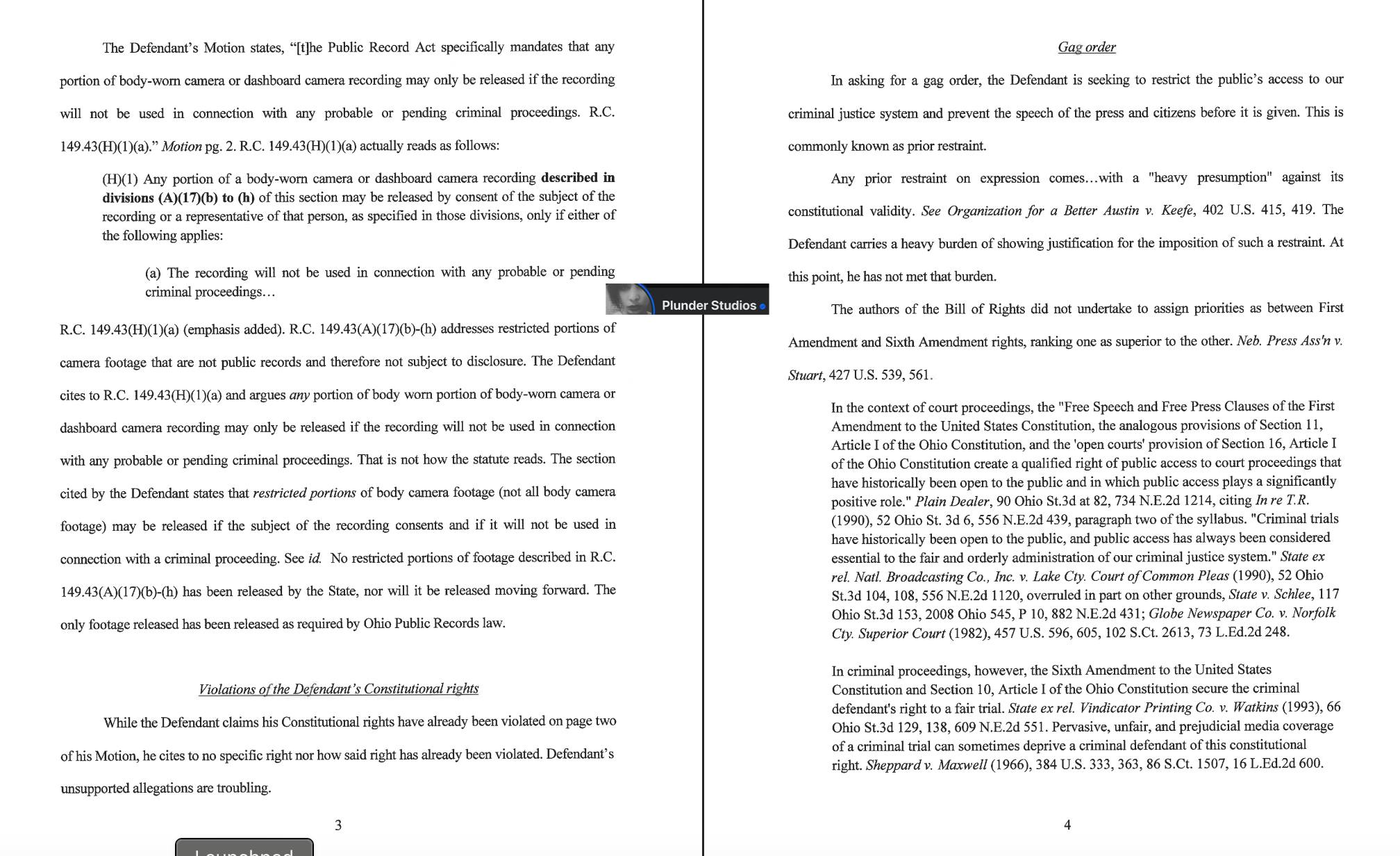
Yet, perhaps the most intriguing moment of the hearing occurred in the final minutes, during a discussion regarding a motion for non-dissemination, or a “gag order.” Mulligan requested a continuance on this motion, pushing it to a status conference on April 6. In his request, he uttered a phrase that has sent shockwaves through the legal community and local observers: he noted that the April 6 date would be used to set a formal hearing for the gag order “if we need one.” That tiny, three-word conditional—if we need one—is a profound linguistic olive branch or, perhaps, a hidden dagger. In the binary world of criminal law, a hearing on a gag order becomes unnecessary only under two conditions: either the two sides have reached a private agreement on how to handle the media, or the case is moving toward a resolution that precludes the need for a trial entirely.
This brings us to the lingering question of a plea deal. While the public posture of the defense is one of aggressive readiness and a demand for a quick trial, the “if we need one” comment suggests that back-channel communications may be more active than the courtroom theatrics imply. A $3.5 million bond is a staggering weight, and despite his previous status as a public figure, Flynn remains a man whose life has been utterly dismantled. The accelerated trial date of April 28 serves a dual purpose: it prepares for war, but it also creates a looming “deadline” that can be used to pressure the prosecution into a favorable plea agreement. If the State is worried about their readiness for an April trial, they might be more inclined to offer a deal that carries a sentence of life with the possibility of parole rather than risking an acquittal or the death penalty in a rushed proceeding.
The week between March 30 and April 6 is now the most critical period in the Flynn case to date. It is a window for “proffer” sessions and intense negotiations. Mulligan’s mention of having “discussions internally and also outside the office” regarding these issues points toward a team that is weighing the risks of their own gamble. They have shown the court a defendant who is quiet, submissive, and seemingly broken—a visual plea for mercy. They have shown the prosecution a legal team that is unafraid of a fast-tracked trial—a display of tactical strength. Now, they sit in the middle, waiting to see which side of that coin will buy Caleb Flynn his future.
Ultimately, the hearing on March 30 revealed a defense strategy built on the mastery of time and tone. By shrinking the defendant’s presence to a whisper and shrinking the trial’s timeline to a matter of weeks, L. Patrick Mulligan is attempting to exert total control over a situation that was previously defined by its volatility. Whether Flynn is truly “angling to strike a plea deal” as his lawyer’s slip of the tongue might suggest, or whether he is genuinely prepared to face a jury in twenty-nine days, the underlying motive remains the same: survival. In the hallowed halls of Miami County justice, the man who once sang to the heavens is now banking everything on the power of a whisper and the strategic use of silence. The world will be watching on April 6 to see if that whisper turns into a confession or a final, defiant shout for a day in court.