TOO TERRIFYING: The questionable statements from Lynette Hooker’s husband after paddling 8 hours to report her missing; a special DETAIL about her life jacket has stripped away the facade of the incident
THE MISSING VEST: Public Suspicion Mounts as New Details Emerge in Bahamas Disappearance of Lynette Hooker
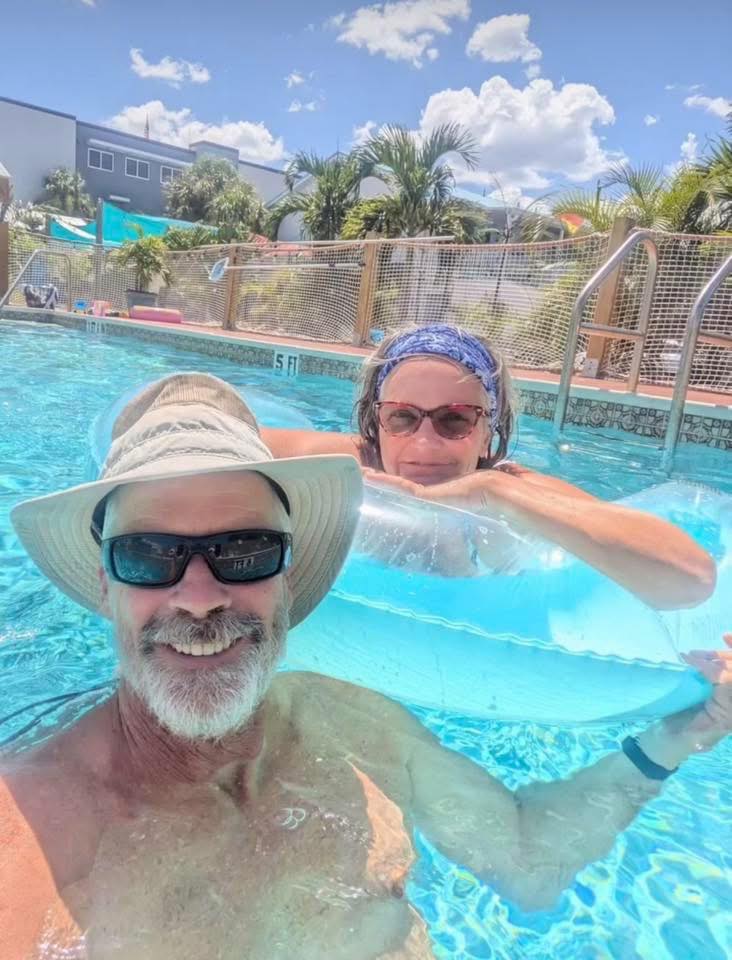
ABACO, THE BAHAMAS – The search for 55-year-old Lynette Hooker has entered its most harrowing phase, shifting from a desperate rescue mission to a complex investigation clouded by public doubt. While the Royal Bahamas Defence Force continues to scan the vast, dark Atlantic for any sign of the Michigan native, the court of public opinion has already convened online. Central to the growing controversy are two chilling details: the total absence of a life jacket and the bizarre circumstance involving the boat’s ignition keys.
As the sun sets over the Abaco Islands for the third time since Lynette vanished, the silence from the water is being drowned out by a roar of skepticism across social media platforms, where veteran mariners and armchair detectives alike are deconstructing the story provided by her 58-year-old husband, Brian Hooker.
The “No Life Jacket” Red Flag
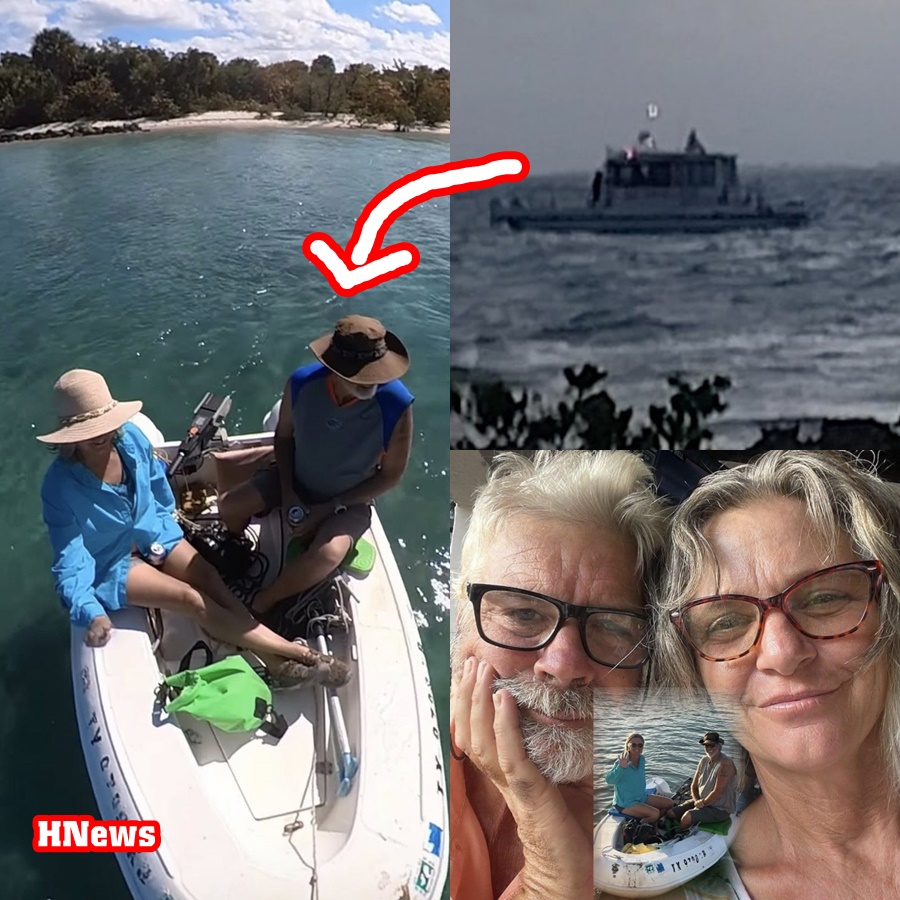
In the initial reports provided to the Royal Bahamas Police Force, it was noted that Brian Hooker was “unsure” or “didn’t notice” if his wife was wearing a life jacket when she “bounced” out of their 8-foot dinghy. To the casual observer, this may seem like a lapse in memory during a traumatic event. However, to the boating community, it is an admission that defies the fundamental laws of maritime safety.
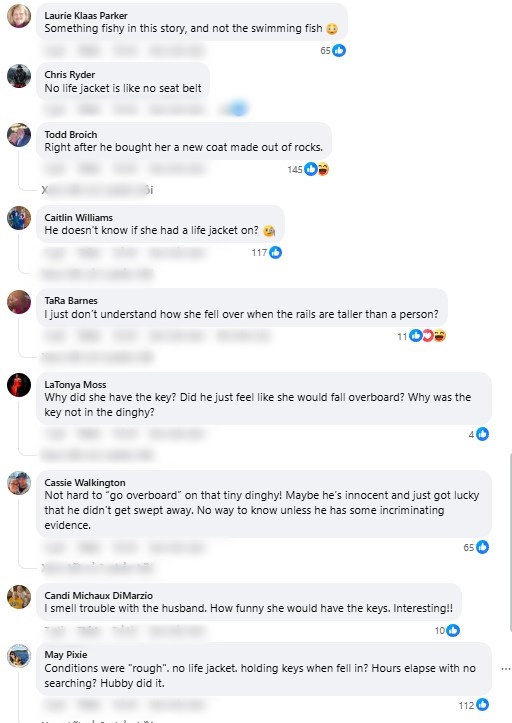
“No life jacket is like no seat belt,” commented Chris Ryder, a social media user whose sentiment has been echoed by thousands. The skepticism stems from the couple’s reported experience. The Hookers were not novice tourists; they were seasoned boaters who owned a yacht named Soulmate. For an experienced mariner to allow their spouse to travel in a tiny, 8-foot hard-bottom dinghy—especially at 7:30 PM in “rough” conditions—without a flotation device has struck many as incomprehensible.
Renee Credeur, a vocal critic on Facebook, pointedly asked: “How you don’t know if your wife was wearing a life jacket?! I bet he pushed her in.” This sentiment, while speculative, reflects a growing trend of users who find Brian’s narrative “fishy.”
The Key to the Mystery
Perhaps the most scrutinized aspect of the case is the ignition key. Brian Hooker told authorities that Lynette fell overboard while holding the keys, which caused the engine to die instantly and left him unable to pursue her.
Seasoned boaters have quickly pointed out the technical inconsistencies in this claim. Linda Jean Melville, an experienced boater, noted that in these types of dinghies, the “key” is usually a kill-switch lanyard. “If the key was around her wrist, it automatically comes out if you fall over… but what I don’t understand is why didn’t he paddle to the direction of their yacht?”
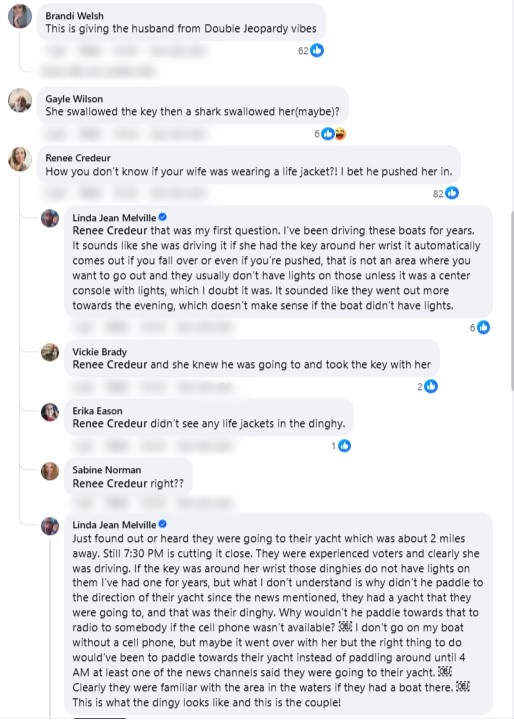
The yacht, Soulmate, was reportedly anchored only two miles away. Critics are questioning why Brian chose to paddle for over eight hours to Marsh Harbour—reaching it at 4:00 AM—instead of heading toward the much closer yacht, which likely equipped with a radio, flares, and emergency supplies.
“I smell trouble with the husband,” wrote Candi Michaux DiMarzio. “How funny she would have the keys. Interesting!!”
Dark Waters and “Double Jeopardy” Vibes
The atmosphere surrounding the investigation has turned decidedly dark. Some users have gone as far as to compare the case to the plot of the film Double Jeopardy, where a husband fakes a disappearance to frame a spouse or collect insurance. Brandi Welsh noted, “This is giving the husband from Double Jeopardy vibes,” a comment that garnered significant engagement from others who feel the timeline of events doesn’t add up.
The conditions on the night of April 4 were described as “rough.” In such weather, the decision to take an 8-foot dinghy out in the evening (7:30 PM) is being called into question. Veteran sailors argue that if the water was truly rough enough to “bounce” a person out of a hard-bottom vessel, a seasoned boater would have insisted on life jackets and likely would not have let the passenger hold the only set of keys.
“Conditions were ‘rough,’ no life jacket, holding keys when fell in? Hours elapse with no searching? Hubby did it,” stated May Pixie, summarizing the cynical view held by a large portion of the online audience.
The Investigation’s Missing Pieces
While the public remains skeptical, the Royal Bahamas Police Force (RBPF) is maintaining a cautious stance. They are currently treating the incident as a missing person case, but the pressure to examine the “incriminating evidence” (or lack thereof) is mounting.
Cassie Walkington, another commenter, offered a slightly more balanced but equally grim perspective: “Not hard to ‘go overboard’ on that tiny dinghy! Maybe he’s innocent and just got lucky that he didn’t get swept away. No way to know unless he has some incriminating evidence.”
The “incriminating evidence” being sought by the public includes:
- The Yacht’s Position: Why was the yacht not the first destination for rescue?
- The Keys: Is it standard practice for the passenger to hold the ignition lanyard instead of the driver?
- The Time Gap: Why did it take from 7:30 PM to 4:00 AM to raise the alarm if land and the yacht were relatively close?
A Community in Turmoil
In Michigan, the Onsted community is divided. Many who know the couple are in shock, defending Brian as a grieving husband who faced an impossible situation in the dark. They point to the “total darkness” of the Bahamas’ out islands as a reason for his disorientation.
However, the maritime community in the Abacos is less forgiving. They know the currents. They know the “cuts” between the islands. They know that an 8-foot dinghy is a “tiny” vessel that requires maximum safety precautions. The fact that the rails of many larger vessels are “taller than a person,” as noted by TaRa Barnes, raises questions about the dinghy’s stability and how a “slip” could result in being “swept away” so instantly that a husband could not reach his wife.
The Search for the Truth
As of this afternoon, U.S. counterparts and the U.S. Coast Guard Miami Sector are continuing to provide air support. They are looking for a woman in a black bathing suit—a choice of attire that offers zero visibility in night waters and no buoyancy.
The tragedy of Lynette Hooker is now a tale of two realities: the official search for a missing woman, and the digital search for a motive. Until Lynette is found, or until Brian Hooker provides a more technical explanation for the eight-hour delay and the missing safety gear, the “fishy” smell described by Laurie Klaas Parker will continue to linger over the Abaco Sound.
The U.S. State Department’s March 2025 advisory warned that “boating is not well regulated” in the Bahamas. It seems, in this case, it wasn’t just the regulations that were missing—it was the basic survival gear that could have turned a “bounce” into a simple rescue rather than a permanent disappearance.
The world watches the horizon, hoping for a miracle for Lynette, but also demanding answers from the man who was the last to see her alive.