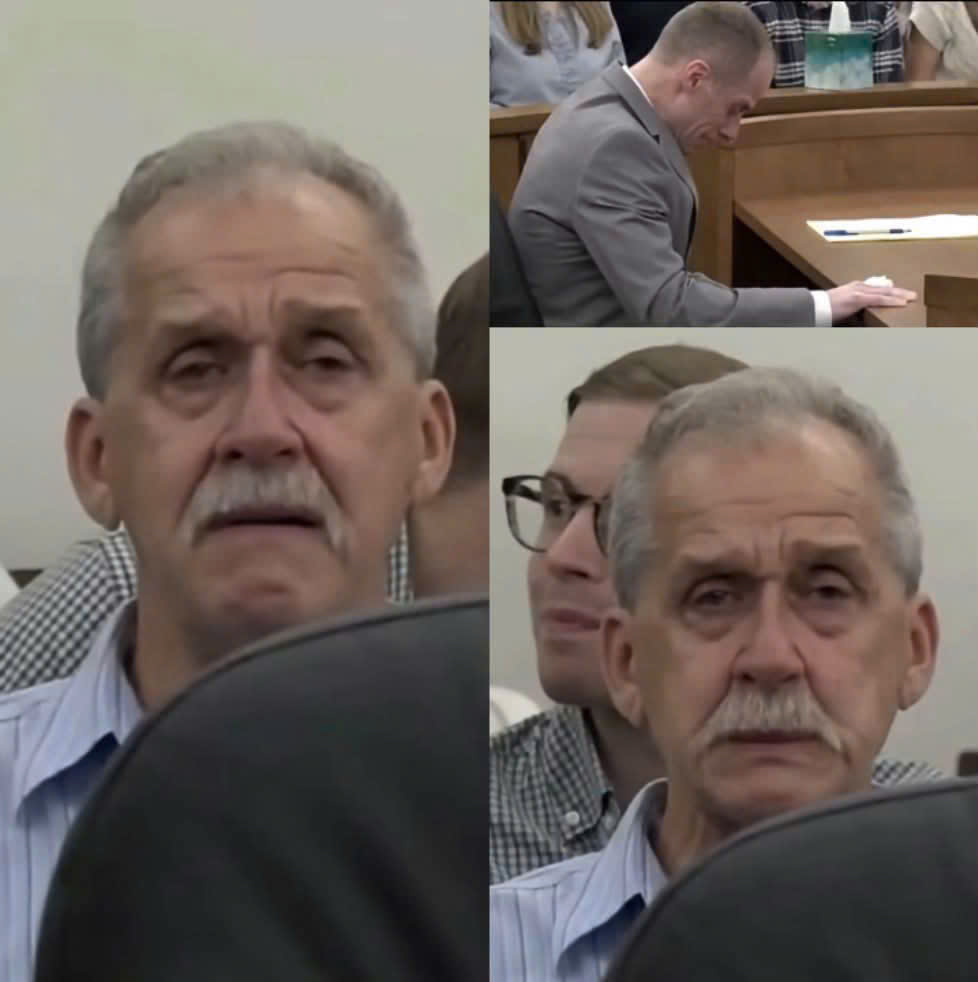
OFFICIAL: Brian Hooker has been released after several days of detention. The Royal Bahamas Police Force issued an unexpected statement regarding Brian—it turns out all of America might have misunderstood him
In the murky turquoise waters of the Bahamas, where the line between a tragic accident and a calculated crime often dissolves under the midday sun, the disappearance of Lynette Hooker has evolved into a haunting saga of domestic discord and legal ambiguity. As of mid-April 2026, the investigation into the 55-year-old Michigan woman’s disappearance has reached a frustrating and volatile standstill. Brian Hooker, the man who stood by her side for twenty-one years of marriage and only six weeks of a disastrous sailing dream, has been released from Bahamian custody. His return to freedom has not brought a sense of closure or relief; instead, it has ignited a firestorm of outrage and suspicion from those who knew Lynette best: her mother and her daughter.
The narrative provided by Brian Hooker remains consistent yet inherently suspicious to those left behind. According to Brian, the tragedy unfolded in the dark, choppy waters between Hope Town and Elbow Cay. He told authorities that Lynette was ejected from their small dinghy after it hit a wake or a sudden wave. In a detail that investigators have scrutinized for its almost cinematic convenience, Brian claimed that as Lynette fell, she was holding the engine’s kill-switch lanyard. With the key ripped from the ignition, the motor died instantly, leaving the dinghy adrift and Brian unable to restart the engine to reach his wife as she was pulled away by the aggressive Atlantic currents. He spent the next several hours chrowing and eventually trekking through dense brush on land before reporting her missing at 4:00 AM.
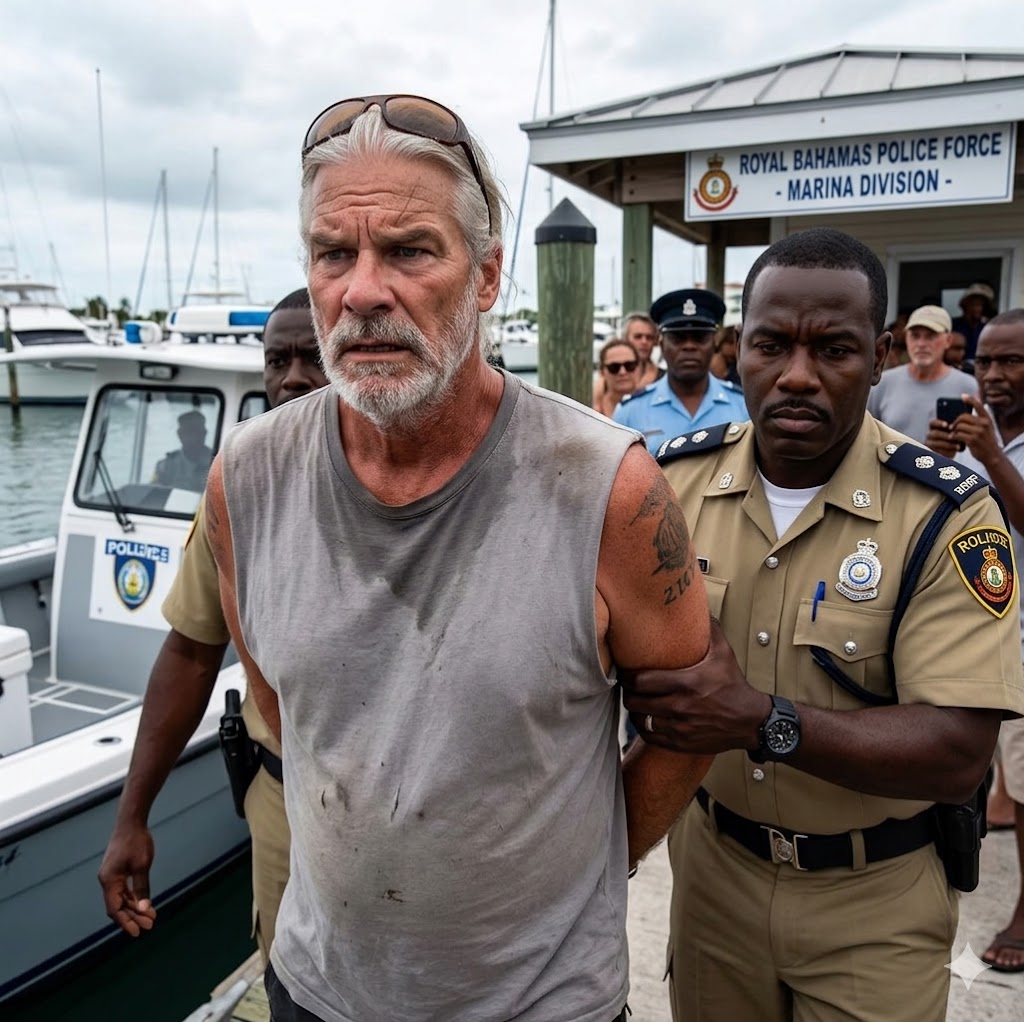
For five days, Brian sat in a Bahamian jail cell while investigators combed the Soul Mate, the couple’s primary vessel, and analyzed the geography of the incident. However, under the legal statutes of the Bahamas, a suspect cannot be held indefinitely without formal charges. On the evening of April 13, 2026, the Royal Bahamas Police Force announced that due to a lack of “direct forensic evidence” or a body, Brian Hooker would be released. While he remains a person of interest and his passport has been restricted, he is, for now, a free man.
The reaction to this release was not one of quiet resignation. It was an explosion of grief and accusations that have laid bare the deep fractures within this family. Lynette’s daughter, Karli Aylesworth, has become the public face of the “Justice for Lynette” movement, and her response to Brian’s release was nothing short of scathing. Speaking from her home in Michigan, Karli did not mince words, describing the release as a “failure of the system” and a “slap in the face to a woman who feared for her life.”
Karli’s perspective is informed by a history that the public is only now beginning to see through the lens of Lynette’s private messages. To Karli, the story of the kill-switch and the accidental fall is a fabrication designed to exploit the inherent dangers of the sea. “My mother was a survivor. She was a strong swimmer, she was cautious, and she was smart,” Karli stated in a recent emotional broadcast. “She didn’t just ‘fall out’ of a boat and disappear. She told us she was done. She told her friends she wasn’t safe out there with him. For the police to let him walk while she is still out there in the water is a nightmare we can’t wake up from.”
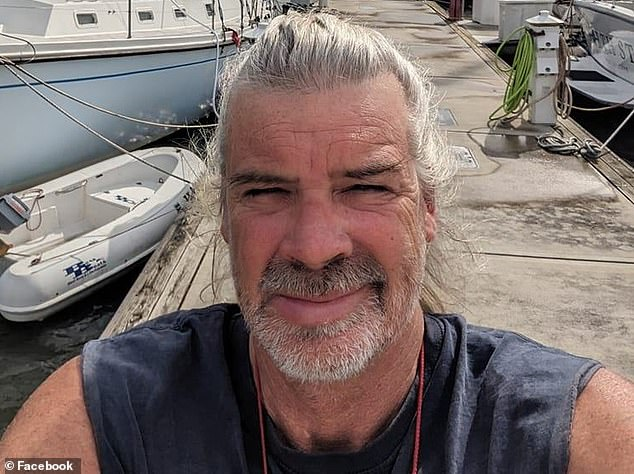
Perhaps even more jarring is the reaction of Lynette’s mother. Typically, in cases of missing persons, maternal figures are portrayed in a state of hopeful prayer. However, Lynette’s mother has taken a harder, more defensive stance, one rooted in years of observing the volatile chemistry between her daughter and son-in-law. Her reaction to Brian’s release was a mixture of profound fear and a cold, analytical anger. She revealed that in the weeks leading up to the final voyage, Lynette had expressed a sense of “entrapment.”
“She didn’t want to go back on that boat,” the mother shared in a strained interview. “She did it because she felt she had to, because she had sold everything and had nowhere else to turn. When I heard he was out, my first thought wasn’t about the investigation—it was about who he might hurt next. He didn’t just lose his wife; he lost the person who kept his secrets. We aren’t surprised he’s out, but we are terrified.”
The unexpected nature of their reactions stems from their refusal to play the role of the “grieving family of an accident victim.” Instead, they are acting as the primary witnesses for the prosecution in the court of public opinion. They have pointed to the 2015 police reports in Michigan, which detail a history of alcohol-fueled domestic disturbances. They have highlighted the messages obtained by CBS News, where Lynette explicitly stated, “I can’t be out there with him.” To the mother and daughter, these aren’t just snippets of a rocky marriage; they are the motives for a crime.
The legal reality, however, is far more complex. Without a body, a “no-body” homicide prosecution is an uphill battle, especially in a maritime environment where “lost at sea” is a common and often truthful conclusion to accidents. The Bahamian authorities are caught between the intense pressure from the American family and the lack of physical proof that a struggle occurred on that dinghy. There were no witnesses. There are no cameras in the middle of the Abaco waters at midnight. There is only Brian’s word against a collection of text messages from two years ago.
For the community of “cruisers”—the nomadic sailors who live their lives on the water—this case has struck a nerve. The “Sailing Hookers” were a recognizable brand on social media, projecting an image of sunset cocktails and pristine beaches. The revelation that their marriage lasted only six weeks of actual cruising before Lynette wanted to “call it quits” has shattered the illusion of the sailing lifestyle. It highlights the psychological toll of “too much closeness,” a phrase Lynette used herself. The isolation of a boat can turn a troubled marriage into a pressure cooker, and for Lynette, it seems that pressure reached a breaking point long before she ever went overboard.
As Brian Hooker walks the streets of Marsh Harbour, awaiting the next move from the U.S. Coast Guard or the Bahamian police, the search for Lynette has shifted. It is no longer a rescue mission. The local divers and search planes are now looking for remains, for clothing, or for the elusive kill-switch lanyard that Brian claims was the catalyst for the tragedy.
The “unexpected” reactions of Karli and Lynette’s mother serve as a reminder that the loudest voices in the room are often the ones who have been silenced for the longest. They are not asking for sympathy; they are demanding an indictment. They are challenging the narrative of the “accidental widower” with the reality of a “trapped woman.”
In the absence of a body, the messages Lynette left behind have become her living testimony. “It was real bad,” she wrote in 2024. As the investigation continues, those four words carry more weight than any statement Brian Hooker has given to the police. The sea may hide the physical evidence, but the digital trail Lynette left behind has created a cage of suspicion that Brian may find much harder to escape than a Bahamian jail cell. The battle for the truth is no longer just about what happened on the boat; it is about honoring the warnings of a woman who saw her end coming and tried, desperately, to steer a different course.
A HOUSE OF CARDS IN THE BAHAMAS: THE RELEASE OF BRIAN HOOKER AND THE SHADOW OF A SECRET ESCAPE
The turquoise waters of the Bahamas, usually a backdrop for the “Sailing Hookers” social media brand of idyllic retirement, have become the site of a grim legal stalemate. On Monday night, Brian Hooker, 59, was released from Bahamian custody without charges. After a high-stakes detention that pushed the limits of local law, the man at the center of a international disappearance investigation walked free—though whether he remains a prisoner of the island nation or is free to return to Michigan remains a point of intense legal ambiguity.
As Brian Hooker steps out of a cell and back into the light, the narrative of his “heartbreak” is being systematically dismantled by forensic evidence and a mother’s haunting revelation. The case of Lynette Hooker, the 55-year-old sailor and mother who vanished on April 4, has shifted from a tragic boating accident into a calculated mystery where digital footprints and a secret one-way ticket tell a story that Brian Hooker’s defense team desperately wants to ignore.
The “Cascade of Failures”: A Story Under Scrutiny
The official account provided by Brian Hooker remains a chilling sequence of “unpredictable seas.” According to Hooker, the couple was traveling by an 8-foot hard-bottom dinghy near Elbow Cay, returning to their sailboat, The Soulmate, when disaster struck. He claims that rough conditions—high winds and choppy waves—caused Lynette to “bounce” off the boat.
In a detail that maritime experts find suspicious, Brian told police that Lynette was wearing the engine’s safety lanyard. When she fell, the engine cut out, leaving Brian powerless and adrift in 20-knot winds. “Strong currents subsequently carried her away,” police noted in Brian’s statement, “and he lost sight of her.” What followed was an eight-hour gap that remains the black hole of this investigation. Brian claims he spent the night paddling a heavy dinghy through the Sea of Abaco until he washed ashore near Marsh Harbour, eventually stumbling through thick brush to a boatyard to contact police.
While a boatyard employee described Hooker as “more exhausted than anything else,” investigators are looking at the math. An experienced sailor like Brian, who had spent three years chronicling his life on the water, was suddenly overwhelmed by conditions he had navigated a hundred times before. More importantly, the “flotation device” he claimed to have tossed to her was later found in an area that didn’t align with his reported drift patterns.
The One-Way Ticket: The Silent Motive
The most explosive development in the case—one that explains why Brian was held for nearly a week—did not come from the water, but from Lynette’s mother, Darlene Hamlett. In an exclusive interview, Hamlett revealed that the “idyllic” sailing trip was a facade. Lynette had recently purchased a secret, one-way airline ticket back to Michigan.
“She was planning to leave him,” Hamlett stated. “She bought that ticket in secret. She was done with the sailing, done with the fear.”
This revelation shatters Brian’s “heartbroken husband” defense. In the world of domestic violence, the moment a victim attempts to leave is the most dangerous. If Brian discovered that ticket, his “beloved Lynette” suddenly became a threat to his control. This secret escape plan provides the “probable cause” that Bahamian authorities used to extend his detention. It transforms the night of April 4 from an accident into a potential execution of a woman who was days away from freedom.
The Digital Witness: The Phone in the Abyss
While Brian’s attorney, Terrel Butler, maintains that he “categorically and unequivocally denies any wrongdoing,” the physical evidence tells a different tale. Authorities confirmed that Lynette’s cell phone was lost at sea—an act Brian attributed to the “chaotic” fall. However, police seized Brian’s own phone, and the data within is reportedly “shocking.”
Forensic reports suggest that Brian’s phone contained images and deleted files that document a history of “vicious” behavior. Despite the smiling Facebook videos, the couple had a documented history of violence. A 2015 Michigan police report detailed a night where Brian was found intoxicated and bleeding from the nose, claiming Lynette struck him, while Lynette—highly intoxicated herself—claimed she had been struck in the forehead.
Furthermore, Karli Aylesworth, Lynette’s daughter, revealed that her mother had previously confided that Brian “choked her out” and, as recently as January, threatened to “throw her off the boat” during a fight. The “shocking” images found on Brian’s phone are believed to be the digital receipts of this long-term abuse—evidence Brian couldn’t bring himself to throw into the ocean along with his wife’s device.
A Legal Limbo and a Looming Shadow
On Monday, attorney Terrel Butler described Brian as “extremely fragile” and “puzzled” by the accusations. “He’s just hoping to have closure,” she said, painting him as a victim of a “cascade of failures” and public speculation. Yet, even as he is released, the U.S. Coast Guard’s criminal investigation remains wide open.
The timeline of the phone call to Karli Aylesworth adds to the suspicion. Karli described the call as “dropping a bomb,” noting that Brian’s tone was “matter-of-fact” as he told her her mother had been missing since the night before. This delay in notification, combined with the eight-hour gap before he reached the boatyard, remains the cornerstone of the prosecution’s skepticism.
As the search shifts from rescue to recovery, the “Soulmate” yacht sits docked, a silent witness to whatever truly happened in the dark and stormy sea. Brian Hooker may be out of a jail cell, but he is not out of the woods. With the one-way ticket proving Lynette’s intent to flee and the digital evidence on his phone providing a window into his “vicious” nature, the release without charges feels less like an exoneration and more like a tactical pause in a much larger hunt for justice.
The world now waits to see if Brian Hooker will attempt to leave the Bahamas or if the “strong currents” of the law will pull him back into custody. For Lynette Hooker’s family, the release is a bitter pill, but the evidence remains—indisputable, shocking, and waiting for the day a body or a confession finally closes the book on the “Sailing Hookers.”