BAD NEWS for Brian Hooker: Despite Returning to the U.S., He Receives a SHOCKING Update from Bahamas Police; God Has Heard Lynette’s Prayers—Now It Is Time for Brian Hooker to Pay the Price

The Extradition Shadow: Former FBI Agent Jennifer Coffindaffer Analyzes the Growing Case Against Brian Hooker
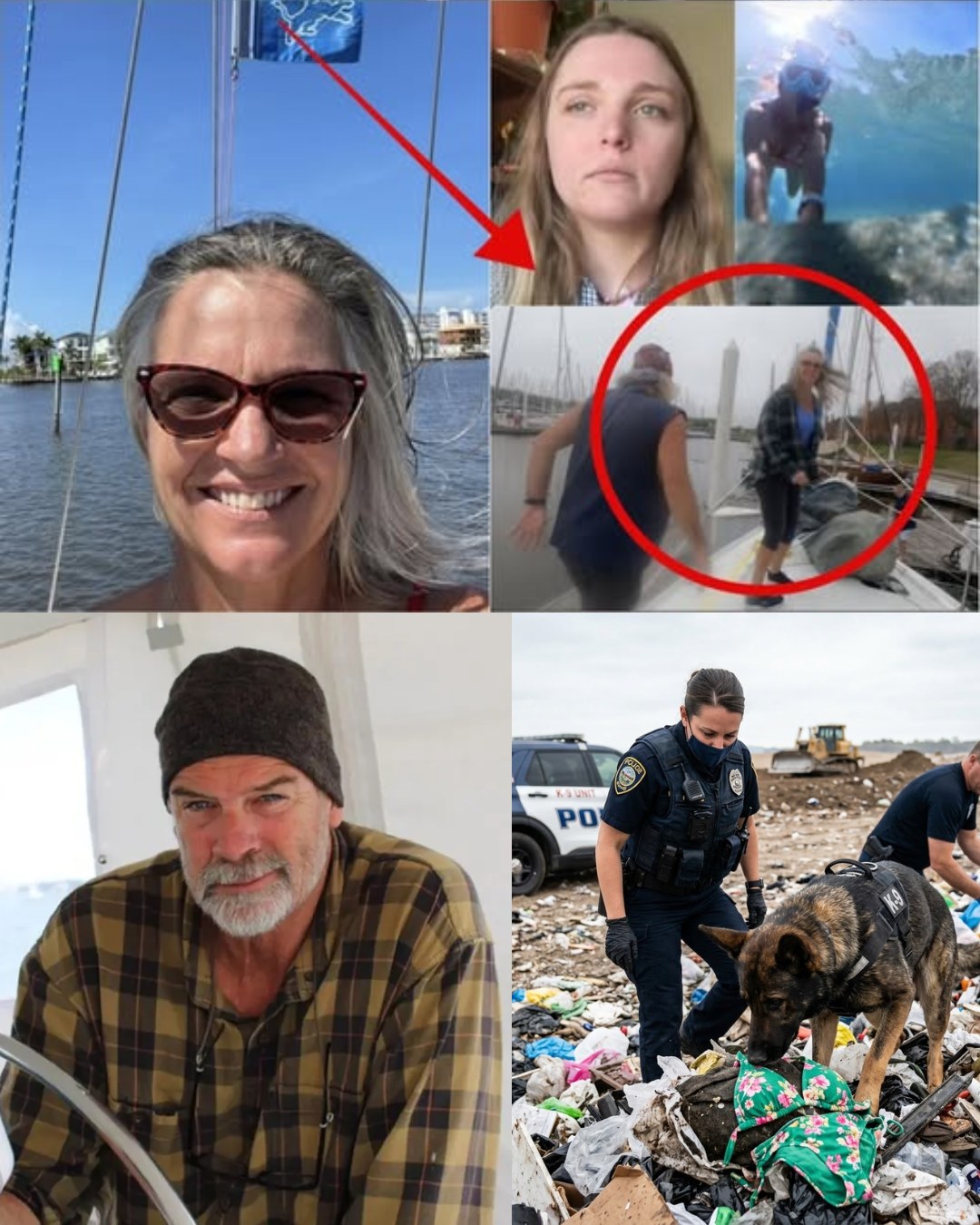
NASSAU, BAHAMAS — The disappearance of Lynette Hooker, the 55-year-old Michigan mother who vanished into the Bahamian night on April 4, has moved beyond a local search-and-rescue mission and into the crosshairs of international criminal profiling.
As her husband, Brian Hooker, sits in the United States—having fled the islands citing a family emergency just hours after his release from custody—legal and forensic experts are beginning to dissect the “impossible” physics of his story. Joining NewsNation Live to break down the investigation, former FBI Special Agent Jennifer Coffindaffer provided a chilling assessment of the case, suggesting that while Brian Hooker may be out of the Bahamas, he is far from out of reach of the law.
“The Shallows Don’t Lie”: A Forensic Perspective
Central to the investigation is Brian Hooker’s claim that Lynette fell from their small dinghy during a transit from Hope Town to Elbow Cay. He described rough seas, fading light, and a mechanical failure that left him paddling for hours.
However, Coffindaffer, drawing on her extensive experience in federal investigations, points to the geography of the Abaco banks as a primary “red flag.”
“When you look at the topography of where this incident allegedly occurred, we are talking about water that is four to seven feet deep,” Coffindaffer noted during the broadcast. “In the world of forensic recovery, water that shallow behaves differently. It doesn’t swallow people without a trace in the way the deep ocean does. If someone falls in four feet of water, even in ‘rough’ conditions, the survival instinct and the proximity to the bottom change the dynamics of the disappearance entirely.”
Experts have noted that at a depth of five feet, an average-sized adult is often capable of standing or at least pushing off the sea floor. The claim that Lynette vanished instantly, coupled with the lack of any recovered items—including the “keys” Brian said she was holding—has led investigators to treat the “accident” narrative with extreme skepticism.
The “Mom’s Illness” Alibi and the Flight from Justice
The optics of Brian Hooker’s departure from the Bahamas have been described by Lynette’s daughter, Karli Aylesworth, as a “revelation of character.” Brian’s attorney, Terrel Butler, maintains that he left to be at the bedside of his dying mother.
Coffindaffer addressed the legal implications of this move. While the public sees a “fleeing suspect,” the law sees a man who was released because the 48-hour detention window expired without a formal charge.
“The Bahamas, like many jurisdictions, cannot hold you on a ‘hunch’,” Coffindaffer explained. “But leaving the country while your wife is still missing under highly suspicious circumstances is a double-edged sword. It may provide temporary relief from local interrogation, but it creates a trail of behavior that prosecutors can use later to establish consciousness of guilt.”
The Extradition Factor: Can He Be Brought Back?
One of the most pressing questions in the NewsNation segment was whether Brian Hooker is now “untouchable” since he is back on American soil. Coffindaffer was quick to clarify the reach of international treaties.
“If a charge is filed, the border becomes irrelevant,” she stated.
The United States and the Bahamas share a robust extradition treaty. If the Royal Bahamas Police Force (RBPF) gathers enough forensic evidence—such as GPS data from the boat, inconsistencies in the “kill-switch” mechanics, or digital evidence from cellular devices—to issue an arrest warrant for homicide or culpable negligence, the U.S. Department of Justice would be obligated to facilitate his return.
| Legal Phase | Action | Potential Outcome |
| Investigative | RBPF gathers digital/forensic data. | Establishment of “Probable Cause.” |
| Charging | Bahamian prosecutors issue a warrant. | Interpol Red Notice or Extradition Request. |
| Extradition | U.S. Marshals take subject into custody. | Subject is flown back to Nassau for trial. |
The “Kill-Switch” Inconsistency
Coffindaffer also highlighted the technical specifics of the dinghy. Brian Hooker claimed that when Lynette fell, she was holding the keys, which pulled the safety lanyard and killed the engine.
“As an investigator, you look for the ‘unnecessary detail’,” Coffindaffer said. “Why emphasize the keys? If the engine died, why wasn’t a distress call made immediately? Most modern boaters have a cell phone or a handheld VHF. The story of ‘paddling for hours’ in a high-traffic area without seeking help from nearby anchored boats is a narrative that frequently collapses under forensic reconstruction.”
A Daughter’s Grief, a Nation’s Scrutiny
While the legal experts debate extradition, the emotional heart of the story remains in the Bahamas, where Karli Aylesworth has arrived to join the search for her mother. Her presence on the water stands in stark contrast to her stepfather’s absence.
“It shows his character,” Aylesworth told reporters, a sentiment that Coffindaffer suggests will be a powerful tool for the prosecution if this case ever reaches a jury. “In a trial, the jury doesn’t just look at the DNA; they look at the heart. They ask: ‘What would a loving husband do?’ The answer usually isn’t ‘board a commercial flight and leave the scene’.”
The Road Ahead
The investigation into the disappearance of Lynette Hooker is now a race against time and tide. The RBPF is reportedly working with American authorities to monitor Brian Hooker’s movements and analyze the digital “pings” from the night of April 4.
Jennifer Coffindaffer’s analysis on NewsNation serves as a grim reminder that in the modern age, the “perfect crime” at sea is nearly impossible to pull off. Between satellite tracking, tidal modeling, and international extradition laws, the “shallows” of the Bahamas may soon yield more than just secrets.
As the search for Lynette continues, the shadow of the law follows Brian Hooker across the border. If the truth is indeed submerged in those four feet of water, it is only a matter of time before it—and the man who left it behind—are brought back to the surface.
Summary of Expert Opinion (Jennifer Coffindaffer):
- The Site: Water depth (4–7ft) makes a “vanishing” highly unlikely without intervention.
- The Exit: Travel to the U.S. does not grant immunity; extradition is a standard procedure between these nations.
- The Evidence: The focus must shift to the dinghy’s mechanical state and the digital forensics of the couple’s phones.
- The Outcome: If charged, Brian Hooker will likely face a forced return to the Bahamas to stand trial.