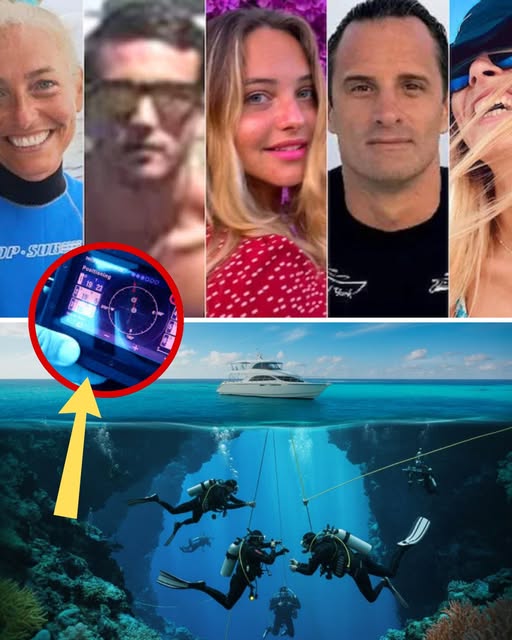
“HEARTBREAKING as the TRUE CAUSE is revealed, turning the beautiful coral paradise of the Maldives into a mass grave for 5 tourists and marine biologists; the condition of the oxygen tanks when found has become the answer to everything. Deepest condolences to the victims.”
THE MALDIVES DIVING TRAGEDY: WHEN OVERCONFIDENCE DEFIES EVEN SEASONED EXPERTS
A SUBMERGED CAVE SYSTEM OVER 50 METERS DEEP AT VAAVU ATOLL BECAME THE WATERY GRAVE FOR FIVE ITALIAN TOURISTS AND MARINE BIOLOGISTS. THE ONGOING INVESTIGATION IS EXPOSING A GRIM REALITY: A FATAL COMBINATION OF HUMAN ERROR, SURPASSED PHYSIOLOGICAL LIMITS, AND THE MERCILESS NATURE OF THE OCEAN.
On May 14, 2026, the tropical paradise of the Maldives was rocked by one of the most severe diving accidents in the island nation’s history. Five Italian citizens—including renowned marine biology professors, veteran dive instructors, and promising young researchers—perished within an underwater cave system at Vaavu Atoll.
When the first body was recovered with an oxygen tank depleted to absolute zero, all sensationalized online rumors were instantly dispelled. Instead, a stark and heartbreaking truth began to emerge through technical analysis: even those who understand the ocean best can fall victim to it the moment they cross the life-and-death boundary of strict safety protocols.
1. The Fated Roster and a Flawed Expedition
To understand why this tragedy occurred, one must first look at the composition of the diving group. This was not a group of amateur tourists recreational diving on a shallow reef. They were leading minds from the University of Genoa:
- Monica Montefalcone: An internationally acclaimed professor of marine biology and ecology, who dedicated her life to studying ocean conservation.
- Giorgia Sommacal (23 years old): Professor Montefalcone’s daughter, a promising bioengineering student.
- Muriel Oddenino: A dedicated marine biology research assistant.
- Federico Gualtieri: A marine biology master’s graduate and professional dive instructor.
- Gianluca Benedetti: A veteran dive instructor and the operations manager of the Duke of York liveaboard—the luxury vessel that hosted the expedition.
With a team consisting entirely of individuals boasting thousands of logged dive hours and deep scientific knowledge, confidence was understandable. However, according to investigators from the Maldives National Defence Force (MNDF), this very confidence led to a systemic error in judgment: they conducted a cave exploration dive at a depth far exceeding standard safety limits without the proper preparation and specialized equipment required for technical diving.
2. Perils at 50–60 Meters: The Trap of Nitrogen Narcosis and Oxygen Toxicity
The location where Gianluca Benedetti’s body was recovered was at a depth of roughly 50 to 60 meters, deep within the second chamber of an underwater cave system near Alimathaa Island. In the global diving community, any depth exceeding 40 meters is considered the “red zone” for recreational diving.
Descending to this depth using standard compressed air (containing roughly 21% Oxygen and 78% Nitrogen) forces the human body to confront two invisible killers from a physiological standpoint:
Nitrogen Narcosis
At the extreme pressure of a 50-meter depth (equivalent to six times the atmospheric pressure at sea level), the nitrogen gas in the diving cylinder dissolves heavily into the diver’s fatty tissues and nervous system, inducing an effect similar to severe alcohol intoxication. Those suffering from nitrogen narcosis lose the ability to think logically, experience delayed reflexes, and may display false euphoria or intense, unexplained panic. For Professor Montefalcone’s group, diving to this depth meant their cognitive functions and team coordination were severely compromised before the crisis even hit.
Oxygen Toxicity Under High Pressure
Many mistakenly believe that oxygen is always safe, but at great depths, the partial pressure of oxygen escalates. If it surpasses the critical threshold of 1.4 to 1.6 atm (equivalent to depths beyond 56 meters when using standard air), oxygen becomes a neurotoxin, triggering sudden grand mal seizures. If a diver experiences a seizure underwater, they will lose their regulator and drown almost instantly.
Expert Insight: To safely dive to depths of 50–60 meters, divers must utilize specialized gas blends like Trimix (which reduces oxygen and nitrogen percentages by adding helium) alongside closed-circuit rebreathers. The Italian group is believed to have used standard compressed air—a choice that gambled with their lives.
3. The Shadow Labyrinth and the Cruel Currents of the Maldives
While the extreme depth eroded their physical faculties, the topographical structure and weather patterns of Vaavu Atoll snapped the trap shut.
The underwater cave system at Alimathaa is famous for its majestic beauty, but it is equally feared by divers. The cave features a bottleneck structure, consisting of multiple chambers interconnected by narrow rock fissures. As the group ventured deep into the second chamber, their visibility depended entirely on specialized dive lights.
According to the primary hypothesis from the investigation team, two environmental phenomena occurred simultaneously:
- Shifting Underwater Currents: In May, the Maldivian waters undergo a seasonal monsoon transition, generating powerful and unpredictable undercurrents. A massive surge may have pushed the divers deeper into the cave faster than anticipated, or trapped them by preventing them from swimming against the current to exit.
- The “Silt-out” Effect: Inside underwater caves, finer silt and sediment accumulate on the ceilings and floors over hundreds of years. If divers fail to maintain perfect buoyancy, or if they kick their fins frantically during a moment of panic, this layer of silt is stirred up. Within seconds, visibility drops from dozens of meters to absolute zero (0 m). Blinded in pitch darkness, they would be unable to find the exit or even see the companion right next to them.
4. The Final Moments: When the Pressure Gauge Hits Zero
The reality of Gianluca Benedetti’s depleted air tank paints a horrifying picture of what the group endured.
When disoriented in a confined space against a raging current, the victims’ heart rates would have skyrocketed. Panic is a diver’s ultimate enemy. In a state of panic, a diver’s air consumption rate can spike three to four times above normal.
While a standard air cylinder can last 45 to 60 minutes in shallow water, that same volume of air is exhausted in just 10 to 15 minutes at a depth of 50 meters due to ambient pressure. Trapped in a labyrinth of stone, the pressure gauges on their tanks plummeted. They likely tried to huddle together and share their remaining air—a fundamental rescue technique—but in the dark, suffocating confines of the cave, their lifeline simply withered away. The fact that Benedetti was found deep inside the cave proves that he and his colleagues fought until their very last breath before running out of air entirely.
5. The Heavy Toll on First Responders and a Wake-Up Call for Tourism
The tragedy did not end with the deaths of the five Italian tourists. It dragged the host nation of the Maldives into a painful loss of its own.
In a desperate bid to recover the victims, the Maldives National Defence Force (MNDF) deployed their most elite military divers. Facing the hazardous nature of the underwater cave and severe time constraints, Sergeant Mohamed Mahdhee—a highly experienced rescue diver—had to perform consecutive deep dives to locate the remaining bodies.
Due to exceeding safe bottom limits and ascending too rapidly under emergency conditions, Sergeant Mahdhee suffered severe Decompression Sickness (DCS) upon surfacing. Nitrogen gas bubbles formed in his bloodstream, blocking his circulatory system. Despite being immediately placed in a hyperbaric recompression chamber, the rescue officer succumbed to his injuries at the hospital.
The death of a military rescue diver elevated this tragedy beyond a standard tourist accident. It became a national maritime safety crisis.
Conclusion: A Lesson Written in Blood
Currently, the Ministry of Tourism of the Maldives has suspended the operating license of the Duke of York liveaboard indefinitely. Criminal investigations by both Maldivian and Italian authorities are underway to determine liability, particularly regarding who approved such a high-risk dive plan.
The tragedy at Vaavu Atoll leaves a haunting lesson for the global diving community: the ocean offers no compromise for breaking safety rules. Professor Monica Montefalcone and her colleagues may have been brilliant intellectuals in university lecture halls, but before the crush of a 50-meter depth and the pitch blackness of the Alimathaa cave, all humans are equal under the laws of physics and biology.
When we push our boundaries into the planet’s most extreme environments without absolute respect for technical protocols, the price paid is sometimes not just our own lives, but the blood of those who dive in to save us. Five Italian divers and a Maldivian rescuer rest there now, leaving behind a chilling warning echoing from the depths of the abyss.