TERRIFYING: Footage Released From Inside Maldives’ Shark Cave — Final Resting Place of 5 Italian Tourists; Mystery Behind Ocean Explorers’ Deaths Finally Revealed
“One body was found near the cave entrance, while the other four were discovered lying side by side in the third chamber” — what rescuers found beside the victims has left many deeply disturbed.
Inside the “Shark Cave” Tragedy: New Questions Emerge After Five Italian Divers Die in the Maldives
The mysterious underwater cave in the Maldives where five Italian divers lost their lives has become the focus of an international investigation, as haunting footage from inside the site and new theories surrounding the disaster continue to emerge.
Known locally as “Shark Cave,” the submerged labyrinth lies near the Vaavu Atoll, roughly 60 miles from the Maldivian capital of Male. The cave, officially named Thinwana Kandu, stretches approximately 60 metres and is divided into three separate chambers. Though considered one of the region’s most fascinating dive sites, it is also regarded as extremely dangerous, even for experienced divers.
The tragedy unfolded after a group of Italian tourists and researchers entered the cave during a deep dive expedition and failed to return. What began as a recreational and scientific outing soon turned into one of the deadliest diving incidents in recent Maldivian history.
After an intense and emotionally draining search operation involving elite cave divers, four of the missing bodies were finally discovered at a depth of around 160 feet on Monday.
The victims recovered inside the cave were identified as Monica Montefalcone, an associate professor of ecology at the University of Genoa; her daughter Giorgia Sommacal; marine biologist Federico Gualtieri; and researcher Muriel Oddenino.
The group had originally entered the cave alongside Gianluca Benedetti, whose body was recovered earlier near the entrance to the cave system.
According to Ahmed Shaam, spokesperson for the Maldivian government, the bodies were not found close to the opening but deep inside the structure itself.
He explained: “The four bodies were found inside the cave, not only inside the cave but well inside the cave into the third segment of the cave, which is the largest part. Pretty much together.”
The statement immediately raised further questions among investigators and members of the diving community. Experts began examining whether the group became trapped, disoriented, or overwhelmed by environmental conditions deep inside the cave.
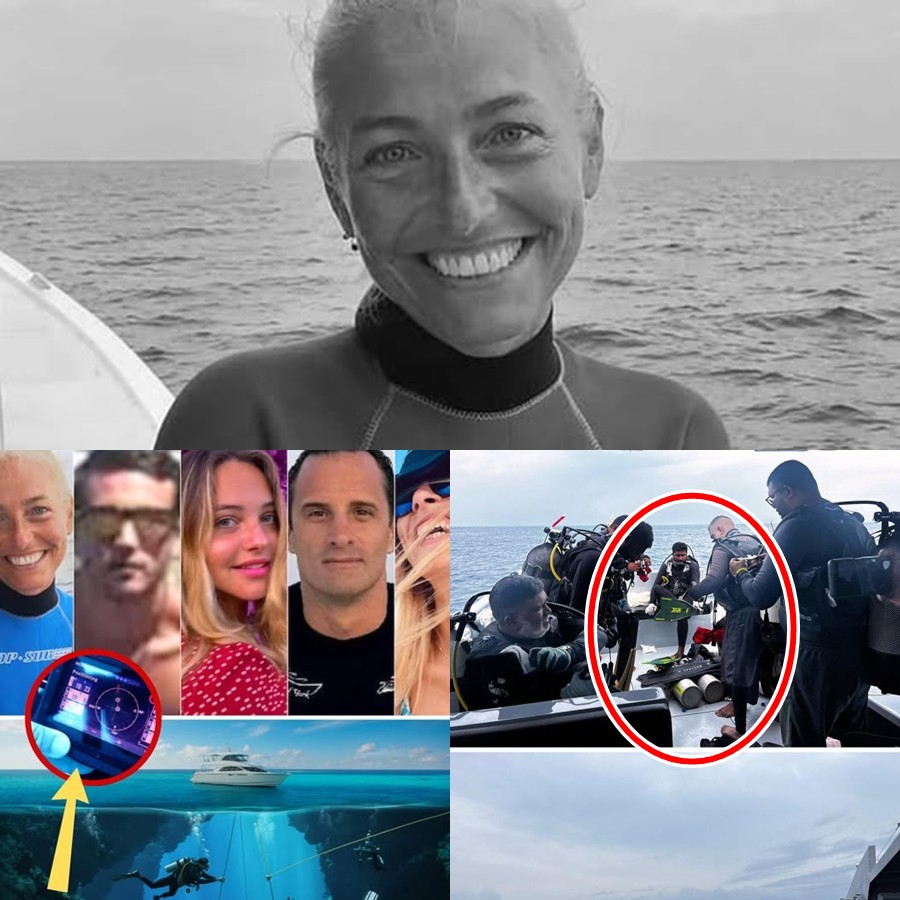
Footage from inside Thinwana Kandu has since surfaced online, providing a chilling glimpse into the environment the divers entered before disappearing.
The video shows narrow winding tunnels, dark chambers, and low visibility conditions inside the underwater cave network. In several sections, the passages appear tight and claustrophobic, requiring divers to move carefully through twisting rock formations.
The eerie footage also reveals the near-total absence of marine life inside the cave, aside from a single stingray gliding silently through the darkness.
For experienced cave divers, such conditions represent one of the most dangerous forms of underwater exploration. Cave diving leaves little room for mistakes, particularly at extreme depths where oxygen management, navigation, and decompression become critical survival factors.
As recovery efforts continued, several theories emerged regarding what may have caused the deadly incident.
One major possibility involves severe weather conditions in the area at the time of the dive. Just one day before the expedition, Maldivian authorities had reportedly issued a yellow weather warning as powerful winds reaching 30mph swept across the islands.
Strong currents and unstable underwater conditions can drastically increase the danger level inside caves, where visibility may suddenly disappear and escape routes become difficult to navigate.
Monica Montefalcone’s husband, Carlo Sommacal, strongly rejected suggestions that the divers acted recklessly.
Speaking to Italian newspaper La Repubblica, he said: “She would never have put her daughter’s life or the lives of the other children at risk out of recklessness.”
He added: “Something happened down there.”
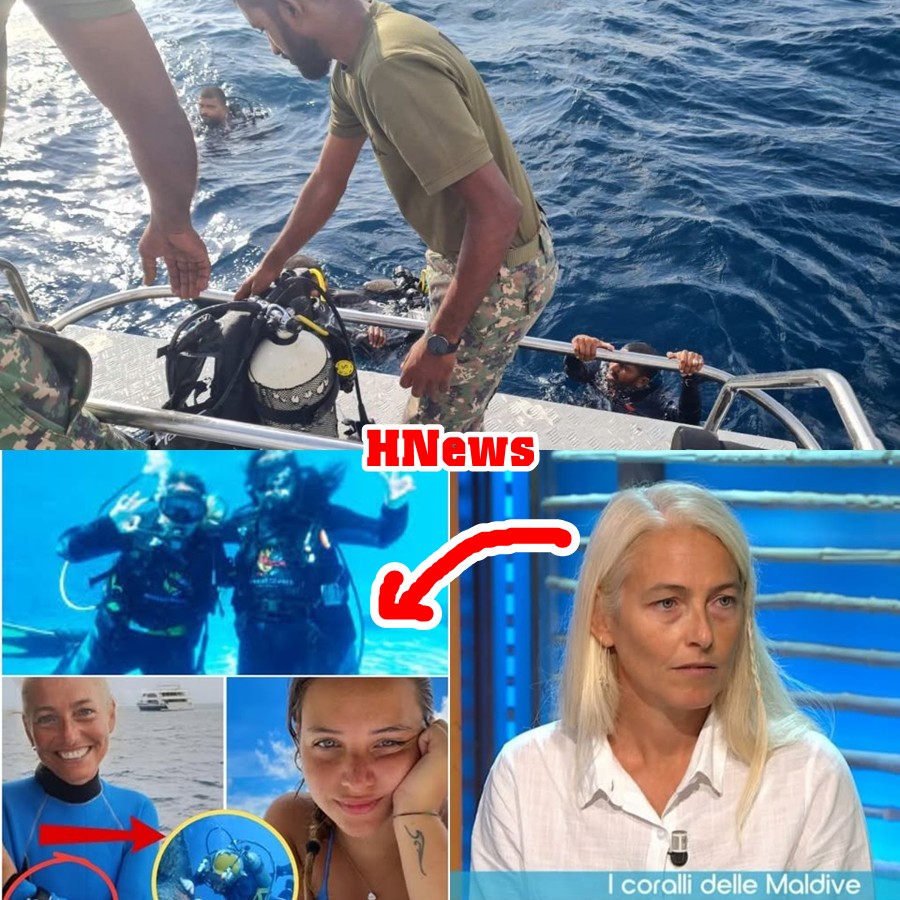
Sommacal emphasized that both Monica and Muriel were conducting scientific research during the expedition, not merely recreational diving.
Describing his late wife as “one of the best divers on earth,” he insisted she would never knowingly ignore serious safety warnings.
He said: “If there really was a yellow alert, they must have dived in earlier. I’m ready to swear anything about Monica’s behaviour.”
His comments have intensified debate over the timeline of the dive and whether local weather conditions had deteriorated unexpectedly while the group was underwater.
At the same time, other theories circulating online have been even more controversial.
American hobby diver Marc Randazza speculated publicly on social media that the expedition may have been doomed from the start due to the depth involved.
Posting on X, he wrote: “I’ve been diving for 30 years. Rescue and deep dive certified.”
He continued: “These divers were effectively dead the moment they went in the water.”
“At 150ft, with recreational gear and without a special gas mix, you’re already dead.”
“There was no possible way they were coming back, whether they panicked or not.”
“That dive plan was never going to end with any of them alive.”
Randazza even suggested the incident could amount to “murder,” implying that the dive may have been irresponsibly planned or approved despite obvious risks.
His remarks sparked heated debate among professional divers online. Some agreed that descending to such depths without proper technical equipment would be extraordinarily dangerous, while others argued that experienced divers can safely conduct deep dives when using appropriate procedures and gas systems.
To assist local authorities, an elite Finnish cave diving team was dispatched to the Maldives by DAN Europe, the international diving safety organization coordinating the operation.
The specialist unit included Sami Paakkarinen, Jenni Westerlund, and Patrik Grönqvist — all highly experienced technical cave divers.
The team successfully located the remaining four bodies after Maldivian rescuers had earlier recovered Gianluca Benedetti near the cave entrance.
According to Italy’s foreign ministry, the operation remains ongoing because recovering bodies from such depths is extraordinarily difficult and dangerous.
A spokesperson for the Maldivian government told the BBC: “Further dives [are] to be carried out in the coming days to recover the bodies.”
Authorities confirmed that specialized recovery equipment from both the United Kingdom and Australia was being used during the mission. The divers also relied on underwater scooters and advanced gas systems capable of recycling air during long underwater operations.
Each recovery attempt reportedly lasts around three hours. Missions are immediately aborted whenever divers encounter unexpected obstacles or dangerous conditions.
Although the bodies have been located, bringing them safely back to the surface remains one of the most technically demanding aspects of the operation.
Officials expect recovery efforts to continue over several days, with teams attempting to retrieve two bodies at a time.
In a public statement, DAN Europe confirmed the difficult progress being made during the operation.
The organization stated: “DAN Europe confirms that the international search & recovery team deployed to the Maldives has successfully completed the first operational objective of the mission following today’s initial technical cave dive at the Dhekunu Kandu site, in Vaavu Atoll.”
The statement continued: “This marks an important milestone in an operation that remains technically demanding, emotionally challenging, and operationally complex.”
DAN Europe added that the following days “will be dedicated to the highly delicate recovery procedures”.
The Finnish divers involved in the mission are internationally respected within the cave diving community.
Paakkarinen has reportedly been cave diving since 2004, while Grönqvist gained global recognition following his role in rescuing surviving divers during the famous 2014 Plura cave incident in Norway.
The team’s ability to dive to depths approaching 500 feet proved critical in locating the victims inside Thinwana Kandu.
Yet even highly trained professionals face enormous risks in such operations.
The danger of the mission became tragically clear on Saturday when a Maldivian military rescue diver died while attempting to recover the bodies.
The diver, identified as Mohamed Mahudhee, reportedly suffered decompression illness — a life-threatening condition caused when gas bubbles form in the bloodstream due to ascending too quickly from deep underwater pressure.
His death raised the total number of fatalities connected to the incident to six.
Investigators from Italy’s foreign ministry continue examining the exact cause of death for the five Italian victims.
Attention has also turned toward the dive vessel involved in the expedition.
At the time of the incident, approximately 20 other tourists were aboard the yacht Duke of York when the five Italians departed for the dive and later disappeared.
Those passengers have since returned to Italy following the traumatic experience.
However, new reports revealed that the Duke of York yacht allegedly lacked authorization for dives deeper than 100 feet.
The Italian divers were ultimately found at around 160 feet — significantly beyond the permitted depth limit.
The revelation has intensified scrutiny over how the expedition was organized and whether regulations may have been violated.
Former Maldives National Defence Force diver Shafraz Naeem, who has extensive experience diving in the Alimatha cave system, explained just how hazardous the site can be.
He told Il Giornale: “I’ve done at least 50 dives in the Alimatha caves, taking the right precautions and using the right equipment.”
“Each time it was a fantastic experience, but I was fully aware of the extreme risks I was taking.”
“Expertise and precaution are necessary: for me, descending to Alimatha wasn’t difficult. I’m a cave diver, and I always had the right gas mix, the right equipment, and a backup system.”
Naeem questioned why the group had been allowed to proceed with the dive under those circumstances.
He warned that at such depths, even a single small mistake or unexpected event can quickly become fatal.
“At such depths,” he stressed, “just one unexpected event can quickly turn into tragedy.”
As investigators continue piecing together the final moments of the divers’ expedition, the tragedy has reignited international debate over safety standards, technical training, and regulation in extreme underwater tourism.
For now, Thinwana Kandu — the so-called “Shark Cave” — remains both a place of fascination and a site of profound loss.