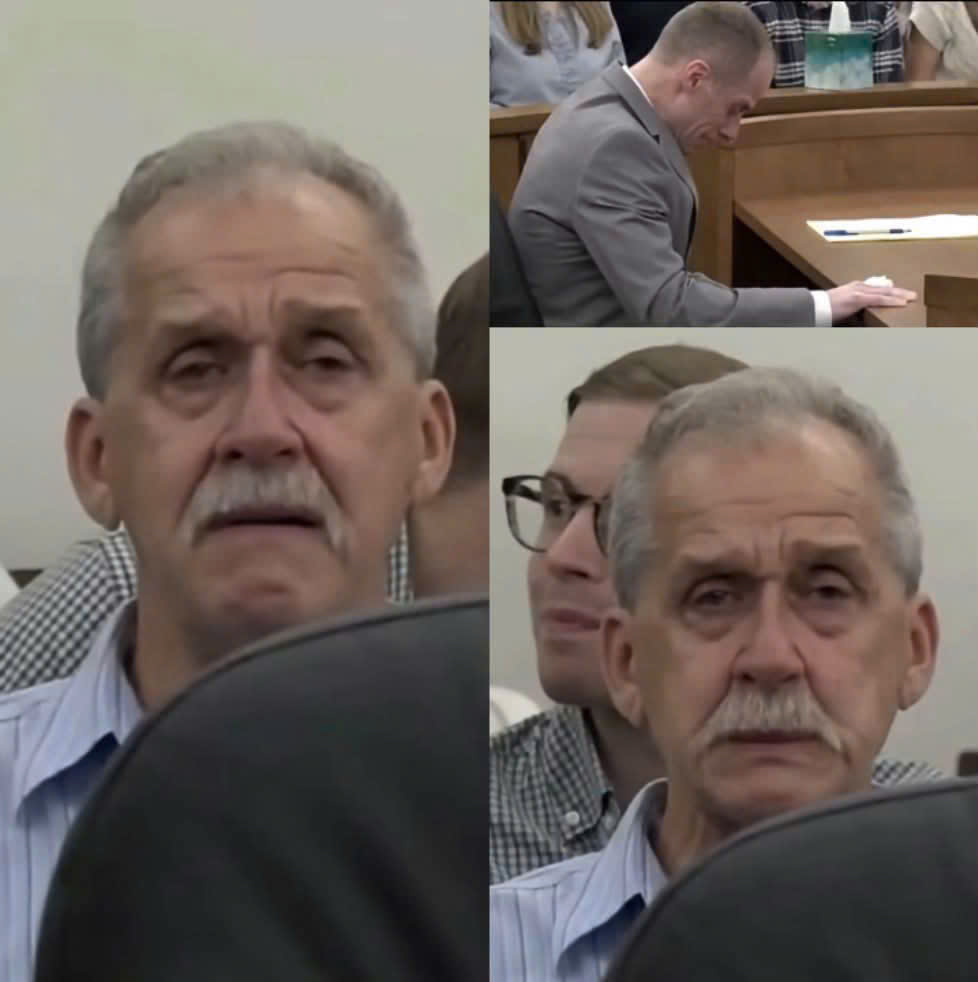
The sole survivor who luckily survived the Maldives tragedy where 5 professional Italian divers lost their lives because he stayed on the boat, speaks out to recount the final details when the 5 people said goodbye to go down into the sea and then never returned forever.
THE SOLE SURVIVOR OF THE MALDIVES DIVING TRAGEDY: HORRIFIC MEMORIES FROM THE DECK AND THE SHADOW OF SURVIVOR’S GUILT
The tearful, large-scale recovery operation at Vaavu Atoll, Maldives, officially concluded on May 20, 2026. Five divers descended into the fateful “Shark Cave,” and five bodies have been brought back to the surface. Yet, there is a sixth member who was not on the casualty list—a sole survivor who escaped death in a way he never wished for: remaining on the ship’s deck, watching his colleagues and loved ones dive into a fatal abyss, completely powerless to stop them.
Part I: The One Left Behind on the Fateful Deck
In the initial breaking reports regarding the worst diving tragedy in Maldives history, which occurred on May 14, 2026, international media focused heavily on the five Italian victims from the University of Genoa delegation. However, few know that a sixth Italian member was present on that research vessel—a young research fellow assigned to remain on deck for surface logistics, logs, and communications.
To protect his privacy and psychological well-being amidst an intensely stressful legal investigation, the identity of this young man is being strictly guarded by Maldivian police and the Italian Consulate. For the purpose of this report, he will be referred to as A.
A. was the sole witness to the entire preparation process. He saw the warm smiles shared between Professor Monica Montefalcone and her 22-year-old daughter, Giorgia, and heard the lighthearted jokes exchanged among the team just before they stepped over the gunwale, dropping into the deep blue waters of the Indian Ocean at 11:00 a.m. last Thursday.
“He is currently experiencing a severe psychological crisis,” a rescue official from DAN Europe shared. “Survival is not a privilege in a situation like this. For A., it feels like a heavy psychological sentence. He was the only one who watched them disappear, the one who heard their final distress signals, and now he must live with the haunting question: ‘Why was I the one left behind?’.”
Part II: 165 Minutes of Suffocation and an SOS from the Abyss
According to A.’s exclusive testimony given to local investigators, the morning of May 14 began with an urgent but focused atmosphere. Despite a yellow warning indicating active monsoon weather, the team trusted the immense experience of Professor Monica and captain-instructor Gianluca Benedetti. They believed they could safely execute a quick, 60-minute survey dive near the mouth of the Thinwana Kandu cave.
A. sat at the stern, clipboard in hand, logging the precise entry time of each diver. Professor Monica, her daughter Giorgia, young researchers Muriel and Federico, and instructor Benedetti each flashed an “OK” hand signal before descending.
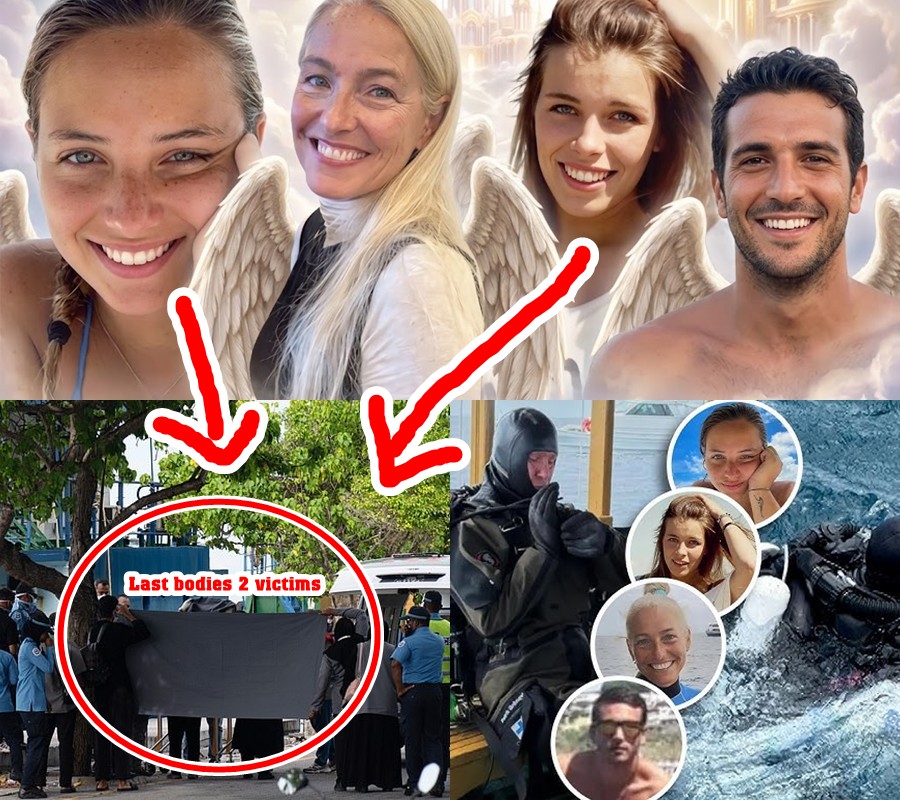
Sitting on the boat, A. constantly checked his dive watch. 12:00 p.m.—the scheduled time for resurfacing—came and went; the ocean surface remained blank. By 12:30 p.m., then 1:00 p.m., anxiety mutated into sheer panic. The local Maldivian crew began racing across the deck, deploying radio buoys and utilizing acoustic sonar to locate the air cylinders.
At exactly 1:45 p.m., the ship’s receiving console picked up a sudden, incredibly faint SOS distress ping from the team’s underwater locators. The ping lasted for only a few minutes before going completely silent. It was at that exact moment A. realized his friends and mentor were facing death 50 meters directly beneath his feet.
Part III: Chaotic Fragments Through the Eyes of the Survivor
As a qualified diver himself, A.’s detailed testimony has helped investigators uncover critical, fatal deviations in the trip’s organization—details the tour operator, Albatros Top Boat, has been scrambling to deflect.
1. The Anomaly of the 12-Liter Cylinders
A. confirmed to authorities that the expedition was originally mapped out as a standard recreational dive under 30 meters to collect shallow coral samples. However, upon reaching the cave mouth, Professor Monica and instructor Benedetti apparently spotted an undocumented reef structure and made a spontaneous decision to push deeper.
A. recalled expressing concern when he noticed the team was using standard 12-liter cylinders—tanks that are strictly forbidden in deep, technical cave diving. “But they were top-tier experts, and I was just a junior research fellow. I couldn’t overrule their decision,” A. testified painfully.
2. The Truth Behind Professor Monica’s Wetsuit
The fact that Professor Monica was found wearing only a short wetsuit (shorty)—a detail heavily criticized by external experts as unprofessional for a deep dive—was also clarified by A. In reality, that was the gear she had donned for the shallow sampling plan. The decision to enter Shark Cave was made entirely on the fly underwater, meaning she never returned to the ship to change into thermal protective gear. This crucial piece of evidence proves the team was ambushed by a sudden, unexpected underwater situation, rather than executing a pre-planned, reckless deep dive.
Part IV: The “Venturi Effect” From a Surface Perspective
From the vessel’s anchored position, A. noted that the surface currents that afternoon behaved incredibly strangely. While the surface showed only mild swells, the ship’s heavy mooring lines suddenly became violently taut, pulled sharply toward the submerged cave system. This directly aligns with the hypothesis presented by Alfonso Bolognini, President of the Italian Society of Underwater Medicine, regarding the “Venturi effect.”
| Hydrological Factors at the Scene | Surface Manifestations (Witnessed by A.) | Terrifying Reality in the Depths (Hypothesis) |
| Monsoon Currents | Mooring lines pulled violently taut | Water forced into a narrow bottleneck, accelerating sharply |
| Inclement Weather | Severe visibility drop, gathering storm clouds | Fine bottom silt churned up, cutting visibility to absolute zero |
| Bottleneck Cave Structure | Total absence of escaping air bubbles | Massive vacuum force generated, violently sucking the divers inside |
A. recounted that before the group dove down themselves, they attempted to deploy a small Remotely Operated Vehicle (ROV) to survey the cave mouth. However, the device was violently jerked by an unseen force and lost its control feed within minutes. Instead of aborting, the team—perhaps overconfident in their physical capabilities—decided to dive down to manually assess the current. They assumed that human swim stroke and leverage could withstand the flow. It was a fatal miscalculation. An invisible, titanic vacuum swallowed all five individuals into the third chamber, trapping them there until their very last drops of oxygen were exhausted.
Part V: The Ghost of Survivor’s Guilt
Following the conclusion of the recovery mission on May 20, which culminated in retrieving the bodies of Giorgia and Muriel, A. was transported to the capital city of Malé for urgent medical evaluation and specialized psychiatric care. Doctors confirm he is suffering from severe Survivor’s Guilt—an extreme psychological state where an individual blames themselves for surviving a catastrophic event that claimed everyone else around them.
“He keeps repeating that if he had just been more forceful in holding them back, or if he had dove with them to carry backup air cylinders, perhaps the tragedy wouldn’t have been this absolute,” a medical staff member disclosed.
A.’s psychological collapse worsened significantly when he had to face Carlo Sommacal—the husband and father who lost his entire family in a single afternoon. Although Mr. Carlo harbored zero resentment and even embraced A. to share the grief, the hollow eyes of a man who had lost everything cut into the young researcher’s heart like a knife.
Part VI: The GoPro—A Tool for Psychological Healing?
Currently, the entirety of A.’s hope, alongside that of the investigators, rests upon the GoPro body camera recovered by the Finnish dive team next to Professor Monica’s body in the third chamber. The device is currently undergoing data extraction to salvage the final footage.
For legal authorities, the GoPro is a piece of evidence to determine corporate liability or equipment failure. But for A. personally, those frames hold a life-or-death significance for his psychological future. He needs to know what transpired in the pitch-black darkness of that third chamber. He desperately needs visual confirmation that it was an irresistible natural disaster—a brutal Venturi trap—rather than any delay on his part in broadcasting the surface distress signal. Only when that truth is laid bare will this sole survivor find a path toward self-forgiveness.
Conclusion: The Ghost of the Deep and the Sailor on Land
The rescue operations at the paradise of Vaavu Atoll have officially drawn to a technical close, but for A., the fateful journey of May 14, 2026, will never end. He survived, but a piece of the young researcher’s soul remains permanently entombed alongside his colleagues inside the freezing dark of “Shark Cave.”
A.’s story stands as a heartbreaking reminder that in great tragedies, the pain does not only belong to those who rest in the deep. It weighs just as heavily on the shoulders of those whom the ocean chose to return—those who must continue to live, carrying the horrific echoes from the deck. The ocean may be vast and guard its secrets closely, but the crackle of the radio and that faint, dying SOS signal on that fateful afternoon will haunt the sole survivor for the rest of his days.