Exclusive UK police bodycam footage released showing the final “I CAN’T BREATHE” moments of Henry Nowak on the fateful night he was stabbed 6 times by a maniac
EXCLUSIVE FILE: WHEN THE POLICE IGNORED THE CRY FOR HELP – THE HEARTBREAKING TRAGEDY FROM THE NEWLY RELEASED BODYCAM FOOTAGE IN THE UK
Summary: The United Kingdom is reeling in shock following the release of police bodycam footage capturing the agonizing final moments of Henry Nowak, an 18-year-old university student in Southampton. Stabbed six times through the lungs by a stranger, Henry was not given medical aid; instead, he was handcuffed, dragged along the ground, and wrongfully accused of being a racist criminal. He passed away after drowning in his own blood, his desperate pleas of “I can’t breathe” coldly dismissed by the responding officers.
Part 1: The Fateful Night in Central Southampton and the “Wicked Lie”
On a late December night in 2023, the bustling port city of Southampton was alive with festive lights in preparation for the Christmas holidays. Henry Nowak, an 18-year-old university student with a bright future ahead of him, was walking alone through the city centre. He had no way of knowing it would be the final journey of his life.
Approaching from behind was Vickrum Digwa (25), a man with a history of instability and a violent obsession with knives and bladed weapons. Without warning or prior altercation, Digwa pulled out an eight-inch ceremonial Kirpan dagger and launched a frenzied attack on the young man. Six fatal stab wounds pierced Henry’s body, including deep lacerations that ruptured his lungs. Henry collapsed onto the pavement as blood gushed from his wounds.
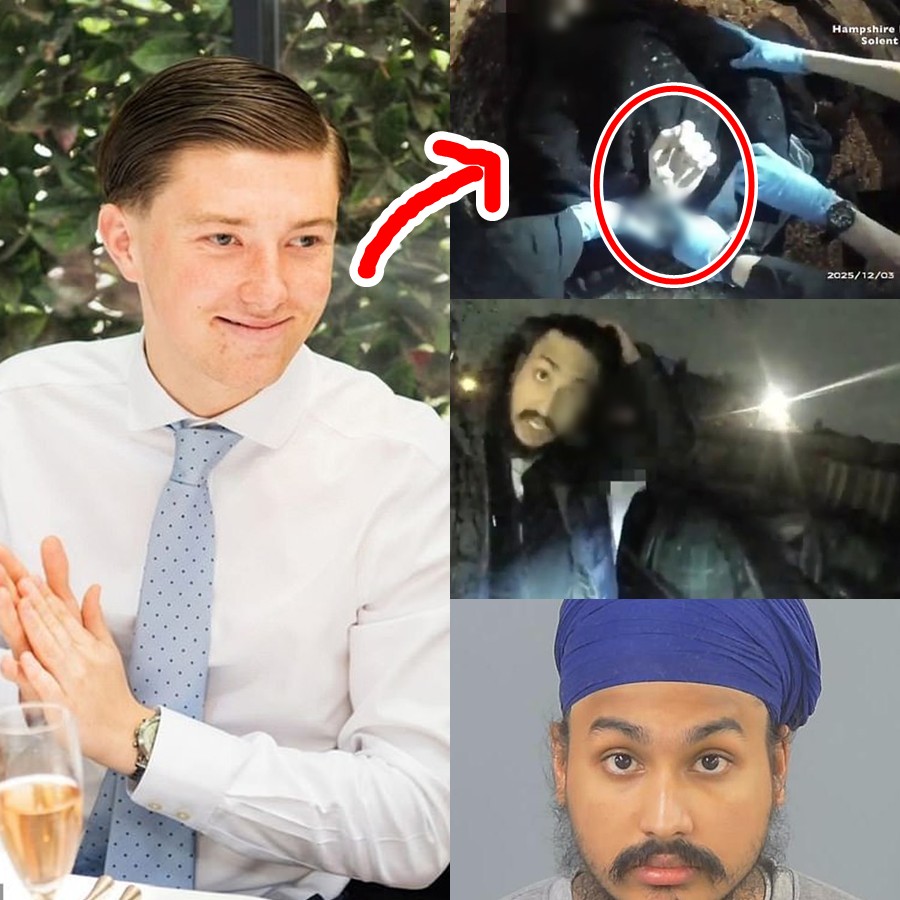
The incident might have remained a horrific murder case had it not been for the arrival of local police officers a few minutes later. Spotting the flashing blue lights of a patrol car from a distance, the killer, Vickrum Digwa, executed what the High Court judge later described as “the most wicked and despicable lie imaginable.”
Digwa proactively ran toward the arriving officers, gasping for breath and portraying himself as a victim of a religiously motivated hate crime. He loudly claimed that Henry Nowak—who was at that moment dying in a pool of blood just meters away—was the actual perpetrator. He accused the 18-year-old student of shouting vile racist abuse at him as a Sikh man, punching him in the face, and deliberately knocking his sacred turban to the ground.
Believing this racially charged and highly provocative allegation, the officers from Hampshire Constabulary immediately switched to a high-risk criminal apprehension mode. They approached Henry Nowak with weapons drawn and a mindset completely clouded by prejudice, stripping away the sole survival window of a victim on the brink of death.
Part 2: The Horrific Bodycam Footage – “I Can’t Breathe” and the Chilling Indifference
In early 2026, following an order from the judge at Southampton Crown Court, the nearly 10-minute bodycam footage capturing Henry Nowak’s arrest was officially released to the media and the public. The footage immediately ignited a storm of public fury due to the sheer cruelty and suffocating indifference of the law enforcement officers.
The video opens with the sight of Henry Nowak curled up on the cold concrete pavement, clutching his chest, surrounded by spreading pools of blood.
As the officers close in, rather than kneeling down to check his pulse or calling for emergency medical backup, the first shout heard is: “Stay still! Put your hands behind your back!”
Henry’s voice is faint and gasping, yet perfectly audible: “I’ve been stabbed… Please, I’ve been stabbed. Call an ambulance.” He repeats this plea four consecutive times, his eyes begging for help.
However, the response from the lead officer at the scene sent shivers through the courtroom. Looking at Henry with skepticism, the officer pinned him down by the shoulder and replied in a dismissive, almost mocking tone: “I don’t think you have mate. Stop playing games.”
The police assumed the blood on Henry belonged to the “victim” Digwa, or that Henry was faking an injury to evade arrest for “racially aggravated assault.”
Despite Henry’s weak protests that he could not move, two officers grabbed him by the collar and arms, brutally dragging the 18-year-old along the ground to flip him onto his stomach so they could secure the handcuffs. Medical experts testified in court that this dragging motion exacerbated the internal bleeding in his chest, causing the blood vessels in his lungs to rupture even faster.
The pinnacle of heartbreak occurs when Henry begins to choke on his own blood. He desperately gasps: “I can’t breathe… I can’t breathe…”
According to audio records from the bodycam, Henry uttered this exact phrase at least seven times. With each plea, his volume faded, replaced by the gurgling sound of blood rising in his throat. In response to his suffocating cries, the police repeatedly ordered: “Shut up! Put your hands in the cuffs now if you don’t want us to use force!”
The video cuts out as Henry’s hands go limp and his eyes roll back. Just as the handcuffs click shut, Henry Nowak takes his final breath. He died at the hands of the very people sworn to protect the public, positioned as a handcuffed criminal, with his official cause of death determined as asphyxiation from drowning in his own blood.
Part 3: The Strict Verdict of Justice for the Killer
During the trial at Southampton Crown Court, the true face of the killer, Vickrum Digwa, was entirely exposed to the public. Investigators uncovered hundreds of images and posts on Digwa’s personal phone and computer revealing a fanatical obsession with daggers, bladed weapons, and extreme violent tendencies.
CCTV footage retrieved from surrounding shops completely contradicted Digwa’s initial statements. The footage showed Henry Nowak simply walking by, without any form of approach, provocation, or insult toward Digwa. The displacement of Digwa’s turban occurred solely because Henry, while frantically trying to defend himself against the frenzied knife blows, accidentally brushed against it.
When handing down the sentence, the presiding judge looked sternly at Digwa and emphasized:
“Your crime did not stop at brutally taking an innocent young man’s life with six savage knife strikes. Your greatest depravity lies in exploiting your own religious identity to weave a wicked lie, manipulating the psychology of the responding officers. That lie turned those who should have been the victim’s saviors into unwitting accomplices, indirectly pushing the victim into a far more painful and agonizing death.”
Vickrum Digwa was sentenced to Life Imprisonment, with a minimum term of 26 years before he can be considered for parole. While the verdict was widely supported by the public, it brought little comfort to the shattered family of the victim, and more importantly, it opened another dark chapter: police accountability.
Part 4: When the “George Floyd Syndrome” Repeats in the UK and a Storm of Systemic Criticism
The release of Henry Nowak’s bodycam footage blew open a severe crisis of faith in Hampshire Constabulary and British policing at large. The phrase “I can’t breathe” has once again become a haunting symbol, echoing the 2020 death of George Floyd in the United States, but this time involving an 18-year-old British student, with systemic negligence serving as the indirect catalyst.
The Independent Office for Police Conduct (IOPC) immediately launched a comprehensive and independent investigation into all officers involved in the arrest that night. The biggest question remains: Why was the most basic protocol regarding first aid and casualty assessment completely ignored?
Legal experts and former senior police officers analyzing the footage pointed out a series of fatal errors:
- Confirmation Bias: The police placed absolute faith in Digwa’s initial claim without taking even three seconds to check Henry for stab wounds.
- Severe Lack of Basic Medical Skills: A person stabbed six times through the lungs will exhibit blood-stained froth at the mouth and severe respiratory distress. The police dismissal of Henry “playing games” shows a staggering failure in basic first-aid training.
- Misuse of Force in the Wrong Context: Deliberately dragging a patient with a chest injury and forcing them into a prone position (positional asphyxia) is strictly prohibited in many international policing manuals because it directly restricts the chest’s ability to expand and breathe.
Faced with a wave of public outrage, the Chief Constable of Hampshire Constabulary had to issue a public apology to defuse the situation, admitting that “The footage is a horrific reality, and the entire force is appalled by what happened to Henry.” However, this belated apology did little to quiet the protestors demanding justice outside the courthouse.
Part 5: A Mother’s Tears and a Message for Deep Structural Change
Appearing in a tearful interview following the release of the video, Henry Nowak’s mother shared her unbearable grief:
“I couldn’t bring myself to watch the whole video. The sound of my son choking on his blood, begging to breathe, will haunt me until the day I close my eyes. My son was a good boy; he never harmed anyone. He was stabbed by a maniac, and when the people in uniform arrived—the people I always taught my son to trust from childhood—they handcuffed him and left him to die slowly on the cold ground. They killed my son a second time through their sheer indifference.”
The Nowak family is not seeking financial compensation; their sole objective now is the establishment of a foundation in Henry’s name to push for a new piece of legislation known as “Henry’s Law.” This law demands a radical overhaul of police response protocols across the UK: In any conflict scenario, if an individual reports being injured by a weapon, medical evaluation and first aid must take absolute priority before any handcuffing or arrest measures are taken, unless the subject is actively holding a weapon and posing an immediate threat to life.
Through the newly released bodycam footage, the case of Henry Nowak has transcended a typical murder investigation. It has become a tragic, costly lesson on the dangers of confirmation bias, the erosion of human empathy, and systemic negligence within law enforcement. As long as citizens’ cries of “I can’t breathe” are met with handcuffs and cold indifference, true justice in the United Kingdom remains unfulfilled.