Resolving the Muscatine Tragedy: Why Jonathan McFarland Was the Sole Survivor of the 6-Victim Mass Shooting in Iowa
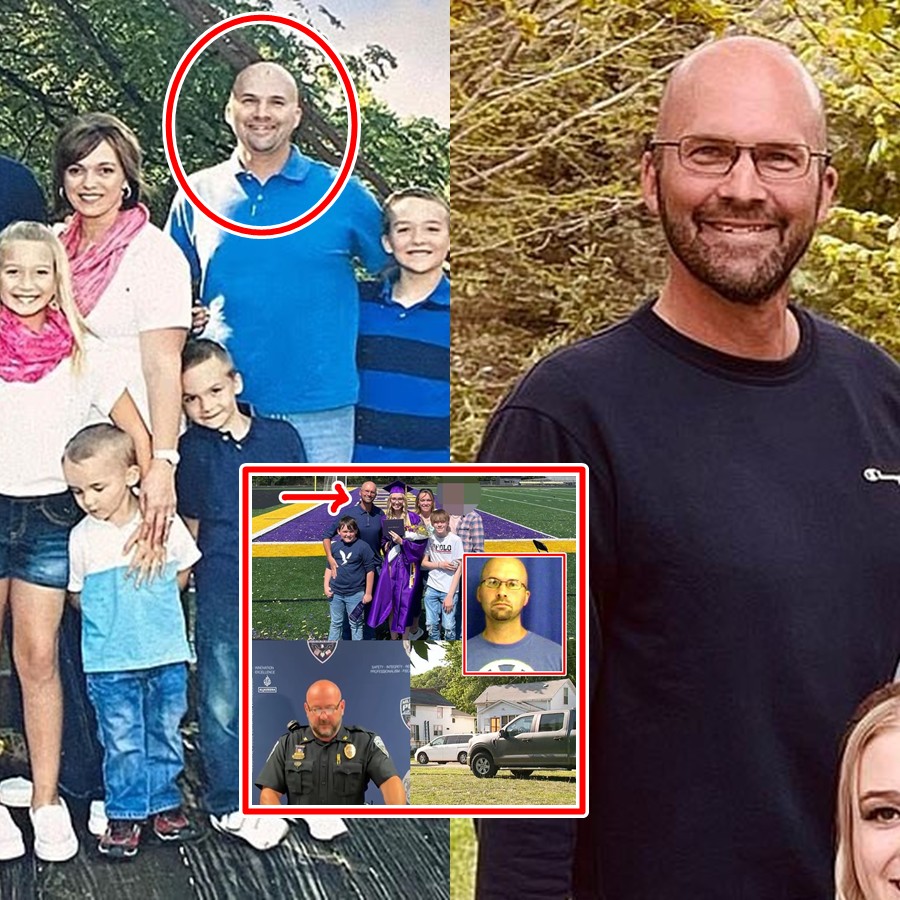
MUSCATINE, IOWA – The horrific family massacre (familicide) that took place on June 1, 2026, in Muscatine—a small, peaceful city near the Iowa-Illinois border—has become one of the darkest chapters in the history of modern American justice. Suspect Ryan Willis McFarland, 52, turned a firearm on his own family, claiming the lives of his wife and five of his children before committing suicide to evade legal retribution.
Yet, amid a gruesome crime scene stretching across three separate locations in the city, authorities confirmed that one son miraculously survived. His name is Jonathan McFarland. His survival stands as the lone beacon of life in this immense tragedy, leaving the public with a haunting question: How, and for what reason, did a calculated killer with a deep criminal history and overwhelming resentment spare this particular son?
Based on scene reports released by Muscatine Police Chief Anthony Kies, eyewitness accounts, and forensic criminal psychology, the reasons behind Jonathan McFarland’s survival stem from three core factors: the perpetrator’s timeline, the geography of the crime scenes, and the psychological makeup of a “family annihilator.”
1. The Core Factor: Geography and the Destiny of Timeline
The most direct and practical reason Jonathan McFarland did not become his father’s seventh victim was his physical absence from the targeted locations at the exact moments the gunman struck.
According to the timeline reconstructed by the Iowa Division of Criminal Investigation (DCI), the initial 911 emergency call reporting gunfire was placed at 12:15 p.m. on Monday, June 1. At that moment, Ryan McFarland began his deadly rampage at the family home located at 210 Park Avenue. There, he shot and killed his wife, Lesa McFarland (51); his daughter, Ryle McFarland (20); and his two school-aged sons, Mark (16) and Ryan Jr. (13).
Investigation records confirm that during this fateful window, Jonathan McFarland was not at the residence. He was in a different part of the city attending to personal matters. This circumstantial absence created an immediate safe distance, keeping him entirely outside his father’s immediate line of sight.
Furthermore, the perpetrator’s movements following the first scene were rapid and highly directed. Within less than 30 minutes, Ryan McFarland drove to two distinct locations where he knew his older children would be:
The 1500 block of Mill Street: Where he killed his son, Dakota Whitlow (32).
The 800 block of Grandview Avenue: Where he shot and killed his son, Austin Harris (29).
Because Ryan McFarland did not know Jonathan’s exact schedule that afternoon, or because Jonathan was too far from the killer’s path of travel, the gunman was unable to locate him before law enforcement intervened.
2. Swift Intervention by Law Enforcement
The second factor that severed Ryan McFarland’s opportunity to continue his killing spree was the response time of the Muscatine Police Department. According to neighbor Melissa Weggen, who lives next door to the 210 Park Avenue home, police cruisers swarmed the neighborhood just 20 minutes after she heard McFarland yelling frantically on the street about money and death.
The rapid identification of the suspect and the immediate issuance of a city-wide alert put Ryan McFarland on the defensive. After firing the fatal shots at the extended scenes on Mill Street and Grandview Avenue, McFarland was quickly located and cornered by officers on the city’s Riverfront Trail near the pedestrian bridge.
On the trail, officers actively engaged the suspect, utilizing tactical communication to convince him to drop his weapon. Facing an airtight police perimeter and realizing he had no escape, the 52-year-old gunman took his own life.
This swift police intervention directly protected Jonathan McFarland. Had there been a delay in locating the suspect on the Riverfront Trail, Ryan McFarland may well have continued driving through the city to hunt down Jonathan to complete his objective of erasing his entire immediate family.
3. Criminal Psychology: Was Jonathan a Target for Elimination?
Beyond the logistical factors of time and geography, criminal psychologists offer deeper hypotheses regarding the internal family dynamics to explain why Jonathan was not consumed by his father’s ultimate wrath.
According to past judicial records, Ryan Willis McFarland was a deeply volatile individual, having pleaded guilty to child endangerment in 2012 and two felony counts of fraudulent business practices in 2016, which carried an order of over $58,000 in restitution. Compounding financial ruin distorted his psyche, turning him into an authoritarian, hyper-controlling figure at home.
In cases of “family annihilation,” perpetrators typically target members whom they perceive as “traitors” or those who directly challenge their absolute control. Investigators noted that the older sons, Dakota and Austin, had previously experienced severe friction with McFarland regarding financial matters and his behavior toward their mother.
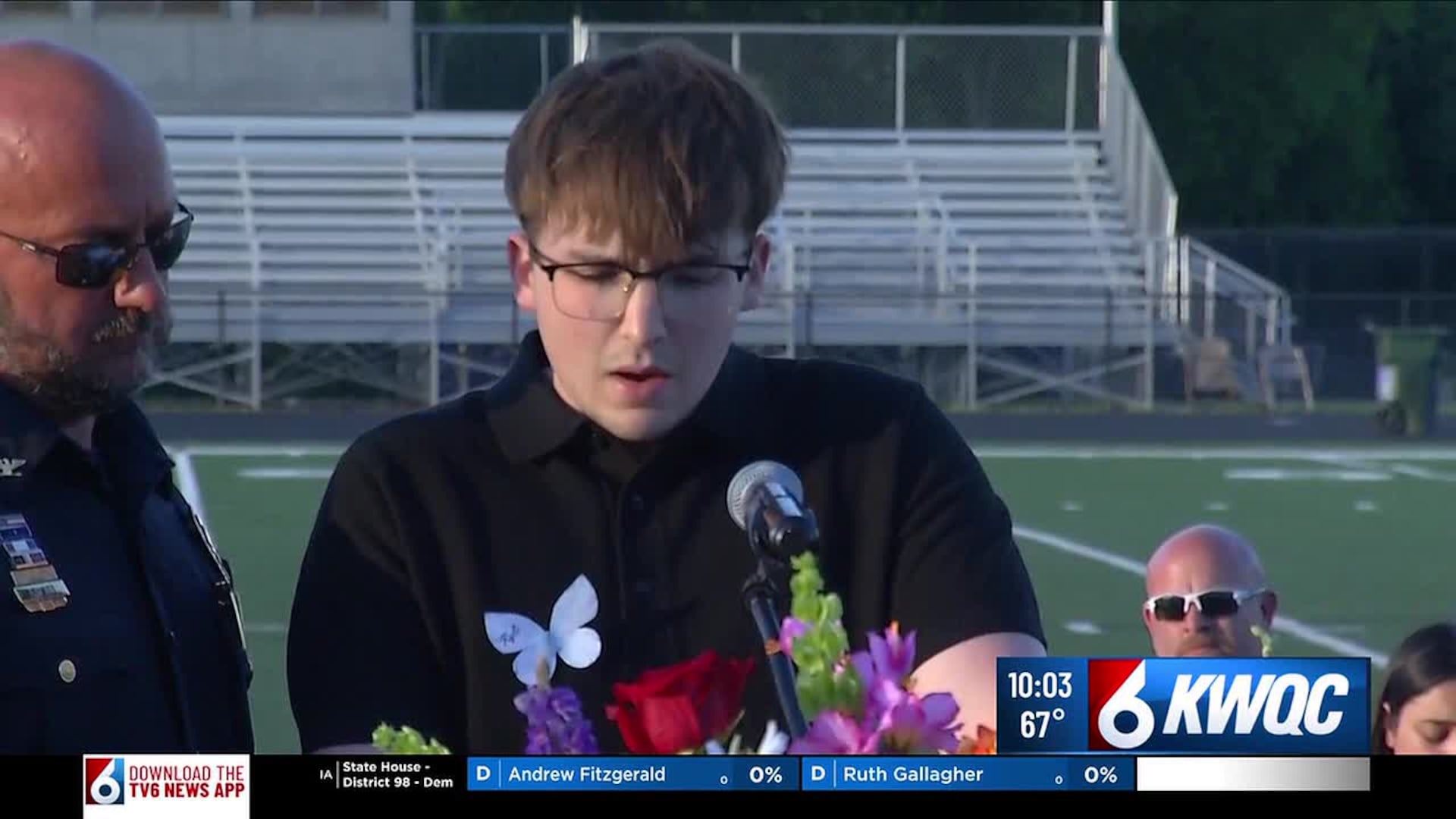
Conversely, Jonathan McFarland may have maintained a more neutral position within the domestic conflicts, or at least, did not directly confront his father in a way that wounded the killer’s fragile ego. This unique dynamic was heavily reflected in Jonathan’s mindset even after the tragedy. During the candlelight vigil held at Muscatine High School on the evening of June 2, Jonathan courageously declared to the mourning crowd:
“This might hurt some people for me to say. No matter what is being told to me, I will always love and miss my dad.”
Why Jonathan McFarland Was the Sole Survivor of the 6-Victim Mass Shooting in Iowa
This deeply complex statement indicates that a profound emotional bond existed between Jonathan and his father, distinct from the explosive relationships shared by the other siblings. It is highly plausible that within Ryan McFarland’s distorted mind before the shooting, Jonathan was intentionally excluded from the “execution list,” or that the killer deliberately left his one son alive to witness the total, cataclysmic destruction of the family.
4. The Agony of the Survivor: Alive but Permanently Scarred
While Jonathan McFarland survived physically due to the fortunate timing of his schedule and rapid police work, his life was completely shattered on June 1, 2026. In a single afternoon, he went from having a large, vibrant family to becoming entirely isolated, losing his mother, his sister, and four brothers simultaneously.
At the memorial service, Jonathan admitted he was still living in a state of profound denial, finding it hard to believe the tragedy was real. Facing the crowd to call out the names of his departed family members—Lesa, Ryle, Dakota, Austin, Mark, and Ryan Jr.—was an immense psychological burden.
Jonathan’s survival brings a small measure of comfort to the devastated Muscatine community, but it also saddles him with a heavy emotional weight—survivor’s guilt. He will have to navigate the rest of his life with an unanswered question: Why did everyone else perish while I was spared?
5. Conclusion
The Muscatine mass shooting case has physically closed following the suicide of the perpetrator, Ryan Willis McFarland, on the riverfront trail. Jonathan McFarland’s survival was the product of a sequence of random elements—his personal schedule, the rapid response of the Muscatine police, and potentially a deliberate psychological choice by the killer himself.
Currently, the Muscatine community and the local school district are mobilizing mental health counseling and support resources to help Jonathan navigate this profound crisis. His survival remains a deeply sorrowful testament to the thin, fragile line between life and death in modern domestic tragedies.