THE TRUTH FROM OFFICIAL LEGAL RECORDS: Texas Court Releases Evidence in Austin Metcalf Murder Case

THE TRUTH FROM OFFICIAL LEGAL RECORDS: Texas Court Releases Evidence in Austin Metcalf Murder Case, Dismantling Social Media Misinformation
The legal battle surrounding the shocking murder case at a Frisco, Texas high school track meet in April 2025 has entered a more public chapter. Facing a wave of chaotic information, conspiracy theories, and provocative statements across social media platforms, the Collin County Court took a landmark step: making public the entire catalog of legally admitted evidence that the jury reviewed before delivering its guilty verdict.
This move by the 296th District Court allows the public direct access to the official state archives. It is viewed as the law’s definitive response, utilizing objective facts to confront and dismantle the fabricated narratives that have circulated online regarding the schoolyard stabbing tragedy between the two teenagers.
Transparency of the Case File: When Justice Is No Longer Behind Closed Doors
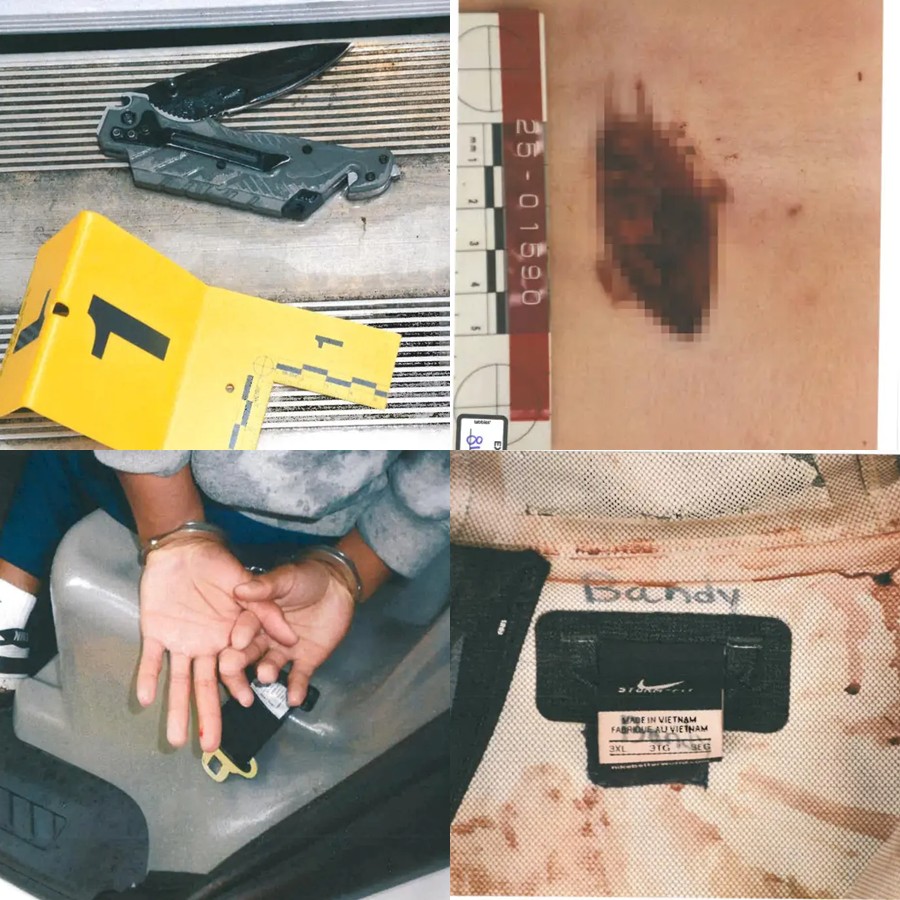
According to litigation records, the 296th District Court has officially posted links to the repository of evidence admitted during the trial of The State of Texas v. Karmelo Sincere Anthony (Cause No. 296-83565-2025). This massive archive includes a collection of crime scene photographs, initial audio recordings of statements, and four groups of digital videos extracted from surveillance cameras and police bodycams. Representatives for Collin County stated that making these videos available in a digital format ensures that the public can access them transparently and easily.
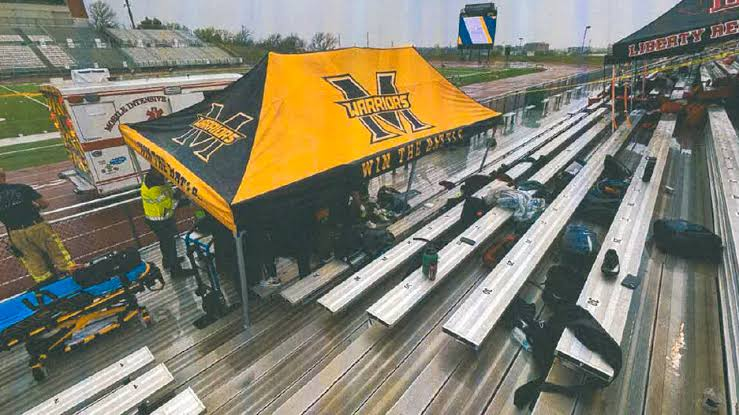
Previously, a Collin County jury convicted Karmelo Anthony (now 19) of first-degree murder for the fatal stabbing of 17-year-old student Austin Metcalf. The incident occurred in the bleacher area of Kuykendall Stadium during a track and field event organized by the Frisco Independent School District (Frisco ISD) on April 2, 2025. During the sentencing phase in June 2026, the jury unanimously rejected the “sudden passion” claim presented by the defense, assessing a 35-year prison sentence against Anthony.
The widespread publication of these exhibits and video clips was executed immediately after the court’s protective order expired. Throughout the initial trial, the judge enforced a strict order banning all photography, video recording, audio recording, livestreaming, or any other form of data transmission from within the courtroom. The order also barred the public and media outlets from accessing admitted exhibits until all trial proceedings concluded. Now, as the legal veil is lifted, the public can finally witness firsthand exactly what the 12 jurors considered before determining the defendant’s fate.
The Truth Confronts Fabricated Narratives in Cyberspace
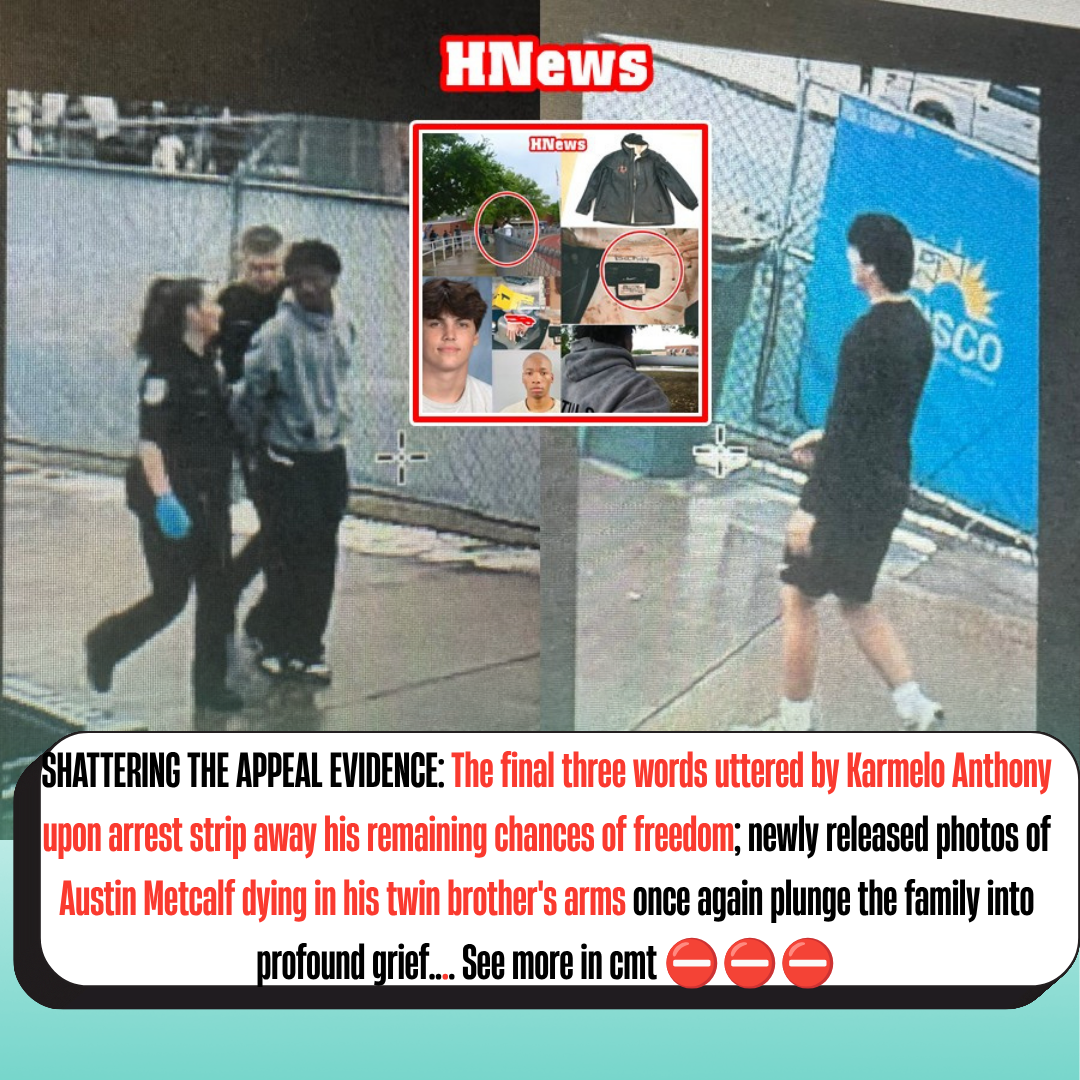
The importance of the court’s evidence release lies in its direct resolution of conflicting public narratives. From the moment Anthony attacked Metcalf at the Frisco stadium, a series of biased scenarios and stories have continuously surrounded the case. Courthouse reactions following the verdict quickly shifted from the jury’s decision to broader, heated debates over race, the fairness of the judicial system, and systemic bias within Collin County.
Immediately after the death of the young football star Austin Metcalf, anonymous users on social media maliciously spread a flurry of falsified information. This included an X (Twitter) account impersonating Frisco’s police chief to issue misleading statements, a fabricated autopsy report claiming drugs played a role in the victim’s death, and forged Instagram screenshots defaming the victim by linking him to weapons. A comprehensive investigation conducted by the CBS Texas Confirm team in April 2025, in coordination with law enforcement agencies, determined that all the aforementioned posts were entirely the product of manipulation and fabrication.
Furthermore, following Anthony’s 35-year sentence, a wave of online accounts continued to minimize the killer’s crime by claiming that Anthony had been “jumped” by a group of other students, surrounded and isolated before the stabbing, or pulled into a prolonged, predatory fight.
However, independent analysis of the complete video catalog released by the court completely refutes these claims. No footage shows Anthony being collectively attacked, surrounded, or dragged into a prolonged fight under the Memorial High School tent. Instead, what the cameras capture is a brief confrontation and altercation unfolding under the opposing team’s tent, right before Anthony draws his knife to inflict a single fatal blow to the victim’s chest and hastily flees the scene. The release of this original material gives citizens a direct look at the core legal evidence, rather than forcing them to rely on intentionally selective clips, extreme social media reactions, or secondhand rumors.
Decoding the Controversy Over Jury Composition
While the publication of these exhibits and documents has clarified the physical sequence of the homicide, it cannot completely extinguish all politically motivated claims surrounding the case, particularly controversies regarding the racial composition of the jury panel.
One of the most widely repeated claims on online forums is the allegation that Karmelo Anthony—a Black youth—was convicted by a “100% all-White jury.” However, verified information from court records reveals a significant discrepancy between reality and rumor. The truth is that no Black jurors served on the official panel, but that does not mean the jury was entirely White.
Sources close to the trial confirmed to Fox News Digital that 3 of the 12 official jurors belonged to racial minorities, including citizens of Asian and Indian descent. Furthermore, counting the total pool of 18 jurors, which included alternates, 6 were from ethnic minorities.
This distinction is crucial when evaluating the fairness of the trial. Public criticism targeting the verdict often intentionally collapsed and conflated two completely separate concepts: the fact that “no Black jurors served” and the claim that “the jury was all White.” While the first claim is an objective reality resulting from a random drawing process, the second is an outright distortion of truth aimed at inciting social friction.
The Affirmation of Justice: Rejecting the Self-Defense Argument
Throughout the arguments, defense attorneys for Karmelo Anthony concentrated their efforts on the claim that their client acted in lawful self-defense against threats from rival school students. They attempted to portray Anthony as a victim of circumstance, forced to use violence to protect himself.
However, the jury firmly rejected all such arguments when they consistently convicted Anthony of murder. Shortly thereafter, the same panel once again dismissed the psychological claim of “sudden passion” during the sentencing phase, choosing to isolate Anthony from society for a term of 35 years.
It must be viewed objectively that the release of these videos and photographic evidence does not replace the full trial transcript, the direct testimony of witnesses, the judge’s legal instructions to the jury, or the closing arguments between prosecutors and defense lawyers. It also does not fully settle the lingering debates over political motives or deeply rooted racial biases in society.
However, the ultimate value of these newly available materials is that they grant the power of verification to the public. Citizens can now review and evaluate for themselves every piece of video, every photographic exhibit, and every audio recording that the jurors carefully weighed before reaching a final verdict that defines a human life.
Mainstream media outlets in Texas are currently not embedding these videos directly into commercial articles. Readers wishing to review and cross-reference the information are advised to access it directly through the official Collin County evidence page. Because these exhibits contain real-life imagery that is violent and distressing, viewer discretion is strongly advised. The truth of justice always demands a clear, objective perspective that respects legally recognized evidence.