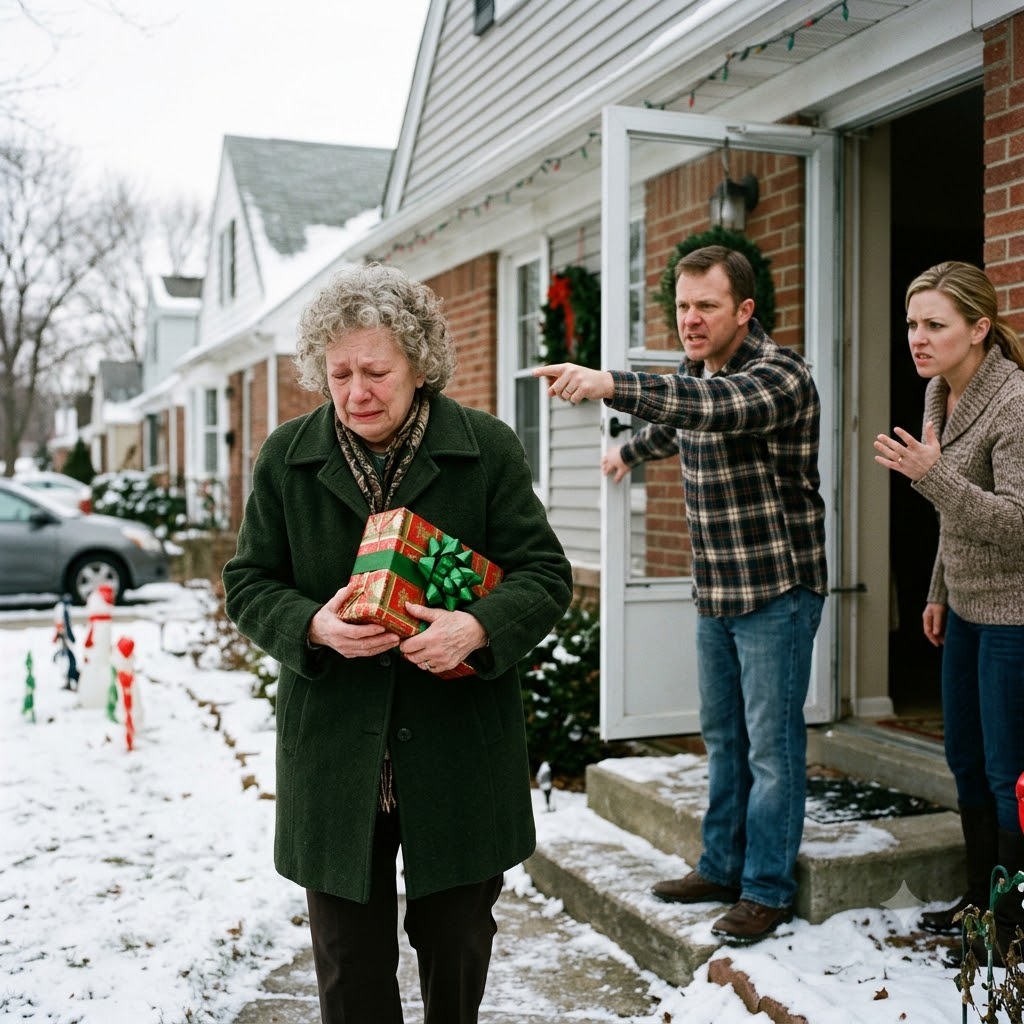
After My Husband’s Death, I Hid My $500 Million Inheritance—Just to See Who’d Treat Me Right’
After My Husband’s Death, I Hid My $500 Million Inheritance—Just to See Who’d Treat Me Right’
The damp morning mist of suburban Connecticut hung thick over the pristine lawns of Ridgefield, but inside the sprawling Georgian manor, the atmosphere was suffocating.
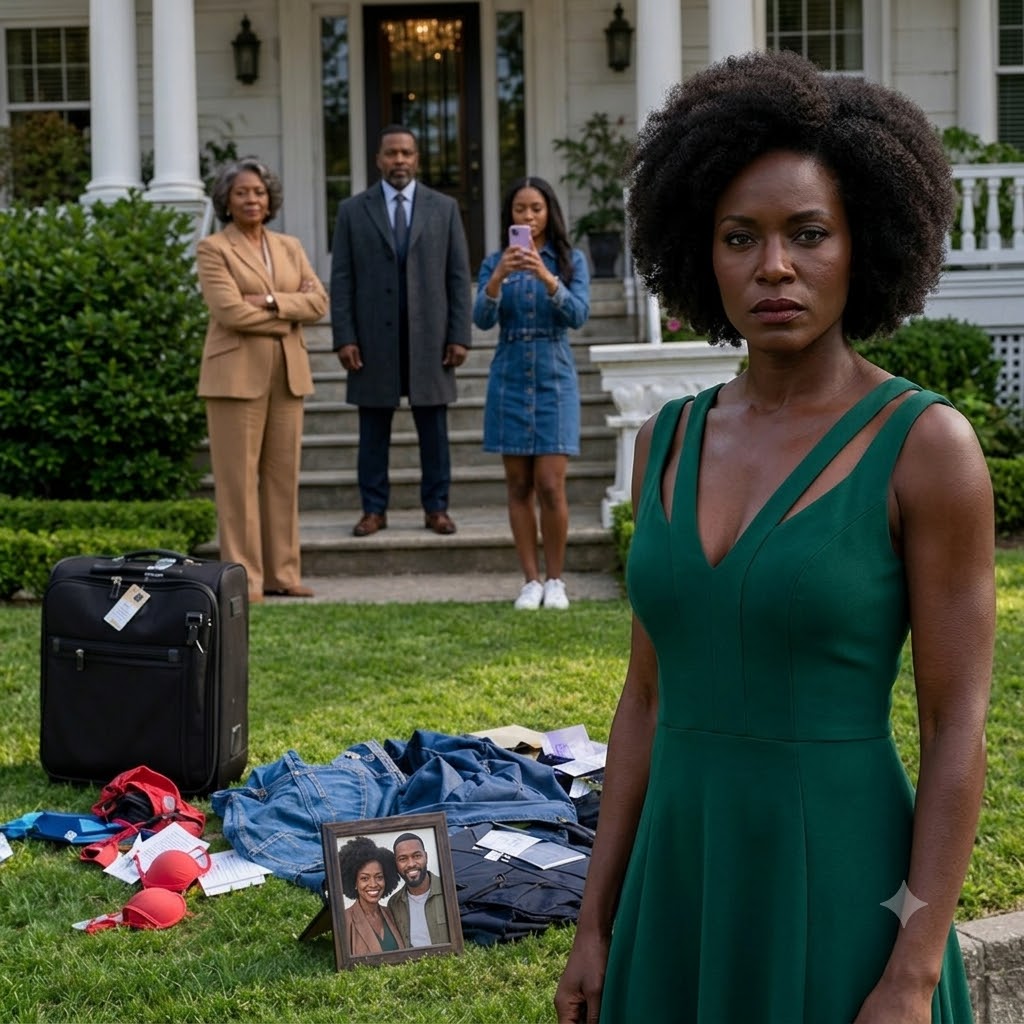
Twenty-four hours after placing the love of my life into the cold ground, my entire wardrobe was hurled onto a lawn so meticulously manicured it seemed entirely unnatural.
They weren’t packed into luggage or set down with even a shred of artificial dignity. They were viciously scattered.
A tailored navy coat I had worn to an awkward holiday gathering where everyone ignored me lay limp in the dew-soaked grass. A pair of Italian leather pumps I had pinched pennies to buy—naively praying that appearing polished might finally win their approval—slid through the dirt toward the automated lawn sprinklers. My bound wedding portfolio lay face-down in the soil, its cream-colored linen cover soaking up dark mud.
Standing atop the grand portico like a statue forged from arrogance stood my mother-in-law, Eleanor Sterling. Her diamond-ringed fingers were tightly interwoven, her lip curled into an expression devoid of sorrow. What radiated from her was purely triumphant malice.
“You achieved your little ambition!” Eleanor shrieked, her voice echoing down the manicured cul-de-sac for every curious neighbor to hear. “Now clear out of our estate!”
Our estate.
Not Julian’s ancestral home.
Not the family property.
Just ours—as though my five years as Julian’s wife had been nothing more than a temporary stain on their polished floorboards.
Clustered behind her stood the remainder of the Sterling clan, a living tableau of hostility.
Arthur Sterling, my father-in-law, leaned against the heavy oak entrance, his gaze pinned to a spot above my horizon, as if acknowledging my presence might tarnish his social standing.
Victoria, my sister-in-law, perched on the limestone steps with her smartphone held high, recording the entire spectacle with a satisfied smirk, clearly delighted by her morning entertainment.
And then there was Marcus—Julian’s younger brother. He hovered near the back, eyes glued to the stone tile, hands jammed into his trousers, falsely believing his cowardice exempted him from guilt.
They had convinced themselves of a single narrative regarding my existence.
They believed I was a calculated gold-digger who had trapped Julian Sterling.
They thought my background—working double shifts as a diner waitress while putting myself through nursing school—was merely a performance until I could slip into their generational wealth.
They assumed that with Julian gone, I would be unceremoniously dumped back into the poverty they believed I hailed from.
They thought I was left with nothing.
They were profoundly mistaken.
Yet, I offered no defense. Not at that moment.
Grief does strange things to the human psyche. It burdens your lungs while honing your focus into something razor-sharp. Standing there with burning eyes and a bruised heart, an absolute stillness settled over my soul. It wasn’t despair. It was the calm before an unyielding storm.
Julian had tried to prepare me.
Seven days prior to his sudden cardiac collapse, he had cupped my cheeks in our master suite, his thumbs gently wiping away my exhaustion.
“Listen to me, Maya,” he had murmured, his dark eyes intense. “I’ve altered everything. Every legal instrument, every asset title. You are completely secure now. No matter what unfolds, you are safe. They won’t be able to lay a finger on you.”
I had offered a faint smile, brushing it off as paranoia. “Why are you speaking like we’re in a thriller?”
He hadn’t laughed. He simply kissed my forehead and held me close.
Now, as I looked up at the Sterling family celebrating their perceived victory, I understood why Julian had acted with such urgency….
Eleanor descended one step, her expensive perfume drifting down to meet the smell of damp earth. “Did you honestly believe a girl who grew up in a trailer park could inherit a thirty-million-dollar real estate empire? You were a temporary distraction for my son, Maya. Nothing more.”
Victoria giggled from the stairs. “Make sure you record her face, Mom. This is going on the family group chat.”
I didn’t yell. I didn’t reach down to save my mud-caked wedding album. I simply met Eleanor’s piercing gaze, letting a slow, quiet silence build between us.
My lack of hysterics unnerved her. Her smirk faltered, if only for a fraction of a second.
“Pack your trash and leave,” Arthur barked from the doorway, breaking his silence. “The private security team will be here in ten minutes to escort you off the premises.”
“I don’t need an escort,” I said quietly, my voice steady enough to cut through the cool air. “I’ll leave.”
I turned, leaving my ruined belongings on their manicured grass, and walked down the long cobblestone driveway to my modest sedan parked at the curb.
As I started the engine, I glanced in the rearview mirror. Eleanor was watching me depart, her arms still crossed, convinced she
The cool afternoon air greeted me as I stepped onto the granite plaza outside the office tower, but the crisp breeze did little to dissipate the heavy silence that followed me out of that conference room.
I stood there for a moment, listening to the muffled roar of downtown Hartford traffic—the hiss of bus brakes, the distant blare of a taxi horn, the rhythmic click of heels on concrete. For five years, my existence had been governed by the loud, suffocating opinions of the Sterling family. Now, suddenly, the world was quiet.
Evelyn Reed stepped out beside me, slipping her leather briefcase under her arm and adjusting her sunglasses. She looked at me with a rare, quiet smile—one of genuine professional satisfaction mixed with deep empathy.
“You handled that with remarkably steady nerves, Maya,” Evelyn said, her voice cutting through the ambient city noise. “Most people in your position would have yielded to the urge to scream at them. You didn’t give them a single inch of performative drama to feed on.”
“I spent five years watching them turn every human emotion into a performance,” I replied softly, pulling my coat tighter against the wind. “I realized a long time ago that Eleanor doesn’t fear anger. She understands anger; she uses it as fuel. What terrifies her is absolute, immovable silence.”
“Well, your silence just stripped her of three estates, a corporate empire, and her social standing,” Evelyn noted dryly. “What’s our next move? The eviction notices are officially served. The thirty-day clock is ticking for Ridgefield Manor.”
I looked down at the silver chain around my neck, slipping my thumb under my lapel to touch Julian’s wedding band resting against my collarbone.
“I need to go back there,” I said softly.
Evelyn raised an eyebrow. “Back to Ridgefield? Maya, they still have keys. Eleanor is likely driving back there right now in a state of absolute hysteria. I can send private security to secure the perimeter and oversee their departure.”
“No,” I shook my head, my decision firm. “I don’t want a siege, Evelyn. I want my life back. I need to gather what remains of Julian’s personal belongings—his journals, his private sketches, the things they never knew existed—before they decide to destroy them out of spite. I’ll go today, while they’re still picking up the pieces of their legal team.”
Evelyn studied my face for a long moment, then nodded, retrieving a small black card from her coat pocket and handing it to me. “This is the direct line to Marcus Vance’s team—the security firm we retained for the corporate transition. Two plainclothes officers will be trailing your car at a discreet distance. If Eleanor or Arthur so much as raises a hand or steps across the line of basic decency, you press one button, and they step in.”
“Thank you, Evelyn. For everything.”
“Don’t thank me yet,” she said, her eyes softening. “The legal victory was the easy part, Maya. Winning the paper war takes a few court orders. Winning your peace after living in a cage… that’s the hard work.”
The drive from downtown Hartford back to Ridgefield was a blur of autumn trees and winding suburban roads. The peak foliage of October painted the hills in shades of violent crimson and burnt orange, but to me, the landscape looked stripped of color.
As my sedan pulled up to the heavy wrought-iron gates of the Ridgefield Manor, the gates swung open automatically—the security system already updated by Evelyn’s firm to recognize my vehicle’s primary clearance code.
I parked at the bottom of the long, cobblestone driveway, deliberately avoiding the main portico where, just seventy-two hours earlier, my clothes had been thrown into the dirt.
The lawn had been raked. The mud-soaked wedding portfolio I had been forced to abandon three days ago was gone—presumably swept up by the landscaping crew or burned by Victoria in a fit of rage. But as I stepped onto the grass, the ghost of that morning hung heavy in the damp air.
I unlocked the front door with my own key.
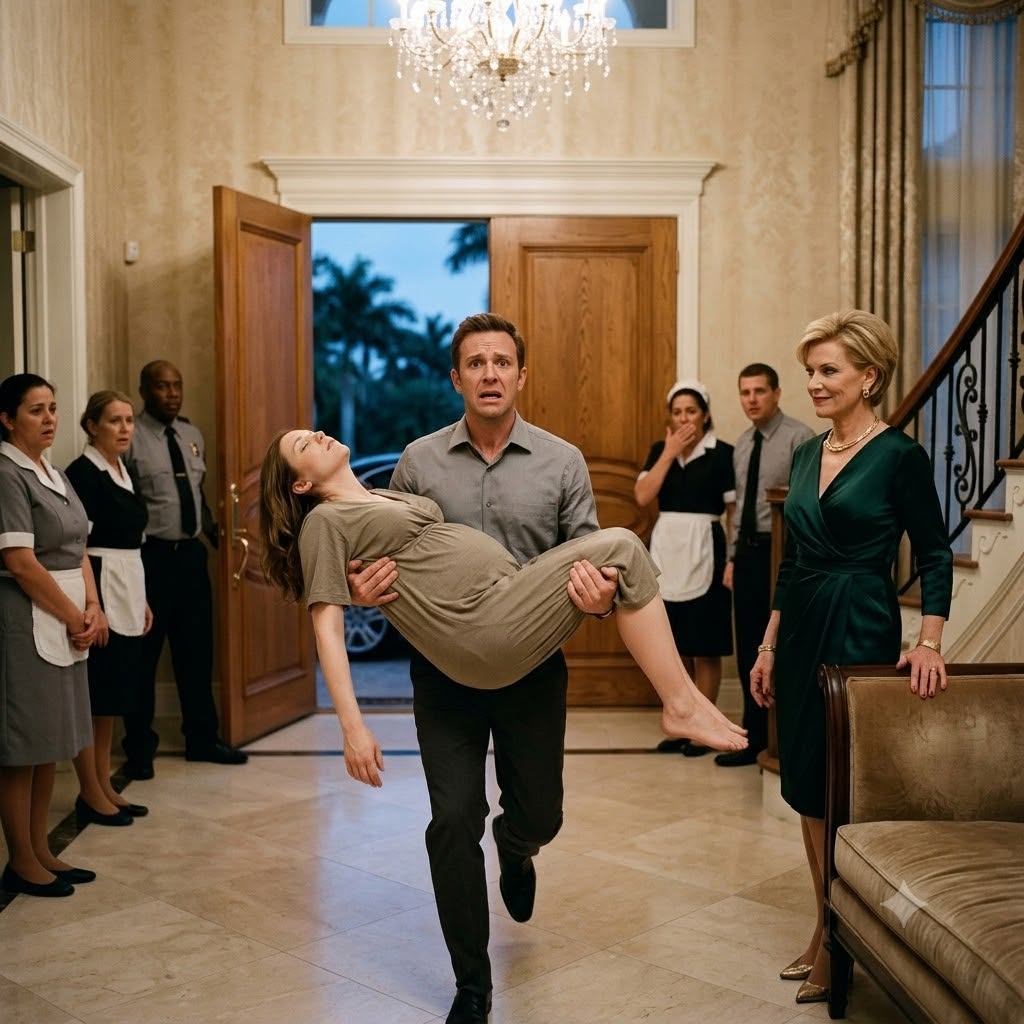
The grand foyer was dead silent. The soaring ceilings, the Italian marble floors, the crystal chandelier that caught the pale afternoon light—it all looked grand, immaculate, and entirely hollow. This wasn’t a home; it was a museum built to showcase the vanity of a family that didn’t know how to love anything that couldn’t be bought.
I walked up the sweeping spiral staircase, my soft-soled flats making barely a sound against the runner. I bypassed the master suite—where Julian and I had shared our few stolen moments of genuine peace—and walked straight toward his private study at the far end of the east wing.
This was the room the Sterlings had never cared about. To Eleanor, Julian’s study was just an administrative nook where he managed his schedules. They didn’t know about the hidden floor safe beneath the vintage Oriental rug, nor did they care about the locked mahogany secretary desk in the corner.
I pulled a small brass key from my purse—the key Julian had given me during our quiet anniversary trip to Maine two years ago—and unlocked the desk drawer.
Inside lay three thick, leather-bound notebooks.
My fingers trembled as I picked them up. These were Julian’s journals, spanning the last four years of his life.
I opened the first volume. His sharp, elegant cursive filled the pages. I flipped through the entries, my throat tightening as I read his private thoughts:
October 14 — Maya brought me tea while I was buried in the quarter-four audits. She didn’t say a word, just set the cup down and kissed the top of my head. My mother spent twenty minutes on the phone earlier telling me that Maya’s presence at the charity gala would ’embarrass the brand.’ I listened to my mother, then I looked at my wife. I realized today that I have spent thirty years mistaking my family’s ambition for love. Maya is the only real thing in my life. If I die tomorrow, I will leave her surrounded by walls they cannot break.
Tears blurred my vision, hot and fast, dripping onto the yellowed page. He had planned this for so long. Every corporate maneuver, every legal shift, every quiet conversation with estate attorneys—it hadn’t been an act of cold vengeance. It had been his final, desperate act of love. He knew his family’s true nature better than anyone. He knew that the moment his heart failed, their claws would come out.
Suddenly, the heavy oak door of the study slammed open, crashing against the wall.
I jumped, snapping the journal shut and pulling it against my chest.
Eleanor stood in the doorway.
She was no longer the immaculate matriarch in tailored silk. Her hair was coming undone from its hairpins, falling in stray silver strands around her face. Her makeup was slightly smudged around her eyes, and her hands were trembling so violently that the heavy diamond rings on her fingers clicked against one another.
Behind her stood Arthur, looking entirely drained, his shoulders slumped like an old man who had suddenly realized his spine was gone.
“You,” Eleanor hissed, her voice low, raspy, and vibrating with a terrifying, unhinged fury. “You dare step foot back into this house?”
I stood up slowly from behind the mahogany desk, keeping the journals firmly tucked under my arm. I did not raise my voice. I did not shrink back.
“I own this house, Eleanor,” I said flatly. “I have every legal right to be here.”
“Legal right?!” she shrieked, taking three aggressive steps into the room. Arthur reached out a hand to restrain her, but she violently shoved him away. “You think a piece of paper signed by a dying, confused man gives you the right to walk through these halls like a queen?! You manipulated him! You poisoned his mind against his own blood!”
“Julian was never confused,” I replied, meeting her bloodshot eyes without flinching. “He was clearer in his final months than he had ever been in his entire life. He saw you, Eleanor. He saw how you treated him like an asset, how you used his talent to fund your vanity, and how you treated the woman he loved like garbage.”
“You were garbage!” Eleanor yelled, her voice echoing off the wood-paneled walls. “You were a nobody! A waitress from a trailer park who scrubbed floors and served coffee to real people! I gave my son everything! I gave him a name, a legacy, a place in high society! And you stole him from us!”
“You didn’t give him a home,” I said quietly, taking a step out from behind the desk. “You gave him an obligation. You loved his title. You loved his corporate voting power. But you didn’t love him. If you loved him, you wouldn’t have been picking through his financial accounts twelve hours after his heart stopped.”
Eleanor froze, her face twisting into a mask of pure venom.
“I built this family!” she spat, pointing a trembling finger at my chest. “My father built Sterling Enterprise! You think you can just march in here with your lawyers and take thirty years of my life away from me?! I will spend every dime I have left fighting you! I will drag your name through every tabloid in New England! I will make sure everyone knows you for the scheming, opportunistic parasite you are!”
Arthur stepped forward, his voice tired and cracked. “Eleanor… stop. Please. It’s over. Harrison said—”
“Shut up, Arthur!” she screamed, turning on her husband with terrifying ferocity. “You spineless coward! You’re just going to sit there and let this… this girl evict us from our home?!”
“It isn’t our home anymore!” Arthur yelled back, his sudden outburst surprising even Eleanor. His face was red, his eyes wet with shame. “Look at us! Look at what we did! We threw her clothes into the mud, Eleanor! We celebrated Julian’s death like it was an business acquisition! Julian saw it coming! He knew what we were!”
Eleanor stared at her husband as if he had struck her across the face. For a moment, the room fell into a heavy, suffocating quiet.
Arthur turned to me, his shoulders hunched, his eyes fixed on the floorboards. He couldn’t look me in the eye.
“Maya,” Arthur murmured, his voice barely audible. “We… we will be gone by the end of the week. Please. Just… don’t destroy Victoria. She’s young. She was just following her mother’s lead.”
“Victoria is twenty-six years old, Arthur,” I said, my voice dripping with cold clarity. “She made her choices. She stood on those stairs and filmed my grief for entertainment. She will face the legal consequences of her actions.”
I looked back at Eleanor, who was breathing heavily, her chest heaving as the terrifying reality of her utter defeat finally settled into her bones. The rage was still there, but beneath it lay something new: a profound, paralyzing isolation. She had lost her son, her money, her estate, and now, the respect of her own husband.
“You have twenty-seven days left on your notice,” I told Eleanor smoothly, walking past her toward the doorway. “If any property is damaged, or if any asset is removed from this estate without my explicit written approval, I will have the state prosecutors file criminal grand larceny charges within the hour. Do not test me.”
I didn’t wait for her response. I walked down the long corridor, down the marble staircase, and out the heavy front doors into the crisp autumn air.
As I reached my car, I saw the two plainclothes security officers parked in a discrete black SUV at the edge of the driveway. One of them gave me a subtle nod. I nodded back, slipped into the driver’s seat, set Julian’s journals on the passenger side, and drove away from Ridgefield Manor for what I knew would be a very long time.
Six weeks later.
Early November had arrived, bringing a sharp, frosty bite to the air. The leaves had all fallen, leaving the trees bare against a pale gray New England sky.
I stood on the balcony of a modest, sunlit apartment overlooking the Connecticut River in Middletown—a quiet town thirty miles away from the insular, suffocating wealth of Ridgefield. It wasn’t a mansion. It didn’t have marble floors or crystal chandeliers. But it had high ceilings, large windows that let in the morning light, and a sense of profound, unbroken stillness.
I wore a comfortable oversized wool sweater and held a steaming mug of black coffee in both hands.
The legal dust had finally begun to settle.
As Arthur had promised, the Sterling family had cleared out of Ridgefield Manor three weeks ahead of the eviction deadline. They hadn’t gone quietly—local luxury real estate blogs had picked up rumors of a massive rift within the Sterling empire—but Evelyn Reed’s legal team had enforced an ironclad gag order as part of the corporate restructuring.
The story that reached the public was clean and undeniable: Maya Sterling, widow of the late Julian Sterling, assumes full control of Sterling Enterprise holdings following a planned corporate succession.
Eleanor and Arthur had moved into a small, rented townhouse in Stamford—a property funded entirely by Arthur’s modest, non-transferable pension, which Julian had deliberately left untouched so his father wouldn’t end up on the street. Eleanor’s grand social calendar had vanished overnight. The charity boards she had dominated for two decades quietly removed her name from their letterheads, eager to distance themselves from a woman who had lost her influence and her fortune.
Victoria had been forced to issue a public, written apology on her social media platforms to settle the defamation lawsuit I had filed against her. Her trust fund was frozen, her high-end lifestyle abruptly halted. She was currently working as an entry-level receptionist at a design firm in Manhattan—learning, for the very first time in her life, what it meant to earn a living.
Marcus, the younger brother who had stood silently in the background while my clothes were thrown into the mud, had approached me two weeks ago. He didn’t ask for money or corporate position. He simply asked for forgiveness.
“Julian tried to talk to me before he died,” Marcus had confessed, standing in my attorney’s office with tears in his eyes. “He told me I was letting Mom turn me into a ghost. I was too afraid to stand up to her, Maya. I was a coward.”
I hadn’t given him a corporate seat, but I had authorized a small, conditional educational trust for him to finish his degree in architecture—on the strict condition that he maintain total financial independence from his mother.
As for Sterling Enterprise, I had no desire to play the role of a corporate tyrant.
With the help of Dr. Evelyn Reed and an executive search firm, I appointed an independent, highly respected Chief Executive Officer to run the day-to-day operations of the firm. I retained controlling voting interest on the board, ensuring that the company’s profits were redirected toward ethical housing development projects and nursing scholarships across the state—a cause that honored both my past and Julian’s vision for a legacy that actually meant something.
I took a slow sip of my coffee, feeling the warm liquid settle in my chest.
A soft knock sounded at my front door.
I set my mug down on the wooden bistro table and walked through the living room to answer it.
Standing on the welcome mat was Bashi, my closest friend from nursing school—the same woman who had held my hand during those grueling double shifts at the diner, who had sat with me in the hospital waiting room while Julian was in surgery, and who had never once judged me for falling in love with a man from a world so vastly different from our own.
She carried a warm bakery box tied with a red string and wore a thick wool scarf around her neck.
“Hey,” Bashi said softly, offering a warm, gentle smile. “I brought those cinnamon pastries from the bakery downtown. Thought you might want some company.”
“I’d love that,” I smiled, stepping aside to let her in.
Bashi walked into the apartment, setting the box on the kitchen island and looking around at the space. The living room was warm, filled with books, framed photos of Julian and me from our quiet weekend trips, and fresh flowers in simple glass vases.
“It feels like you in here, Maya,” Bashi noted, wrapping her arms around herself. “It feels… real.”
“It is real,” I said softly, pouring her a mug of coffee. “For the first time in five years, everything in my life is real.”
We sat together at the dining table near the window, eating pastries and talking—not about court filings, corporate assets, or the Sterlings, but about ordinary things. About nursing board certifications, about the upcoming winter forecast, about the small community clinic down the street where I had recently volunteered to work two afternoons a week as a registered nurse.
I didn’t need the thirty-million-dollar empire to survive. I had never needed it. But I had accepted the responsibility of managing it because it was the armor Julian had built to protect me from the people who wished to destroy me.
Later that afternoon, after Bashi had hugged me goodbye and left for her shift at the hospital, I walked over to the small writing desk near the window.
I opened Julian’s final journal to the very last page—an entry he had written just forty-eight hours before his heart gave out.
If you are reading this, Maya, it means the storm has arrived, and I am no longer there to hold the umbrella for you. But I know you. I know the strength that lives behind those quiet, beautiful eyes. They will try to make you feel small. They will try to make you believe you don’t belong. Do not let them take your light, my love. Reclaim your name. Reclaim your peace. Live a life that is entirely, gloriously your own.
I stared at his handwriting for a long, quiet moment. A single tear escaped my eye, falling onto the dark leather cover of the journal, but this time, it wasn’t a tear of helpless grief. It was a tear of gratitude.
I closed the notebook gently and placed it on the bookshelf alongside my nursing textbooks and my personal albums.
I walked out onto the balcony once more as the sun began to set over the Connecticut River. The sky was painted in brilliant streaks of violet, gold, and deep indigo, reflecting off the dark, moving water below.
The Sterlings had thought they could throw my life away like trash on a wet lawn. They had believed that wealth gave them the power to erase people, to rewrite truths, and to dictate who was worthy of dignity. But they had forgotten a fundamental truth about the world: real strength isn’t built in grand mansions or inherited boardrooms. It is forged in the quiet, unrelenting resilience of those who have survived the worst and chosen to stand tall anyway.
I pulled my sweater tight around my shoulders, looking out at the vast, open horizon.
The wind blew soft and steady, carrying away the last remnants of the past. I was no longer the girl serving coffee in a crowded diner, nor was I the quiet, isolated wife hiding in the shadow of a cruel family.
I was Maya Sterling. I was free, I was protected, and my story was finally, truly my own.