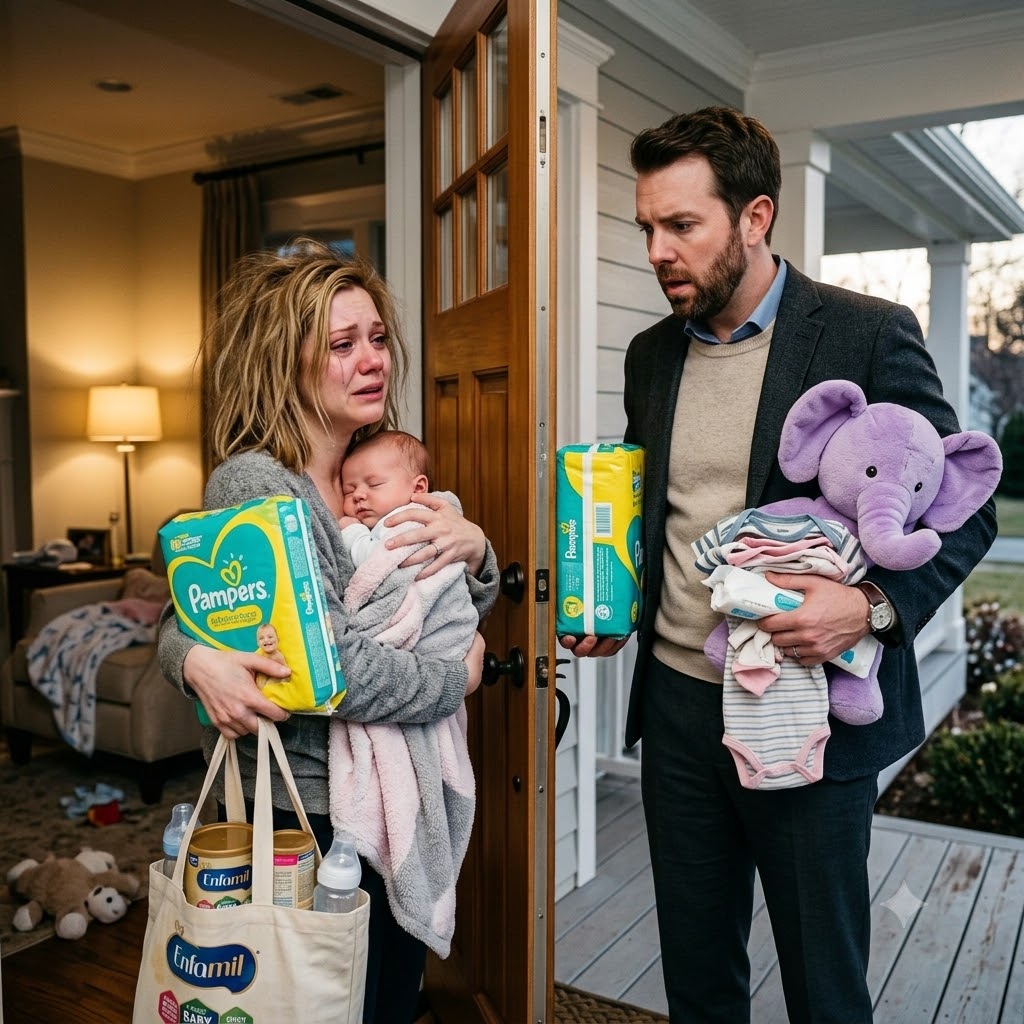
My husband’s lifelong buddy volunteered to shuttle our sixteen-year-old daughter to her ballet rehearsals three evenings a week.
My husband’s lifelong buddy volunteered to shuttle our sixteen-year-old daughter to her ballet rehearsals three evenings a week. Having known him for nearly thirty years, he had earned our complete trust. So when Maya suddenly became quiet and stopped expressing any interest in dance, I never once suspected he might be the reason.
Then, one afternoon, I dropped by her studio unannounced.
Through the observation window, I watched the other students running through their routines.
Maya was nowhere to be seen.
When I located her instructor and inquired about my daughter’s whereabouts, the woman’s face paled instantly.
“Mrs. Vance, your daughter hasn’t told you what’s been happening, has she?”
A knot tied in my stomach.
“What do you mean?”
She glanced up and down the empty corridor before stepping back and pulling the studio door shut.
What she revealed next made me realize my daughter had been hiding a secret for weeks.
And the man we’d relied on to help her pursue her passion might be directly responsible.
Maya had been captivated by dance since early childhood.
Our kitchen was barely wide enough for two people to pass without squeezing, yet she always managed to find space to rehearse another turn.
I’d often be at the stove making breakfast when she’d suddenly extend a leg behind her, testing her balance.
“Maya, watch out! You’re going to hit the fridge!”
She’d just laugh.
“Mom, I have to learn how to control my body!”
Then she’d try the movement all over again.
I used to smile at how devoted she was.
While other kids asked for expensive gadgets or the newest video games, Maya set aside her birthday cash specifically for pointe shoes.
She watched classical recitals online, checked out dance manuals from the local library, and rehearsed routines repeatedly until every step was muscle memory.
We had registered her for basic classes when she was small, but formal, high-level instruction was pricey.
My husband, David, worked as a site supervisor for a construction firm, while I worked in hospital administration.
We budgeted carefully.
Professional dance training was rarely something our finances could easily cover.
Yet Maya never let go of her ambition.
She trained whenever the opportunity arose.
And last autumn, all that relentless effort finally paid off.
She secured a spot in the elite teen ensemble at a well-regarded conservatory.
The acceptance came with a merit scholarship that covered most of her tuition.
I’ll never forget the day the notification arrived.
She burst through the front door, phone clutched in her palm.
“Mom! Mom, read this!”
I was leaning against the kitchen counter.
“What happened?”
“I got in!”
She shoved the screen toward my face.
I skimmed the email.
Then I read it a second time to be sure.
“Oh, honey!”
I threw my arms around her.
Maya squeezed me so hard I could barely catch my breath.
“Please, Mom,” she whispered. “I want this more than anything.”
I wanted to say yes right then and there.
However, when I looked up the facility’s location, my excitement quickly faded.
It was almost fifty minutes away by car.
Using public transit meant taking two different bus routes.
To make matters worse, her sessions didn’t wrap up until after eight at night.
David and I both worked late schedules.
Driving Maya back and forth three nights a week seemed nearly impossible.
Ensuring she got home safely in the dark was an even bigger hurdle.
I studied the schedule again.
Maya picked up on my unease right away.
“Mom?”
“We need to work out the logistics first.”
Her expression fell.
“But I got the scholarship.”
“I know, sweetie.”
“I put so much work into this.”
“I know you did.”
She stared down at the floor.
“Please don’t tell me I can’t go.”
I felt sick to my stomach.
For two solid weeks, David and I scrambled to figure out a ride arrangement.
We reached out to coworkers.
We asked around the neighborhood.
We even looked into shifting our work shifts.
Yet no one was available to reliably drive Maya both ways on all three days.
She even suggested riding the bus solo.
“I can head straight from school and get there well before class starts.”
“It’s not the trip there that worries me,” I clarified. “It’s getting back late at night.”
She let out a heavy sigh.
“So I finally make it into the program, and I still have to give it up?”
I didn’t have an answer for her.
Then, during a Sunday family dinner, a solution presented itself from a man we had known for decades.
Gavin had been David’s closest friend since high school.
They had grown up in the same neighborhood, played on the same teams, and remained tight throughout their adult lives.
He was a groomsman at our wedding.
He came over to see us right after Maya was born.
He was always there for birthday parties, summer cookouts, and holiday gatherings.
Maya had known him her entire life.
Gavin and his wife, Clara, had a daughter named Chloe who was the same age as Maya.
The two girls had taken introductory ballet together years back.
So Gavin was fully aware of how much dancing meant to our daughter.
That Sunday, Maya brought up the conservatory program once more.
“Dad, what if I take an earlier route and just hang out inside the building until class begins?”
David shook his head.
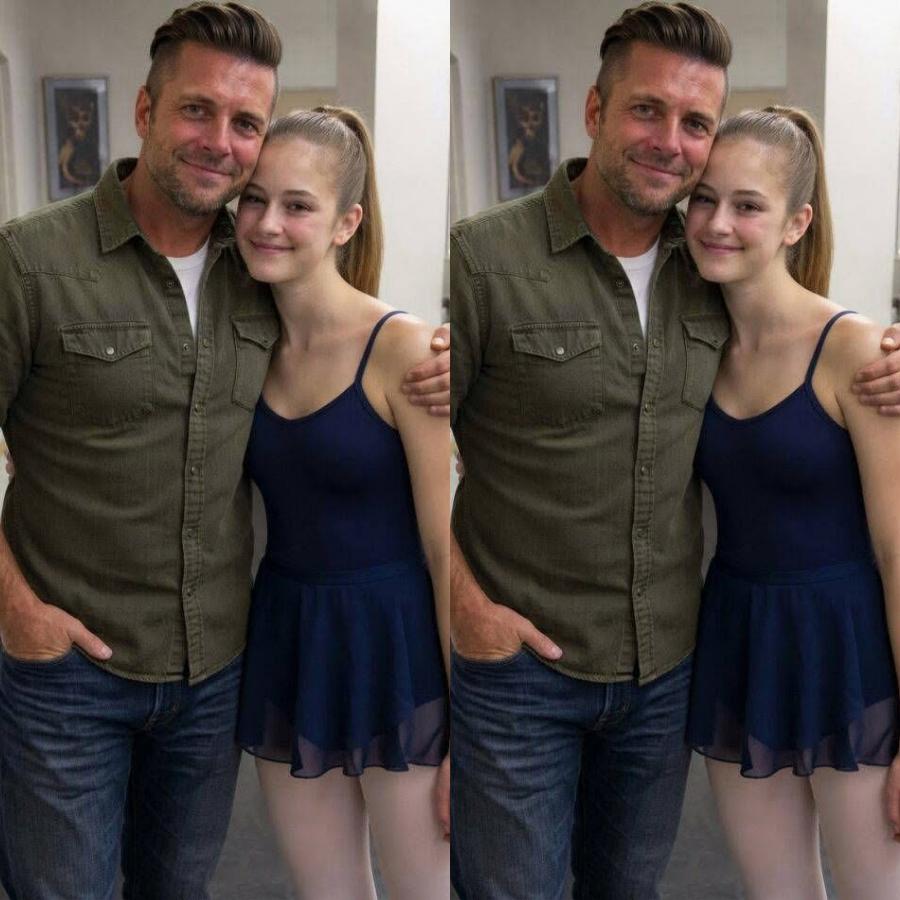
Chapter 2: The Shadow Behind the Steering Wheel
“It’s not safe, Maya,” David said, setting his fork down with a quiet, heavy clatter against his plate. “Waiting around in a dark parking lot or a transit center in the middle of downtown after eight at night isn’t happening. Not at sixteen.”
Maya kept her head down, tracing the edge of her placemat with a thumb. She didn’t argue. She had reached that quiet stage of disappointment where pushing back felt like a waste of energy.
Gavin set his wine glass down, wiping his mouth with a napkin before looking across the table at David.
“You know, Dave,” Gavin said smoothly, leaning back in his chair with that easy, familiar warmth he’d carried since they were fifteen years old, “I’ve got client meetings in the northern district every Tuesday and Thursday afternoon anyway. My schedule is wide open around five.”
David looked up, frowning slightly. “That’s out of your way, Gavin. You’d be driving twenty miles past your own office.”
“So what?” Gavin chuckled, waving a hand dismissively. “Chloe’s off at boarding school in Vermont now. The house is quiet. Clara’s working night shifts at the clinic. What else am I going to do with my evenings? Sit around and watch cable news?” He turned toward Maya, offering a warm, reassuring smile. “I can pick her up at four-thirty, drop her at the conservatory doors, grab dinner or finish up paperwork in my car, and bring her straight back to your front door by nine. Mondays, Wednesdays, and Fridays, right?”
“Tuesdays, Thursdays, and Fridays,” I corrected automatically, my chest lightening for the first first time in two weeks. I looked at David. “That… that actually lines up with your shift on Fridays, doesn’t it?”
David hesitated, his eyes moving between his best friend and his daughter. Gavin Vance was the man who had stood beside him as best man at our wedding. He was the man who had spent three weekends helping us rebuild our back deck after a fallen branch crushed the awning. He was the uncle who brought Maya a oversized stuffed bear when she had her tonsils out at age seven.
“Are you sure, Gavin?” David asked, the line between his eyebrows softening. “That’s a huge commitment. Three nights a week for a whole year.”
“She’s like a second daughter to me, Dave,” Gavin said, his voice quiet, sincere, and absolute. “If Chloe had a dream like this, I’d hope somebody would do the same for her. Consider it done.”
Maya looked up from her plate, her dark eyes suddenly wide, a tiny, hesitant spark of hope returning to her face. “Really, Uncle Gavin? You’d do that?”
“In a heartbeat, kiddo,” Gavin replied, reaching across the corner of the table to give her shoulder an affectionate squeeze. “You just worry about those fancy turns. I’ll handle the mileage.”
That night, for the first time in a month, I heard Maya humming in her room as she folded her tights and organized her dance bag. I stood in the doorway, watching her double-check the ribbons on her pointe shoes, feeling a deep, profound sense of gratitude for the network of love we had built around our daughter.
We thought we were blessed.
We thought we had a guardian angel in a silver Lincoln Continental.
The first month went by like a dream.
Every Tuesday, Thursday, and Friday at precisely four-twenty-five, Gavin’s pristine silver sedan would pull up to our curb. Maya would dash down the front steps, her bag slung over her shoulder, waving back at the kitchen window. Gavin would tap his horn twice—a cheerful, familiar signal—and pull away into the late afternoon traffic.
At nine o’clock on the dot, the car would return. Maya would hop out, thank him, and come inside, smelling faintly of leather car seats and mint gum.
She was exhausted, but radiant. She’d show us her bruised toes with a strange kind of pride, telling us about the strict Russian instructor, Madame Laurent, who ran the advanced ensemble with an iron fist. She’d demonstrate small, precise wrist movements in the hallway while waiting for the shower to heat up.
Then, around the middle of November, the subtle shifts began.
It wasn’t sudden. It was like watching a watercolor painting left out in the damp—the colors didn’t disappear overnight; they simply blurred around the edges until the picture lost its sharpness.
It started with her appetite. Maya had always eaten like a teenage athlete—hearty helpings of pasta, double breakfasts on weekends. But gradually, she began pushing her food around her plate.
“I’m just sore, Mom,” she’d say when I pressed her. “Madame Laurent says heavier legs make soft landings harder. It’s fine.”
Then came the silence.
The cheerful chatter after her rehearsals stopped. When she came through the front door at nine, she no longer lingered in the kitchen to talk about her class. She went straight to her bedroom, locked the door, and turned off the lights. When I knocked to bring her a glass of milk or a fresh towel, her voice would sound flat from behind the wood.
“I’m tired, Mom. I’m going to sleep.”
I brought it up with David one evening while we were folding laundry in the basement.
“She’s sixteen, Sarah,” David said, snapping a bath towel straight before folding it in half. “She’s in an elite program with kids who’ve been training eight hours a day since they were six. She’s probably stressed out trying to keep her grades up at school while keeping up with the conservatory.”
“It’s not just stress, David,” I insisted, holding a pair of her pink tights in my hands. “She doesn’t laugh anymore. She used to stretch in the kitchen every morning. She hasn’t done a single extension in this house for three weeks.”
“Have you asked Gavin how she seems on the drive?”
“I did,” I admitted. “Last Thursday, when he dropped her off, I went out to his car to give him a thermos of coffee. He said she’s just growing up. Said she mostly puts her headphones in and sleeps on the way home because the rehearsals are so intense.”
That explanation made sense. It was logical. It fit the narrative of a dedicated, overworked young dancer pushing her body to the limit.
So I let it go. I told myself I was being an overly protective mother. I bought her muscle soaks, left her favorite snacks on her desk, and stayed out of her way.
Until the first Tuesday in December.
I had left work early due to a sudden power outage at the hospital administration building. It was three-thirty in the afternoon—an hour before Gavin was scheduled to pick Maya up from school.
I decided to stop by her high school to surprise her and drive her to the conservatory myself, thinking it would be a nice break for Gavin.
When I pulled up to the school’s circular driveway, the bell had just rung. Students were spilling out of the glass doors in heavy winter coats, laughing, shouting, and crowding toward the bus stops.
I parked near the flagpole and waited.
Ten minutes passed. Then fifteen.
I stepped out of the car and walked toward the main entrance, pulling my coat tight against the biting winter wind. Through the glass doors, I saw Maya standing near the locker bank at the end of the long, empty hallway.
She wasn’t alone.
Gavin was standing there with her.
I froze on the concrete steps. Gavin wasn’t supposed to be here for another forty minutes. His car was parked in the side lot, tucked away behind the school’s maintenance vans where it wasn’t easily visible from the main street.
He was standing very close to her—far closer than a family friend had any reason to stand. He was wearing his long black wool overcoat, his hands shoved into his pockets. He was leaning down, speaking to her in a quiet, intense cadence.
Maya was leaning back against her locker, her hands clutching the straps of her backpack so tightly her knuckles were white. Her head was bowed. She wasn’t looking at him. Her posture wasn’t that of a teenager chatting with a beloved uncle; it was the posture of a person trying to make themselves as small as possible, hoping the shadow towering over them might pass by.
My heart gave a strange, sickening flutter.
Before I could make up my mind to push open the heavy glass doors, Gavin reached out.
He didn’t pat her shoulder. He didn’t give her a quick, casual hug.
His fingers reached out and slowly, deliberately brushed a loose strand of hair behind her ear. His hand lingered against the side of her neck for two long, agonizing seconds before sliding down to rest lightly on her upper arm.
Maya flinched. It was a tiny, violent movement—a quick hitch of her shoulders that lasted less than a second—but she didn’t step away. She simply remained frozen, staring at the floor, until he dropped his hand and gestured toward the side exit.
I couldn’t move. My feet felt as though they had been poured into the cold concrete beneath me.
By the time I pushed through the double doors, the hallway was deserted. The sharp, metallic click of their footsteps had vanished toward the side parking lot.
I stood alone in the empty, tiled corridor, the smell of floor wax and wet wool heavy in the air, a cold, terrifying knot tightening in the center of my chest.
Chapter 3: The Empty Stage
I didn’t confront Gavin that afternoon.
I know now that I should have. I should have marched down that hallway, pulled my daughter away from him, and demanded to know what he was doing touching her like that.
But shock is a strange, paralyzing emotion. It paralyzes logic. It makes you doubt your own eyes.
He’s known her since she was born, a voice inside my head whispered, trying desperately to repair the shattered glass of my reality. He’s like an uncle to her. Maybe she was upset about school. Maybe he was just comforting her.
I drove home in a fog, my hands trembling against the steering wheel. I sat in my parked car in our driveway for an hour, watching the dusk settle over our neighborhood, arguing with myself until my head throbbed.
When Gavin dropped Maya off at nine o’clock that evening, I stood behind the sheer curtains of the living room window, watching them through the dark.
The interior light of his Lincoln turned on as Maya opened the passenger door. Gavin said something to her. Maya didn’t look back; she simply nodded once, got out, and closed the door with a quiet, dull thud.
She walked up the front path, her head down, her steps heavy and uneven.
When she came through the front door, I was standing in the hallway.
“Hey, sweetie,” I said, forcing my voice to sound casual, warm, normal. “How was rehearsal?”
Maya stopped. She looked at me, and for a fraction of a second, an expression of pure, naked panic flashed across her face before she dragged a blank mask over her features.
“Fine,” she said quietly, slipping off her boots. “Madame Laurent made us run the second act three times.”
“Did… did Gavin pick you up on time?”
She stiffened slightly while unbuttoning her coat. “Yeah. Same as usual.”
“I tried to call your cell around four,” I lied, watching her face intently. “Thought I might take you myself today, but I couldn’t reach you.”
Maya didn’t look up from her coat hook. “My phone died after third period. I forgot my charger.”
She was lying. I had seen her holding her phone in the hallway outside her locker at four o’clock.
“Maya,” I said softly, taking a step toward her. “Is everything okay? You seem… distant lately. Is something going on at the studio? Or with Gavin?”
At the mention of his name, Maya’s entire body went rigid. Her shoulders hitched toward her ears, her hands freezing on the zipper of her bag.
“Nothing is going on, Mom!” she snapped, her voice suddenly high, thin, and sharp—a tone she had never used with me in her entire life. “Why are you asking me all these questions?! I’m just tired! Can’t I just be tired without everybody analyzing me?!”
She spun on her heel, marched down the hallway, and slammed her bedroom door shut. The lock clicked into place a second later.
I stood in the dark hall, listening to the muffled sound of her throwing her bag onto the floor.
She wasn’t just stressed. She was terrified.
And the secret she was carrying was heavy enough to break her.
The next two days were an agonizing exercise in restraint.
I watched David interact with Gavin on Thursday evening when Gavin came over to drop off a set of snow tires for our garage. They laughed, talked about football, and drank a beer on the back porch while the winter wind howled through the trees.
I stood at the kitchen sink, watching them through the window, feeling an overwhelming urge to vomit.
Tell him, my mind screamed. Tell David what you saw at the school.
But what had I actually seen? A hand on a neck. A brushed strand of hair. A flinch.
If I accused David’s best friend of thirty years—a man who had no criminal record, a man who was treated like family—without absolute proof, David’s first instinct would be to rationalise it. Gavin would deny it smoothly, call it a fatherly gesture, and make me look like an unhinged, paranoid mother.
And Maya… if Maya was being threatened, forcing her into a confrontation before she was ready might make her retreat even further into her shell.
I needed to see what was happening at the studio.
On Friday afternoon, I called out of work at two o’clock. I didn’t tell David. I didn’t tell Maya.
I drove straight across town to the Metropolitan Conservatory of Dance—a grand, historic limestone building tucked into the arts district downtown.
I parked two blocks away and walked through the light snowfall, my heart hammering against my ribs like a trapped bird.
The conservatory’s interior was vast, quiet, and smelled of rosin, old wood, and sweat. High ceilings with ornate plaster moldings arched over wide hallway corridors lined with framed photographs of famous ballerinas.
I navigated the building using the room numbers listed on the rehearsal schedule posted near the main lobby.
Studio 3B was at the very end of the second-floor corridor.
The heavy wooden doors had tall, narrow glass observation panels designed for parents and directors to observe classes without interrupting the dancers.
I approached the glass slowly, keeping my body pressed against the wall, taking deep, quiet breaths to steady my racing pulse.
I leaned forward and looked through the glass.
The room was vast, lined with floor-to-ceiling mirrors and polished wooden barres. Twelve young women in black leotards and pink tights were moving in synchronized precision across the floor under the watchful eye of an elderly woman with silver hair pulled into a tight bun—Madame Laurent.
I scanned the line of dancers.
Left to right. Front row. Back row.
Maya wasn’t there.
I looked again, my eyes darting frantically from face to face. I knew every girl in her ensemble by sight from the program booklet—the tall blonde girl from Boston, the quiet Asian girl who won the regional cup, the twin sisters from Newton.
Maya Vance was not in the room.
My stomach dropped into a cold, dark abyss.
I stepped away from the door, my mind reeling. Was she in the restroom? Was she getting her ankles taped in the trainer’s room?
I turned and walked down the long, quiet hallway toward the administrative office near the front entrance.
Standing behind a low wooden counter was a woman in her late fifties, wearing a gray cashmere sweater and reading glasses hanging from a silver chain around her neck.
I walked up to the counter, my voice trembling despite my best efforts to control it.
“Excuse me,” I said. “I’m looking for my daughter. Maya Vance. She’s in the advanced teen ensemble in Studio 3B.”
The woman looked up from her computer screen. She adjusted her glasses, peering at me with a polite, professional smile.
“Maya Vance?” she repeated, her fingers hovering over her keyboard. “Let me check the master sign-in log for today.”
She typed for a few seconds, her eyes scanning the screen.
Then her hand stopped moving.
Her polite smile slowly faded, replaced by a strange, sharp tension that made her entire face harden.
She looked up from the monitor, her eyes locking onto mine with an intensity that made the cold hair on the back of my neck stand on end.
“Mrs. Vance, your daughter hasn’t told you what’s been happening, has she?”
A wave of cold nausea washed over my stomach, heavy and suffocating.
“What do you mean?” I whispered, leaning against the wooden counter for support. “Where is my daughter?”
The receptionist glanced toward the empty hallway, ensuring no students or instructors were within earshot. She reached under the counter, hit a button that clicked the office door unlocked, and gestured for me to step inside.
She closed the heavy oak door behind us, turning the lock with a sharp, final click.
Then she looked at me and said the words that shattered my world forever.
“Mrs. Vance… Maya hasn’t attended a single rehearsal at this conservatory in three weeks.”
Chapter 4: The Ledger of Lies
The room seemed to tilt on its axis. The air left my lungs in a sudden, ragged gasp, and my knees buckled so violently that the receptionist had to grab my forearm to keep me from hitting the parquet floor.
“Sit down, Mrs. Vance,” she said softly, guiding me into a leather armchair beside a filing cabinet. “Please. Take a breath.”
I couldn’t breathe. My throat felt like it was full of sand.
“Three… three weeks?” I stammered, my voice sounding hollow, like a voice echoing from the bottom of a deep dry well. “That’s impossible. She leaves our house every Tuesday, Thursday, and Friday at four-thirty. She comes home at nine. She has her bag… her shoes…”
The woman walked around her desk and pulled up a heavy, physical ledger book—a thick binder with handwritten attendance records signed by the instructors at the end of every block.
She laid it flat across my lap, turning the pages back to mid-November.
“Look here,” she pointed a trembling finger at the columns.
There was Maya’s name, printed in neat black ink: MAYA VANCE — ADVANCED TEEN ENSEMBLE.
Beside her name, for the past nine sessions, was a small, red, hand-stamped letter: A.
Absent.Absent.Absent.
“On the sixteenth of November,” the receptionist explained, her voice dropping into a low, grave tone, “we received an official email from a primary contact address registered to your family account—an address under the name Gavin Vance.”
I choked on my own breath. Gavin Vance. He had used his own last name, relying on the fact that the conservatory staff assumed he was Maya’s father or legal guardian due to their matching surnames on the emergency contact paperwork.
“What did the email say?” I demanded, my hands gripping the edges of the binder so hard the plastic creaked.
The woman clicked her mouse, turning her monitor so I could see the text printed on the screen.
FROM: g.vance@vanceconsulting.com TO: registrar@metropolitanballet.org SUBJECT: Maya Vance — Medical Leave of Absence
Dear Conservatory Registrar, Please be advised that Maya will be taking a temporary medical leave from all ensemble rehearsals effective immediately due to a severe stress fracture in her left tibia. Her orthopedic specialist has restricted all weight-bearing physical activity for six to eight weeks. We request that her scholarship status remain active while she undergoes physical therapy. We will notify you when her medical clearance is granted. Sincerely, Gavin Vance (Parent/Guardian)
I stared at the glowing letters on the screen, my mind racing at a terrifying, chaotic speed.
A stress fracture. Medical leave.
He had fabricated an injury. He had cut her off from the one place she was supposed to be three nights a week—the one place David and I believed she was safe, supervised, and surrounded by teachers and peers.
For three weeks—nine separate evenings—Gavin had been picking my sixteen-year-old daughter up from school at four-thirty… and taking her somewhere else.
And at nine o’clock every night, he had brought her back to our front door, smelling of mint gum and leather seats, while she stood in our hallway with her heart breaking in total silence.
“Why didn’t you call us?!” I screamed, the terror inside me suddenly bursting into a wave of raw, violent fury. “Why didn’t anyone call her home number to verify this?!”
“Mrs. Vance,” the woman said, her eyes brimming with genuine distress. “The emergency contact number listed on her scholarship file was changed on the online portal two months ago. It was updated to a direct cell number. Whenever our office called to check on her progress… Mr. Vance answered the phone. He confirmed she was at home resting.”
He had systematically isolated her. He had rewritten her administrative records. He had built an invisible, inescapable cage around my daughter, and David and I had handed him the keys every Tuesday, Thursday, and Friday afternoon.
I stood up from the leather chair, my vision swimming with red.
“Where is she?” I rasped, grabbing my coat from the back of the chair. “Where does he take her?”
“I don’t know, Mrs. Vance,” the receptionist whispered, her voice shaking. “But today is Friday. It’s five-fifteen right now.”
Five-fifteen.
Gavin had picked Maya up from school forty-five minutes ago.
They were somewhere in the city right now. Together.
I turned on my heel, shoved open the office door, and ran out of the conservatory into the freezing winter dusk.
Chapter 5: The Glass Room
The snow was falling heavily now, fat, wet flakes plastering against the windshield of my car as I sped through the gridlocked downtown traffic.
My hands were shaking so violently against the steering wheel that I could barely keep the vehicle in its lane. My phone sat on the passenger seat, vibrating repeatedly with incoming calls from David.
I didn’t answer. I couldn’t. If I heard David’s voice—if I heard him speak Gavin’s name with that easy, unsuspecting brotherhood—I would lose whatever fragile grip on sanity I had left.
Where would he take her?
Think, Sarah. Think.
Gavin Vance was a creature of habit and supreme, arrogant vanity. He was a wealthy independent commercial consultant who owned a three-story brownstone in the historical district, a weekend lake house two hours north, and a private executive office suite on the top floor of the Apex Tower on 4th Street.
His wife, Clara, worked the four-to-midnight shift as a charge nurse at the city hospital every Tuesday, Thursday, and Friday.
His brownstone would be empty.
His office building would be deserted after five o’clock on a Friday evening.
I pulled my phone from the seat and opened a family location-sharing app that David had installed on Maya’s phone two years ago. Maya had turned off her primary GPS beacon three weeks ago—likely forced to do so by Gavin—but the app still recorded the last known cellular tower handoff.
I tapped the screen.
The tiny blue dot pulsed on the map, fixed to a single geographic block downtown: 1142 WEST OAK STREET.
Gavin’s private office building.
A cold, lethal calm settled over my blood, burning away the panic, replacing it with the ancient, terrifying instinct of a mother hunting a predator that had touched her child.
I ran two red lights, turning hard onto Oak Street, the tires screeching against the slush.
The Apex Tower was a sleek, dark-glass monolith rising twenty stories above the snow-swept pavement. The lobby was dim, illuminated only by security desk lamps and the blue glow of an automated turnstile.
I parked my car illegally in the yellow loading zone, threw the driver’s door open, and marched through the front glass doors.
The security guard behind the desk—a young man in a dark uniform—looked up from his phone as I approached.
“Ma’am? Building’s closed for the weekend. You need an executive key card after—”
I didn’t let him finish. I grabbed the edge of his desk, leaning over until my face was inches from his.
“Gavin Vance,” I said, my voice dropping into a low, terrifying register that made the young guard instinctively draw back. “Which floor?”
“Uh… seventeenth,” the guard stammered, staring at my face. “Suite 1704. But you can’t go up there without—”
I pushed past the turnstile, forcing the arm forward until the plastic mechanism snapped with a sharp crack, and sprinted toward the bank of elevators.
I hit the button for the seventeenth floor.
The elevator doors slid shut, and the cabin shot upward into the dark tower.
10… 12… 15… 17.
The doors glided open with a soft, cheerful chime that sounded utterly grotesque in the suffocating silence of the floor.
The seventeenth floor was a quiet expanse of plush dark carpets, frosted glass doors, and dim recessed lighting. The offices belonged to private wealth managers, corporate attorneys, and consultants.
Suite 1704 sat at the far end of the hallway.
The frosted double doors bore gold lettering: VANCE GLOBAL CONSULTING LLC.
The lights inside were turned off, save for a faint, warm glow illuminating the frosted glass panel from the rear executive office.
I walked down the corridor, my boots making zero sound on the thick carpet.
I reached the double doors. I reached out and gently turned the brass handle.
It was locked.
I pressed my ear against the frosted glass.
At first, I heard nothing. Only the low hum of the building’s HVAC system.
Then, through the heavy glass, came a sound that made every drop of blood in my body turn to solid ice.
It was the quiet, rhythmic sound of classical piano music—a Chopin nocturne—playing softly from a speaker inside.
And beneath the music came a voice.
Gavin’s voice. Smooth, calm, and terrifyingly persuasive.
“You’re doing so well, Maya,” Gavin was saying softly. “Look at yourself in the mirror. You don’t need that silly conservatory. They don’t appreciate what you have. I’m the only one who sees how special you really are.”
Then came a second voice.
A tiny, choked sob.
“Please, Uncle Gavin…” Maya wept, her voice so thin, broken, and small it sounded like a little girl crying from the bottom of a dark well. “I want to go home… Please… My mom is going to be worried…”
“Your mom doesn’t know what’s best for you, Maya,” Gavin replied, his tone shifting into a sharp, cold edge that sent a shiver straight down my spine. “Your mom and dad are simple people. They can’t give you the life you deserve. I paid for your private tuition, didn’t I? I bought you those shoes. If you tell them… if you break our promise… do you think your father’s heart could take that kind of betrayal? From his best friend? Do you want to destroy your family, Maya?”
Silence. A heavy, suffocating silence filled with my daughter’s ragged, terrified weeping.
I didn’t hesitate.
I took three steps back across the carpeted hallway.
I raised my right foot, channeled every ounce of fury, love, and protective rage living inside my soul, and kicked the center of the double doors right beside the lock.
Chapter 6: The Reckoning
BOOM.
The heavy brass latch tore through the wooden doorframe with a deafening crack that echoed down the seventeen floors of the dark tower.
The double doors burst open, slamming against the interior walls.
I stepped through the shattered frame into the reception area, my eyes sweeping the room like searchlights.
The executive suite was vast, lined with mahogany bookshelves, leather sofas, and a wall of floor-to-ceiling windows overlooking the snow-swept city skyline below.
At the far end of the room stood a raised hardwood platform—a private, custom-built dance floor surrounded by floor-to-ceiling mirrors that Gavin had installed inside his private office.
Standing on the hardwood floor was my sixteen-year-old daughter.
She was wearing her black leotard and pink tights, her hair pulled into a tight bun. Her face was pale, streaked with dried tears, her dark eyes wide with an agony so profound it tore my heart straight out of my chest.
Standing two feet behind her, wearing a grey cashmere sweater with his sleeves rolled up, was Gavin Vance.
His hands were resting on her shoulders.
When the doors shattered, Gavin spun around sharply, his face contorting into a mask of sudden, panicked fury.
“What the hell—?!” Gavin barked, his voice dropping as his eyes locked onto mine.
He froze. The confident, smooth-talking executive vanished, replaced for a fraction of a second by the raw, terrified look of a monster caught in the bright beam of a flashlight.
“Sarah…?” Gavin stammered, stepping back from Maya, his hands instantly raising in a placating gesture. “Sarah… what are you doing here?! How did you get up—?”
I didn’t answer him.
I didn’t say a word.
I walked past the leather sofas, past the mahogany desk, straight toward the raised hardwood platform.
Maya let out a ragged, hysterical sob, collapsing off the platform onto the carpet, crawling toward me like a child fleeing a nightmare.
“Mom! Mom!” she shrieked, burying her face into my coat, her whole body shaking in violent, uncontrollable spasms. “I’m sorry! I’m so sorry! I tried to tell him no! I tried!”
I reached down, pulled my daughter up into my arms, and wrapped my coat around her shivering body, holding her against my heart with a strength I didn’t know I possessed.
“Shh… Shh, baby,” I whispered into her hair, my tears finally spilling over my cheeks. “I’ve got you. Mommy’s here. You’re safe.”
Over Maya’s shoulder, I looked up at Gavin.
Gavin had managed to pull a fraction of his polished, professional composure back over his pale face. He adjusted his cashmere sleeves, smoothed down his dark hair, and took a slow step toward us, his hands still held out in that easy, familiar gesture he had used for thirty years.
“Sarah… listen to me,” Gavin said, his voice dropping into that quiet, reasonable tone he used when explaining contracts to clients. “You’re misunderstanding what you just saw. Maya was having an emotional breakdown about her ensemble placement. She’s been under so much pressure at the conservatory… I was just giving her a private space to practice… I was coaching her—”
“Shut your mouth, Gavin,” I said.
My voice didn’t rise. It didn’t tremble. It fell over the quiet room like a sheet of pure, heavy ice.
Gavin stopped in his tracks. A faint, nervous twitch appeared near his left eye.
“Sarah, think about what you’re doing,” Gavin whispered, his tone taking on a subtle, sinister edge. “David is my best friend. If you blow this out of proportion… if you make wild accusations without understanding the context… you’ll ruin David’s life. You’ll ruin this family. Is that what you want for Maya?”
He was still trying to manipulate me. He was still using David’s trust as a shield to protect his own disgusting skin.
I reached into my coat pocket, pulled out my smartphone, and held the screen up toward his face.
The screen displayed an active 911 emergency call. The timer read: 03:42.
The operator’s voice came loudly through the speaker:
“Ma’am? We have your GPS location at 1142 West Oak Street, seventeenth floor. Police units and emergency medical services are entering the building right now. Stay where you are.”
Gavin’s face went completely, ghastly white. The last remnant of his arrogant, bulletproof posture shattered into thin air.
“You… you called the police?” he stammered, stepping backward until his back hit the glass window behind his desk.
“They’re in the elevator, Gavin,” I said softly. “And so is David.”
The sound of heavy, rapid footsteps and screaming sirens echoed up through the floorboards from the street below.
Gavin looked at the shattered door, then looked at the active phone in my hand, his breath coming in rapid, panicked gasps. He sank slowly into his leather executive chair, his head dropping into his manicured hands, his entire empire of lies collapsing around him in absolute silence.
I turned my back on him.
I wrapped my arm securely around my daughter’s waist, lifted her off the floor, and together we walked through the shattered doorway into the corridor.
As the elevator doors slid open on the seventeenth floor, revealing four armed police officers flanked by a terrified, breathless David running down the hallway toward us, Maya buried her face into my neck and finally let go of the secret she had held for weeks.
The nightmare was over.
My daughter was in my arms, the monster was behind bars, and as I pulled David into our embrace under the bright lights of the corridor, I knew that no matter how long the road to healing would be, our family was finally stepping out of the dark and into the light.