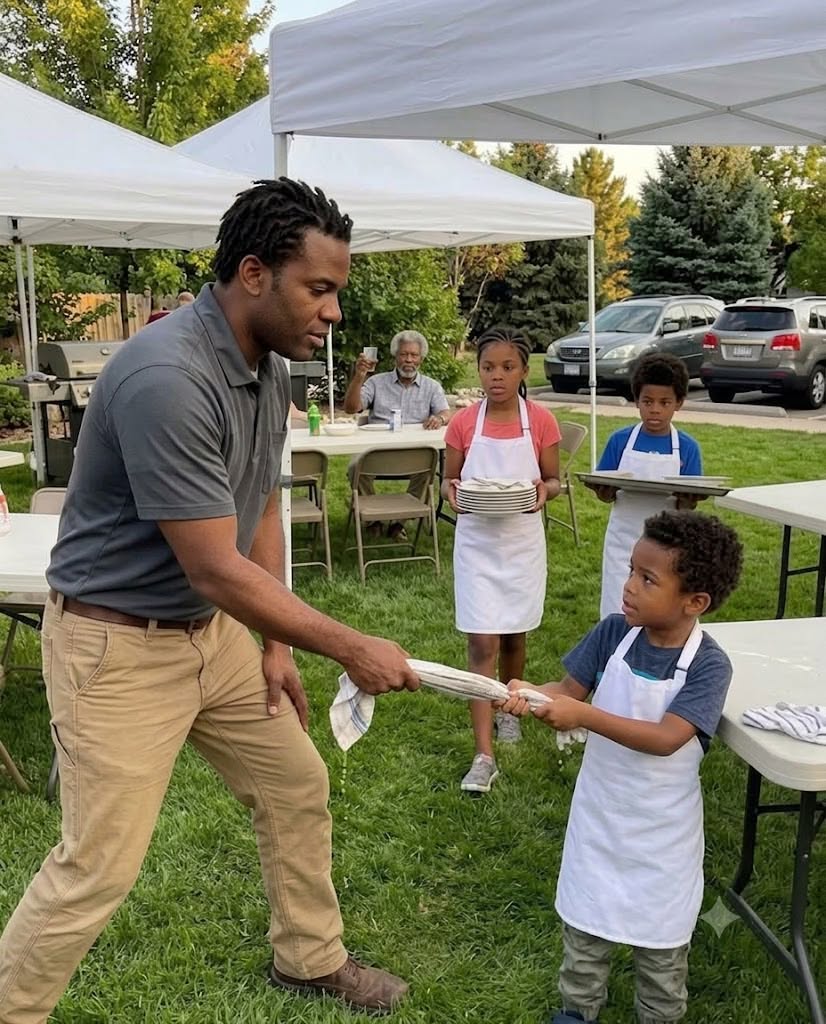
BEYOND HORRIFIC: Spencer Tepe’s brother-in-law dragged into the dentist couple’s murder case; False rumors claim Rob Misleh left the door ajar for the killer ex-husband to break in, as a devastated Misleh finally speaks out to set the record straight
The brutal murders of Dr. Spencer Tepe and his wife, Monique, in their Weinland Park home on December 30, 2025, were already a nightmare of unthinkable proportions. But for the grieving family left behind, the horror did not end with the police tape and the sirens. In the weeks following the tragedy, a new kind of violence began—one perpetrated not with a firearm, but with keyboards and clickbait.
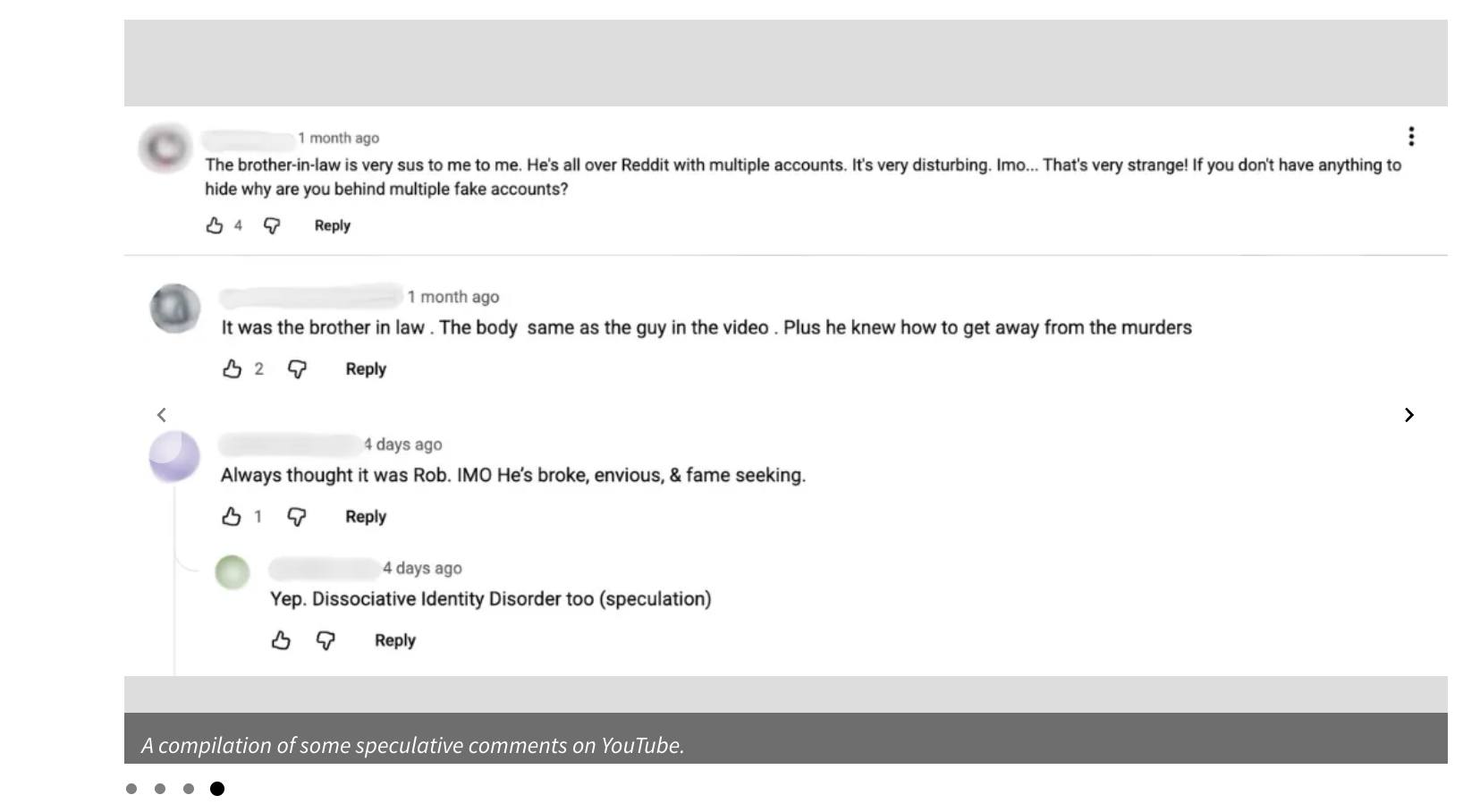
As the community mourned and investigators worked to piece together the final moments of the couple, a “true crime” industrial complex on social media began to churn. Driven by a thirst for engagement and a total disregard for human suffering, several online entities—including the fraudulent website News75today and various Facebook content creators—turned their sights on an innocent man: Rob Misleh, the brother-in-law of Spencer Tepe.
The Anatomy of a Digital Character Assassination
The smear campaign against Misleh began with a fabricated narrative that looked, at a glance, like legitimate journalism. A headline from the fake outlet News75today began circulating widely, claiming that a “dispute between siblings” held the key to the murders. The article alleged that just days before the killings, Misleh had “angrily stormed out” of the Tepe home following a “heated argument about finances,” even going so far as to claim he left the door “ajar”—a detail clearly designed to imply he had facilitated the entry of a killer.
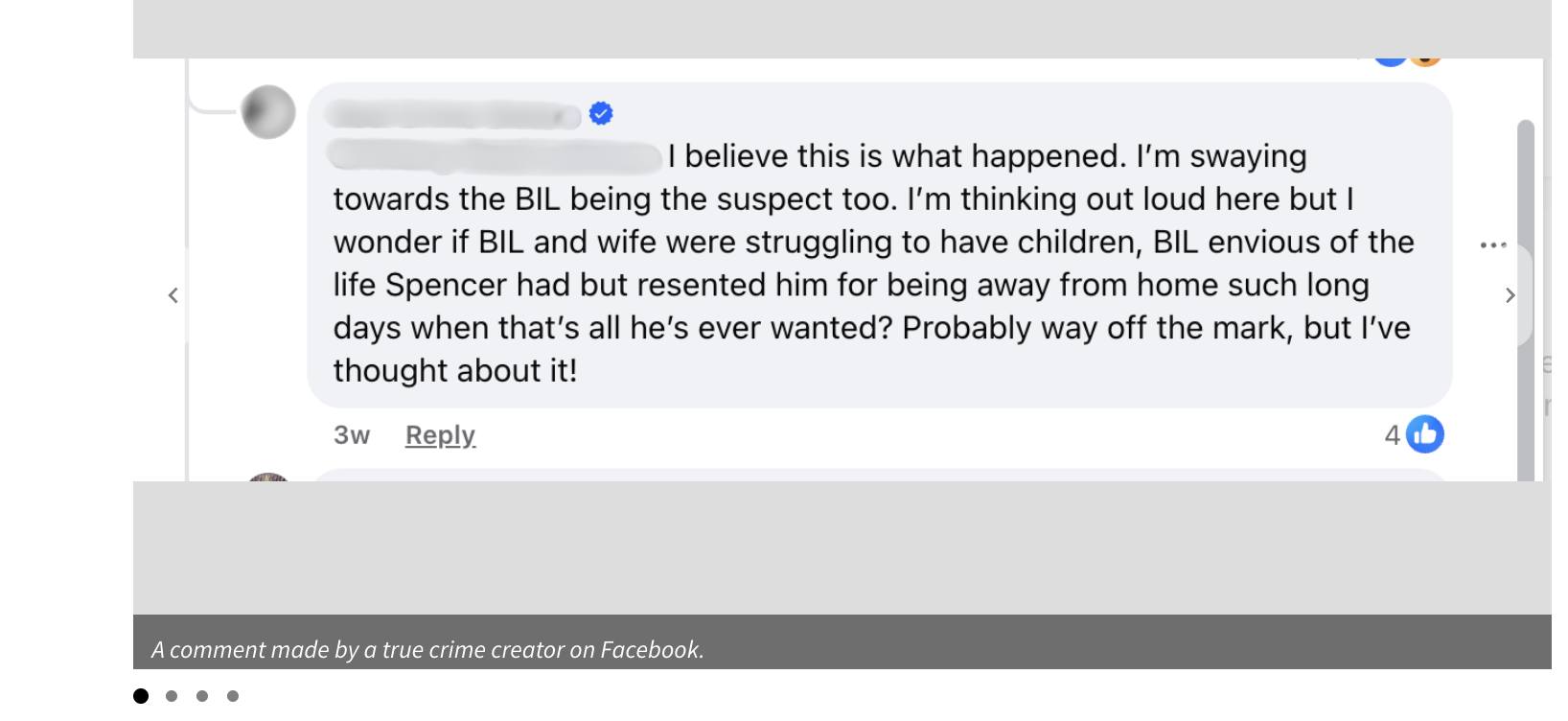
This was not just a rumor; it was a calculated piece of disinformation. It served as the “evidence” that armchair detectives on Facebook needed to build their own sprawling theories. One prominent true crime creator, whose name has been redacted in legal discussions but whose reach was significant, posted a screenshot of the fake article with their own commentary.
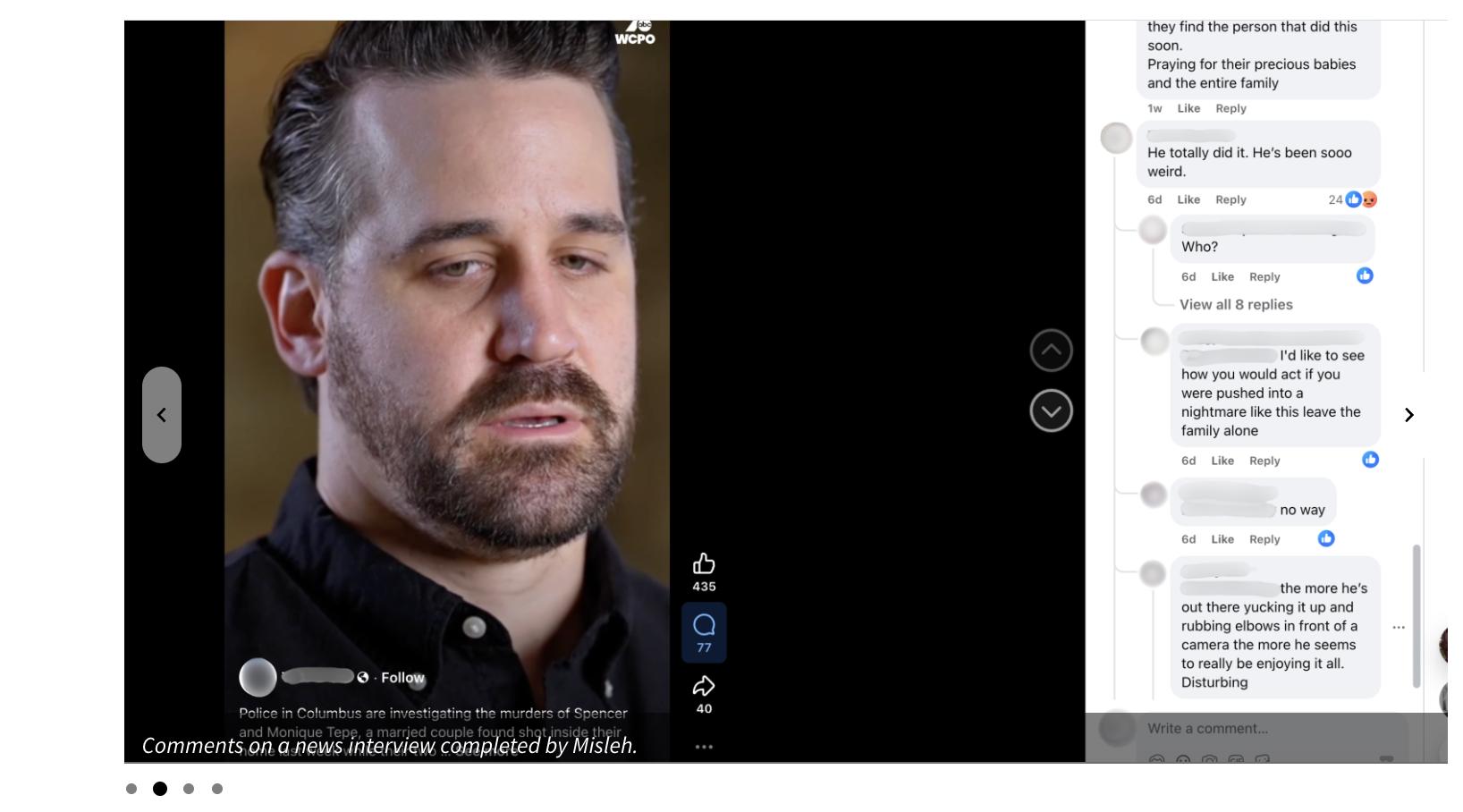
“I believe this is what happened. I’m swaying towards the BIL [brother-in-law] being the suspect too. I’m thinking out loud here but I wonder if BIL and wife were struggling to have children, BIL envious of the life Spencer had… Probably way off the mark, but I’ve thought about it!”
While the creator added the caveat of being “way off the mark,” the damage was instantaneous. In the world of social media algorithms, “thinking out loud” is a match dropped into a forest of dry leaves.
The Human Toll: Rob Misleh Speaks Out
In a recent, deeply personal interview with NBC4’s Ava Boldizar, Rob Misleh detailed the secondary trauma of being branded a murderer while trying to bury his family. As he was navigating the logistical nightmare of a double homicide—planning funerals, coordinating care for the Tepes’ two orphaned children, and deciding who would keep the family dog—he was simultaneously being hunted by an online mob.
“Your speculation turns into other people’s facts,” Misleh told NBC4. “It’s like you’re lighting a torch; now the mob is joining you.”
The impact on Misleh’s health was devastating. While the “detectives” on Facebook were enjoying the thrill of a “theory,” Misleh was unable to eat or sleep. He watched as his friends and family members tried to defend him online, only to be “attacked” and harassed by strangers who had never met the Tepes and possessed only the most limited, distorted information.
“These people… are now just saying these things, whether they believe it or they’re doing it for clicks and likes,” Misleh said. His words highlight a growing, dangerous trend in the true crime genre: the commodification of grief. For a content creator, a “theory” about a brother-in-law is a way to boost an engagement score. For the brother-in-law, it is a life-altering defamation that threatens his safety and sanity.
The “I Called It” Culture
One of the most stinging observations Misleh made during his interview was the lack of accountability in the true crime community. He noted that when online theorists happen to get a detail right, they celebrate it as an “I called this” moment, holding it up as proof of their investigative prowess. However, when they are proven wrong—as they were in this case when police arrested Michael David McKee, Monique’s ex-husband—they simply vanish.
“People just kind of shift the narrative to however they want it to play out for them, and then when it doesn’t, they move on to the next one,” Misleh observed. He pointed out that the same crowd that harassed him has already moved on to other high-profile cases, like the Nancy Guthrie case or events in Tipp City, likely subjecting those families to the same baseless scrutiny.
There is rarely a public apology. There is no “I was wrong” post that reaches the same viral height as the original accusation. The “torch” is simply carried to the next house.
The Legal and Ethical Reckoning
The case of Rob Misleh and the News75today fabrication raises serious questions about the legal future of true crime content. Misleh’s situation appears to be a textbook case for a defamation lawsuit. By presenting fabricated events—like the “storming out” and the “door left ajar”—as factual news, sites like News75today have crossed a line from speculation into malicious falsehood.
Furthermore, the Facebook creators who amplified these lies may find themselves in hot water. While “opinion” is often protected under the First Amendment, the line blurs when that opinion is rooted in fabricated “facts” and leads to the targeted harassment of a private individual.

The digital age has democratized information, but it has also weaponized ignorance. As Misleh poignantly put it: “The dumbest people tend to be the loudest.”
A Call for Digital Empathy
The tragedy at 1411 N. 4th St. was a crime of obsession and violence committed by an individual who is now facing the justice system. It did not need the “assistance” of social media sleuths to solve, and it certainly did not need the added layer of cruelty inflicted upon Rob Misleh.
As the Tepe family continues to heal and the community waits for the trial of Michael McKee, Misleh’s story serves as a stark warning to the true crime audience. Behind every “juicy” theory and “shocking” headline is a real person—a brother, a father, a neighbor—who is already enduring the worst days of their life.
“I understand the obsession with true crime or the interest in it,” Misleh admitted. “We’ve all watched documentaries… It’s just that when you just say everything that comes to your mind with total disregard as to who you’re saying it about, it can just be dangerous.”
In the end, the “truth” in true crime should be about justice for the victims, not “likes” for the onlookers. If the community cannot learn to distinguish between a legitimate news report and a clickbait torch, then the digital mob will continue to claim victims long after the actual killer is behind bars.