Death Row Guards Reveal SHOCKING Changes in Tanner Horner’s Personality While Spending 23 Hours a Day in a 5sqm Cell with Zero Human Contact, TV, or Entertainment: “We Have Never Seen Him This Crazed
DEATH ROW FILES: TANNER HORNER’S LIFE IN SOLITARY CONFINEMENT AND THE SHOCKING “MANIACAL” BEHAVIOR
LIVINGSTON, TEXAS – Just days after a Tarrant County jury handed down a death sentence on May 5, 2026, Tanner Horner—the killer of young Athena Strand—was officially transferred to the Allan B. Polunsky Unit. This is home to Texas’s most notorious death row inmates, a “land of the dead” where time seems to freeze in absolute isolation.
However, initial reports from inside the prison and Horner’s psychological outbursts during the final stages of the trial have painted a terrifying picture of a mind that is crumbling yet remains defiantly predatory.
A “Vanishing” Life in a Five-Square-Meter Cell
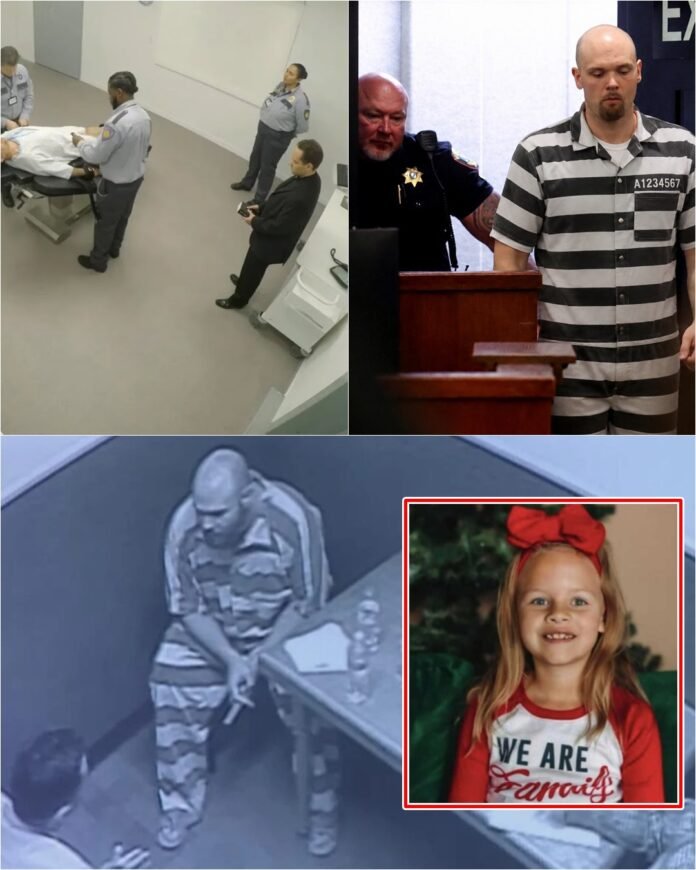
At the Polunsky Unit, Tanner Horner’s life is now confined to a solitary cell measuring approximately five square meters. Under the strict regulations for death row inmates, he is isolated for 23 hours a day. Every activity—eating, sleeping, and personal hygiene—takes place within this cramped space under 24/7 surveillance by cameras and correctional officers.
Horner is permitted no direct contact with any other inmates. When he leaves his cell for a shower or to exercise alone in a steel cage, he is belly-chained, shackled at the ankles, and escorted by at least two officers. It is a brutal contrast to his days of freedom behind the wheel of a FedEx truck, which he exploited to commit an unforgivable atrocity.
“Maniacal” Expressions and Pathological Coldness
What shocked the public and courtroom attendees the most was the shift in Horner’s psychological state. During the final days of the sentencing phase, instead of his usual stoic demeanor, Horner occasionally displayed expressions that psychological experts described as “maniacal” and “inhuman.”
“He stared at the victim’s family with a hollow, smirking grin. It wasn’t the smile of a sane person; it was the morbid satisfaction of a man who knew he had successfully destroyed a life,” shared one witness present at the trial.
Forensic psychiatrists revealed during the trial a “secondary persona” that Horner referred to as “Zero.” Horner claimed that when “Zero” took over, he felt as though he were sitting in the backseat of a car being driven by someone else. When discussing this entity, Horner’s eyes would grow wild and his pupils dilated, leaving many in the courtroom with a chilling sense of dread.
The Haunting of Deviant Behavior
Recently released investigative files also shed light on Horner’s disturbing interests prior to the crime, including role-playing “father figures” in violent scenarios and an obsession with the act of killing. A cousin testified that Horner once nonchalantly asked: “What would it feel like to actually kill someone?”
The combination of his diagnosed conditions and antisocial tendencies created a highly volatile individual. Even in the highly controlled environment of death row, guards report that he occasionally mutters to himself and experiences sudden bouts of agitation, forcing the facility to maintain the highest level of alert.
The Path to Justice and an Irreparable Scar
Although the death penalty has been stayed, Texas law dictates an automatic appeals process that will last for years. This means Horner will remain in that solitary cell for a significant period before facing the lethal injection needle.
For Athena Strand’s family and the community, the image of Tanner Horner’s crazed expression in court will remain a permanent, haunting memory. The death penalty is the inevitable conclusion for a man who stripped himself of his humanity, but the shadow of his eyes and his smile in those final moments of the trial will persist as a painful reminder of the presence of pure evil in society.
The four-year journey for justice for Athena has reached its final chapter, but the lessons regarding child safety and the early signs of criminal sociopathy remain as vital as ever.
Reporter’s Note: This article was compiled based on the proceedings of the trial concluded in May 2026 and reports from the Texas Department of Criminal Justice. The legal punishment serves as a testament that, ultimately, evil must pay its price.