VOICE OF HELPLESSNESS AND THE TRAGEDY IN AN ALABAMA HOSPITAL PARKING LOT: THE FATAL GUNSHOT THAT TOOK A YOUNG MOTHER’S LIFE AND THE EMERGING LEGAL COMPLEXITIES
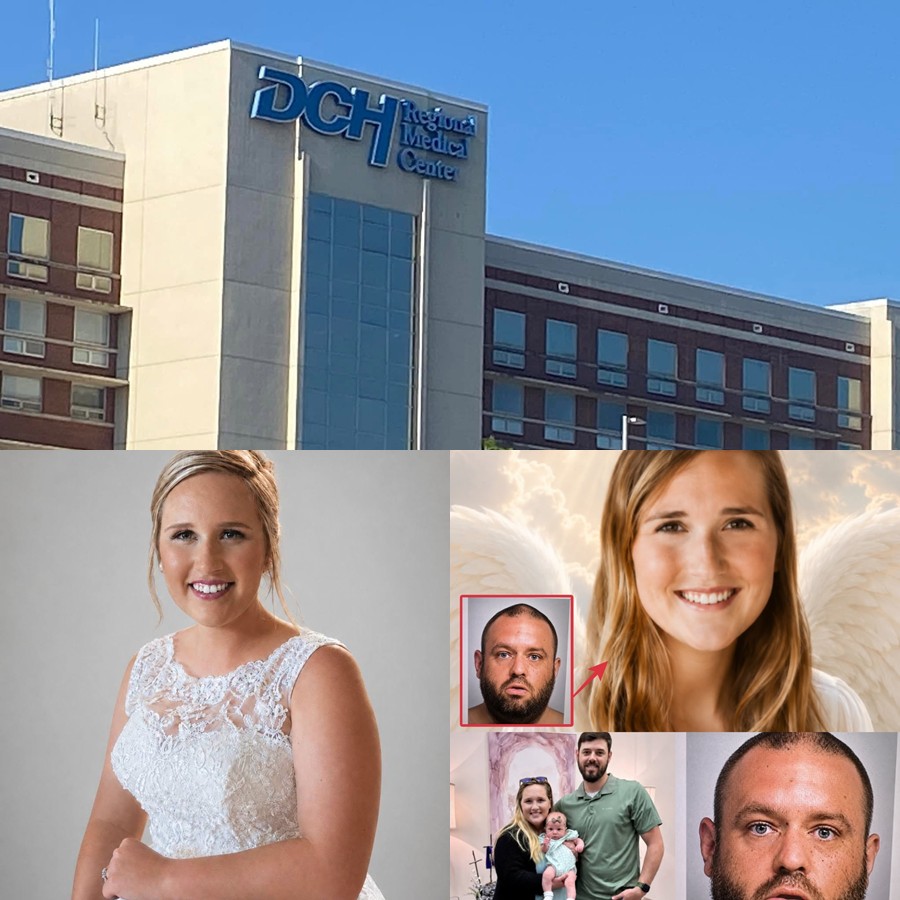
TUSCALOOSA, ALABAMA – A hospital parking lot is typically a place that witnesses sighs of relief as patients are discharged, or the hurried footsteps of medical staff changing shifts to return home to their loved ones after a stressful day of work. However, on a fateful Tuesday afternoon in mid-May, the outdoor premises of the DCH Regional Medical Center in Tuscaloosa, Alabama, turned into the scene of a bloody tragedy.
Ada Chapman Doss, a dedicated 27-year-old nurse manager, a loving wife, and a mother of two young children, was brutally shot and killed in a violent attempted robbery. The case has not only left her family in profound grief and shocked the American healthcare community, but it has also ignited a fierce legal debate regarding the security responsibilities of public medical facilities and the systemic loopholes in handling social mental health crises.
1. A Late Call Ends with a Cold-Blooded Gunshot
According to official information from the Tuscaloosa Violent Crimes Unit, the incident occurred precisely during a hospital shift change. As dusk began to fall, Ada Chapman Doss had just wrapped up a long shift in her role as a nurse manager. She left the building and walked out toward the parking lot to get to her vehicle.
Like any busy mother and wife, Ada used this brief walking time to call her husband, Andrew Doss. On the other end of the line, her husband was eagerly waiting for his wife to come home so they could prepare dinner together and care for their two young daughters, who were still toddlers. However, the warm atmosphere of the family conversation was instantly shattered.
An unknown man, later identified as 41-year-old Matthew James Taylor, abruptly ambushed Ada Doss from the shadows. In his hand was a loaded handgun. Taylor blocked her path, threatened her, and violently attempted to rob her.
The most horrifying aspect of this case is that the entire terrifying sequence of events was captured live in her husband’s ears over the phone line. Investigators stated that when facing the dark muzzle of the perpetrator’s gun, Ada Doss did not physically resist. Being completely vulnerable, she chose the only path a mother could think of: pleading for compassion from the predator. She cried out for her life, continuously mentioning her young children waiting at home.
“Please don’t, I have babies to take care of!” – Ada’s choked, panicked pleas echoed in vain.
Responding to her sacred maternal instinct and tears was a cold-blooded silence, followed by a deafening gunshot. A single bullet struck Ada directly, causing the young mother to collapse instantly onto the gray concrete of the parking lot. The brutality did not stop there. After the shooting, Taylor callously went through the belongings of the victim as she lay dying, snatched her keys, and attempted to start her vehicle to flee.
However, the carjacking attempt failed. Receiving an emergency alert from the husband and witnesses at the scene, rapid-response police forces immediately surrounded the area. Taylor only managed to flee a short distance before being subdued and taken into custody by responding officers near the hospital campus.
2. The Perpetrator Loitered for Hours Amid a Mental Health Crisis
As the investigation dug deeper, authorities uncovered details that left the public both furious and raising massive questions about the healthcare and public security systems.
Surveillance footage revealed that Matthew James Taylor was not someone who had suddenly broken into the parking lot from elsewhere to commit a crime. In reality, the 41-year-old man had been loitering and walking freely around and within the DCH hospital property for several hours before the shooting took place.
Notably, initial police reports indicated that earlier that day, Taylor had proactively come to the hospital area with the initial purpose of seeking help. However, for reasons unknown, he never actually stepped inside the Emergency Department to register or receive any medical intervention. Authorities later declared that at the time he approached and murdered Ada Doss, Taylor appeared to be experiencing a severe mental health crisis, leading to distorted perception and extreme violent behavior.
Currently, Matthew James Taylor has been formally detained without bond and charged with two extraordinarily serious offenses: Capital Murder and First-Degree Robbery. Under Alabama state law, a capital murder charge carries the highest potential penalties: the death penalty or life imprisonment without the possibility of parole.
3. A Multi-Faceted Legal Battle: A Wrongful Death Lawsuit Filed by the Husband
The death of Ada Doss did not end as a mere criminal case between a killer and a victim. It has sparked a complex civil legal battle as systemic failures in the hospital’s security apparatus were brought to light.
Just days after the tragic death of his wife, Andrew Doss—amidst overwhelming grief and the heavy burden of raising two young daughters who lost their mother—officially filed a civil wrongful death lawsuit. The targets of the lawsuit include not only the suspect, Matthew James Taylor, but also the DCH Health System and the Contracted Security Company hired by the hospital to safeguard the campus.
| Parties Involved in the Doss Family’s Civil Lawsuit |
|---|
| Plaintiff: Andrew Doss (Victim’s husband, representing their two young children). |
| Defendant 1: Matthew James Taylor (The individual who fired the fatal shot). |
| Defendant 2: DCH Health System (The entity managing the premises and parking lot where the crime occurred). |
| Defendant 3: Contracted Security Company (The entity responsible for patrolling and campus security). |
Andrew Doss’s lawsuit argues that there was a systemic failure and gross negligence in DCH’s security protocols. The fact that an individual exhibiting mental instability and carrying a dangerous weapon was allowed to roam freely and loiter for hours in a sensitive area like an employee parking lot—without being detected, questioned, or escorted off the property by any security personnel—is deemed completely unacceptable. The lawsuit alleges that this very leniency indirectly provided Taylor with the time and opportunity to execute his heinous crime. Currently, these claims remain under civil review by the state court.
4. Conclusion: The Pain of Those Left Behind and a Wake-Up Call for the Medical Sector
The initial phase of the investigation closes with tears streaming down the faces of colleagues at the DCH Regional Medical Center. Ada Chapman Doss passed away in the prime of her life, at a time when her nursing management career was flourishing and her small family was at its happiest. In the minds of her friends, colleagues, and the patients she once cared for, Ada will forever be remembered as a dedicated nurse manager, an exemplary wife, and a mother completely devoted to her children.
Her departure leaves a void that can never be filled for her husband and two young daughters—children who, from now on, will have to grow up without the warmth and embrace of their mother.
The homicide at Tuscaloosa serves as a profound wake-up call regarding workplace safety for healthcare workers in the United States. It proves that the threat of violence does not just exist inside patient rooms but also lurks in the dark corners of parking lots after hours.
As authorities continue their deep investigation to bring Matthew James Taylor to justice, the public expects that the costly lessons of security and mental health management from this tragedy will be rigorously implemented, so that no nurse will ever have to trade their life on their way home to their young children again.