THE “TWISTED” REQUEST OF THE MOTHER OF 16 “ALMOST FERAL” CHILDREN THROUGH HER DEFENSE LAWYER
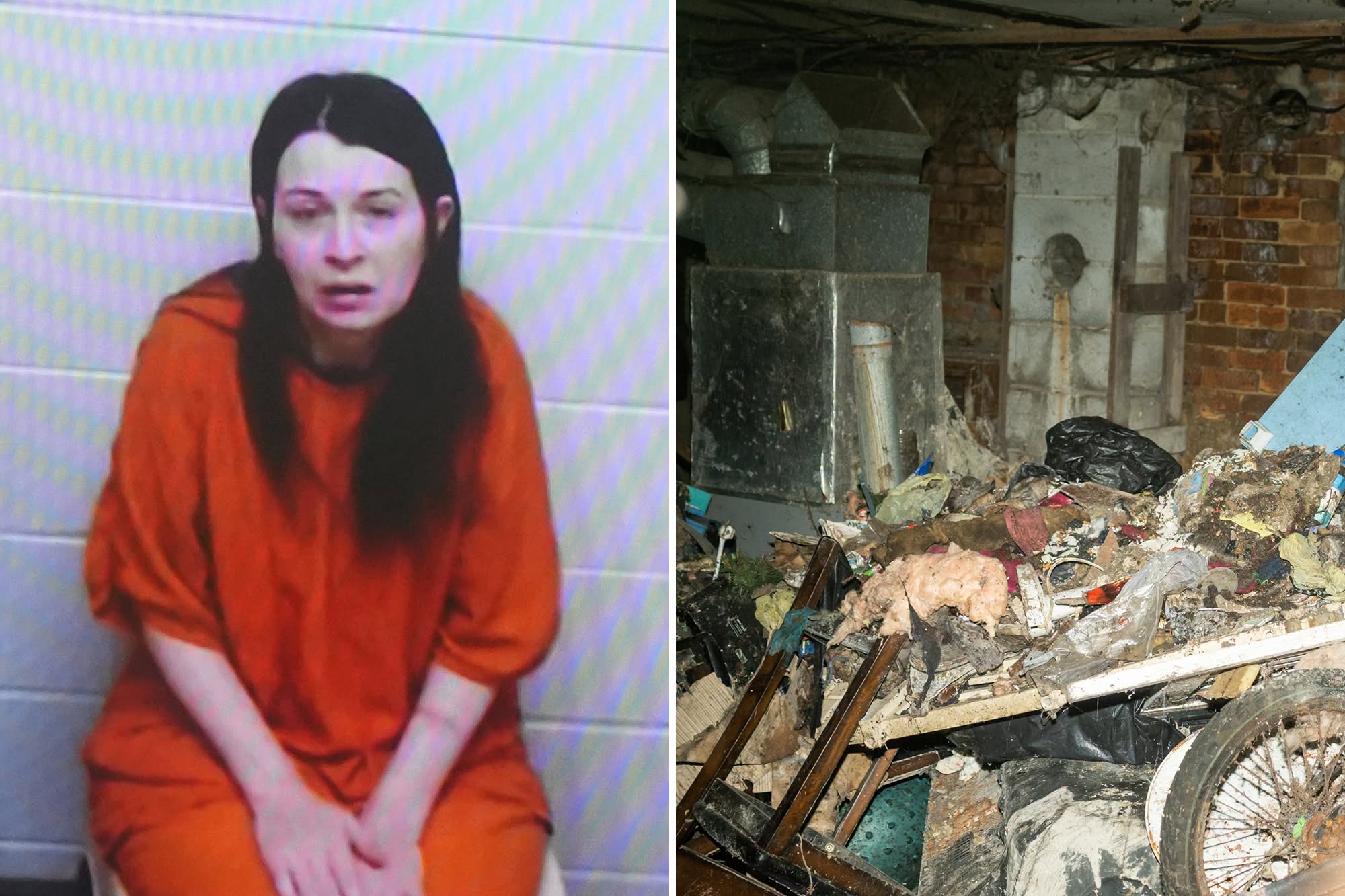
The case of the rescue of 16 children living in “almost feral” conditions in a home overrun with feces and trash in Ohio, USA, continues to send shockwaves through the public as new details emerge from behind bars. Amidst a wave of absolute public outrage over the inexcusable crimes of child abuse, the incarcerated mother of the victims—Elizabeth Siders, 33—has filed a highly paradoxical legal request through her defense lawyer: she is fighting to be released from custody to pursue reunification with the very children she stands accused of subjecting to unimaginable abuse and neglect.
This action has immediately ignited a fierce debate in the American public and legal circles. Is this a case of belated remorse, a desperate maternal instinct, or a calculated legal strategy designed to mitigate her punishment ahead of the trial for crimes that the Ohio Attorney General bluntly described as “pure evil”?
1. A Controversial Plea from Elizabeth Siders’ Jail Cell
Currently, Elizabeth Siders is being held at the Southeastern Ohio Regional Jail on a steep $300,000 bond after being charged with 16 felony counts of child endangerment. Recently, her defense attorney, J. Thomas Stolly, officially petitioned the court to modify her bond structure to a recognizance bond. This release structure would allow Elizabeth to leave jail without posting financial bail, subject to certain conditions and strict court monitoring.
To persuade the judge, attorney Stolly argued that Elizabeth has no prior criminal history, which should make her eligible for pre-trial release. However, the most shocking aspect of the court filing (obtained by WOWK 13) is the motive asserted by Elizabeth:
“Through conversations with Counsel, the Defendant maintains that her principal desire (is) to reunite with her children; she understands that reunification of any sort is an impossibility if she does not appear before this Court.”
The defense filing further argued that since the 16 children have been removed from the home and placed under the specialized care of social services, Elizabeth poses no threat to them. She wishes to be released to prepare her defense, clear her name, and eventually find a way to be reunited with them. To date, the judge has yet to rule on this highly controversial release request.

2. The Nature of the Crime: A 13-Square-Meter Dungeon and Living Conditions Worse Than Livestock
Elizabeth’s plea for reunification has been widely condemned by the public as “twisted” and “callous” because it stands in stark contrast to the horrific trauma investigators uncovered at the Hamden home.
According to authorities, the 16 young victims (ranging in age from 1 to 18) were mostly confined to a cramped 12-by-12-foot space (approximately 13 $m^2$) for at least the past four years. Their living space was choked within crumbling walls, buried in human waste, trash, and a suffocating stench.
When describing these brutal living conditions, investigators and local officials used the heaviest words, calling the scene “deplorable” and “third-world.” One law enforcement official went so far as to bluntly state:
“Local livestock have better conditions than the kids did.”
Ohio Attorney General Andy Wilson, who personally witnessed the scene on the day of the rescue, described it as “pure evil”. He admitted that he was unable to wash the stench and the haunting memory off himself after walking out of the house of horrors.
3. The Heartbreaking State of the Victims: Unable to Speak, Unable to Write Their Own Names
Following their successful rescue by police on June 30, all 16 children were immediately rushed to hospitals across Ohio for emergency medical care. Several were admitted in critical condition:
- At least two children had to be airlifted via trauma helicopters to specialized medical centers.
- At least one child had to be intubated to sustain their life.
While their physical wounds may heal over time, the deep-seated psychological and cognitive trauma presents an immense barrier. Having never been enrolled in school or allowed to interact with the outside world, their cognitive development was severely stunted. The children can barely communicate; some cannot speak at all, while others can only utter basic noises or gestures, behaving like feral children.
Most heartbreakingly, the oldest child—a young woman who has just turned 18—is developmentally disabled. Due to a total lack of education and care, at an age when she should be entering adulthood, she is unable to even write her own name.
4. The Legal Accountability of the Siders Clan
In this shocking case, Elizabeth Siders is not the only defendant facing justice. Authorities arrested a total of four adults living in the home. Alongside the mother, Elizabeth (33), the other co-defendants include:
- Gary “Bub” Siders Jr. (36): Elizabeth’s husband, who is believed to be the biological father of all 16 abused children.
- Gary Siders Sr. (73): The grandfather of the victims.
- Christina “Lynn” Siders (67): The grandmother of the victims.
All four adult members of the Siders clan have been hit with 16 felony counts of child endangerment. Under Ohio law, given the brutal nature and scale of this prolonged abuse, if convicted on all counts, each defendant could face decades in prison or even permanent confinement behind bars.
5. Public Skepticism and the Road to Recovery for 16 Young Lives
Elizabeth Siders’ plea to reunite with her children has hit a massive wall of skepticism and outrage from the American public. Across social media, the overwhelming consensus is that allowing a mother who either actively abused or silently stood by as her 16 children were reduced to an “almost feral” state to have any contact with them would go against the very spirit of justice and humanity.
Hoever, from a behavioral psychology perspective, the case also raises complex questions about the isolationist and controlling structure of the Siders household. Could Elizabeth herself, who entered this family dynamic at a very young age, have been a victim of long-term grooming and psychological manipulation, leaving her stripped of the cognitive capacity to act before she became complicit in abusing her own children? Regardless of the answers, the law demands absolute justice for these innocent victims.
The journey to rehabilitation for the 16 Siders siblings will undoubtedly be incredibly long and difficult. Learning to speak, write, trust other human beings, and navigate the most basic concepts of civilized society will require a coordinated effort from medical systems, educational institutions, and unconditional love from the community. Elizabeth Siders’ “twisted” request may very well be rejected by the court, but it serves as a stark reminder of the critical importance of protecting child welfare—ensuring that young minds are nurtured in light and knowledge, rather than buried in the darkness of a house of horrors.