Pure Horror: Colorado Funeral Home Couple Left 190 B0djes to R0t for 4 Years While Pocketing Fees; Police Describe Scene as ‘Most Horrific Mission’ of Their Careers
THE “RETURN TO NATURE” FUNERAL HOME SCANDAL: A JOURNEY FROM GREEN BURIAL PROMISES TO A HOUSE OF HORRORS
Translation and In-depth Investigation
Part 1: The Verdict and the Federal Fraud Charges
On March 16, 48-year-old Carie Hallford was found guilty of federal fraud after embezzling approximately $130,000 in funeral service fees from grieving families. Her husband, Jon Hallford, had previously been sentenced in June 2025 to a maximum of 20 years in prison for the same crimes.
Speaking before the court, the Colorado District Attorney remarked that only individuals with an extremely unstable psychological state could conceive of and execute such acts. He stated that the severe sentence is expected to offer some solace to the victims’ families, although it can never fully compensate for the profound losses and trauma they endured.
According to FBI allegations, beyond defrauding families, the two defendants also deceived the federal government to illicitly obtain nearly $1 million from COVID-19 pandemic business relief packages (Small Business Administration loans). This money was squandered on personal luxuries, including high-end vehicles, cryptocurrency investments, designer shopping at Gucci and Tiffany & Co., and expensive cosmetic procedures. Sentences related to the pandemic relief fraud are expected to be handed down on April 24.
Part 2: The Discovery of a “House of Horrors”
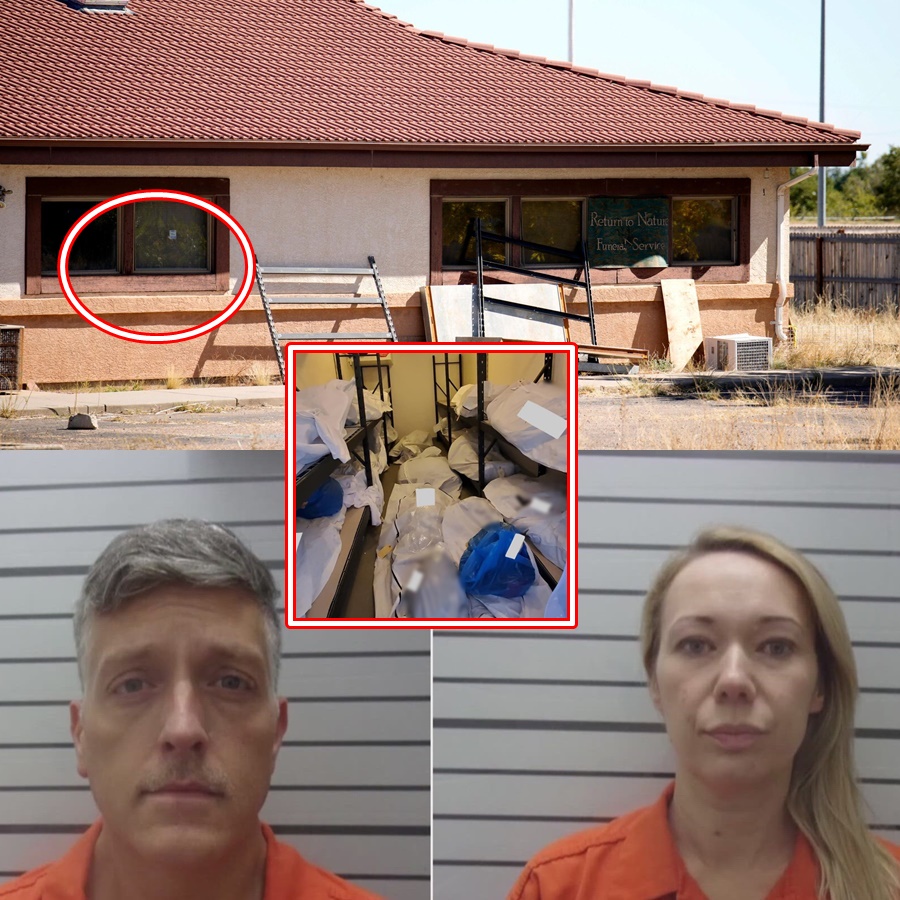
The case unraveled in September 2023, when residents in the small town of Penrose, Colorado, began noticing a pervasive and sickening odor in the area. Initially, locals suspected a malfunction in the sewage system or perhaps a large animal carcass nearby. However, the source was eventually traced back to a seemingly abandoned, dilapidated building.
This building served as a storage facility for the Return to Nature Funeral Home, operated by the Hallfords. On October 5, 2023, law enforcement cordoned off the scene to begin an investigation. Investigators later described the site as one of the most haunting and traumatizing scenes they had ever encountered in their careers.
Inside the facility, authorities discovered approximately 190 bodies in varying stages of decomposition. Some remains were placed on gurneys, while others lay directly on the floor or were stacked on top of one another, blocking walkways. Many bodies were inadequately covered or left entirely exposed for prolonged periods. The interior was described as a chaotic scene of neglect, with fluids leaking onto the floors and an overwhelming infestation of insects.
Part 3: The Broken Promise of “Green Burials”
Founded in 2017 in Colorado Springs, Return to Nature marketed itself as an eco-friendly alternative to traditional funeral practices. They specialized in “green burials,” which cost approximately $1,895 (about 48 million VND). This service promised a return to the earth without the use of embalming chemicals, metal caskets, or concrete vaults.
The Hallfords tapped into a growing market of environmentally conscious consumers. However, under Colorado law, any body not buried within 24 hours must be properly refrigerated. The investigation revealed that the Hallfords had no functioning refrigeration at the Penrose facility.
Authorities discovered that while many families paid for cremations, others had opted for natural burials. Instead of fulfilling these contracts, the Hallfords simply abandoned the bodies at room temperature. Some remains had been sitting in the facility since 2019. To cover their tracks, the couple allegedly handed over dry concrete mix or other materials to families, claiming they were the cremated remains of their loved ones.
Part 4: Deep Dive – Investigating the Regulatory Failures (Additional Information from U.S. Media)
To understand how such a tragedy could occur, U.S. media outlets like The Denver Post highlighted Colorado’s notoriously lax funeral industry regulations. At the time of the discovery, Colorado was the only state in the U.S. where funeral directors did not require a high school diploma, let alone a specialized degree or a state license.
The Financial Motive: Court documents filed in the federal case reveal a pattern of extreme financial desperation masked by a lavish lifestyle. The Hallfords were facing multiple lawsuits from crematory owners for unpaid bills and were months behind on rent for their properties. Despite these debts, bank records showed they were spending thousands of dollars at luxury boutiques in Las Vegas and California. The $882,300 they received in EIDL (Economic Injury Disaster Loan) funds, intended to keep their business afloat and pay employees during the pandemic, was instead treated as a personal slush fund.
The Impact on Families: The emotional toll on the victims’ families has been catastrophic. Many families who believed they had scattered their loved ones’ ashes in the mountains or at sea were devastated to learn that the remains were actually decomposing in a trash-strewn warehouse in Penrose.
One victim, Samantha Naranjo, told AP News that she felt “violated twice”—once by the loss of her mother and again by the knowledge that her mother’s body had been neglected for years. The process of identifying the 190 bodies required the assistance of the FBI’s Disaster Mortuary Operational Response Team (DMORT), using DNA testing and dental records, a process that took months and cost the county millions of dollars.
Part 5: Legislative Changes and the Road to Justice
In the wake of the Return to Nature scandal, Colorado lawmakers were pressured to overhaul the state’s funeral laws. In 2024, Governor Jared Polis signed a suite of bills aimed at bringing Colorado in line with national standards. These new laws require funeral directors to be licensed, undergo criminal background checks, and hold degrees in mortuary science. Additionally, the state granted regulators more power to conduct unannounced inspections of funeral homes.
The federal charges against the Hallfords—specifically the “Wire Fraud” and “Conspiracy to Commit Wire Fraud”—carry heavy penalties because they involved the use of electronic communications to defraud the government and private citizens. While the state-level charges focused on the “Abuse of a Corpse” (a felony in Colorado), the federal charges addressed the financial machinery that allowed their operation to persist.
Conclusion: A Warning to the Industry
The case of Carie and Jon Hallford remains a dark stain on the history of Colorado. It serves as a grim reminder of the vulnerability of grieving families and the necessity of strict oversight in industries that handle the deceased.
As the April 24 sentencing for pandemic fraud approaches, the community remains watchful. For the families of the 190 souls found in Penrose, no amount of prison time can erase the images of the “house of horrors.” However, the conviction of Carie Hallford marks a significant step toward accountability. The legacy of this tragedy is now etched into new laws that hope to ensure no other family in Colorado ever has to endure such a nightmare again.