Brian Hooker Lied Blatantly, Why Was He Still Released After Custody for the Investigation into Lynette Hooker’s Death: Bahamas Authorities and a Series of Witnesses Provide Evidence of Her Last Fateful Night
Shadows in the Shallows: The Vanishing of Lynette Hooker and the Questions Left in her Wake
The turquoise waters of the Bahamas are often synonymous with paradise, but for the family of Lynette Hooker, they have become a backdrop for a harrowing mystery. A week after Lynette vanished from a small dinghy during a nighttime excursion, the investigation has taken a complicated turn. Her husband, Brian Hooker, who was initially detained by Bahamian authorities, has been released from custody without charges—at least for now.
As the search continues and the legal machinery grinds slowly, a growing chorus of maritime experts and concerned observers are scrutinizing the details of that fateful night. What emerges is a narrative fraught with technical inconsistencies and a stark departure from established safety protocols.
The Night of the Disappearance
According to accounts Brian Hooker allegedly shared with friends and investigators, the couple was navigating a small dinghy during a period of deteriorating weather. He described a harrowing scene: rising waves, gusting winds, and the rapid onset of darkness. In the chaos of the rough water, he claims Lynette fell overboard.
Brian’s version of events paints a picture of a desperate, failed rescue attempt. He reportedly told authorities that he threw a flotation cushion toward his wife and called out for her, but she was quickly swallowed by the dark, churning water. Brian further claimed that his engine or steering became compromised, causing him to drift miles away from the initial incident site before he was eventually able to reach land and raise the alarm.
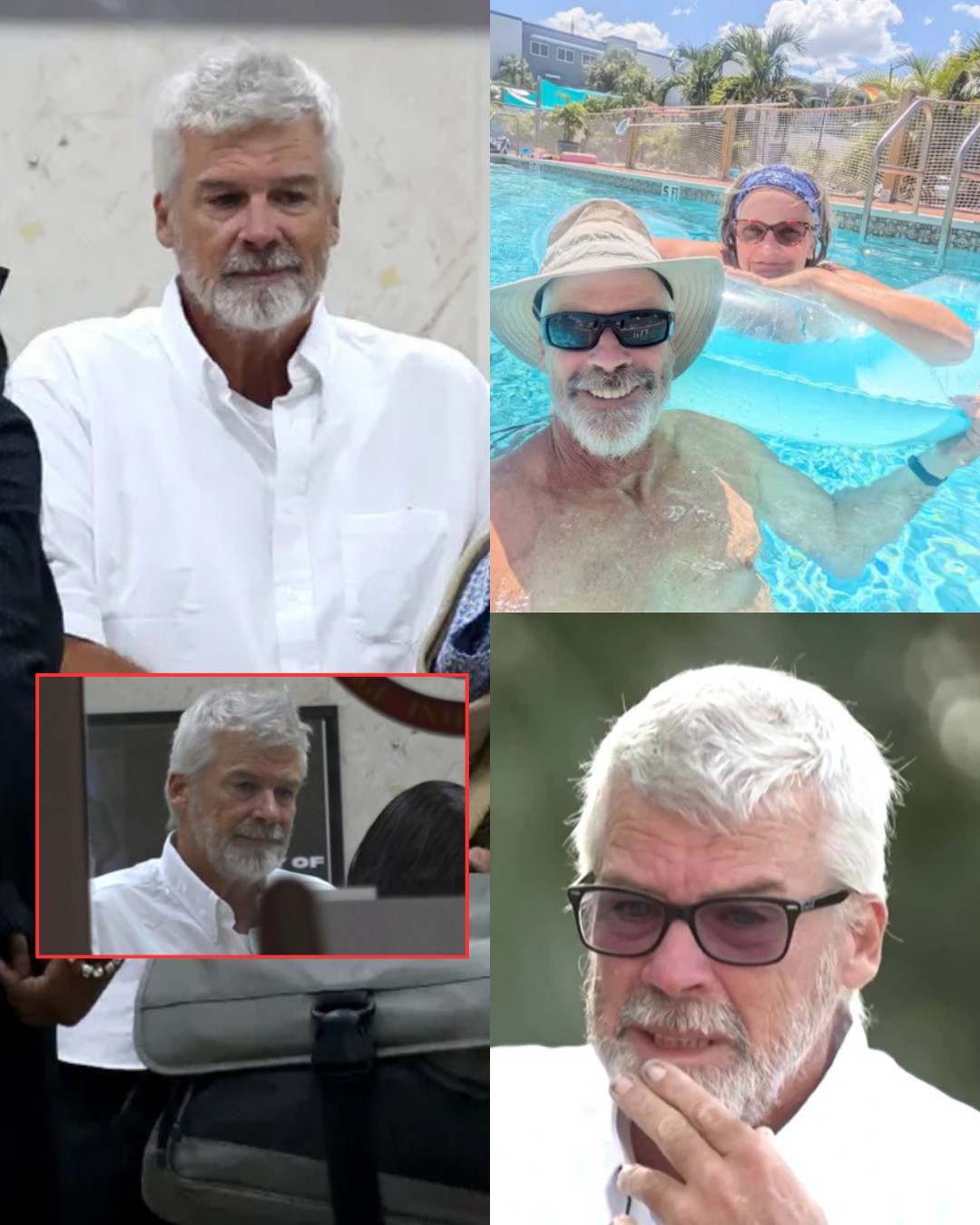
While the Bahamian Public Prosecutions department acknowledged the gravity of the situation, they maintained that, at this stage, there is insufficient evidence to file formal charges. Brian remains a person of interest as the investigation remains active.
The “Shallow Water” Paradox
One of the most jarring aspects of the case for local boaters and search-and-rescue (SAR) teams is the geography of the area where the couple was reportedly traveling. Large swaths of the Bahamian banks, particularly the routes used by dinghies moving between anchorages and shore, are notoriously shallow.
Hydrographic data for the suspected area indicates depths ranging from approximately 4 to 7 feet.
“In water that shallow, a vessel doesn’t just disappear, and a person who falls overboard is often within standing depth or very close to it,” says a veteran charter captain based in Nassau. “While rough weather complicates everything, the ‘drifting for miles’ narrative becomes harder to reconcile when you’re dealing with the drag and friction of such shallow flats.”
Critical Lapses in Maritime Protocol
In the world of maritime safety, there is a “Golden Hour” for rescue. The steps taken in the immediate aftermath of a Man Overboard (MOB) situation dictate the likelihood of survival. Experienced boaters have pointed to four specific areas where the reported actions—or lack thereof—diverge from standard life-saving protocols.
1. The Silence of the Radio
There is currently no record of a Mayday or Pan-Pan call being broadcast on VHF Channel 16 at the time of the incident. In the Bahamas, the cruising community is tight-knit; a distress call often brings nearby vessels to the scene long before official Royal Bahamas Defence Force (RBDF) assets can arrive.
2. The Flare Discrepancy
Brian allegedly claimed to have used flares to signal for help. However, local authorities and nearby boaters have not come forward to confirm seeing any pyrotechnic signals in the sky that night. In the flat expanse of the Bahamas, a red parachute flare can be seen for over 20 miles. The absence of witnesses to these signals is a significant point of contention for investigators.
3. Untapped Technology
Modern smartphones are equipped with Emergency SOS via Satellite features (on newer iPhone and Android models) that allow users to contact emergency services even when cellular towers are out of range. Furthermore, even without a signal, a phone’s GPS remains active. Investigators are reportedly looking into digital forensics to determine if any attempts were made to utilize these “silent” lifelines during the hours Lynette was missing.
4. The Life Jacket Factor
By Brian’s own admission, neither he nor Lynette were wearing life jackets. While not illegal in all private contexts, the decision to navigate a small dinghy in “rough evening conditions” without Personal Flotation Devices (PFDs) is viewed by safety experts as a fatal error in judgment.
The Legal and Investigative Landscape
The release of Brian Hooker does not signify exoneration. In Bahamian law, as in many jurisdictions, a suspect can only be held for a limited window without a formal charge. By releasing him, prosecutors are likely “buying time” to allow the RBDF and police to gather more forensic evidence, analyze tide/current patterns, and wait for potential new witnesses.
The investigation is currently focused on several key prongs:
- Forensic Analysis of the Dinghy: Looking for signs of a struggle or mechanical failure that matches Brian’s story.
- Tidal Modeling: Using $V = \frac{d}{t}$ calculations to determine if the “miles of drifting” claimed by Brian is physically possible given the wind and current vectors that night.
- Search for Lynette: Divers and aerial assets continue to skim the shallow banks, though as time passes, the mission has grimly shifted from “search and rescue” to “recovery.”
A Community in Limbo
For the friends of Lynette Hooker, the past week has been a blur of grief and frustration. On social media, tributes to her vibrant personality are interspersed with demands for transparency. The central question remains: How does an experienced individual vanish in five feet of water without a single electronic or visual distress signal being verified?
The Bahamian authorities have urged the public not to succumb to speculation, emphasizing that “everything about what happened remains alleged.” Yet, in the absence of a body or a confession, the technical gaps in the story serve as the primary focus of the probe.
As the sun sets over the Caribbean today, the search continues. The case serves as a somber reminder of the unforgiving nature of the sea and the vital importance of the protocols designed to keep us safe upon it. For now, the waters hold their secrets, and Brian Hooker remains free, walking the line between a grieving widower and a man under a dark cloud of suspicion.
Key Takeaways for Maritime Safety
| Protocol | Expected Action | Reported Action |
| VHF Radio | Immediate “Mayday” on Channel 16 | No call recorded |
| Visual Signals | Deployment of flares/strobe lights | Claimed, but unverified |
| Safety Gear | Wearing PFDs in rough water | No life jackets used |
| Navigation | Staying with the vessel/last known spot | Drifted miles away |
The investigation into the disappearance of Lynette Hooker is ongoing. Anyone with information regarding sightings of a small dinghy in distress during the period in question is urged to contact the Royal Bahamas Police Force.