Caleb Flynn had truly FALLEN OUT OF LOVE with his wife, Ashley Flynn, and was hell-bent on escaping his marriage to live with his 23-year-old mistress: A close-up look at the details of his plot to send Ashley Flynn to her Creator. Just 2 days before the night of the execution, Caleb made an incredibly cold-blooded move.

The quiet streets of Tipp City, Ohio, were never meant to be the backdrop for a crime so calculated and chilling that it would grip the nation. The murder of Ashley Flynn, a 37-year-old mother, teacher, and coach, initially appeared to be the tragic result of a home invasion gone wrong. However, as investigators peeled back the digital and emotional layers of the Flynn household, a far more sinister reality emerged. This was not a random act of violence. It was a cold-blooded execution, meticulously planned by the man who had sworn to protect her: her husband, Caleb Flynn.
The motive, as old as time but handled with modern cruelty, was the pursuit of a new life. Caleb Flynn had not just fallen out of love with Ashley; he had effectively erased her from his future long before the first shot was fired. His heart and his loyalty had shifted entirely to a 23-year-old mistress, a woman who represented the “fresh start” he craved. To Caleb, Ashley and their shared life were no longer a family to be cherished, but an obstacle to be liquidated.
The Architect of Deception
Caleb Flynn’s plan was defined by its chilling premeditation. He did not snap in a moment of rage; he operated with the precision of an architect building a house of cards. The investigation has revealed that for weeks, if not months, Caleb had been leading a double life. While maintaining the appearance of a suburban father, he was deeply immersed in an affair with a woman fourteen years his junior. This relationship was not a passing fling; it was the catalyst for murder. Caleb wanted to build a new life with his mistress, but he wanted to do so without the financial or social burdens of a divorce. In his twisted logic, Ashley had to die so that he could be free.

The level of calculation involved was most evident in his manipulation of social media. Two days before the murder, Caleb orchestrated a “digital alibi.” He logged into Ashley’s Facebook account and updated her profile picture to a photo of the two of them together. This was a masterstroke of psychological warfare. By creating a public image of a happy, loving couple on Valentine’s Day, he hoped to deflect any future suspicion. Who would suspect a man who was just seen celebrating his wife on social media? It was a cold-blooded move designed to paint himself as the grieving widower before he had even become one.
The Night of the Execution
On the night of February 16, 2026, Caleb put his plan into motion. The 911 calls from that night provide a haunting window into his performance. He reported a burglary, claiming an intruder was in the house. He spoke in frantic tones, reporting that he and his daughter were barricaded in a bedroom. But the forensic evidence told a different story. There was no forced entry that suggested a random intruder. Instead, the scene was one of intimate violence.
Ashley was shot twice in the head at close range. This was not the work of a panicked burglar; it was an execution. While Ashley lay dying, Caleb was already thinking about the next step of his plan. Even after the police arrived and the investigation began, Caleb continued his digital manipulation. Two days after the murder, while his wife’s body was in the custody of the coroner, Ashley’s Instagram account was accessed. Privacy settings were changed, and a profile photo was altered. Caleb was attempting to scrub the digital record, perhaps deleting messages or interactions that hinted at their crumbling marriage or his own infidelities.
The Mistress and the New Life
The driving force behind this carnage was the 23-year-old mistress. Caleb’s obsession with this younger woman had reached a point where he viewed his existing life as a prison. He wanted a world where he could be with her without the “messiness” of a legal separation or the judgment of their tight-knit community. To Caleb, the 23-year-old was his future, and Ashley was a ghost from a past he wanted to bury.
He had convinced himself that he was smart enough to get away with it. He believed that by faking a burglary and using social media to create a false narrative of marital bliss, he could walk away from the ashes of his family and into the arms of his lover. He spent hours calculating the timing of the 911 calls, the placement of the “stolen” items, and the theatricality of his own grief. The 3:27 a.m. dispatch call, where Caleb was reportedly hyperventilating, is now viewed by investigators not as a panic attack, but as a calculated performance for the first responders.
The Collapse of a Cold-Blooded Plan
Unfortunately for Caleb Flynn, even the most meticulous plans often fail to account for the persistence of modern forensics and the keen eyes of a suspicious public. The “burglary” simply didn’t add up. Why would a burglar shoot a sleeping woman twice in the head but leave her husband and children untouched? Why was the digital activity on Ashley’s phone so inconsistent with her usual habits?
The turning point came when investigators began to track the IP addresses and login data associated with Ashley’s accounts. The “Show Cause” motion against Meta Platforms, Inc. was the final nail in the coffin of Caleb’s deception. By attempting to force Meta to release the records, the state was closing the net around Caleb. The data would show that the logins—those crucial Valentine’s Day updates and the post-mortem Instagram changes—did not come from Ashley’s location or habits, but from devices linked to Caleb.
Caleb Flynn’s plan was birthed in a heart that had grown cold and a mind that had become untethered from morality. His desire to build a “new life” with a 23-year-old mistress led him to commit the ultimate betrayal. He thought he could outsmart the law by using technology as a shield, but instead, that very technology became the mirror that reflected his guilt.
The Aftermath of Betrayal
Today, Ashley Flynn is remembered by the Tipp City community as a vibrant, dedicated woman whose life was stolen by the one person she should have been able to trust. Her daughters are left with a void that can never be filled, victims of their father’s narcissism. Caleb Flynn, once a respected member of the community, now stands exposed as a man who valued a new romance over the life of his wife and the stability of his children.
His cold-blooded calculation failed. The digital breadcrumbs he left behind, thinking they would lead investigators away from him, led them straight to his door. The image of the “loving husband” he tried to project on Facebook was shattered by the reality of the IP addresses and the secret life he led in the shadows. Caleb Flynn wanted a new life at the cost of a death, but instead, he finds himself facing a future behind bars, where the only thing he will have left is the memory of the life he so cruelly destroyed.
This case serves as a harrowing reminder that in the age of digital footprints, the truth has a way of surfacing. Premeditation, no matter how carefully cloaked in “happy” profile pictures and frantic 911 calls, cannot withstand the scrutiny of a dedicated investigation. Caleb Flynn’s plan was a masterpiece of malice, but in the end, it was his own hubris that proved to be his undoing. He was not the brilliant architect of a perfect crime; he was merely a man whose heart had turned to ice, leaving a trail of digital and physical evidence that no amount of “monkeying around” on social media could ever erase.
THE DIGITAL GHOST IN THE COURTROOM: WHY META IS AT THE CENTER OF THE ASHLEY FLYNN MURDER INVESTIGATION
TIPP CITY, OHIO — In the quiet suburbs of Miami County, the echo of two gunshot wounds fired in the early hours of February 16, 2026, continues to reverberate through the halls of justice. But as the murder trial of Caleb Flynn approaches, the battlefield has shifted from the physical crime scene on Cunningham Court to the digital servers of Menlo Park, California.
At the heart of the controversy is a high-stakes standoff between the State of Ohio and Meta Platforms, Inc. The tech giant, which oversees billions of users across Facebook and Instagram, now finds itself under a “Motion to Show Cause,” facing potential contempt of court for allegedly ignoring a search warrant that prosecutors believe holds the key to uncovering the truth behind Ashley Flynn’s death.
The Night of the Tragedy
The narrative began as a frantic 911 call at 2:31 a.m. Caleb Flynn reported a home invasion, claiming an intruder had breached their residence. Initial dispatch recordings captured a scene of chaos: Caleb reported himself and his juvenile daughter were locked in a bedroom, though later clarifications suggested the children were asleep in their own rooms.
By 2:34 a.m., the call transitioned into a trauma emergency. Ashley Flynn, a beloved 37-year-old substitute teacher and volleyball coach, was found in the home with two gunshot wounds to the head. She was pronounced dead at the scene. An hour later, a third dispatch call classified as an “illness” recorded Caleb allegedly hyperventilating—a physical reaction that investigators are now scrutinizing: was it genuine grief, or the physiological collapse of a man hiding a dark secret?
The Digital Breadcrumbs: Valentine’s Day and Beyond
In modern criminal investigations, the “digital footprint” often speaks louder than physical evidence. For the community and online investigators at Plunder True Crime, the anomalies began on social media.
On February 14, 2026—just 48 hours before the murder—Ashley Flynn’s Facebook profile picture was updated to a smiling photo of her and Caleb. To the casual observer, it was a Valentine’s Day tribute. To seasoned investigators, the timing was surgically precise. Did Ashley post it to celebrate her marriage, or did Caleb update it to create a digital facade of a “happy couple” shortly before the tragedy?

The mystery deepened on February 18, two days after Ashley was killed. While the Flynn home was a taped-off crime scene and Ashley was in the morgue, her Instagram account suddenly went private, and her profile photo was changed.
“Dead women don’t change their privacy settings,” noted one digital forensic analyst. The central question of the prosecution is simple: Was Caleb Flynn “monkeying around” on his deceased wife’s phone to delete incriminating messages or alter the narrative of their relationship?
The Standoff: Ohio vs. Meta Platforms, Inc.
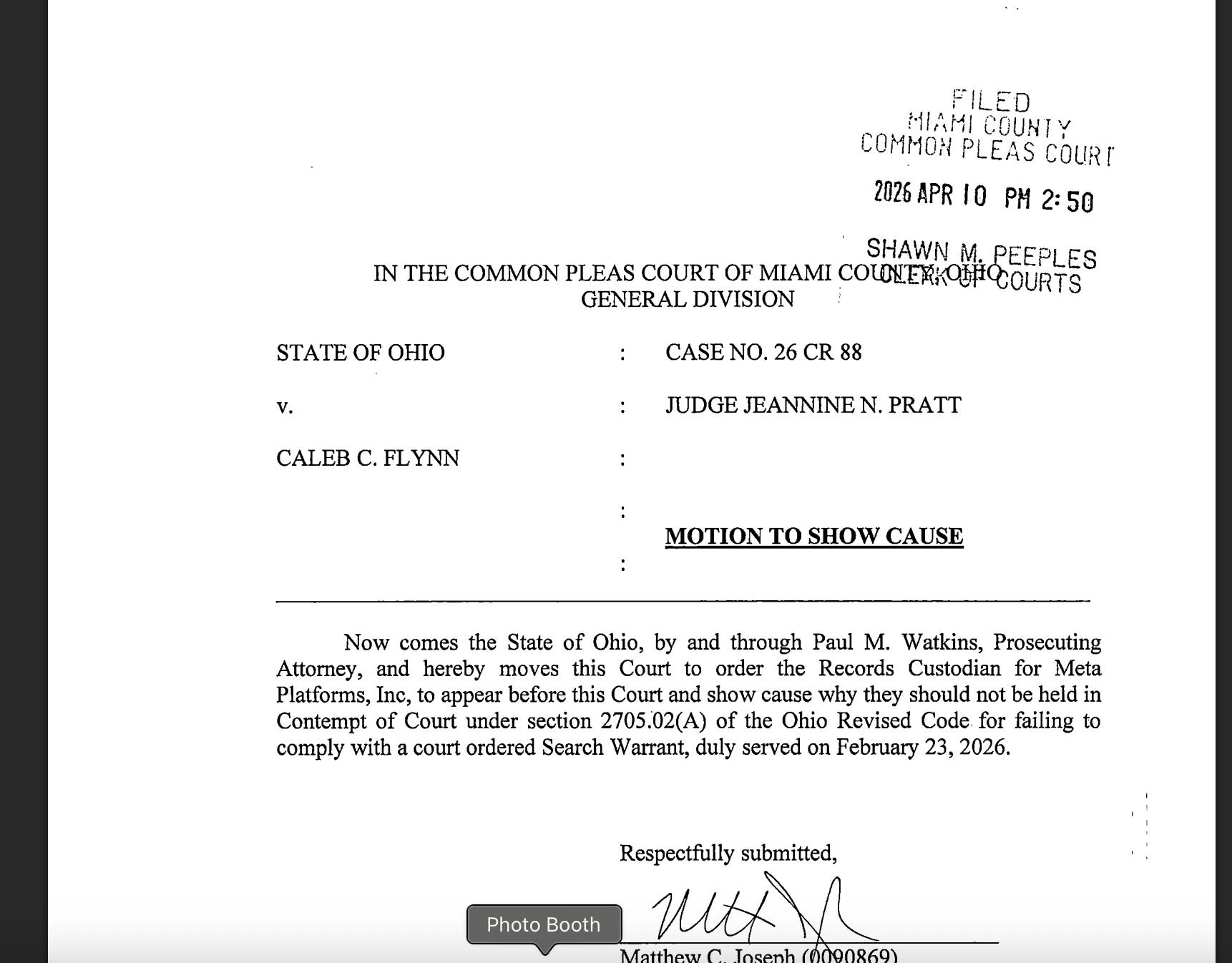
To answer these questions, the Miami County Prosecutor’s Office served a search warrant to Meta on February 23, 2026. They requested “behind-the-scenes” data: IP addresses, login timestamps, device IDs, and deleted messages. This data would definitively prove which device—and potentially which person—was logged into Ashley’s accounts in the days surrounding her death.
However, for nearly 60 days, Meta remained silent.
On April 10, 2026, the State of Ohio lost its patience. Prosecutors filed a “Motion to Show Cause,” a rare and aggressive legal maneuver. It asks the court to hold Meta in contempt for failing to comply with a direct judicial order.
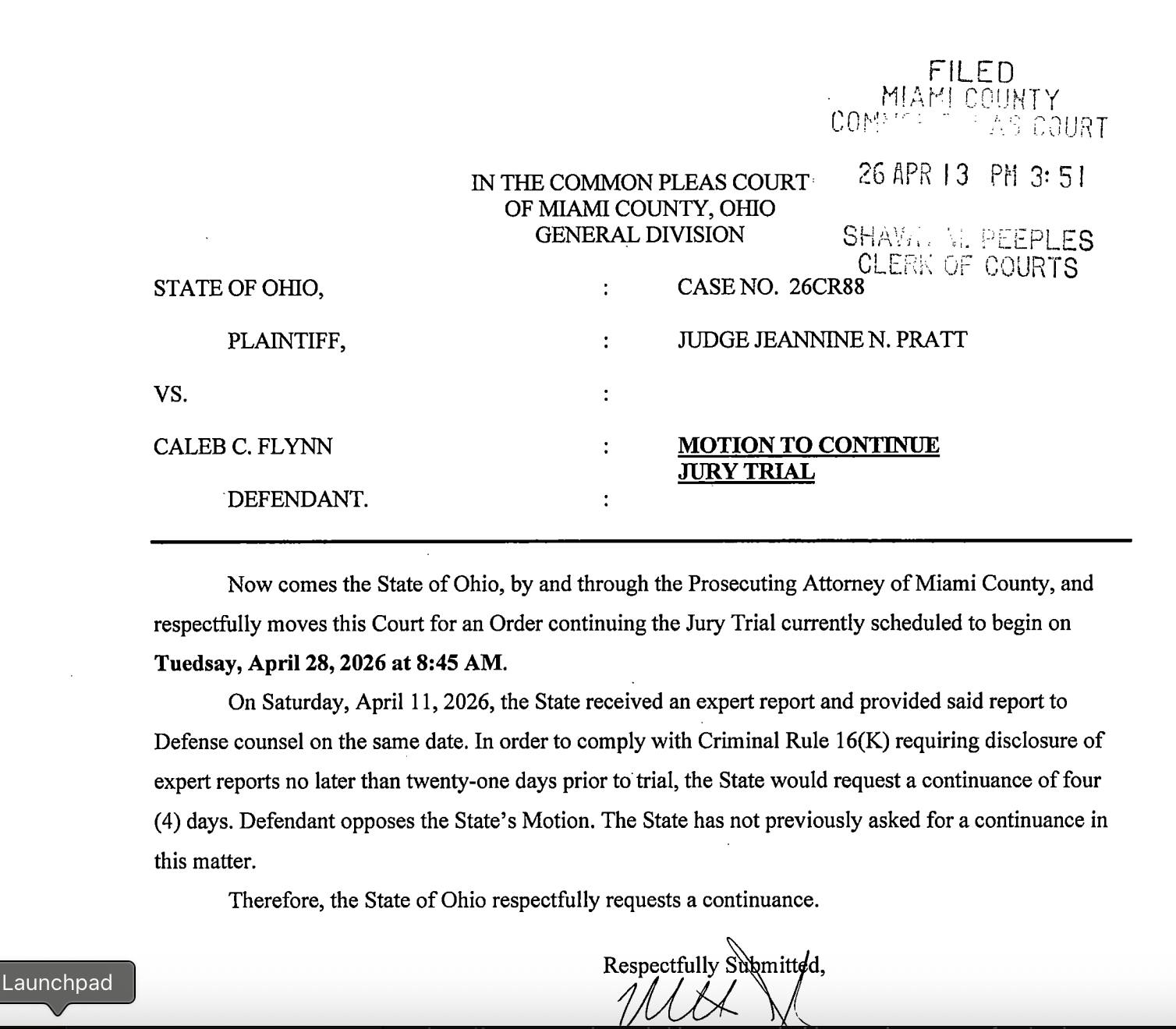
The legal filing suggests that while a tech giant like Meta could likely extract this data within hours using automated scripts, they have allowed the warrant to sit in a digital vacuum. This delay has significant consequences; Caleb Flynn’s trial was originally set for late April, and without this data, the prosecution’s timeline of events remains incomplete.
Why Do Tech Giants Resist?
The friction between law enforcement and “Big Tech” is not new. Record Custodians at companies like Meta, Google, and Apple process tens of thousands of warrants monthly. They often cite “user privacy” and “technical burdens” as reasons for delays.
However, legal experts suggest there is a more pragmatic side to this delay. Tech companies often push back on warrants they deem “overbroad.” If a warrant asks for “all data” rather than specific timeframes, the companies’ legal teams may ignore or reject it through their Law Enforcement Portals to force the state to narrow its scope.
In the Flynn case, the state argues the scope is as narrow as it gets: they need to know who was using Ashley Flynn’s identity while her body was still warm.
A Judicial Ultimatum
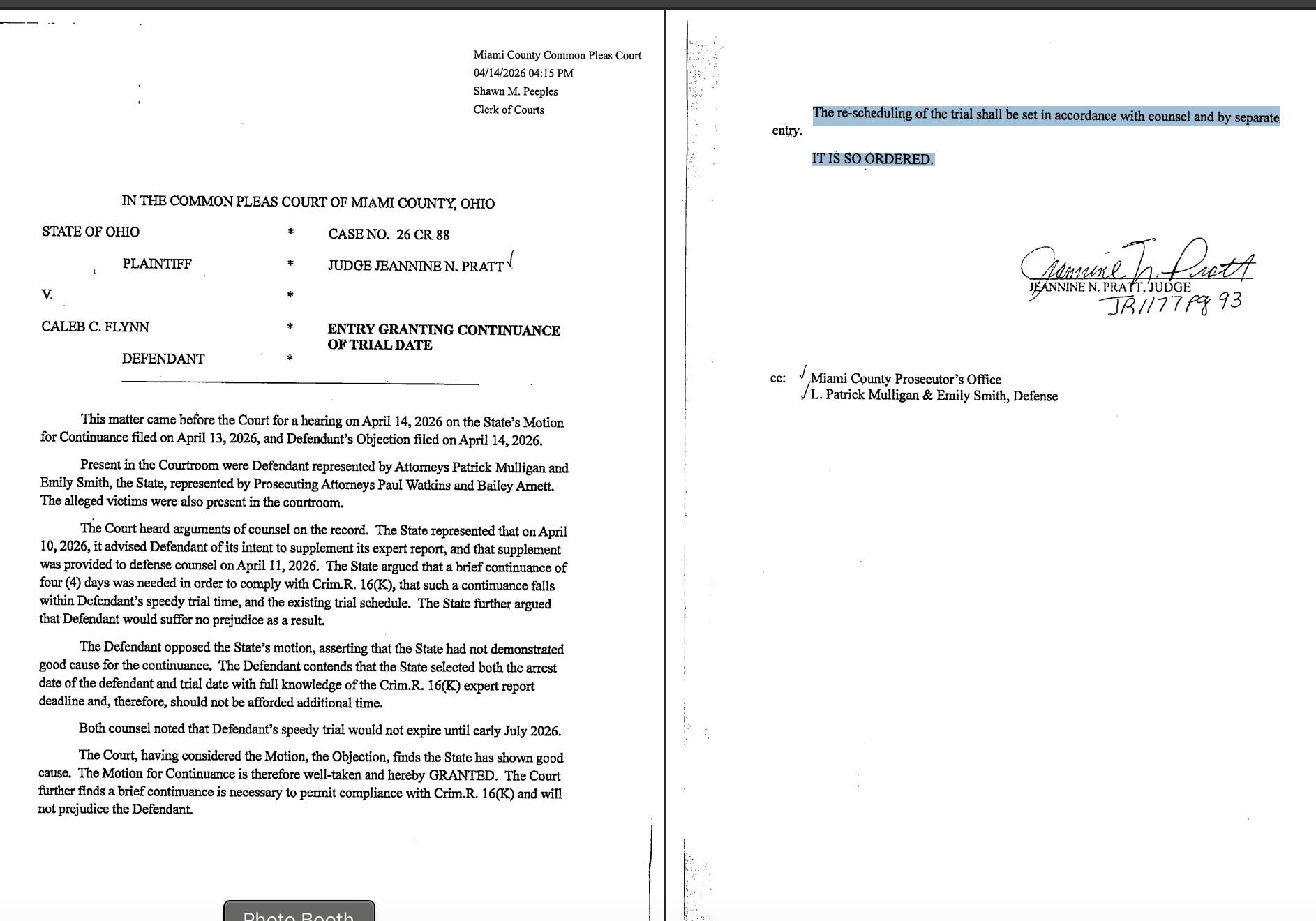
Judge Jeannine N. Pratt has signaled that the court’s patience has reached its limit. On April 13, 2026, she signed an order granting the State’s motion. Meta’s Records Custodian is no longer being “asked” to provide data; they are being ordered to appear in person in Troy, Ohio, on April 28, 2026.
This “in-person” requirement is a significant pressure tactic. Corporate giants loathe sending high-level employees to small-town courts to explain administrative failures. History shows that when faced with a “Show Cause” hearing, tech companies often “miraculously” find the requested records and deliver them 24 to 48 hours before the hearing to avoid the trip.
The Community in Waiting
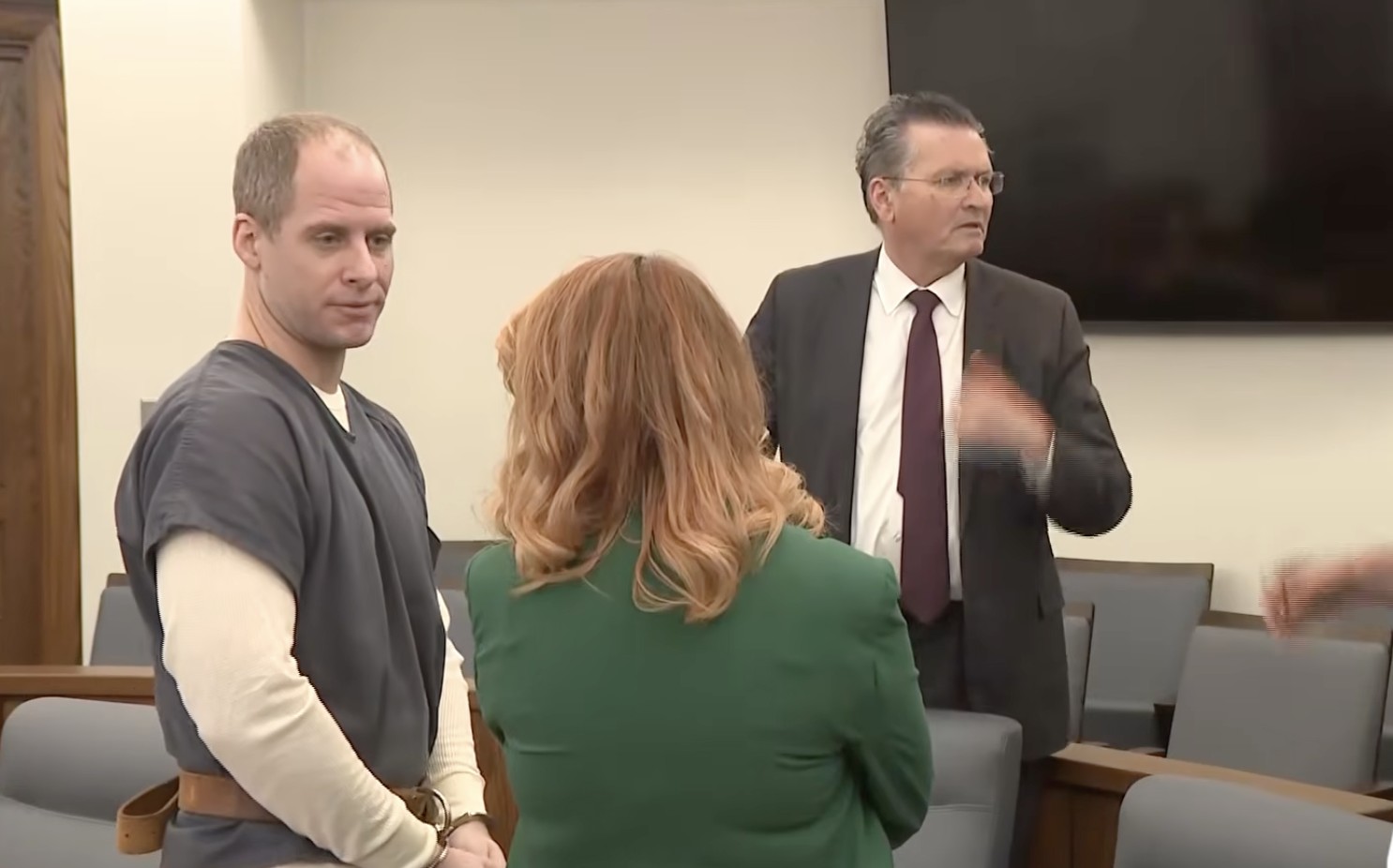
While the legal battle over bits and bytes rages on, the Tipp City community remains in mourning. Ashley Flynn was a pillar of the local school system and a mentor to young athletes. Prayer vigils have been held, and a GoFundMe has raised significant funds for her two young daughters, who are now growing up without a mother and with a father behind bars awaiting trial.
Caleb Flynn, for his part, has maintained his innocence. He even opposed delays in his trial, perhaps hoping to reach a verdict before the Meta data could be fully analyzed. But the judge’s decision to allow a short delay suggests the court views the social media records as “pivotal evidence.”
The Stakes of April 28
The date April 28, 2026, now serves as a dual milestone. It is the day Meta must answer to the court, and it was the original window for the trial itself.
If Meta provides the records, we may see one of two things:
- The Smoking Gun: Data showing Caleb Flynn logged into Ashley’s account from his own phone at 3:00 a.m. on February 18 to hide evidence.
- The Exoneration: Data confirming the changes were made by a third party or were automated, supporting the theory of an outside intruder.