Shamar Elkins’ final moments outside the home of a National Guard officer: He raced to the officer’s house following a police chase, then a single gunshot rang out—a scene that can never be forgotten
The midnight air in Bossier City, Louisiana, usually carries the quiet stillness of a suburban sanctuary, but in the early hours of Sunday, April 19, that silence was shattered by the desperate act of a man who had already surrendered his soul to darkness. Shamar Elkins, a 31-year-old veteran who had spent seven years in the Louisiana National Guard, did not flee toward a hidden fortress or an anonymous highway after committing one of the most heinous massacres in the state’s history. Instead, he drove a stolen vehicle toward the only place where he still felt a vestige of safety: the doorstep of his former Army mentor and “adopted uncle,” Michael Mayence. It was a final, pathetic seeking of refuge by a man who had, just hours earlier, systematically executed seven of his own children and their young cousin, leaving a trail of blood that stretched across two residences in Shreveport.
The climax of this tragedy took place in a driveway that should have been a symbol of mentorship and fraternal bond. Michael Mayence, a trusted officer who had helped raise Elkins within the ranks of the Guard, was thrust into a nightmare when his home security cameras suddenly flared to life. Mayence would later recount that he was totally unaware of the carnage Elkins had wrought—the cold-blooded shooting of his wife, Shaneiqua Pugh, and the slaughter of eight children, ranging in age from three to eleven. To Mayence, Elkins was the troubled younger soldier he had counseled just twenty-four hours prior about a looming divorce. To the police pursuing him, Elkins was a mass murderer driving a carjacked vehicle with a short AR-15-style carbine at his side.
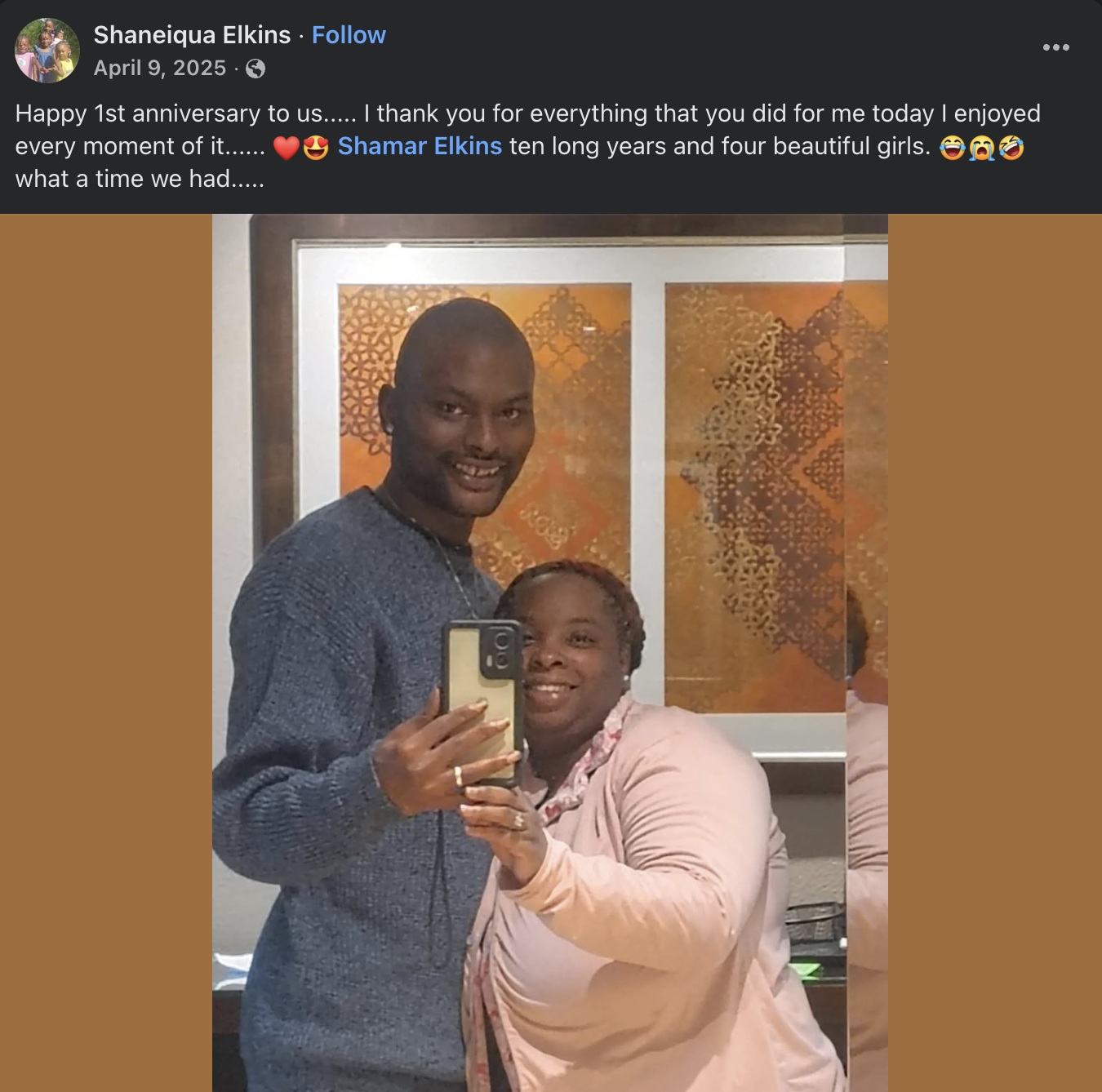
As the stolen car screeched into the driveway of Mayence’s Bossier City home, the intersection of Elkins’ past and his horrific present collided. Mayence speculated that Elkins sought the “safety” he once found in a trusted superior officer, perhaps hoping for a reprieve or a moment of clarity that he had denied his own family. But there is no sanctuary for a man who shoots his children while they sleep. Close behind him, the blue and red lights of law enforcement cut through the dark, surrounding the property and closing the net on a killer who had run out of road. In those final seconds, standing outside the door of the man who had tried to guide him toward a better life, Elkins faced the ultimate accountability. As officers moved in and opened fire to neutralize the threat, ending his life in the very driveway where he had sought a final moment of uncle-like protection.
The path to that driveway was paved with missed warnings and a toxic unraveling of domestic life. Shamar Elkins and his wife, Shaneiqua, were locked in a bitter separation, with a court date scheduled for the very next morning. The legal proceedings, intended to finalize the end of their marriage, seemingly acted as a catalyst for a man who viewed his family not as individuals, but as possessions to be controlled or destroyed. Shaneiqua survived the initial attack despite being shot multiple times in the head and stomach, miraculously crawling to a neighbor’s house to summon help. Her survival provided the first window into the horror Elkins had left behind: a house on West 79th Street where Jayla, Shayla, Kayla, Layla, Markaydon, Sariahh, Khedarrion, and Braylon were found scattered, most of them shot in their beds.
In the aftermath of the suicide in the driveway, a haunting portrait of Elkins began to emerge through the words of Michael Mayence. In a Facebook post that circulated rapidly among current and former members of the National Guard, Mayence expressed a profound sense of shock and betrayal. He described Elkins as a man he had mentored for years, someone he believed he knew intimately. The day before the shooting, the two had spoken at length about Elkins’ impending divorce, a conversation that gave Mayence no indication of the latent violence boiling beneath the surface. Mayence’s grief was compounded by the realization that his home had been chosen as the site for Elkins’ final stand—a perversion of the trust and “adopted uncle” status he had afforded the younger man.
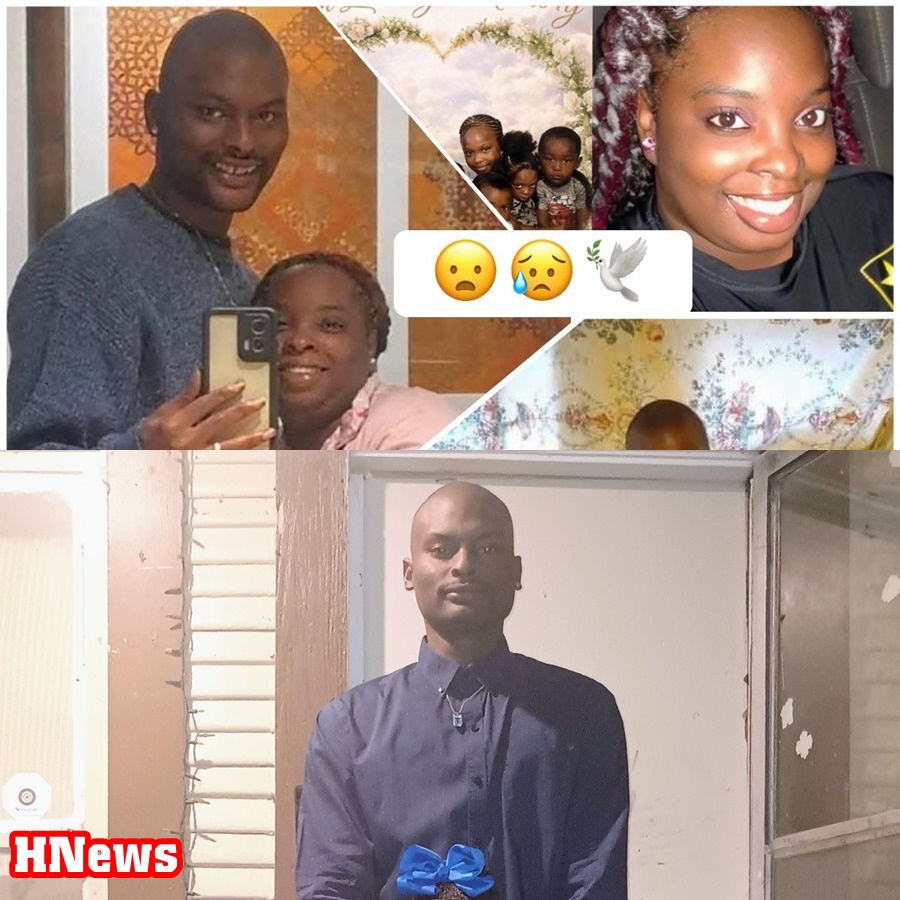
This lack of foresight by those closest to him stands in stark contrast to Elkins’ criminal record, which suggested a history of impulsive violence and instability. In 2019, Elkins had been convicted for firing a weapon at another driver near a high school, a brazen act of road rage that hinted at a total disregard for human life and public safety. Earlier, in 2016, he had been convicted of driving under the influence. Despite these red flags and his military training with high-powered firearms, Elkins remained a part of the community, a ticking time bomb whose eventual explosion would claim the lives of an entire generation of his own bloodline. The AR-15-style carbine he carried to Mayence’s house was the same tool he had used to turn a family home into a morgue.
The scene in the Bossier City driveway remains a focal point for investigators trying to understand the final psychological state of a mass murderer. Why drive to a mentor’s house after such an irredeemable act? Criminal profilers often note that individuals who commit “family annihilation” frequently seek out a figure of authority or a parental proxy in their final moments, either to confess or to find a place where they are still seen as the person they used to be before the crime. For Elkins, Michael Mayence represented the disciplined, honorable soldier he once aspired to be. By dying at Mayence’s door, Elkins effectively forced his mentor to become a witness to his downfall, staining a relationship of “trusted officer” and “nephew” with the indelible blood of eight innocent children.
As the sun rose on the Monday that was supposed to be Elkins’ divorce hearing, the driveway in Bossier City was cleared of debris, but the community remained paralyzed by the scale of the loss. The victims—Jayla, 3; Shayla, 5; Kayla, 6; Layla, 7; Markaydon, 10; Sariahh, 11; Khedarrion, 6; and Braylon, 5—represented a catastrophic loss of life that Shreveport had never seen. Only one child, a survivor who escaped through the roof and suffered a broken leg, remained to tell the story of the night their father became a monster. That child’s escape stands as a singular point of light in a narrative of absolute darkness, a defiance of the fate Elkins had intended for every soul under his roof.
The death of Shamar Elkins provides no closure and very few answers. While he died outside the home of the man who helped raise him, he left behind a shattered wife fighting for her life in a hospital bed and a mentor grappling with the impossibility of his own memories. Michael Mayence’s speculation—that Elkins sought “safety” in him—serves as a chilling reminder of how killers can compartmentalize their lives, seeking comfort from a friend while the blood of their children is still wet on their clothes. Elkins died a veteran, a protégé, and a nephew in the eyes of the man behind the door, but to the rest of the world, he died as a coward who could not face the Monday morning court date he had so violently avoided.
The investigation into the motive continues, though for the people of Shreveport and Bossier City, the “why” matters less than the “who.” The names of the eight children have become a somber litany in local churches and vigils, a reminder of the vulnerability of those caught in the crosshairs of domestic “toxic” masculinity and military-grade weaponry. Shamar Elkins’ final moments in that driveway were the end of a chase, but for the survivors and the mentors left behind, the pursuit of understanding and healing is a journey that has only just begun. The security cameras that captured Elkins’ arrival at Mayence’s door did not just record a car pulling into a driveway; they recorded the final, desperate gasps of a man who had destroyed everything he touched and had nowhere left to turn but the doorstep of a ghost from his better past.