HAUNTING: Neighbors recall chilling moment meeting beautiful 29-year-old mother Marine Basmajian just 2 days before the fatal shooting of LA family of 4 in nearly $1M home
“Half a Step from Heaven, Half a Step from Hell”: The Haunting Account of Neighbors Regarding the 29-Year-Old Mother Who Shot Her Husband and Two Toddlers in Los Angeles
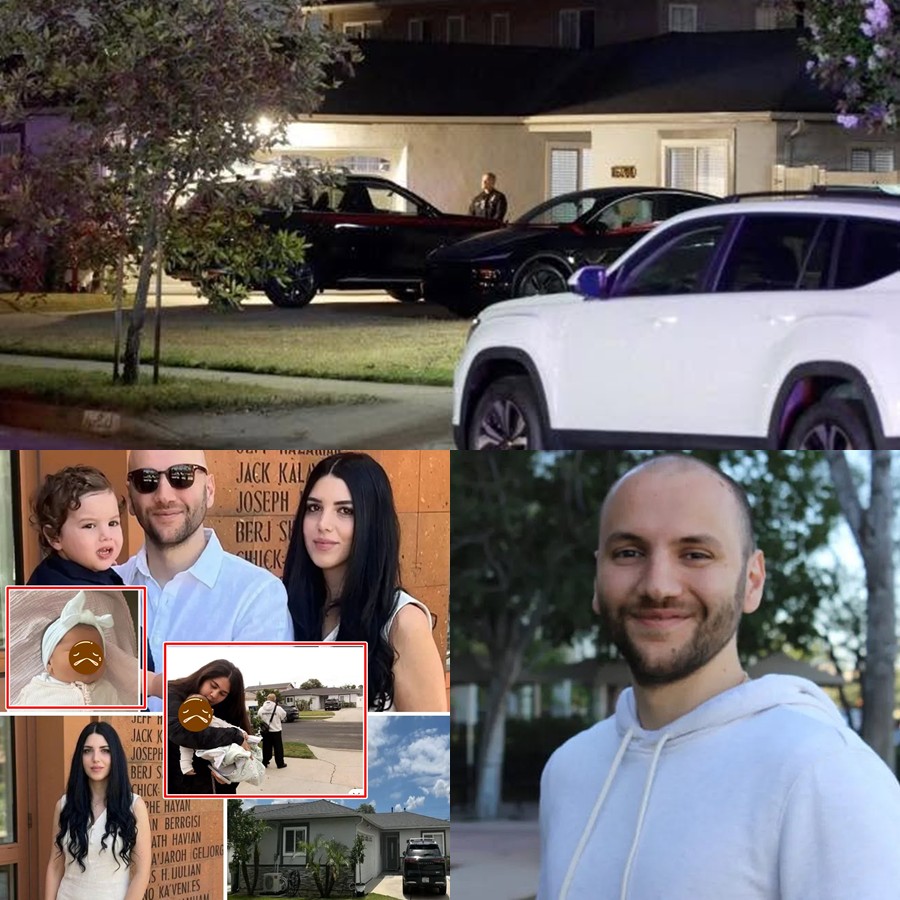
Behind the doors of a beautiful $833,000 home in North Hills, a suburb of Los Angeles, a devastating family tragedy unfolded that left the entire nation stunned. Marine Basmajian, a 29-year-old mother, opened fire, taking the lives of her husband and two young children—including a baby girl born just six days prior—before turning the gun on herself. Through the words of the neighbors who lived beside them every day, the portrait of a “perfect” family shattered instantly, exposing a terrifyingly dark corner that society has blindly overlooked.
Part 1: Gunshots Shatter the Peace of a Suburban Night
The 16200 block of Londelius Street in North Hills, Los Angeles, has long been known as a quiet, safe, and tree-lined middle-class community. It is an ideal living space for educated young families, a place where children can freely ride their bicycles on the sidewalks every afternoon.
However, at around 8 p.m. on that fateful Wednesday, that peace was violently shattered by a succession of sharp, dry echoes erupting from the Basmajian household.
Many neighbors were initially baffled by the noise. Living in an area with an exceptionally low crime rate, their first instinct was not to assume a shooting was taking place.
“I was sitting in my living room when I heard these very loud, distinct ‘bang, bang’ sounds,” a witness living two doors down recalled in shock. “At first, I thought it was just kids playing with fireworks or a broken car exhaust. But then, an eerie silence followed, and just minutes later, police sirens came screeching down the street. That was the moment I knew something truly horrific had happened.”
Within less than ten minutes of receiving multiple emergency calls, officers from the Los Angeles Police Department (LAPD) rushed into the scene. The flashing red and blue lights of ambulances and cruisers reflected off the windows of the $833,000 home. But it was already too late. Four human beings, four bodies once full of life, now lay motionless from cold bullet wounds.
Part 2: “They Were the Definition of a Happy, Model Family”
To the residents of Londelius Street, the Basmajians were more than just neighbors; they were a symbol of a successful, fulfilled household. Khajag Basmajian, 31, was a prominent Senior Staff Cloud Platform Engineer who always presented himself with a polished look and a radiant smile. The mother, Marine Basmajian, 29, was universally liked for her gentle and attentive nature. Their oldest son, Alec, 2, was healthy and bright, and the family had just reached complete fulfillment with the arrival of baby Ella, just six days old.
Karen Banuelos, a neighbor who lived nearby and frequently chatted with the family, could not hold back her tears when speaking to The Los Angeles Times. In her memory, Marine was a wonderful mother, a woman who treated her family as her entire world.
“Marine was an incredibly caring and organized mother. She was meticulous about everything, from how she tended to her garden to how she managed her household. Every time I saw her walking little Alec, I felt such a warm energy. She loved family gatherings and took comfort in making sure everything was absolutely perfect to welcome her loved ones,” Banuelos shared through tears.
Another neighbor recalled that just a week prior, they had seen Khajag eagerly setting things up to welcome his wife and newborn daughter home from the hospital. The house was filled with pink balloons and celebratory wishes. Everyone believed that Marine and Khajag were standing at the pinnacle of happiness: career success, wealth, a gorgeous home, and a beautiful boy and girl. No one could have imagined that just six days later, that “heaven” would turn into “hell” in a single moment.
Part 3: The Haunting Reality of Postpartum Depression
Amidst the massive, unanswered questions regarding what could drive a mother to decisively shoot her husband and her own two children in the head, the words of Karen Banuelos opened a window into a dark reality that leaves society shivering, yet deeply sorrowful. It is the shadow of postpartum depression and psychosis.
Banuelos told the Los Angeles Times:
“It’s so depressing, it’s so devastating for everyone. Postpartum [depression] is real. To get possessed to do that? It’s just, there’s no words.”
The neighbor’s use of the word “possessed” is not superstitious; rather, it accurately describes the terrifying nature of Postpartum Psychosis from the perspective of an outsider witnessing a sudden, drastic shift in a mother’s psyche.
According to accounts from surrounding residents, during the brief days after returning from the hospital with baby Ella, Marine rarely appeared near the windows. The home’s curtains remained tightly drawn. One neighbor mentioned running into Marine by chance at the mailbox two days before the tragedy:
“She looked terrible, completely different from her usual vibrant self. Her eyes were deep and hollow, staring blankly like someone who hadn’t slept for many nights in a row. I called out to say hello and asked how she and the baby were doing, but she just nodded mechanically and quickly walked back inside. At the time, I simply thought she was exhausted from just giving birth. I never could have guessed…”
The severe drop in hormones six days postpartum, combined with the crushing pressure of caring for a newborn alongside a hyperactive 2-year-old toddler, likely pushed a mind that heavily relied on “organization and order” into a panicked corner. When her living environment fell out of her control, her compromised brain succumbed to extreme hallucinations.
Part 4: A Painful Wake-Up Call from the Man Next Door
Unable to hide his shock and grief, Undreal Turner, another neighbor of the Basmajian family, shared a deeply reflective message on ABC 7. For him, the deaths of these four individuals was not just a private tragedy for the Basmajian lineage, but a failure of the surrounding community.
“It’s sad. Four people lost their lives today,” Turner said in a heavy, somber tone. “We really need to hone in on our moms, and even dads, just to make sure, in the neighborhood, people that you know, that they’re OK. Do they need any help? Do they need any assistance? Do they need any support?”
Turner’s words cut straight to a painful wound of modern society. In affluent suburbs, the privacy of each household is respected to the maximum. Closed doors and high wooden fences inadvertently create isolated oases. People might recognize each other and exchange quick greetings on the street, but no one truly knows what is happening behind the lights of a million-dollar home.
The Basmajian family lived in a kind, decent neighborhood, but the darkness of this psychological illness was too stealthy. It hid beneath Marine’s label of being “caring” and her outward “comfort in organization,” causing those around her—and perhaps even Khajag himself—to let their guard down. When the ticking time bomb finally detonated, the price paid was unimaginably absolute.
Part 5: The Verdict of Silence and a Lesson for the Future
The neighbors’ accounts surrounding the home on Londelius Street paint two completely opposing pictures: on one side is material perfection, wealth, and societal status; on the other is the psychological depletion, isolation, and disorientation of a mother six days after giving birth.
This tragedy leaves behind profound, costly lessons for society as a whole:
- Never judge happiness by outward appearances: A beautiful home, a successful husband, and financial stability are not shields that protect a woman from the biological and psychological vulnerabilities of postpartum life.
- The danger of the pressure to be “Perfect”: Mothers who try the hardest to appear strong, organized, and caring are often the ones hiding the deepest internal storms. Terrified of being judged as a “bad mother” or breaking the pristine image of their family, they reject help until it is too late.
- Meaningful action from the community: Just as Undreal Turner noted, society needs to establish a warmer, more connected support net. A timely check-in, a shared hug, or a husband and neighbor proactively taking over household chores can save an entire family’s life.
Conclusion
The $833,000 home in Los Angeles now stands completely silent beneath the shadows of the trees. The toy vehicles belonging to 2-year-old Alec still sit somewhere in the yard, and the bassinet of 6-day-old Ella will never hold warmth again.
From this day forward, the neighbors on Londelius Street will never be able to pass by this house without remembering the painful lesson of the hidden killer called postpartum psychosis. May the souls of Khajag, Alec, Ella, and Marine find peace in the afterlife, and may the tragic echoes from North Hills serve as the final wake-up call to shatter our collective indifference toward maternal mental health.